

Can You Lay a Refrigerator on its Side?
Posted in: Moving AdviceIf you’re out of options and your fridge needs to get horizontal to make a move happen, you can do it. Generally, though, the answer is, “It’s not a great idea.”
Transporting your fridge on its side comes with the risk of damaging the internal components and impacting its cooling functions. You’ll need to take some precautions to ensure you end up with a working fridge after your move.
When you’re moving to a new home, knowing how to safely relocate the fridge is as important as packing your pantry, fridge, and freezer items the right way. Keep reading to learn why laying a refrigerator on its side is a risky move and what leading fridge manufacturers recommend if you don’t have other options.
Why You Need to Be Careful When Transporting a Refrigerator on Its Side
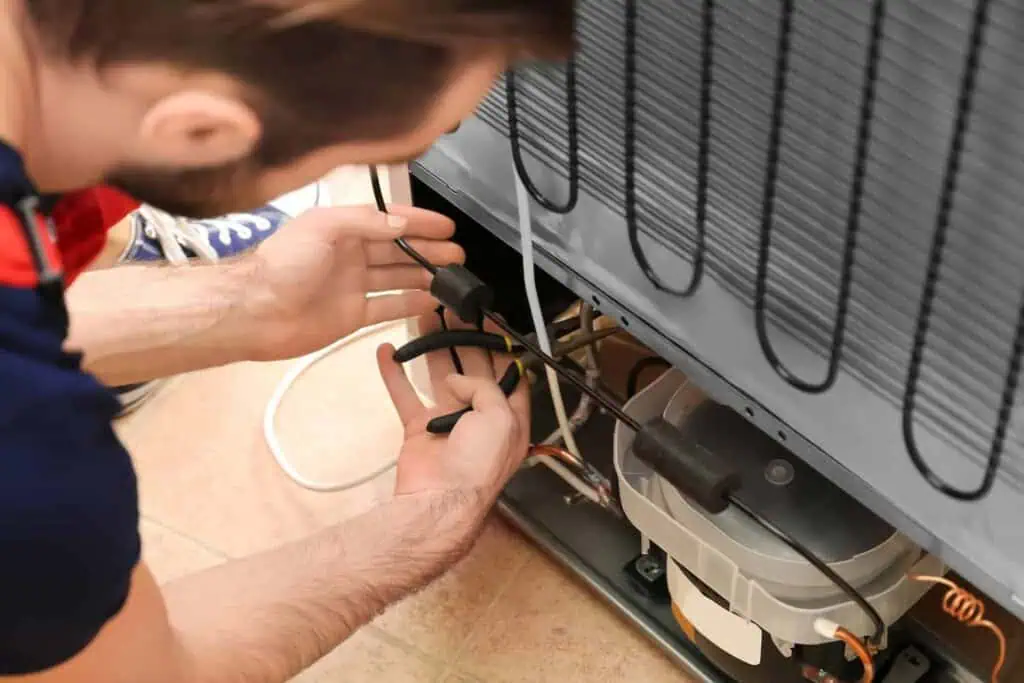
Can you lay a refrigerator on its side to transport it without risk? Not 100%. Reasons to avoid moving a fridge on its side include:
- Compressor oil displacement. When the fridge is positioned horizontally, oil in the compressor can move into the refrigerant lines. Displaced oil could cause blockages or negatively impact cooling.
- Refrigerant distribution issues. Tilting the fridge to extreme levels could cause uneven refrigerant distribution, which impacts functionality.
- Internal component damage. If you lay a refrigerator on its front or back, it can cause pressure on internal parts like shelves or drawers, which could crack or break.
- Strain on the appliance structure. Fridges aren’t designed to rest on their sides. The weight could impact frames, joints, and other infrastructure, leading to misalignment.
However, manufacturers’ recommendations for transporting refrigerators can vary widely depending on the model and design. Some brands allow specific units to be laid on their sides, while others warn against it entirely.
“Mini fridges are lighter and easier to maneuver, but they have the same internal systems as full-sized models. The same rules apply…”
Before you move your fridge, it’s best to consult your owner’s manual or check the brand’s official guidance. We’ve summarized some guidelines from major brands below.
Brand Recommendations for Moving Refrigerators
| Brand | Refrigerator Moving Guidance |
| GE | Top-freezer and side-by-side models can be laid on their sides for transport. Lay side-by-side models down on the freezer side.
French-door, bottom-freezer, compact, and built-in models must always be transported upright. If you transport the fridge on its side, stand it upright for an equal amount of time as it was on its side before plugging it in. |
| LG | Move the refrigerator in as much of an upright position as possible. If you have to transport it on its side, leave the fridge upright for 24 hours before plugging it back in. |
| Whirlpool | Strap a refrigerator upright in the moving truck. If you must lay the fridge down, only do so on the left or right side (not the front or back). Stand the fridge upright for at least 8 hours before restarting it after transporting. |
| Samsung | Keep fridges upright when transporting if possible. If not, stand them upright for at least 4 hours before plugging them in. |
| Frigidaire | Move refrigerators upright if possible. If you have to lay them down, stand them up in their new location for at least 24 hours before plugging them in. |
| Bosch | Keep the fridge upright during a move. If you can only transport it laying down, ensure it stands upright for at least 3 hours before you plug it in. |
| KitchenAid | Transport refrigerators upright unless it’s not possible to do so. If you moved a fridge on its side, leave it standing upright for 24 hours before plugging it in. |
What to Do if You Must Transport a Refrigerator on Its Side
Sometimes, it’s not a matter of can you lay a fridge down, but how can you do it with the least risk. When tight doorways or limited space require tilting a refrigerator all the way down, follow these best practices:
- Lay the fridge on the left or right side. Don’t lay it on the front or back to avoid damage to internal structures.
- Remove shelves and drawers. If it moves, take it out to prevent shifting and cracking during transport.
- Secure the doors. Use straps, tape, or stretch wrap to keep doors in place during the move.
- Protect the exterior with padding. Use moving blankets or other padding to avoid scratching or denting the fridge.
- Stand it upright as soon as possible. Don’t leave a fridge on its side in your new home — unload it and get it into the right position immediately.
- Allow the fridge to sit unplugged. Follow manufacturers’ guidance, which is 3 to 24 hours depending on the brand and model. If you don’t have manufacturer guidance, play it safe with 24 hours or more of wait time.
Transporting Your Refrigerator: Special Cases

Knowing how to move a refrigerator goes a long way toward a new home kitchen that’s functional. And since you didn’t go through all the work of packing pots and pans to avoid cooking because your fridge was damaged during the move, following the steps above is a good idea. Here are a few more tips related to special fridge transport cases:
Can you lay a refrigerator on its side for 30 minutes?
Yes, but you still need to follow the same precautions. Even a short trip can shift compressor oil or refrigerant. That is why the same precautions still apply: lay it on its side, secure all internal components, and stand it upright as soon as possible. Once it’s upright again, let the fridge rest unplugged for at least as long as it was on its side or for the length of time recommended by the manufacturer.
Can you lay a mini fridge on its side?
Mini fridges are lighter and easier to maneuver, but they have the same internal systems as full-sized models. The same rules apply, so avoid laying one on its side unless you have to.