

How To Move A Refrigerator
Posted in: Moving AdviceWhen you’re packing kitchen utensils and dishes, you’re likely keeping an eye on total box weight. After all, it does no good to pack perfectly padded plates in a box that’s so heavy no one can manage it. But what do you do about items that are heavy on their own?
A standard fridge can weigh 150 to 300 pounds or more, and that’s after you empty out the food and drinks. Trying to move one without help is more than frustrating — it can be a safety issue. It’s a good idea to handle this moving task with help from friends or professional movers.
But knowing how to move a refrigerator safely helps you plan ahead, protect your appliance, and avoid injury. We walk you through the steps below, from checking the owner’s manual and getting measurements to protecting your floors and moving it.
Moving Your Refrigerator, Step by Step
If you’ve ever explored how to move a refrigerator to clean behind it, you know it’s not something you want to tackle solo. That’s even more true when you need to get the appliance out of one house and into another.
“You probably shouldn’t [move a fridge by yourself]. At minimum, a DIY refrigerator move requires a sturdy appliance dolly, ratchet straps, and someone to help guide or spot you.”
One option is to hire movers for the job. When you book professional help through HireAHelper’s platform, you don’t have to approach this task alone. You can connect with moving services on our marketplace that handle the entire fridge relocation, and come with the proper equipment to move it safely to your new home.
That said, if you’re moving it with help from others, review the 14 steps below to make sure it’s done safely.
1. Check the Owner’s Manual
Start by checking your refrigerator’s owner’s manual for potential safety considerations and brand-specific precautions. Some manuals also include transport details like how long to wait until you plug a fridge back in after moving it or whether you can lay the appliance on its side.
If your model has water lines, built-in filters, and other features, they may require special prep or handling during a move.
Don’t have the manual for your fridge anymore? Not to worry, you can typically look it up on the manufacturer’s website using your model number.
2. Measure Everything

Measure your refrigerator’s height, depth, and width. Then, measure doorways, hallways, stairwells, and tight turns along the exit path of your old home. Do the same for the entry path of your new home. And don’t forget to check your moving truck’s clearance height too.
Knowing the exact dimensions of your fridge and the spaces you need to get it through helps you make a plan. You may need to re-route your fridge through the back door and along the side of the house to avoid a tight hall, for instance.
3. Gather the Right Supplies
You’ll need a few essentials to move a fridge safely:
- A heavy-duty dolly with straps
- Moving blankets
- Packing tape or stretch wrap
- Furniture sliders
Using these tools reduces the risks of injury to yourself and damage to the fridge during transport. And don’t forget a buddy to help with balance and navigation. Moving any kind of fridge by yourself (except for a mini fridge or a skincare fridge) is not recommended.
4. Empty the Fridge

Fridges are already heavy enough without being full of bottles, frozen goods, or accessories. Remove everything inside before you move the appliance, including the produce in the crisper and whatever’s hanging out in the deli drawer. Not to mention, your fridge will need to be unplugged while you move it, which could last hours — most perishable stuff that’s not frozen is going to spoil anyway.
Place items in coolers right before you move so you can transport them to your new home. If you’re low on cooler space or don’t want to worry about moving food, you should start eating down the fridge a week or so before you move to reduce the need to pack the items.
5. Unplug and Defrost
Unplug your fridge before you move it, allowing enough time for any necessary defrosting. Modern fridges don’t typically need to be defrosted before you move them. However, turning them off and unplugging them for 30 minutes to a few hours ahead of time helps ensure everything settles and that you don’t have water or melted ice in the moving van.
If your fridge or freezer does get ice buildup inside, you’ll need to defrost it. This can take a few hours to a few days, depending on the model and how much ice there is. Plan accordingly, as you won’t be able to keep food in the fridge during this time safely.
6. Clean and Dry Thoroughly

An empty, defrosted fridge is much easier to clean than one that’s plugged in and housing food. Take the time to scrub it inside and out with warm, soapy water. Remove shelves and drawers, and scrub under and behind those areas.
Dry everything completely before shutting the fridge door. A clean, dry refrigerator cuts down on odors and mold, and reduces the risk that water might damage items in the moving truck. Plus, starting off in your new kitchen with a crystal clean fridge is super nice.
7. Secure Loose Parts
Ensure loose or moving parts don’t bang or swing during transport. Tape down doors, shelves, bins, and drawers, or remove the parts you can before transport (this cuts down on the weight, as an added bonus). Wrap shelves and other parts in towels and pack them in boxes if you opt to remove them, but make sure everything is labeled for easy reinstallation.
8. Cover it Up
When you’re moving something as big and bulky as a fridge, it’s likely to brush up against or hit things. Wrapping the appliance in a moving blanket and stretch wrap can help cushion it.
“Don’t have the manual for your fridge anymore? Not to worry, you can typically look it up on the manufacturer’s website using your model number.”
If you hire help for your move, let the pros know a fridge is part of the moving day list. They’ll probably bring their own padding, and they know how to wrap a fridge well already.
9. Protect Your Floors
Dragging a heavy appliance over laminate or wood floors can leave some unsightly gashes and scratches, so use furniture sliders or cardboard under your fridge to avoid damage.
If you’re moving a fridge over carpet, put a board or thick cardboard down to help protect the flooring and keep your load stable.
10. Tilt and Load Onto Dolly
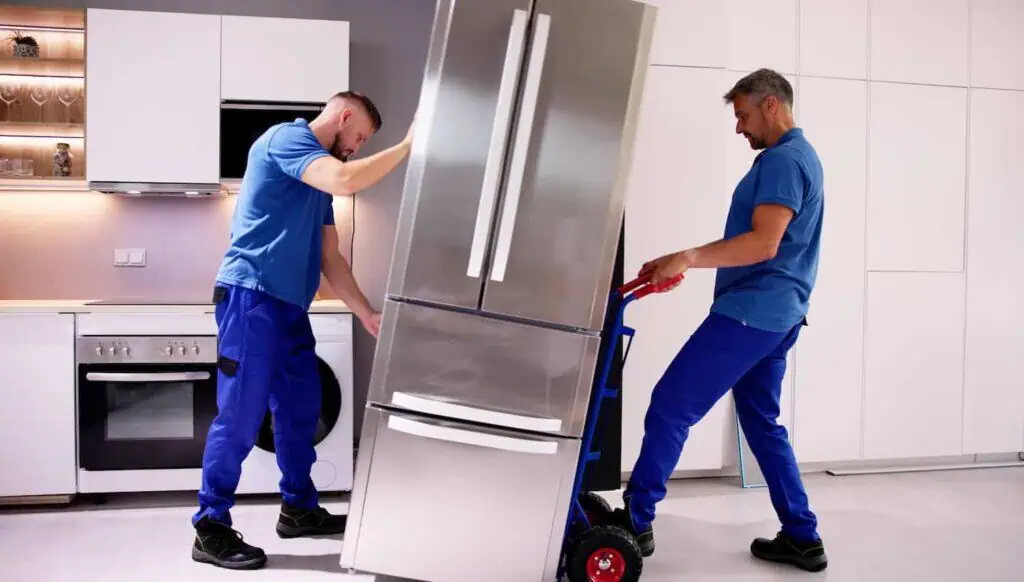
Knowing how to move a refrigerator into a truck usually involves a dolly. With help from another person, tilt the fridge slightly and slide the dolly underneath from the side — not the front or back. Strap the fridge on tightly and tilt the entire thing back slowly so you can move the dolly. Don’t tilt it back too far — this can mess with the internal mechanisms that keep a fridge cold or pose a danger to you and your helpers. You just need to tip it back enough to get it moving and balanced.
11. Navigate Through Tight Spaces
Take it slow and use a spotter to help you clear corners and thresholds, and remove doors or handrails if needed. If the fridge must be tilted far back to get through a doorway, avoid turning it fully on its side to prevent oil or refrigerant issues.
12. Transport Carefully
If possible, always move a fridge in an upright position. Doing otherwise could seriously damage the internal components and cooling ability.
If you absolutely have no other choice, you technically can transport a refrigerator on its side. But doing so risks oil backflow or refrigerant disruption. Check your owner’s manual to see if you can put your fridge on its side for any period of time.
Take the same level of precaution as you would with packed fragile dishes when securing the fridge. If possible, ensure it’s secured to the wall of the moving truck so it can’t slide or fall on anything during the ride.
13. Let It Sit Upright Before Plugging In
Let the fridge sit upright and unplugged for several hours — or as long as your manual requires. This lets compressor oil settle back into place, which protects internal components when you power the appliance back on.
14. Plug In and Monitor Temperature
Plug in the fridge and turn it on. Don’t put food in it yet — it can take a while for the refrigerator to get to the right temperature for safe food storage. Keep an eye on the appliance for a few hours, checking the internal temperature occasionally. You can restock when it reaches around 37 degrees Fahrenheit for the fridge and 0 degrees Fahrenheit for the freezer.
Staying Safe While Transporting a Refrigerator

Moving a fridge is physically demanding, and if you’re not prepared, you can put more than your muscles at risk. Here are tips to mitigate the risks of property damage or personal injury:
- Lift with your legs, not your back. Bend at the knees and keep your spine straight when you lift or tilt the fridge. Let the dolly do most of the work.
- Wear closed-toe, non-slip shoes. Footwear that gives you traction reduces the risk of slips and falls. Protective footwear also shields your feet and toes from items that might fall on them.
- Secure power cords. Coil up cords and tape them to the fridge to keep them from hanging loose and causing tripping hazards.
- Disconnect and drain. Shut off and drain the water line before moving to prevent electric shock and water leaks.
- Cushion sharp edges and corners. Adding a bit of cushion helps protect people and property. A fridge corner can easily knock a hole in drywall as you move down the hall. A quick wrap in a moving blanket can prevent that.
- Don’t do the job solo. We’re repeating this because it’s that important. Even with a dolly and other tools, avoid moving a fridge on your own. Have at least 2 people so someone can act as a guide while the other maneuvers the dolly.
When to Hire Professional Movers to Move Your Fridge
While packing pots and pans or moving your own dishes might be something to DIY, hiring professionals to move the fridge makes good sense. When your fridge might be difficult to move — because it’s oversized or has a built-in water dispenser — pros can provide added peace of mind. Moving services might also help reduce the frustrations of moving a fridge if you need to get it through a narrow space.
How Do You Move a Refrigerator By Yourself?
You probably shouldn’t. Most refrigerators weigh 150–300 pounds, and trying to move one on your own can put serious strain on your back. At minimum, a DIY refrigerator move requires a sturdy appliance dolly, ratchet straps, and someone to help guide or spot you.
If you’re second-guessing yourself, that’s a good sign that it’s time to book professional help. HireAHelper makes it easy to find the right crew for the job.
FAQs
How long should a fridge sit after moving?
If the fridge was upright throughout the moving process, let it sit for a couple of hours before plugging it in. If you had to lay it down to move it, ensure it sits at least the same amount of time upright before plugging it in. Consider allowing a full day when possible, and consult your fridge’s manual for details on your model.
How to move a refrigerator in a truck, car, or SUV?
Transport a refrigerator upright in a truck or moving van. Use straps to keep it secure, and place it near the back wall to prevent tipping. Never move a full-size fridge in a car or SUV — it won’t fit and isn’t safe.
If you have a small fridge that can lie on its side in an SUV, check the manual to ensure laying it down won’t hurt it before you attempt the move. A mini fridge can usually fit on the backseat, and you might be able to use the seatbelt to secure it during the drive.
Is it OK to plug in a fridge right after moving?
Only if it was transported upright the entire time, and even then, it’s a good idea to wait a few hours.
If your fridge was on its side, wait at least 24 hours before plugging it in to avoid damaging the compressor. It’s always best to check the owner’s manual for brand-specific wait times.
How heavy is a refrigerator?
The average refrigerator weighs 150–300 pounds, though larger French door or commercial models can weigh 400 pounds or more.
How to move a refrigerator without scratching the floor?
Use furniture sliders or a dolly with rubber wheels to protect floors. Tape down doors to keep them from swinging open and hitting the floor during transport.