

How to Pack Your Dishes for a Move: Step-by-Step Guide
Posted in: Moving AdviceWhen you’re preparing for a move, packing your inherited heirloom china or a beloved set of pasta bowls can be challenging. Fragile dishes require careful handling, so simply tossing them in a box isn’t an option.
Keep reading to learn how to pack your dishes for a move and ensure they arrive safely and chip-free at your new destination.
Supplies Needed to Pack Dishes Safely

Secure packing starts with reliable supplies. Because dishes are often made of fragile materials, they should be prepped before packing. Here are some essential packing supplies you’ll need to keep everything secure and safe:
- Boxes: You can find boxes specifically designed for packing dishes at moving supply stores. However, you can also use regular moving boxes and add extra padding or dividers. Choose boxes that are sturdy enough to handle the weight of your dishes. Double-walled boxes are better than single-walled ones because they absorb shock more efficiently.
- Packing paper: This is used to wrap and pack dishes for transport. It provides reliable protection from scratches and cracks while remaining compact and lightweight. It also creates protective air pockets when you crumple it. Some people use newspapers, but it may leave ink residue on your dishes.
- Bubble wrap: An alternative to packing paper is bubble wrap. It offers a dependable buffer from shocks, especially when using rolls with large bubbles that provide extra cushioning.
- Packing peanuts: For cushioning the bottom, sides, and top of the box, packing peanuts are another option. They’re also great for filling in any gaps between items in a box. Biodegradable packing peanuts are available if you’re looking for an eco-friendly option.
- Foam dish pouches: Sleeves or pouches designed to hold plates or bowls are an alternative to packing paper or bubble wrap.
- Packing tape: Securing the paper or bubble wrap with packing tape keeps whatever you’re using as cushioning tightly in place. It’s also needed to secure and close boxes.
- Permanent marker: Labeling the box as fragile and indicating which side is up helps ensure proper handling.
- A scale: Try to keep the weight of each box under 40 pounds. Heavier boxes are harder to carry and more likely to get dropped.
For a ready-made solution, you can purchase full dish packing kits, such as the Dish Saver Packing Kit from U-Haul or Dish Packing Kits with dividers from Home Depot.
Step-By-Step Guide for Packing Dishes
Dishes are among the most fragile items in your home, so it’s worth taking a few extra steps to pack them properly. Follow this step-by-step guide to pack your dishes like a pro:
1. Prepare your packing boxes
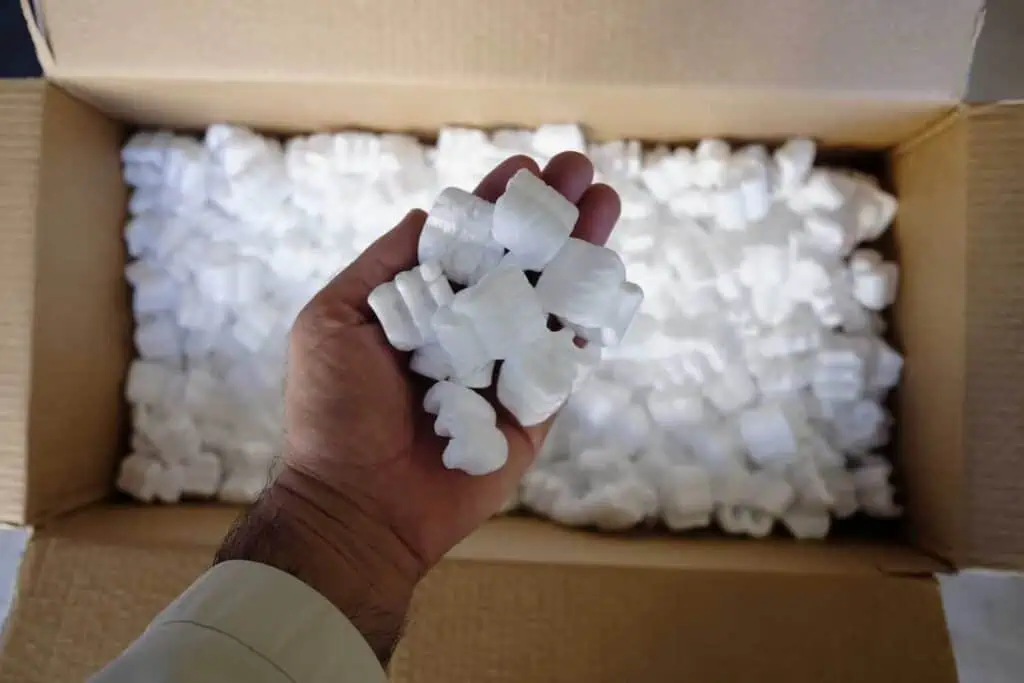
Assemble the cardboard box and reinforce the bottom seam with 2 to 3 strips of overlapping tape before you start packing. Then, place a layer of packing peanuts or crumpled packing paper at the bottom of the box you plan to use for transporting your dishes. Aim for 3 to 4 layers of cushioning at the bottom.
2. Prepare your dish wrapping area
Set a stack of packing paper on a wide, flat surface, such as a table or the floor, to use as your packing area. Keep the space clear so you can safely lift and turn each dish.
3. Sort your dishes by size and shape
Plates, bowls, and platters should be separated before packing. Matching plates or bowls can be individually wrapped, then stacked together inside the box.
4. Wrap pieces individually
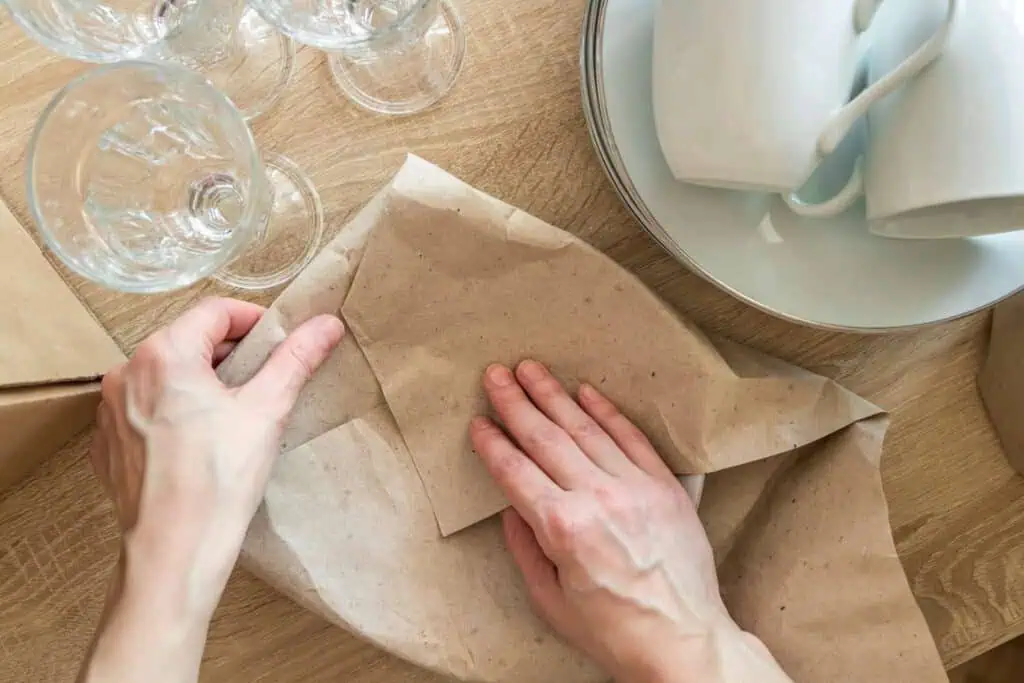
Place the plate, bowl, or platter in the center of a piece of packing paper or bubble wrap. Fold one corner of the packing paper over the entire dish and tuck it in beneath the other side. Repeat with the opposite corner to fully cover the dish, then use packing tape to secure the paper in place.
5. Stack identical dishes together
Once you’ve wrapped a few matched plates or bowls, you can stack them together. Limit stacks to 4 or 5 dishes and place bubble wrap or other cushioning between each dish in the stack. Wrap the entire stack in bubble wrap and secure it with packing tape.
6. Pack dishes vertically into the box
Instead of setting the stacked dishes down directly into the box, stand them up vertically, similar to how you arrange dishes in a dishwasher. Pack 2 to 3 sets of wrapped dishes in a single box, placing cushioning between each stacked set.
“It’s best to unpack your dishes in the kitchen so you don’t have to carry each dish individually from another room. Check for damage before opening the boxes, and unpack the heaviest items first.”
Add packing peanuts to the sides and top for more cushioning around the stacks. Choose the smallest size box that fits your dishes. Separating stacks into multiple small boxes is better than using a single large box for everything.
7. Continue filling the box
Group similar items together in the same box, and pack larger serving pieces in a separate box from your plates and bowls. Fill spaces between stacks with cushioning materials, and leave room for cushioning at the top so dishes aren’t directly in contact with the box. Make sure there’s no empty space when you close the box.
8. Seal and label
Tape the box shut to prevent packing material from escaping. Then, use a permanent marker to indicate the contents of each box and that they are fragile. Also, be sure to mark which side is the top to prevent anyone from accidentally placing it upside down in the moving truck.
How to Transport Dishes Safely

Set the boxes of dishes aside to load last and avoid placing them on top of a large stack or putting heavier boxes on top of them. Use straps or bungee cords to secure the boxes once everything is loaded.
Once you arrive at your destination, remove the boxes with fragile items first and place them in the room where you will unpack them. This gets your dishes out of the way so other boxes aren’t accidentally stacked on top of them.
If you’re really worried about your fragile items, hiring professional movers can help. Their expertise and experience mean they can ensure all your breakables are transported to your new home efficiently and without a chip or scratch. Learn more about efficiently packing everything from fragile dishes to bulky furniture on our How to Pack Hub.
FAQs About Moving Dishes
What if I have a fragile or oversized dish to pack?
Fragile dishes can be packed individually in smaller boxes. Large platters or serving dishes that don’t fit into a standard box might require special care.
Start by wrapping the dish in packing paper and cushioning it with bubble wrap. Once the dish is wrapped, slide it into a large, thin box or tape cardboard sheets around the platter to keep it protected. Even in a thinner box, make sure there is room for ample cushioning. Transport the box upright if possible.
Are there any special considerations for unpacking dishes after a move?
It’s best to unpack your dishes in the kitchen so you don’t have to carry each dish individually from another room. Check for damage before opening the boxes, and unpack the heaviest items first.
Wipe down cabinets before putting away dishes so you have a clean space, and put dishes away as soon as you unpack each stack to avoid leaving them where they could get bumped or knocked over.
Can I move the dishes myself, or should I hire professionals?
Either option is fine, but hiring professionals through HireAHelper means you have experts in handling boxes with fragile items on your side. Professional packing help is available as an optional add-on service.