

How to Ship a Car to Another State (and What It Actually Costs)
Posted in: Long Distance Moving Advice, Money Saving, Moving AdviceWhen you’re relocating your vehicle or buying one in another part of the country, you may not be able to drive it yourself. Between the time, cost, and stress of driving a long distance, the process isn’t always feasible. That doesn’t mean you need to leave your car — you just need to learn how to ship a car to another state.
The process isn’t all that complex or difficult, and we’ll go over the options for shipping your car, whether or not it’s worth it for your situation, how much it costs, and how to prep your vehicle for transport. By the end, you’ll understand everything you need to know to get your car to your new home in another state safe and sound.
What Are Your Options for Shipping a Car to Another State?
The first step in shipping a car to another state is choosing a mode of transport. Depending on your situation, some options might be a better fit based on availability, price point, and what kind of car you want to transport. These are the most common car shipping options.
Open Carrier Shipping (Most Popular)
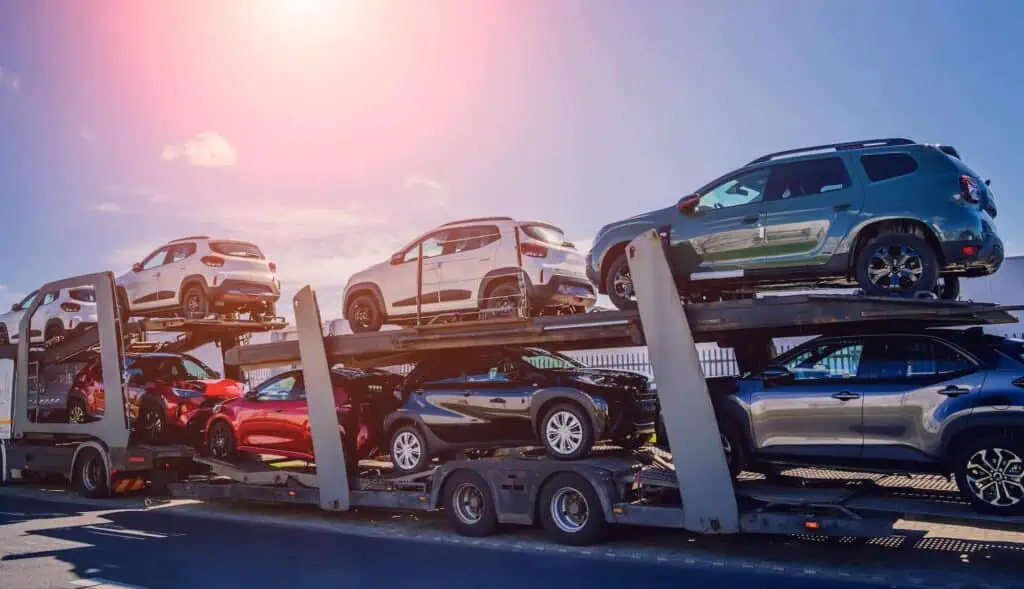
An open carrier is the most popular type of cross-country car transport, and you’ve probably seen one of the carriers on the road before. Your car is loaded onto a multilevel rack on an open car hauler and driven to its destination.
Recommended for: Most vehicles and situations
Pros
- Widely available
- Fast and affordable
Cons
- Vehicles exposed to the elements
- Typically not suitable for luxury or vintage cars
Enclosed Carrier Shipping
Enclosed carrier shipping is similar to open carrier, except it uses a covered car hauler. The trailer walls shield the car, so it’s less likely to be damaged or scratched by flying rocks and debris.
Recommended for: Luxury and classic cars, new vehicles
Pros
- Protects the vehicle exterior
- Extra security from theft or vandalism
Cons
- Higher cost
Terminal-to-Terminal vs. Door-to-Door Delivery
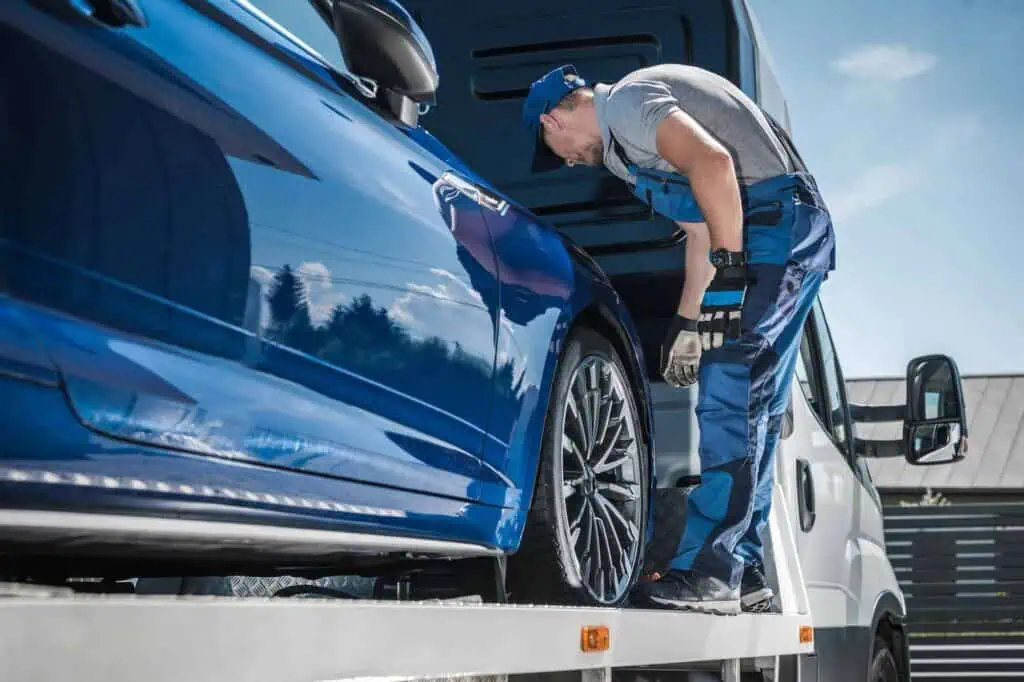
When shipping your car, you can choose terminal-to-terminal or door-to-door delivery. These are similar methods of transporting your car, but they have some important differences them.
Terminal-to-terminal shipping
You drop off your vehicle at a terminal, where it’s held until the company has enough cars to fill a carrier. When the company delivers your car, it arrives at another terminal near your new home. Keep in mind that if you leave the car at the destination terminal, you may incur storage fees.
Recommended for: People with flexible timelines
Pros of terminal-to-terminal shipping
- Affordable
- Easy drop-off and pickup
Cons of terminal-to-terminal shipping
- May take longer
Door-to-door delivery
This option is exactly what it sounds like — the company picks up your car, ships it to your new state, and drops it off at your new home.
Recommended for: People who have a tight schedule or live in a remote area far from vehicle shipping terminals
Pros of door-to-door delivery
- Fast and efficient
- No need to be near a terminal
Cons of door-to-door delivery
- More expensive
Tips for Choosing a Car Shipping Company
As you consider different car shipping companies, it’s important to get multiple quotes so you can compare and find the best deals. Check that each of your top choices is registered with the Federal Motor Carrier Safety Administration. You can also check the company’s safety record using the FMCSA SAFER system. After that, verify it’s fully insured and read customer reviews to get a sense of what it’s like to work with the carrier.
How Much Does Shipping a Car to Another State Cost?
The cost of shipping a car to another state varies, which is another reason why it’s important to get multiple quotes. Typically, your final price will be influenced the most by the following factors:
1. Distance

This aspect of your move has the biggest impact on the final cost. If you’re shipping a car to a state that’s less than 100 miles away, it’s considered a short-distance move. Shorter moves will cost you more per mile, on average, but less overall in total because you don’t have far to go.
Long-distance moves of several hundred miles or more are much more expensive. It can also cost more to ship a car to a location that’s in a rural area versus a major metropolitan area.
2. Vehicle Size and Type
Not all vehicles will cost the same to ship. Size and weight also influence the price.
If you have a compact car, such as a Honda Civic or Mini Cooper, it will likely cost you much less to ship than a Ford F150 or Toyota 4Runner. Also, certain vehicles, such as vintage or luxury cars, often cost more to ship because they require special care.
3. Method of Transportation
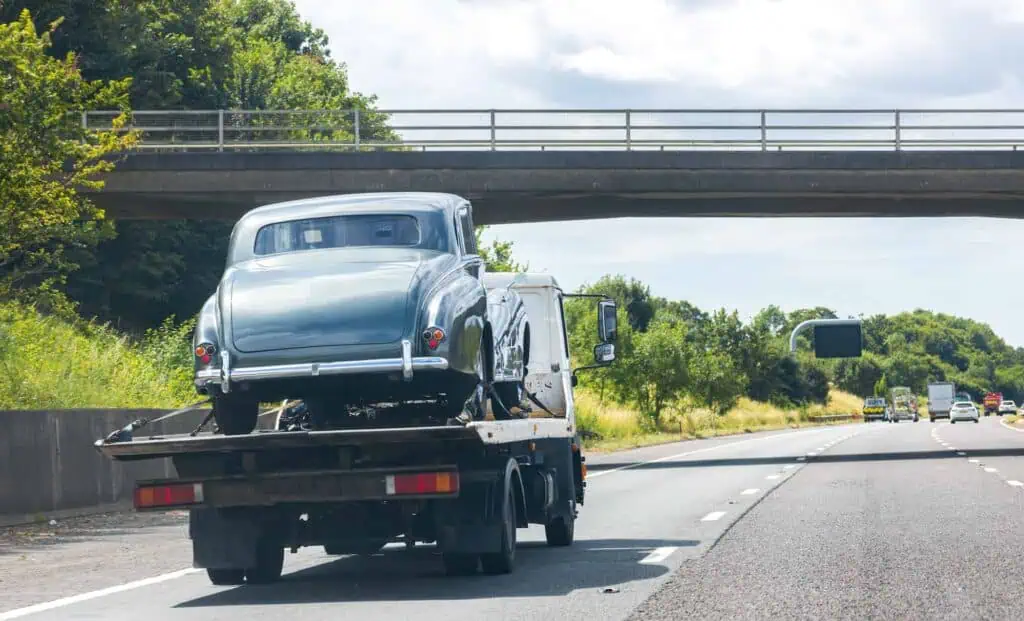
In general, open carriers are more affordable than enclosed carriers. If your car is a few years old, you may be okay with shipping it via an open carrier big rig.
However, if your car is brand new, a classic, or custom-built, you might opt for an enclosed carrier, which costs about 60% more on average.
In most cases, the company will ship your car by truck. This option is the most widely available and usually allows for door-to-door transport. You may also be able to ship your car by train, which is often faster and safer than shipping it by truck, but keep in mind that this option may add to the cost.
4. Time of Year
The season will also impact the overall cost of shipping your car. Summer is the most popular time to move, and the increased demand often drives rates higher.
“It can take anywhere from 3 to 21 days to ship your car to another state. Shorter distances typically require 3-7 days; longer moves can take 7-21 days.”
If possible, try to schedule your move for spring or fall, when the weather is still mild, but the cost won’t be at its peak.
5. Added Fees
Some situations require you to pay additional fees on top of the base shipping price. If you’re shipping a particularly valuable car, you may want to pay for extra insurance. If you need your car shipped ASAP, you could pay a few hundred dollars extra for express shipping.
Car Shipping Costs in 2025
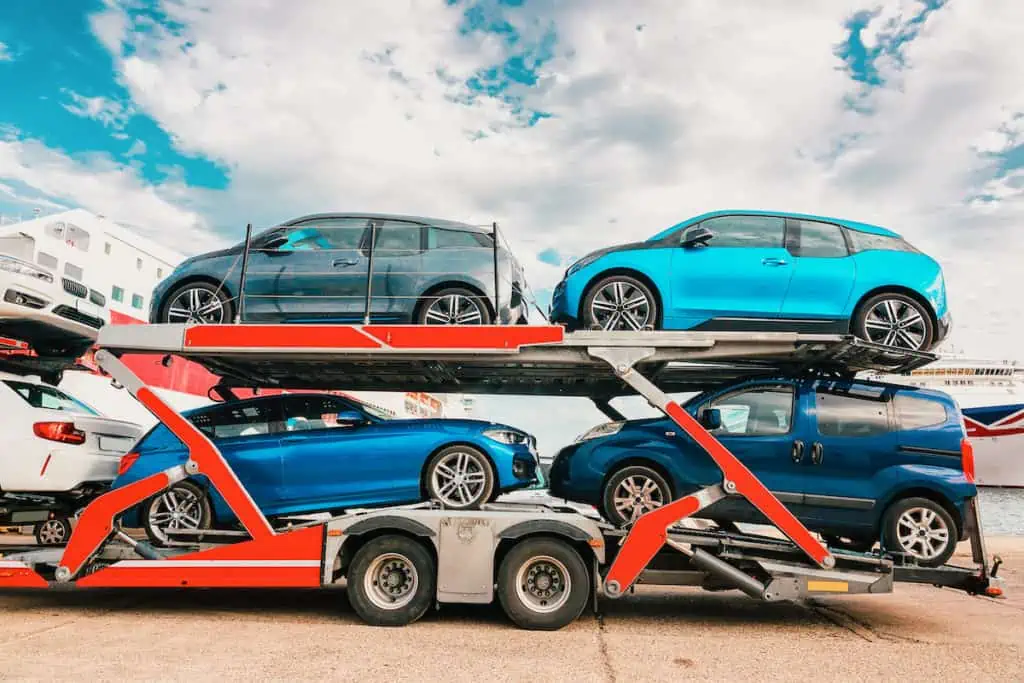
The average cost of shipping a car is around $1,150. The actual price can range from $550 to $2,450. This amounts to $0.60 to $1.70 per mile, or an average price of $1.15 per mile.
As you can see, the cost of shipping a car out of state can vary considerably, but the most important factor in regards to cost is always how far your car is being transported.
How Much Does Car Shipping Cost for Short Moves?
If you choose to ship your car rather than drive it, you’ll find that intrastate and short-distance moves are generally cheaper than long-distance moves because of the shorter distance.
On average, you can expect to pay about $1.10–$1.70 per mile for moves of 500 miles or less, according to Forbes. Since costs can vary quite a bit across car shipping companies, it’s a good idea to budget around $500 to $1,000 for a short-distance move.
Interstate Car Shipping Costs 2025
When you’re shipping a car between states, rates actually get cheaper the further you go. If you’re planning an interstate move of 1,000 miles, the average cost per mile drops to $0.94 for a sedan. However, you still end up spending more overall on a long-distance move due to the high mileage.
The size of your car also makes a big difference. As you might expect, heavier or larger cars cost more per mile to ship than smaller, compact cars.
Here’s a breakdown of what you can expect to pay per mile for shipping a car 1,000 miles based on vehicle size:
| Vehicle Size | Per-Mile Average Cost (Estimate) |
| Sedan | $1.15 |
| Compact SUV | $1.35 |
| SUV | $1.55 |
| Truck | $1.75 |
But as distance goes up, the average mileage rate goes down. Here’s a breakdown of what you can expect to pay per mile based on distance, regardless of vehicle size:
| Distance | Per-Mile Average Cost (Estimate) |
| 500 miles | $1.10–$1.70 |
| 1,000–1,500 miles | $0.90–$1.30 |
| 2,500 miles | $0.60–$0.70 |
How Much Does Transporting Your Own Car Cost?
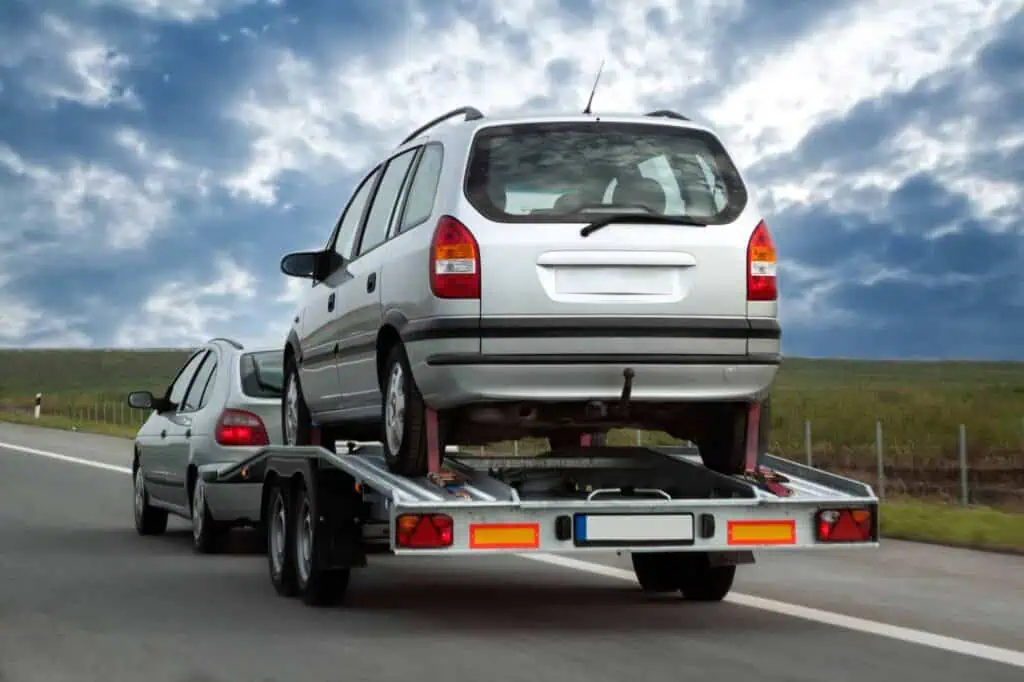
With so many car shipping options, it’s easy to forget that you can still tow your own car. But transporting your own vehicle isn’t for the faint of heart — it requires some skilled driving, especially when changing lanes.
But because this is a less-expensive option than shipping, you might be wondering just how much it can save you. We’ll go through U-Haul’s pricing so you can get some idea of the difference in costs between towing your car yourself and getting it shipped.
Local Move
U-Haul trailer rental rates for a tow dolly (for a front-wheel drive vehicle) start at $44.95 per day, and an auto transport trailer starts at $54.95 per day. Keep in mind that if you’re using another vehicle for transport, the added weight of the second car will worsen your gas mileage, which could add to your final costs.
Long-Distance Move
We requested quotes for a hypothetical long-distance move from Clearwater, Florida, to Los Angeles, California, during the August high-demand season. The price for an auto transport trailer for a 4-wheel drive vehicle was $753.
“However, if your car is brand new, a classic, or custom-built, you might opt for an enclosed carrier, which costs about 60% more on average.”
If you wanted to tow your car with a U-Haul truck, the price dropped to $430 for the auto transport plus $2,606 for the trailer. Of course, rates might be cheaper during lower-demand seasons.
Other Considerations
U-Haul provides specific guidelines for selecting the best vehicle trailer for your car. To find the appropriate trailer, contact U-Haul for their recommendation.
In general, tow dollies are a more affordable option — if they work for your vehicles. In the situation above, a dolly on its own would be $376. Keep in mind that hitch installation, taxes, and other fees add to the cost.
There’s Just One Hitch (Pun Intended)
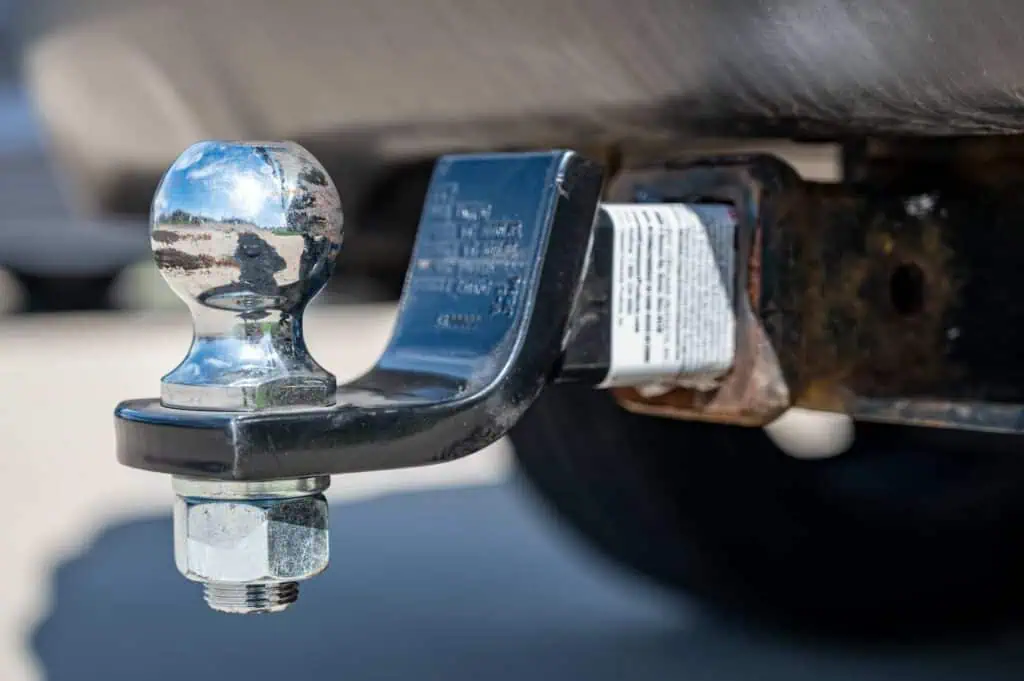
All U-Haul trailers require a proper hitch and lighting to hook to your vehicle. You need either a Class 2 or Class 3 trailer hitch with a 2-inch ball. If you don’t have a proper hitch, you must have one installed.
You can either get that done on your own or make an appointment to have U-Haul install a hitch. But know that U-Haul doesn’t install third-party hitches. Costs vary by vehicle: for a 2020 Subaru Forester, the quote was $174.95 online. You might be able to get a cheaper quote by calling directly.
Or Rent a U-Haul and a Vehicle Trailer
It’s good to know all U-Haul trucks come equipped with a hitch and lighting. So, if you’re renting a U-Haul for your move, you can tow your vehicle with your rental truck as long as it meets U-Haul’s standards.
According to U-Haul:
“While moving costs are dependent on things like when you are planning to move and how far you’re moving, U-Haul customers spend less than $1,200 on average for our most popular truck and towing equipment combination (15’ Moving Truck and Auto Transport).”
Plus, you’ll get a hefty discount on the vehicle trailer when you rent a U-Haul truck. Other rental truck companies may have similar discounts, so be sure to shop around.
How to Prepare Your Car for Cross-State Shipping
Once you’ve chosen a shipping method and company, here’s how to prepare your car:
- Clean the interior and exterior.
- Find your extra set of keys to give to the carrier.
- Take the car in for a tune-up and fluid check.
- Remove all personal items and valuables.
- Photograph the interior and exterior for insurance.
- Take off exterior accessories such as luggage or bike racks.
- Drive the car until there’s about one-quarter of a tank of gas left.
- Remove all toll passes.
How Long Does It Take to Ship a Car to Another State?
It can take anywhere from 3 to 21 days to ship your car to another state. Shorter distances typically require 3-7 days; longer moves can take 7-21 days. The timeline depends on the method, the distance, and the carrier capacity. Bad weather can slow the process.
If you need faster transport, consider door-to-door delivery. Some carriers offer expedited 1-3 day services for an additional fee.
When Shipping a Car, Can You Pack It?

Moving long distances can be pricey, so anything you can do to reduce the size of your moving truck or shipping container helps.
The good news is that, in many cases, you can put some of your belongings in your car to be transported along with it. However, you can’t pack just anything. Avoid fragile, valuable, and hazardous items. Keep your belongings in the trunk or below the window line to avoid theft.
Also, consider that weight impacts the overall cost of car shipping. Usually, there’s room for about 100–200 pounds of extra weight before fees get tacked on.
Common Mistakes to Avoid When Shipping a Car
Once you’ve decided how you want to ship your car, check this list to avoid problems:
- Don’t leave valuables in the car: Leaving valuables in your car during shipping increases your liability for your insurance.
- Don’t make last-minute bookings: Booking ahead of time helps ensure you’ll be able to ship your car when you need to—and you’ll be more likely to have it when you need it.
- Verify insurance coverage: Putting your car in someone else’s hands can be a risk. Verify the insurance coverage—including details about limitations and what’s covered—so you’re protected if anything goes wrong.
- Don’t select a carrier based on price alone: Price isn’t everything. A budget provider may be able to ship your car to where you need it, but they may not be able to do it quickly. Research multiple options and find one that fits your needs.
- Document the condition of the vehicle: Shipping anything comes with the possibility of damage. Take photos of every piece of the car so you have something to compare the received vehicle to (and to provide evidence for insurance if something goes wrong).
The Cost of Shipping a Car to Another State: Final Thoughts
Shipping a car to another state can be pricey, but so can buying a new car in your new hometown — not to mention car shopping is a total hassle. You should look into the choices you have to see which one is best for your situation, and don’t dismiss shipping as an option outright. If you’re looking to save on car shipping, consider transporting your vehicle yourself. Or, if that’s not an option, find ways to save on other moving expenses to offset the costs.