
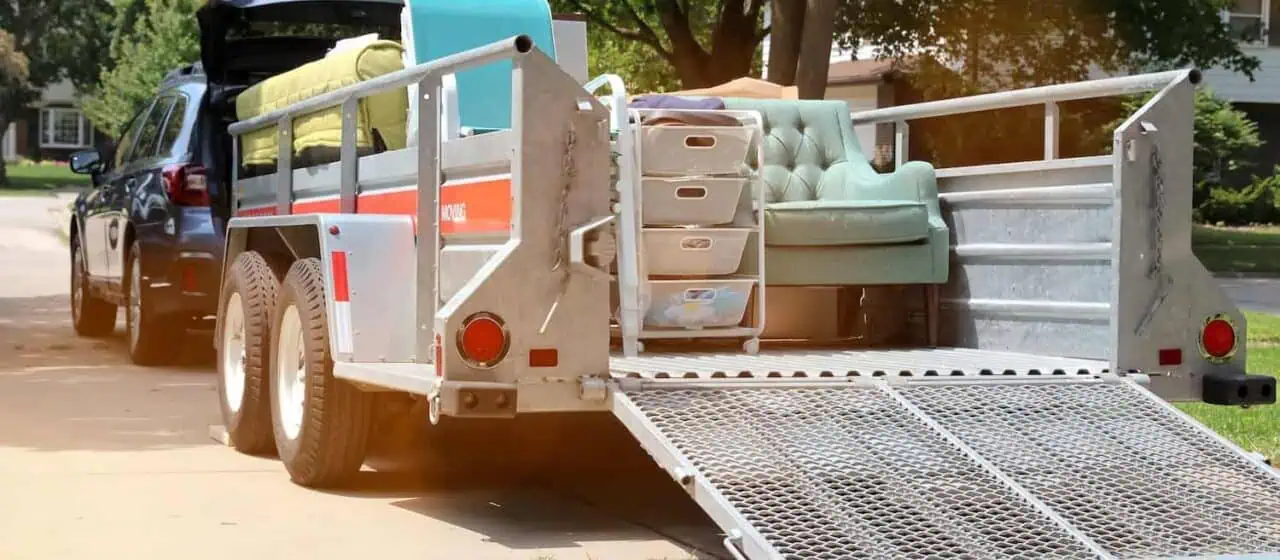
How Much Does It Cost To Rent a Moving Trailer?
Posted in: Moving AdviceRenting a moving trailer typically costs around $15 to $30 per day for a local move, and between $260 and $620 or more for a one-way, long-distance rental.
If you’ve got a vehicle that’s capable of towing and not a ton of furniture to haul, trailer rentals can be a smart, flexible alternative. It’s a great way to cut your costs and skip the stress of driving a big moving truck.
U-Haul is the go-to for enclosed cargo trailers, with local rentals starting at just $14.95 per day. For long-distance moves, prices vary by distance and trailer size, but most quotes include up to four days of use with unlimited mileage.
To give you the clearest picture possible, we dug into real rental quotes from U-Haul and compared prices for local vs long-distance moves. We also peeked at Home Depot and Lowe’s, which mostly offer trailers for short, local trips. So, if you’re thinking about rolling up your sleeves and ditching the standard moving truck for a trailer, we’ll give you all the details on how to make it happen.
Cost Comparison for Renting Trailers for Moving

Renting a trailer can mean very different price tags depending on whether you’re keeping it local or relocating long-distance.
- Local (in-town) trailer rentals are usually one-day trips where you return the trailer to the same location. They’re affordable and often used for quick moves around town or if you just need to move a piece of furniture or two.
- Long-distance (one-way) rentals let you drop the trailer off in a different city. These come with higher costs since you’re covering more miles and time, and the company needs to relocate the trailer afterward.
To give you real-world pricing, we pulled quotes from U-Haul for both local and long-distance moves using a 6×12 enclosed cargo trailer, their largest and most common option for household moves.
For our local example, we got quotes for a one-day rental in Tampa. For our long-distance example, we got quotes for a trip from Tampa, FL to Charlotte, NC.
The long-distance quote included:
- Up to 4 days of use
- Unlimited mileage
- Drop-off at a different location (one-way rental)
Here’s a general breakdown of what you can expect:
| Trailer Size | Description | Local Move Cost | Long-Distance Cost |
| 4′×8′ | Small enclosed | Starts at $14.95/day | Typically $260+ |
| 5′×8′ | Mid-size enclosed | Starts at $18.95/day | Typically $350+* |
| 6′×12′ | Large enclosed | Starts at $29.95/day | Typically $600+ |
*Note: 5′ x 9′ Utility Trailer With Ramp or 5′ x 8′ Cargo Trailer. 5′ x 8′ Utility Trailer is only available for local and round-trip moves.
You’ll notice a couple of patterns: larger trailers cost more, and long-distance moves are priced as flat rates that include a set number of days and unlimited mileage. The per-day model mostly applies to local rentals, while one-way pricing depends on your route, move date, and trailer size. U-Haul trailer rentals include unlimited mileage, which makes them a solid choice for long-distance DIY moves, provided you can fit most of your things into a single trailer.
Extra Costs to Watch Out For When Moving by Trailer

Trailer rental prices might look pretty friendly at first glance, but don’t forget about the extras that can sneak into your total cost. Here are a few to plan for:
- Damage protection: Most rental companies will offer (or strongly encourage) coverage to protect the trailer while it’s in your care. Expect this to run between $10 and $30 per day, depending on the level of protection you choose.
- Towing gear rental: If your vehicle doesn’t already have a hitch or proper wiring, you’ll likely need to rent extra equipment. U-Haul and others offer hitch kits, wiring adapters, and ball mounts for around $10 to $40 total. However, this is just for the equipment. Hitch installation can cost in the hundreds.
- Gas mileage: Towing a trailer will absolutely impact your fuel efficiency. Most vehicles lose several miles per gallon once a trailer is hooked up, especially on the highway. Be sure to factor in extra fuel costs if you’re driving a long distance.
- Deposits: Deposits are typically only required if you’re paying with cash. If you’re using a credit or debit card with a major credit card logo, no deposit is needed. This isn’t always the case, but it’s worth checking ahead of time so you’re not caught off guard at pickup.
These extras can add up quickly, especially on longer trips, but knowing about them now means you can plan smarter and stay within your budget.
Rental Trailer 101: Types, Tricks, and What You Need to Know
Not sure which trailer is right for your move? No worries! Here’s a quick breakdown of the most common types, plus a few tips to help your rental go off without a hitch.
Types of Moving Trailers
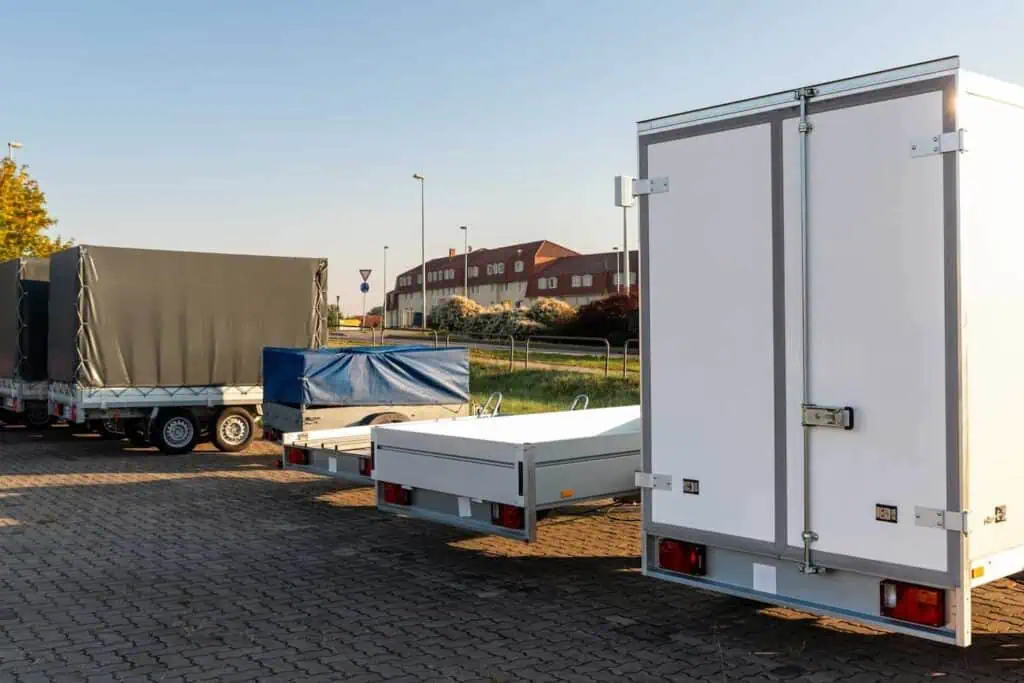
Not all trailers are created equal. Depending on what you’re hauling (and what you’re hauling it with), here are the most common types of moving trailers you’ll see:
- Cargo Trailers: These enclosed trailers are your best bet for a typical move. They keep your belongings protected from weather and road debris and are ideal for boxes, furniture, and fragile items. If you’re moving out of an apartment or small house, this is probably what you want.
- Utility Trailers / Flatbeds: These open trailers work well for items that don’t mind a little breeze, like lawnmowers, grills, or bulky outdoor gear. Just know your stuff will be exposed to the elements, and you’ll want to strap everything down like a pro.
- Car Trailers & Tow Dollies: If you’re driving a moving truck and need to bring your vehicle along for the ride, these are for you. Car trailers carry all four wheels off the ground while tow dollies lift just the front wheels. Which one you choose depends on your car’s make, model, and whether it’s front- or all-wheel drive. Either way, you’ll want to double-check weight limits and make sure your setup is highway safe.
Tips for First-Timers
First time renting a trailer? Good news: it’s not a complex process. Just keep a few key tips in mind to make things easier:
- Backing up is a skill: Driving forward with a trailer? Probably not a problem. Reversing with one? That’s a different story. If you’ve never done it before, practice in a wide, empty parking lot before moving day. If you have a spotter or someone with experience to help you learn, that’s even better.
- Check your vehicle’s towing capacity: Just because your car has a hitch doesn’t mean it can pull anything and everything. Look up your vehicle’s towing specs to avoid overloading and overheating your engine.
- Book early if you’re moving in summer: Trailer rentals get snatched up quickly during peak season, especially since people are probably using them for other things besides moving, like yardwork and seasonal home improvement. Reserve ahead if you’re moving between May and September, or around the end of the month when demand spikes.
With the right trailer and a little prep, towing your stuff is totally manageable!
Alternatives to Renting a Trailer for Your Move
Renting a trailer can work well for local moves, but it’s not always the best option. If you’re hitting the road with a full household or just don’t feel confident towing, there are other ways to get the job done.
“If you already have a towing-capable vehicle and don’t need extra equipment, you can keep costs around $14 to $30 per day and avoid the higher fees that come with long-distance moves.”
Even though trailers are budget-friendly, they do come with a few trade-offs:
- Towing takes skill. If you’re not used to backing up with a trailer, parking or tight turns can get frustrating fast.
- Your vehicle may not be up to the task. Without the right hitch or towing capacity, you’ll either need to rent equipment, pay expensive installation fees, or rethink your move plan.
- They can run out of room quickly. Most trailers aren’t built for large household moves, especially if you have bulky furniture or lots of boxes.
If a trailer isn’t the right fit for your move, don’t worry! There are plenty of other ways to get your stuff to your new home within your budget. Here’s a closer look at the most popular options, how they work, and what they typically cost.
Moving Truck Rental
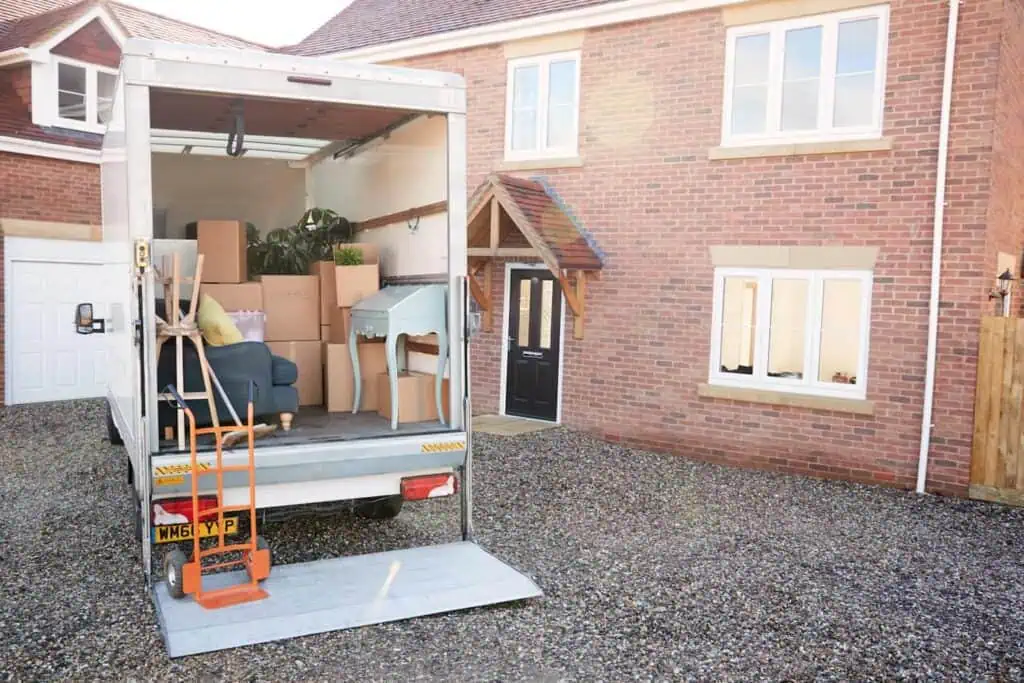
Still a DIY move, but easier to manage than towing a trailer.
- Cost (2–3 bedroom home, ~1,280 miles): $2,894 – $3,887
Best for: People comfortable behind the wheel of a larger vehicle who want full control over their schedule.
You’ll pick up the truck, load it yourself (or hire help), drive it to your new place, and return it. It’s more spacious than a trailer and doesn’t require a towing vehicle. Just keep in mind that you’re also responsible for gas, insurance, and navigating tight corners in something like the size of a small bus. Companies we’ve reviewed include Penske, Ryder, Home Depot, and Enterprise.
Portable Moving Containers (like PODS)
Great for flexibility, especially for long-distance moves.
- Cost (2–3 bedroom home, ~1,280 miles): $3,076 – $4,492
- Best for: Movers who want to skip the driving but still pack and load themselves.
A container is delivered to your home, you fill it up on your own time, and the company picks it up and drives it to your new location. Some services offer temporary storage, too, which is a lifesaver if your move-in date is flexible. You’ll still need help loading and unloading, but no need to worry about navigating the highway with a truck.
Freight Trailer Moving
A budget-friendly option if you have a lot to move, but don’t want to drive a truck yourself.
- Cost (2–3 bedroom home, ~1,280 miles): $1,631 – $2,856
- Best for: Long-distance moves where you don’t mind doing the heavy lifting but want to avoid driving.
Here’s how it works: a freight company drops off a big trailer (often 28 feet or more), you load your portion of it, and they handle the driving. You only pay for the space you use, and it’s usually cheaper than full-service. Just be aware you’ll be sharing the trailer with other shipments, so timing can be less precise.
Full-Service Movers

The easiest and most convenient option! Your movers take care of practically everything, meaning you save yourself a lot of time and effort.
- Cost (2–3 bedroom home, ~1,280 miles): $2,392 – $5,237
- Best for: Anyone who wants to skip the stress, sweat, and scheduling.
During a full-service move, movers show up, load everything, drive it to your new place, and unload it all. Some even pack for you (for an added fee). It’s the priciest option, but the trade-off is time, energy, and peace of mind. Fantastic for busy families, older adults, or complicated moves.
Need a hand with any of these? HireAHelper connects you with experienced, local moving pros who can help with loading, unloading, or both: no matter what kind of move you’re planning. Whether you’re driving a truck, getting a PODS Container, or going full-service, we’ve got your back.
Final Takeaways
Renting a moving trailer can be a smart, cost-effective option, especially if you already have a vehicle that can tow and aren’t moving a full house’s worth of stuff. It gives you more control over your schedule, and in many cases, it’s one of the most budget-friendly ways to get from one home to the next.
Just remember: it’s not the best fit for everyone. Towing adds some complexity, and if you’re moving long distance or need more space, you may find better value in other options like a moving truck, container, or freight service.
U-Haul is the most widely available trailer rental provider, especially for enclosed cargo trailers. But whichever route you choose, you don’t have to do it alone.
HireAHelper can connect you with trusted local pros to help load or unload your trailer, truck, container, or anything else you’re working with. We’re here to make your move easier, start to finish.
FAQs About Renting a Moving Trailer
Are there any hidden costs when renting a moving trailer?
Yes, but mileage isn’t one of them. U-Haul trailer rentals include unlimited miles, so you won’t pay extra for distance. That said, you should still budget for add-ons like damage protection, hitch equipment, moving accessories (dollies, straps), and potentially a deposit if you’re paying with cash. Gas costs also go up when you’re towing, even if you’re not being charged for mileage directly.
What is the cheapest way to rent a trailer for moving?
The cheapest way is usually a local, in-town rental using the smallest trailer that can safely hold your stuff. If you already have a towing-capable vehicle and don’t need extra equipment, you can keep costs around $14 to $30 per day and avoid the higher fees that come with long-distance moves.
Can I rent a trailer one-way?
Yes, you can. One-way trailer rentals let you pick up the trailer in one city and return it in another. This is great for long-distance moves, but the cost is often higher than a local rental because of added logistics and return handling on the company’s end.
How big of a trailer do I need for my move?
It depends on how much you’re moving. A 4×8 trailer is usually enough for a small apartment or dorm. A 5×8 or 6×12 trailer is better for larger one-bedroom or two-bedroom homes. But when in doubt, go bigger. It’s much easier to have extra room than to run out of space halfway through your move.
Is it better to rent a truck or a trailer for moving?
That depends on your vehicle and comfort level. A trailer is usually cheaper and gives you more flexibility if you already have towing equipment. A truck is easier to manage if you’re not confident towing, and often makes more sense for bigger moves. Either way, you can always hire pros to help with the heavy lifting so you’re not doing it all alone.
Can you rent a trailer for long-distance moves?
Yes, many companies offer one-way trailer rentals specifically for long-distance moves. It’s a good budget option if you’re comfortable towing and don’t need a huge truck. Just make sure your vehicle can handle the trailer’s weight and that you’re planning for fuel and insurance.