
Paying for U-Hauls: How It Works and How to Save
Posted in: Money Saving, Moving TrucksU-Hauls can be found just about anywhere, creating a wide network of easily accessible moving trucks across the nation. You can pick one up in California and drive it all the way to New York, then return it to your nearest U-Haul location.
It doesn’t take much to rent one, either — you just have to be over 18 years old and have a valid driver’s license. This has made U-Haul a staple for DIY and labor-only moves everywhere.
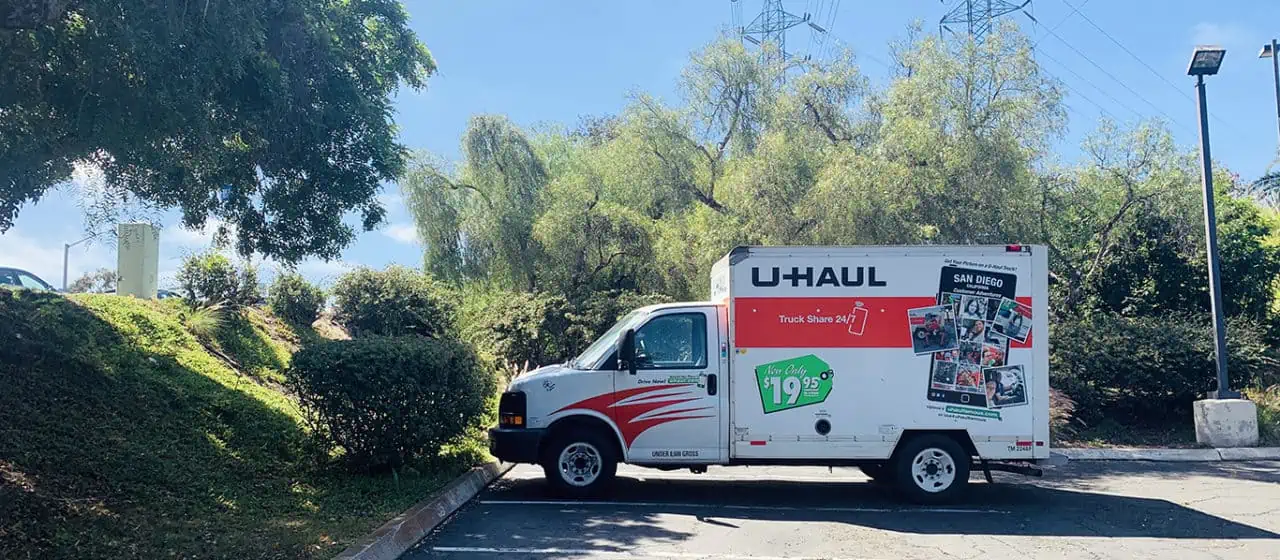
If you’ve been considering a U-Haul for your upcoming move, you should know that the common $19.95 price point you see on the side of the trucks isn’t the whole story. This is just the starting point for the smallest rental trucks. However, you can still get phenomenal deals on U-Haul rentals by planning your move carefully.
By the time you’re done reading our expert advice, you’ll know U-Haul payment options, how to get the best prices on your U-Haul, and how to avoid up-charges.
How Paying for a U-Haul Works
You have plenty of options to book and pay for your U-Haul rental. You can call, reserve online, or rent in person. However, we strongly recommend scheduling in advance online or over the phone to guarantee the availability of your chosen truck size. You also usually get a better daily rate when you book well in advance.
“U-Haul doesn’t have an AAA discount or other widely available discounts for better prices on rental trucks. Instead, the company prides itself on providing competitive rates for all prospective customers.”
Depending on how you place your reservation, U-Haul’s payment options vary. While you have to use a major credit or debit card to schedule online, you can get around this by calling in instead. U-Haul does take cash, but you’ll have to pay an extra deposit, and you’re on the hook for all estimated charges at the time you pick up your truck, regardless of how you pay for it — there are no payment plans.
Understand U-Haul Pricing Structure
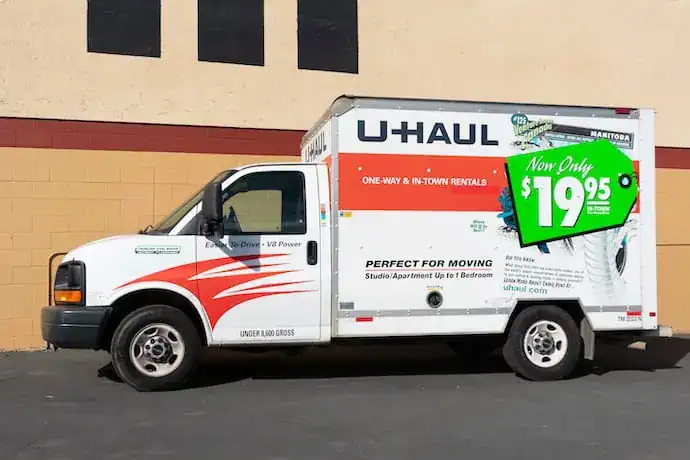
You’ve probably seen the advertised $19.95 daily rate plastered on the sides of U-Hauls everywhere. But that’s rarely what you actually pay. The $19.95 is the base rate for an in-town move with the smallest vehicles: cargo vans and pickup trucks. Considering you’ll likely need a larger truck for your move, expect to pay a higher rate. If you’re moving long-distance, that rate increases even more.
The true cost of renting a U-Haul includes far more than the base daily rate. A local U-Haul move under 50 miles averages $138. Midrange moves typically cost around $301. The average long-distance rental costs much more — around $1,142.
Your total bill upon returning the truck factors in many charges, including:
- Daily rental truck fee
- Mileage (location and timing-dependent, but usually somewhere between $0.40 and $1 per mile)
- Insurance and damage coverage
- Taxes
- Fuel
- Cleaning fees
- Environmental fees
- Equipment rentals
How Much Is a U-Haul Late Fee?
When you book your reservation, the cost is based on your chosen return date. If you return the truck late, there are fees. In most cases, this is $40 per day, and U-Haul can charge that rate even if you’re only late by a few hours.
Some locations may offer a small grace period to account for unexpected delays, but this isn’t a guarantee. You should always ask in advance, but don’t assume this is the case.
Ways to Get a Better Rate on Your U-Haul
Even though that $19.95 price isn’t what you’ll ultimately be paying, scoring a better rate on a U-Haul is usually pretty easy with a bit of planning.
Book Early

U-Haul uses dynamic pricing. If there are plenty of trucks in the size you need on your moving day, prices tend to go down. As moving day gets closer and more trucks are reserved, prices increase. It’s best to book your truck as soon as you know you need it if you want to get the best deals.
Don’t Book During Peak Times
Peak rental periods tend to come with higher pricing — thanks to that same dynamic pricing model. Try to avoid peak rental periods, which tend to fall on weekends, the end of the month, and summertime.
If you can be flexible with your moving date, one strategy is to use short-term storage to wait out a busy period and move during a cheaper time. As Kevin Kato, our in-house moving expert, points out, this option can come with both benefits and trade-offs:
“This may not jive with the timing demands of your move, but U-Haul does offer, in some cases, one free month of self-storage at the beginning or at the end of your move. (Then again, moving your stuff into and then out of storage may mean an extra in-town rental, which nets them more money.)”
Be Flexible With Your Drop-Off Location
Usually, working with a commercial business means paying the quoted price, and that’s that. With U-Haul, you might have a bit of flexibility. Kevin recommends offering to do U-Haul a quick favor for a discount:
“If you’re moving long-distance, ask if U-Haul needs your truck in a location other than the one closest to where you are going. Individual stores have been known to occasionally give you a bit of a break if you agree to drop it off there for them.”
Since the vast majority of U-Haul rentals are one-way, managers need ways to keep enough trucks stocked at their locations. Sometimes, that means they have to travel personally to collect their vehicles, so certain U-Haul locations may actually offer a discount if you drop off the truck at the same place where you rented it.
Of course, this isn’t guaranteed, but it’s always worth asking. The worst they can say is no.
Ways to Avoid Up-Charges on Your U-Haul
Up-charges can quickly take an advertised price and inflate it beyond recognition. Here are a few ways you can avoid extra charges and fees.
Pay With a Debit Card

U-Haul requires a deposit if you pay in cash. For in-town moves, you can expect to pay $100 or the estimated total cost, whichever is greater. You’ll get a refund when you return the vehicle in good condition. For a one-way move, you typically pay $100 on top of the rental rate.
Paying with a major credit or debit card, however, lets you avoid the additional deposit. You’ll still have a hold on your account for the full expected total, but you get to keep an extra $100 in your pocket for your move.
If you booked online or over the phone, bring the card with you to the store when picking up your truck. U-Haul typically makes you reproduce your payment method as an extra security layer.
Check the Gas Gauge
Your truck should come with a full tank of gas, and you’re expected to return it with the same. If it doesn’t, have the U-Haul employee note how much gas was in the tank before you put the truck in drive. Also, take a photo of the gas gauge and odometer reading before you go, just in case. As Kevin puts it, “U-Haul employees won’t think twice about being vague to you, then demand specifics when you go to drop it off.”
Fill Out the Damage Sheet
You should return your U-Haul in the same condition you received it. Dents, dings, and chips can all count against you when you return your truck if you don’t document them correctly. The last thing you need is U-Haul deciding that you’re liable for the damage and charging you for it. To avoid this, fill out the damage sheet thoroughly with any wear and tear on the vehicle before you take it into your possession.
“Since the vast majority of U-Haul rentals are one-way, managers need ways to keep enough trucks stocked at their locations…so certain U-Haul locations may actually offer a discount if you drop off the truck at the same place where you rented it.”
Don’t forget to keep your camera ready as you fill out the damage sheet. Your U-Haul employee should be there to inspect with you, but attention to detail is always your friend when trying to avoid unexpected charges. Pay particular attention to nicks in the paint job and cracks in the windshield. Note any potential damage on the sheet and snap a picture of it, even if the employee tells you not to worry about it.
Avoid (or Communicate About) Lateness
It’s always best to be punctual when time, money, and contracts are involved. But sometimes, delays happen. It might take longer than you thought to unload everything at your new home, or unexpected traffic could slow you down for hours. When this happens, communication is always the best policy.
Late fees apply at U-Haul. While some employees may be lenient with the clock, it’s best not to count on this. Kevin emphasizes,
“Without breaking any traffic laws, do your best to avoid returning your vehicle late. If you happen to fall behind schedule, call ahead. Your U-Haul person knowing you’ll be late is better than him or her wondering if you’ll be showing up at all and hitting you with a massive fee.”
Avoid the Gas Pedal

You can’t expect fantastic fuel economy from a big moving truck, but there are ways to cut down your gas expenses. Some trucks have a fuel economy gauge that tells you the average MPG you’re getting as you drive. Pay attention to it and go easy on the accelerator. Coast whenever you can instead of racing to the red light to reduce your overall gas expenses.
Pay Your U-Haul Bill Immediately
It’s not uncommon for U-Haul to assess additional charges when you drop off your truck. If you’re not prepared to pay, you’ll sign a promissory note to U-Haul. If you don’t pay it, you can get hit with collections, which can rack up additional fees. Either way, your name will go on “e-alert,” and you won’t be able to rent again until you’ve fully paid off the balance. Pay it off in full or as soon as possible.
But what if you disagree with a charge? Kevin explains, “If you feel you have a legitimate dispute, bring it up forthright. But don’t just walk away. U-Haul does not tolerate being ignored.”
U-Haul Discounts
U-Haul doesn’t have an AAA discount or other widely available discounts for better prices on rental trucks. Instead, the company prides itself on providing competitive rates for all prospective customers. The best way to get better rates on your reservation is to follow the advice detailed above.
However, you can often get other types of discounts with a little searching. While not highly advertised, U-Haul maintains a Current Discounts & Promotions page, which can help you score some extra deals.
There’s no formal U-Haul military discount for truck rentals, either. However, if you’re a military family, you can look into the U-Haul Military Move Program. This program helps military families get competitive rates and pay less upfront for services, including truck and trailer