

How Much Does a Piano Weigh?
Posted in: Moving AdviceA piano weighs anywhere from 6 pounds for a simple electronic keyboard to well over 1,200 pounds for a concert grand. Dimensions run the gamut from approximately 30x48x12 inches to a sprawling 40x115x60 inches.
But these measurements are just guidelines. Many factors help determine your piano’s true size, and understanding your piano’s dimensions will help you plan for a safe and successful move. Whether you’re transporting your child’s keyboard or a baby grand inherited from your grandparents, it’s important to protect your investment — and yourself.
Piano Weights and Sizes
Movers need to know how much your spinet or baby grand piano weighs to form a game plan for your move, but it’s not exactly feasible to load a piano onto a bathroom scale to check its weight. That’s why we’ve put together these charts to help you get an estimate of your piano’s dimensions so you can tell your movers the numbers and they can do the hard work of safely moving your piano.
Pianos by Weight
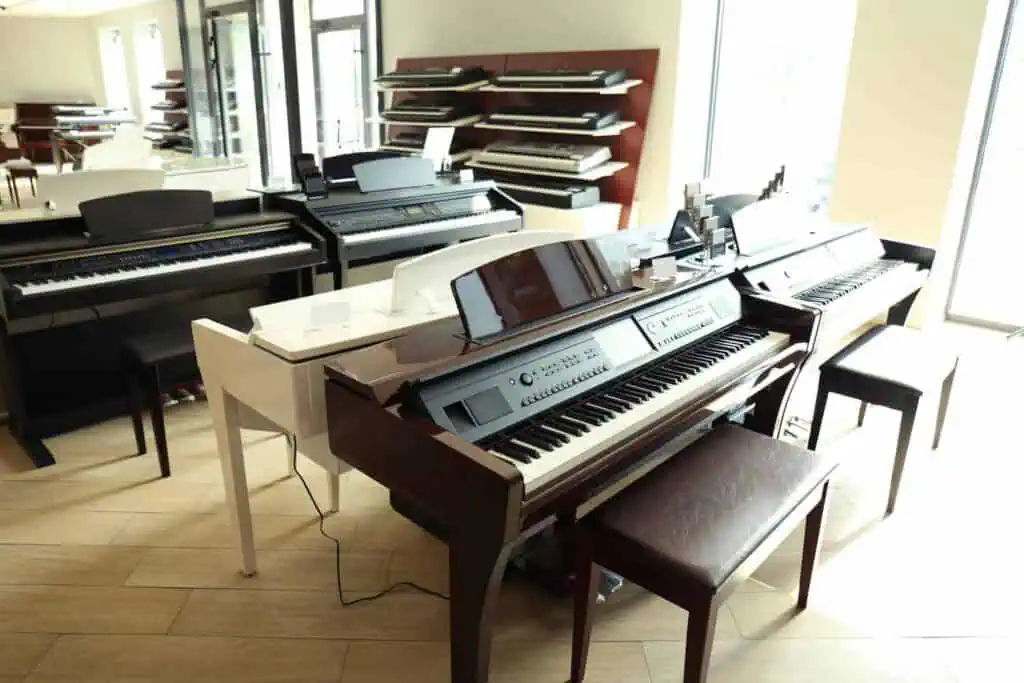
Listing pianos by weight can be tricky. Specific types, like a console piano or living room grand, may weigh more or less depending on size, material used in construction, and the mechanics found inside. For example, the average vertical upright piano ranges between 500 and 800 pounds. But lighter woods or heavier metal framing can make them as little as 200 pounds or as heavy as 1,000 pounds.
Here’s a general look at how heavy a piano is according to type.
| Piano Family | Piano Type | Average Weight |
| Electric | Electric keyboard | 6.6-13.2 lbs. (not including stand) |
| Electric | Digital piano | 20-300 lbs. |
| Electric | Digital grand piano | 100-300 lbs. |
| Vertical | Spinet | 200-400 lbs. |
| Vertical | Console | 350-450 lbs. |
| Vertical | Studio | 400-500 lbs. |
| Vertical | Upright | 500-800 lbs. |
| Grand | Petite baby grand | 400-500 lbs. |
| Grand | Baby grand | 500-600 lbs. |
| Grand | Medium grand | 600-700 lbs. |
| Grand | Living room grand | 600-700 lbs. |
| Grand | Professional grand | 700-1,200 lbs. |
| Grand | Recital grand | 750-850 lbs. |
| Grand | Semi-concert grand | 900-1,000 lbs. |
| Grand | Concert grand | 900-1,200 lbs. |
Pianos by Size
As with weight, the dimensions of pianos can vary significantly, even when comparing similar models. A baby grand piano’s dimensions will be bigger than an upright piano’s dimensions, but different upright pianos may have surprisingly different heights and widths.
Use this chart as a guideline to estimate your piano’s dimensions leading up to your move.
| Piano Family | Piano Type | Average Dimensions (height x width x depth, inches) |
| Electric | Electric keyboard | 30x48x12” (assuming standard 88-key keyboard and average height stand) |
| Electric | Digital piano | 30x53x14” |
| Electric | Digital grand piano | 35x57x19” (with lid closed) |
| Vertical | Spinet | 38x59x24” |
| Vertical | Console | 42x58x24” |
| Vertical | Studio | 46x58x24” |
| Vertical | Upright | 36-60x58x24” |
| Grand | Petite baby grand | 46x51x60x” |
| Grand | Baby grand | 36x63x60” |
| Grand | Medium grand | 68x69x58” |
| Grand | Living room grand | 71x71x57” |
| Grand | Professional grand | 40x114x59” |
| Grand | Recital grand | 40x78x60” |
| Grand | Semi-concert grand | 42x84x60” |
| Grand | Concert grand | 40x115x60” |
Factors That Affect a Piano’s Weight

The type of materials used in construction also plays a big part in how much a piano weighs, as do other elements, like the type of piano and the components. Here are some general guidelines on how those factors influence a piano’s final weight:
- Piano type/size: Larger pianos typically weigh more. That means a fancy grand piano with a larger footprint will have more mechanics, overall materials, and weigh more than a smaller and simpler upright piano.
- Materials: Piano builders usually rely on wood for the piano’s frame and soundboard, but the type of wood varies. For example, lightweight spruce is prized for its superior sound transmission, but dense maple and mahogany are structurally sound and durable.
- Complexity of the action: A piano’s “action” is the moving parts that connect the keys to the hammers and strings to create the instrument’s vibration and sound. Grand pianos generally have heavier action, while upright pianos have lighter action.
Other factors, such as quirks between makers and special design additions, can also impact your instrument’s weight.
Why Piano Weight Matters
Knowing how much a grand piano weighs versus how much a spinet piano weighs can help inform how you move your biggest and most treasured pieces. You’ll need help for heavier items — mechanical help, like a piano or skid board, as well as some extra human assistance.
“…[T]he average vertical upright piano ranges between 500 and 800 pounds. But lighter woods or heavier metal framing can make them as little as 200 pounds or as heavy as 1,000 pounds.”
Weight considerations may also play into the cost of your move. Some companies charge by weight, especially for overseas freight. Others won’t move heavy items on or off your truck without advanced notice.
Tips for Moving a Piano Safely
Once you know how heavy your piano is, you can start planning a move that’s safe for you and your belongings. Here are some tips to help pave the way for a successful relocation of your prized instrument.
- Measure ahead of time. While the tables above will give you a general idea of your piano’s dimensions and weight, it’s always a good idea to check yourself. These measurements are averages, and exact sizing can differ between makes and models.
- Gather the right equipment. You’ll probably need a piano dolly plus moving blankets or other padding. Have packing tape to secure the blankets around the piano’s legs, bench, and other corners. Straps will help you keep the piano in place during transit.
- Have a plan in place. Know exactly how you’re going to move your piano from your home into the truck or PODS container. Wrap walls and corners for extra protection and measure doorways to ensure proper clearance, and lay down sheets or use area rugs to protect the flooring.
- Break down the piano as needed. Depending on the type of piano you have, you may need to close and secure its lid and the top of your bench. In some cases, it may make sense to remove the legs from your bench and wrap them separately.
- Move carefully. Every bump and stutter the piano encounters could knock inner components out of alignment. Aim for a smooth move and secure the piano properly once it’s in the truck or POD.
- Unpack and retune. Once you arrive at your destination, carefully unpack your piano. Use the same care you took in loading to unload everything, and be sure to hire a professional piano tuner to ensure your piano is back in playing condition.
And if all of this seems to be too much work for you, or you’re still worried about getting your precious instrument to your new home in one piece, consider hiring professional movers who have experience with pianos. This will help protect your investment and prevent injury. Plus, you can relax a little more knowing your piano is in the hands of a team that has transported one safely hundreds of times before.