

How To Pack Toys for Moving
Posted in: Moving AdvicePacking your kids’ toys might feel like cleaning their playroom while they “help,” but dumping everything from their toy box into moving boxes isn’t ideal, either.
Thankfully, while there’s no way to make this process as fun as playing with those toys, there are ways to make it easier. Learn how to pack toys for your move with our guide to help prevent them from getting broken, squished, or scratched — you and your kids will be glad you did.
Supplies Needed to Pack Toys Safely
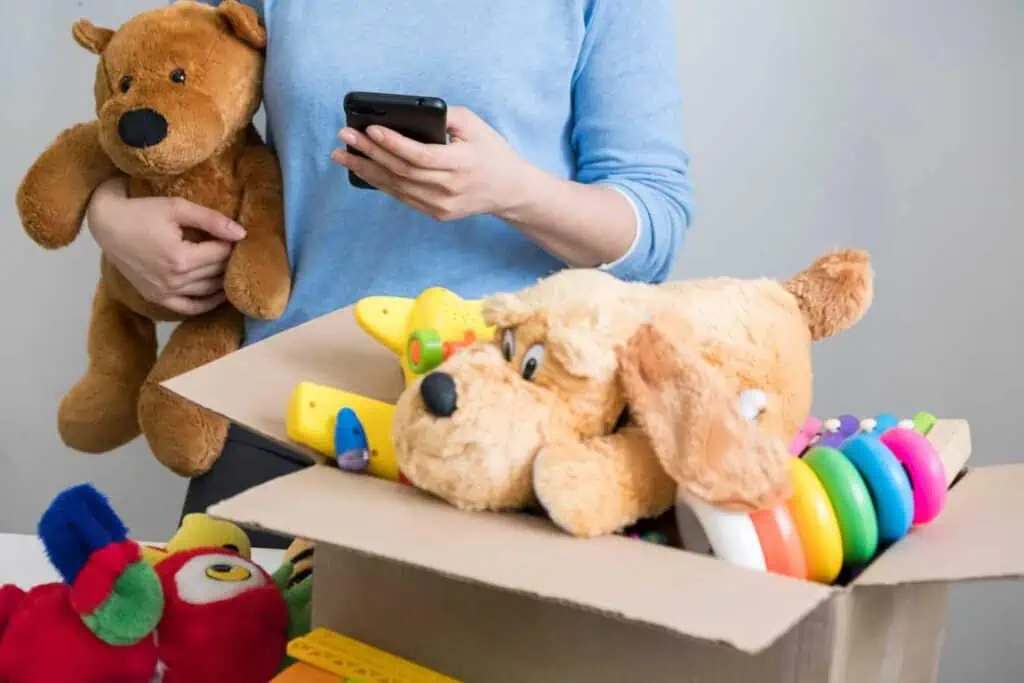
Moving with toys is easy if you have the right packing supplies. You can typically find these essentials at packing supply stores, hardware stores, or discount department stores. Here are the supplies needed to pack your kids’ toys safely:
Essential Containers and Packing Materials
- Moving boxes: Safely arrange toys in stackable moving boxes. Consider small or medium boxes for most toys, as it can be easy to overfill larger boxes to the point they become too heavy to lift safely.
- Plastic storage bags: Place tiny toys, such as LEGO® Minifigures or Mini Brands collectibles, in sealable plastic storage bags so pieces don’t get lost. Plastic storage bags also work well for action figures and coiled cords from electronic toys.
- Plastic storage bins: Pests love stuffed animals, but you can help keep critters away by packing stuffed animals in plastic bins, especially if you plan to keep the stuffed toys in a PODS container or storage facility. Plastic storage bags can also work, and if you’re short on room, consider vacuum packing the plushies.
- Packing tape: Seal packed boxes to keep the contents inside. You can reinforce the strength of moving boxes by wrapping tape around them from top to bottom or taping down bent corners.
- Packing paper and bubble wrap: Fill in the gaps between your kids’ treasured toys to prevent them from bouncing around during the move.
Helpful Tools and Labeling Supplies
- Colored tape or stickers: Consider color-coding your boxes if you’re moving with toys for multiple kids, so it’s easy to figure out which boxes go in each bedroom.
- Scissors and box cutters: Used to cut tape or boxes quickly, but make sure they’re always out of your children’s reach.
- Rubber bands or string: Secure sets of toys or game pieces with rubber bands or string.
- Labels: Attach a large label on each box to help your family or the movers identify where the packed toys go.
- Permanent markers: Consider using wide-tip markers in dark colors, such as navy or black, so you can easily read boxes or labels.
- Trash bags: Can be used as alternative packing containers for big, lightweight toys like stuffed animals or soft blocks.
Step-By-Step Guide for Packing Toys
Clearly you don’t want to crush your child’s beloved car or doll. These 6 steps will help you pack toys safely, whether you’re moving them nearby or across the country.
Step 1. Declutter Before Packing
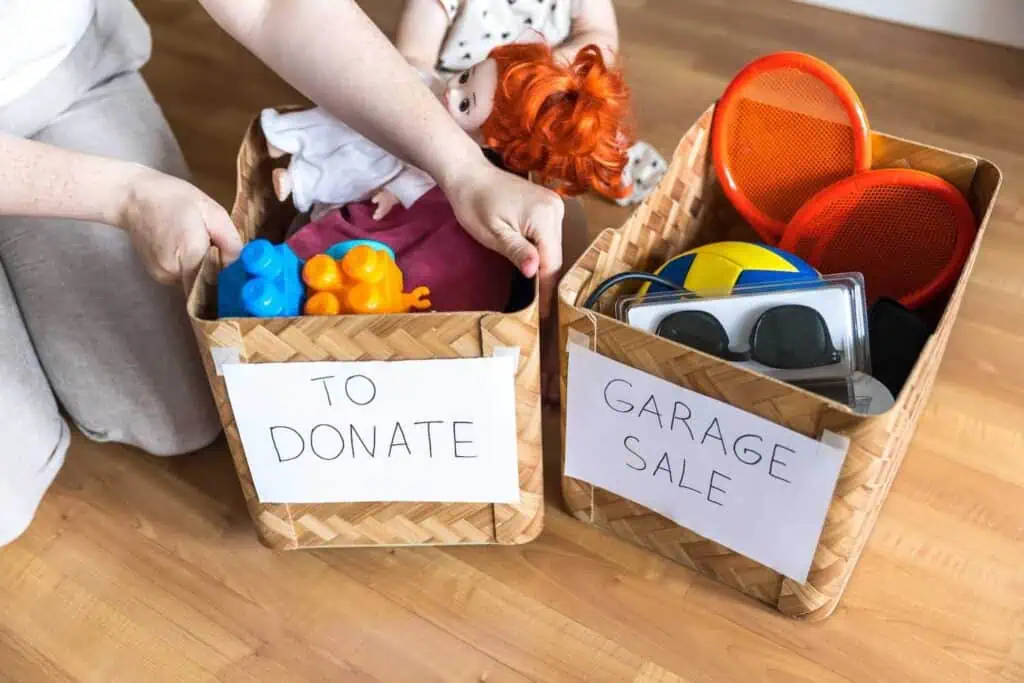
Decluttering can be tricky if your child claims every toy is their favorite, but it can make moving day easier. Grab some garbage bags or extra boxes, then create 3 piles: one for donations, one for trash, and one for toys you’re keeping. Consider adding a separate pile for unknown items, such as a toy your oldest has outgrown but your youngest might still enjoy.
Make sure you dispose of electronic waste properly if your kid has broken tablets or remote-control cars in the trash pile. Electronic waste can be dangerous in landfills, and depending on where you live, disposing of it improperly can land you a fine.
Step 2. Clean Toys for the Move
Little fingers are often sticky and tend to spread germs. Sanitize hard toys before moving day with an antibacterial wipe or spray. Let the toys dry completely before packing them.
“Electronic toys should not be left outside in the heat for prolonged periods, such as overnight, and typically should be the last things on the truck and the first things off.”
Stuffed animals can be washed in the washing machine with a gentle detergent, unless their tags indicate otherwise. Place the stuffed animals in a pillowcase or mesh bag before tossing them in the washer. You can also hand-wash stuffed animals in the tub or sink.
Step 3. Pack Large Toys First
Packing large toys often takes less time than packing small toys. Start with bigger items so you can free up floor space to pack smaller toys.
Take apart large toys if necessary, and place the parts in a plastic storage bag or bin. Place toys in medium or large boxes, then fill in the empty spaces with bubble wrap or packing paper. Oversized toys that are too big for boxes can be wrapped in bubble wrap and covered with moving blankets.
Step 4. Pack Electronic Toys

Disassemble electronic toys before packing them, and remove their batteries. Batteries can go in a separate plastic bag, and you can label it with the toy it belongs to, such as “Red Remote-Control Car”. You should also pack cords, chargers, or remotes in plastic bags.
Roll bubble wrap around electronic toys to help cushion them during the move, and place additional bubble wrap or packing paper in the toy box to protect the delicate components even more. Label the box as fragile or breakable so movers are extra careful with the box.
Step 5. Pack Stuffed Animals
Place clean stuffed animals in plastic storage bags or bins. Stuffed animals are sensitive to heat and humidity, so consider moisture-control or vacuum-sealed plastic bags and bins.
You can pack stuffed animals separately or with other soft or plush toys. A small amount of packing paper crinkled in a cardboard box helps cushion stuffed toys during the move.
Step 6. Pack Small Toys

Put small, non-fragile toys, such as LEGO bricks or miniature dolls, in plastic baggies or small containers. These tiny items can go in a small or medium moving box.
Organize small toys by type. LEGOs and other blocks can go in one box, while tiny clothes and dollhouse decor belong in another. Small toys can easily bounce around, so add bubble wrap or packing paper to the bottom of each box.
Learn more on our How to Pack Hub.
FAQs About Moving Toys
Here are some frequently asked questions about how to transport toys safely:
What if my toy is fragile or oversized?
Fragile toys should be carefully wrapped in bubble wrap, and the box should be labeled as “Fragile”. Also, mark which side is up so you, your family, or the movers don’t accidentally load it into the truck upside down. Oversized toys can be placed in large boxes or wrapped in bubble wrap and moving blankets.
Can I move toys myself, or should I hire professionals?
It’s up to you! Most movers can transport toys for you, and they’re experienced in doing so. Or you can move the toys yourself if you’re confident you’re able to load and unload them safely.
How do you transport toys safely?
Generally, all toys should be packed snugly in boxes, with bubble wrap or packing paper filling the gaps. Electronic toys should not be left outside in the heat for prolonged periods, such as overnight, and typically should be the last things on the truck and the first things off. Cold weather can also damage electronic toys, art supplies, or slime-making kits.
What should I know about unpacking and reassembling toys?
Younger kids may need assistance unpacking toys, especially if they have toys with small pieces, batteries, or cords. Check the user guide for reassembly instructions if you’re unsure how to put the toys back together. You can also find guides for many toys on the manufacturers’ sites or on YouTube.