How Do PODS Work for Moving?
Posted in: Moving AdviceThinking about using a PODS container for your move? Great call — but you’ll want to make the most of it. There are a lot of advantages when getting a moving container like PODS, but they don’t fit every situation. And, because they’re a finite space, if you don’t pack it well, you might have to get more than one (of course, hiring pros who know how to pack safely and efficiently helps eliminate this problem).
Not sure where to start? You can read on to learn about how PODS work, how much they cost, what moving scenarios they benefit most, and how you can make sure your move with PODS goes as smoothly as possible.
What Are PODS?

Think of a PODS (Portable On Demand Storage) container as a moving truck and storage unit rolled into one. You gather your boxes, load your belongings at your own pace, lock up the container, and then PODS transports it wherever you need. You do the packing, but you don’t have to drive a giant truck or squeeze everything into one hectic day.
How do PODS work for moving?
Here’s the process in a nutshell:
- Book a container: Reserve a PODS container (7-foot, 12-foot, or 16-foot size) and pick a delivery date. Make sure there’s a flat, clear space — often a driveway — and check if you need a permit for street placement.
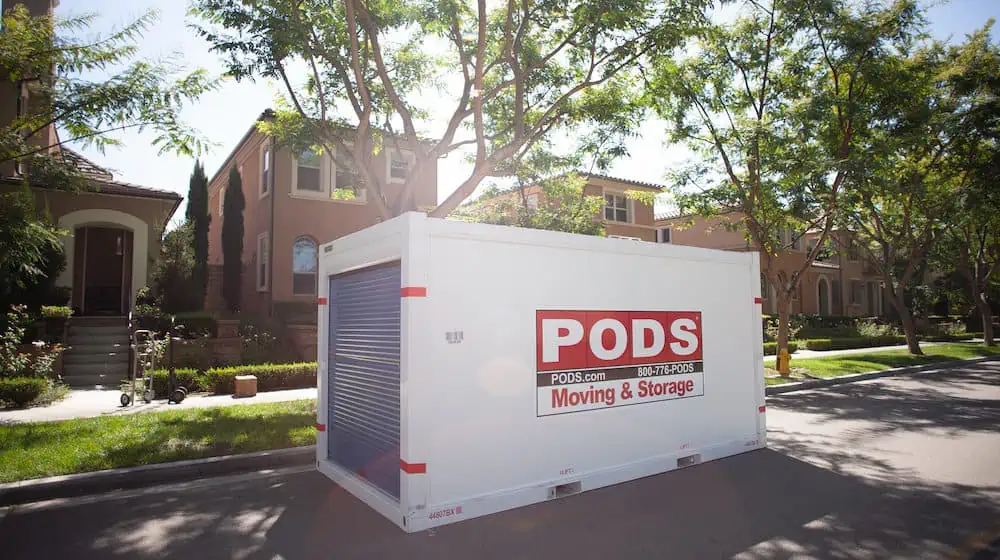
- Container drop-off: On the scheduled day, a PODS truck delivers the empty container. The driver uses a nifty hydraulic lift (called PODZILLA) to gently set it down without scraping your property.
- Pack at your pace: Fill the container with your stuff on your own schedule. Take a day, a week, or a little longer if needed — just pack wisely so items stay secure.
- Pickup and delivery: Once you’re ready, PODS returns to pick up the loaded container and transports it to your destination or a PODS storage facility. When it arrives at your new home, they drop it off for you to unload, and then they haul the empty container away.
PODS also has a few rules and prerequisites you should follow to make sure your move goes smoothly. Here’s what you should keep in mind:
- PODS location requirements: You need a suitable surface for the container, which means something level, off the grass, and free of obstructions. A typical driveway or firm parking spot works well. If you need to place the container on the street, check local rules or HOA guidelines. Also, ensure there’s enough overhead clearance (about 15 feet) for the hydraulic lift.
- Prohibited items: PODS will not allow dangerous or living things inside the container. These include gasoline, chemicals, propane tanks, and fireworks. Perishable foods, household plants, live animals, and motor vehicles are also prohibited. Basically, stick to normal household goods and furniture.
How Are PODS Transported Long Distance?
You’ve finished loading your PODS container for a cross-country move. Now, you might be wondering: How does the PODS moving system work for a long-distance move? It works by truck, train, cargo ship, or occasionally ferry. PODS uses its own trucking fleet and logistics network to move containers long distances.
“[With PODS] you put your own lock on the container, so only you have the key. Plus, your stuff stays in the same container the entire time, which means no unloading and reloading along the way and less of a chance for damage or mix-ups.”
Your sealed container might share a truck with other PODS containers heading in the same direction. For very long routes, containers sometimes hop on freight trains. And if you’re off to Hawaii or Alaska, they’ll take a cargo ship.
The good news is that you don’t have to coordinate any of this. Once your container is locked, it remains sealed until it arrives. When it reaches your new area, a local PODS driver will bring it right to your door. You skip the stress of driving a big rig or worrying about multiple transfers—PODS handles the entire handoff behind the scenes.
What PODS Sizes Are Offered?
PODS offers 3 container sizes to fit different move types, from studio apartments to multi-room homes. Knowing what each size holds can help you avoid ordering too much space — or not enough. Let’s take a look at the container sizes available, and how you can choose the perfect PODS option to match your move.
8-Foot PODS Container
This is the smallest PODS option and is ideal for tight spaces and light moves.
- Dimensions: 8’ x 7’ x 8’
- Cubic Feet: 448
- Best For: Studio apartments, dorm rooms, or a single large room
If you’re moving out of a college dorm or need to store just a few big items (like a couch and some boxes), this size does the trick. It also works great for decluttering or seasonal storage.
12-Foot PODS Container
Middle-of-the-road in size, the 12-footer works well for modest household moves.
- Dimensions: 12’ x 8’ x 8’
- Cubic Feet: 768
- Best For: 2–3 rooms or a small apartment
This container has enough space to hold the contents of a one-bedroom home or apartment. It’s especially useful if you’re downsizing or moving locally and want more wiggle room than the 8-footer provides.
16-Foot PODS Container
This is the largest size most people use for residential moves.
- Dimensions: 16’ x 8’ x 8’
- Cubic Feet: 1,024
- Best For: 3–4 rooms or a medium-sized home
The 16-foot container is ideal for the average family move. It’s the most commonly selected PODS size, especially for long-distance moves. With careful packing, you can fit an entire small home into one of these.
Here’s a quick reference chart to help visualize the difference:
| Dimensions | Cubic Feet | What Fits | |
| 8 ft. PODS | 8’ x 7’ x 8’ | 448 | Dorm or small apartment |
| 12 ft. PODS | 12’ x 8’ x 8’ | 768 | 1 – 2 rooms |
| 16 ft. PODS | 16’ x 8’ x 8’ | 1,024 | 3 – 4 rooms |
What Size PODS Do I Need?
Choosing the right PODS size depends on how many rooms you’re moving, how efficiently you pack, and whether you’re moving a short or long distance. If you’re unsure, estimate on the higher side. It’s often better to have a little extra space than to run out halfway through.
Here’s a basic guide:
| Home Size | Recommended PODS Size(s) |
|---|---|
| Studio or Dorm | 1 x 8 ft. |
| 1-Bedroom Apartment | 1 x 12 ft. or 2 x 8 ft. |
| 2-Bedroom Apartment/House | 1 x 16 ft. or 1 x 12 ft. + 1 x 8 ft. |
| 3–4 Bedroom House | 1 x 16 ft. + 1 x 12 ft. or more |
How Much Do PODS Cost for Moving?

The cost of a PODS container depends on a few key factors: distance, number of containers, rental length, season, and your final destination. There’s no universal flat fee, but here are some ballpark figures:
- Local moves (under ~50 miles): Expect anywhere from $300 to $800. That usually covers a single container, about one month of use, and the container drop-off plus pickup.
- Long-distance moves (100+ miles): Anywhere between $1,000 and $5,000 (or higher), depending on how many containers you need and how far they’ll travel.
These estimates generally include the initial month of container rental and transport. If you keep the container longer, you’ll pay more. And this doesn’t account for extra costs such as tipping your PODS driver for doing a stellar job.
To be sure of your total costs, get a personalized quote on the PODS site. You’ll plug in your move details (dates, container size, origin, and destination) and get a quick estimate. For a deeper dive into real-world numbers, check out our PODS cost review.
How Much Do Moving PODS Cost per Month?
When you rent a PODS container, you typically get the first 30 days included in your quote. After that point, you’ll owe a monthly rental fee, which ranges from $150 to $300 per month — sometimes more, depending on moving container size, location, and seasonal demand. For example, a smaller container might cost between $150 and $200 per month, while a larger one could range from $250 to $300.
Keep in mind: if you stretch even a few days past your initial 30 days, PODS charges for the entire second month. They don’t prorate partial months. In other words, day 31 means you’re on the hook for another month’s rent.
That said, a little extra time can be worth it if you need the container for staging, renovation work, or a tricky gap between move-out and move-in. Just watch your calendar to avoid extra and unplanned charges.
Advantages of PODS

Wonder why some people swear by moving containers? Here are five benefits of PODS:
- Flexible timing: You can pack and load at your own pace instead of being forced to finish in a single day. This flexibility makes moving a lot less stressful.
- No driving required: You won’t have to drive a massive moving truck. PODS handles the transportation, so you avoid the hassle (and anxiety) of navigating a big vehicle.
- Storage when needed: If your new place isn’t ready right away or you have a gap between homes, PODS doubles as storage. You can keep the loaded container on your driveway or have PODS store it at their facility until you’re ready for your belongings.
- Secure handling: You put your own lock on the container, so only you have the key. Plus, your stuff stays in the same container the entire time, which means no unloading and reloading along the way and less of a chance for damage or mix-ups.
- Cost-effective middle ground: Using PODS can be cheaper than hiring a full-service moving company. You’re doing some work (packing and loading) to save money, but you still get conveniences like door-to-door transport and flexible scheduling. It’s a nice balance between cost and effort.

See prices for local moving labor. Read real customer reviews. Easily book your help online.
Disadvantages of PODS
Despite the many benefits, there are some disadvantages of PODS:
- Costs vs. DIY: While cheaper than full-service movers, PODS can be more expensive than renting a moving truck and doing everything yourself. And remember, if you keep a container for extra time, those fees will stack up fast.
- Space and permits needed: This can be a problem if you don’t have a driveway or private parking area. Putting a PODS on a public street usually requires a permit, and some neighborhoods might not allow it.
- No labor included: PODS is basically a drop-off and pick-up service. You’re responsible for all the packing and loading (and unloading later). If you can’t or don’t want to lift and carry your stuff, you’ll need to arrange help or hire movers for the labor.
- Scheduling and transit time: During peak moving season, PODS availability can be limited if you don’t book early. Also, long-distance moves with PODS may take longer to arrive than driving a U-Haul yourself — your container might be in transit for up to a week or more, depending on the distance.
More on How the PODS Moving System Works
Now that you know the basics, you might have some other questions about how PODS operates. Take a look at some of the FAQs:
Do PODS Need a Foundation?
No, PODS containers don’t require any kind of foundation. They’re designed to sit flat on a relatively level surface, like a driveway or parking lot, with no extra construction work. When the PODZILLA lift drops off your container, it stays steady on its built-in support rails. As long as you’re not placing it on super-soft ground or an extreme slope, you don’t need a concrete slab or anything fancy.
Some people lay plywood or boards under the container if they’re worried about a delicate surface. But for most standard driveways, you can place a PODS container down without any special gear or prep.
Do PODS Containers Damage Your Driveway?
Usually not. A fully loaded PODS is heavy, but the weight is distributed across the container’s steel frame, which helps prevent direct strain. PODS drivers use the PODZILLA lift to gently position the container rather than drag or drop it. Think of it like parking a large truck—most driveways can handle that weight just fine.
“You need a suitable surface for the container, which means something level, off the grass, and free of obstructions. A typical driveway or firm parking spot works well.”
If your driveway is brand-new (or freshly poured concrete that hasn’t fully cured), you might want to wait before placing a heavy load. Also, if your driveway is already damaged or riddled with cracks, be cautious: a PODS container could make them worse.
Laying plywood boards under the support rails can help if you’re worried about it. Typically, though, you’ll just see mild impressions or nothing at all.
How Long Can You Keep a PODS Container in Your Driveway?
You can keep a PODS container in your driveway as long as you’d like. PODS won’t force you to give it back, but they will keep billing you monthly until you schedule a pickup.
However, your local rules might not be so flexible. Some cities or HOAs restrict how long a portable container can stay visible, especially if it’s on the street. If it’s fully on your private driveway, you might be fine, but it’s smart to confirm any local regulations or HOA guidelines before your PODS shows up. And remember, every extra month adds to your bill, so plan ahead.