
The Rule of Law and the Global Poor

Reblogged from Thinking About Thinking:

This weekend, I learned something fundamental and important about the plight of the global poor.  I learned that for most of the global poor, they live in a world without the rule of law.  What this means, quite simply, is that they live in a world where crimes committed against them go systematically unpunished.  In fact, because their status in society is so low, crimes committed against the poor may not even be considered crimes at all, despite their patent illegality. 

Read more… 696 more words

Larry Cheng shared some incredible insight he gained after speaking with some directors at International Justice Mission (IJM). His post gives an excellent look at why we at HireAHelper find it so important, when browsing through the list of non-profits to support, to get behind what IJM is doing.

Tips on Moving to a New Apartment

How To Scout For An Apartment When Moving Out

Moving out and on to a new place shouldn’t be the headache that many think it is. Yes, it’s true that leaving a comfort zone you’ve known for a long time can be difficult. Having to search for the right place with similar amenities as your old residence is a process. Calculating the square footage needed in a new apartment, picking a floor to be on, and the number of items needed to be moved are just some of the questions you must ask yourself from the beginning.

Rather than go into the whole thing blind and settle on the first thing you see, here are a few reminders on how to land the right apartment and also a few moving tips and tricks to get your possessions transferred efficiently in terms of both labor and cost.

Mull Over Multiple Apartments

Patience and research will unearth a suitable apartment you’ll be glad to call home. That can happen when you go online to search through multiple apartments around your area. Read the reviews and gauge the most honest and poignant critiques. Sometimes there’s the chance of a phony reviewer either giving too much praise or being extremely negative about everything.

In any case, you should look for an apartment that has characteristics similar to your old residence. Sometimes an apartment might look appetizing given that the square footage of the room is larger. Maybe the luxurious amenities like state-of-the-art fitness facilities, outdoor pools, and laundry connections inside each unit catch your eye while distracting you from the steep price range. In this case, you might have to adjust your rent budget or try negotiating a fair price that both you and the landlord can agree upon. Apartment searches should be all about hustle, desire and smarts. Don’t overpay just because you don’t want to settle somewhere else and vice versa.

Be An Effective Mover

This is an area where procrastinating can be a killer to the whole process. Being lazy with moving out by waiting last minute to box up everything and haul it over to your new place can stretch out the moving day for you and your friends helping out. Even worse, delayed packing and sorting of your possessions can add more time (see: money) for the movers you hire.

Getting around the problem is easy: create a packing checklist weeks before moving day. Go around the place and sort out possessions for individual rooms. For example, wrap up and label bathroom furnishings in certain boxes. And as for the packaging itself, be efficient, but careful not to break anything. Wrap up delicate items such as crystal glasses and stemware with bubble wrap or thick sheets of newspaper. Put thick, protective sheets or blankets around flat screen TV’s. And with every single box you package together, it’s important to spend a few extra dollars on reliable, durable packing tape. Make sure to double up on the bottom of each box so the weight doesn’t break through. Sure, it may seem too obvious to some, but I’ve seen firsthand what can happen to poorly taped boxes. We ended up breaking over $200 worth of plates and bowls just because we rushed the whole thing with no tape.

Note: if you’re moving heavy cabinets with multiple drawers, always use clear tape over each drawer so they aren’t falling out when you and a couple buddies move it.

Moving Safety

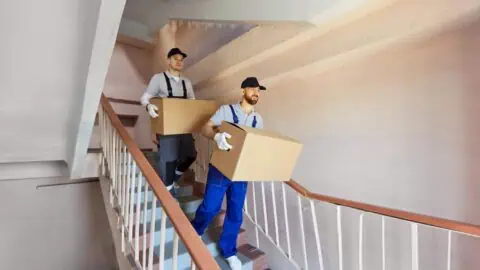
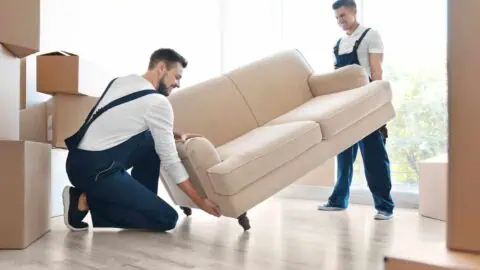
Which brings me to my final point: moving safety. If you haven’t hired professional moving services to do all your heavy lifting and go the DIY route, it’s important to be mindful of how you move bulky items to your apartment. If an item is extremely heavy, like a refrigerator, washer, or dryer, always account for top-heavy areas and have more than one body on that end. When going up flights of stairs with a couch, take your time with each step. Don’t get ahead of yourself and lose your balance, leading to dropped items and potentially injury.

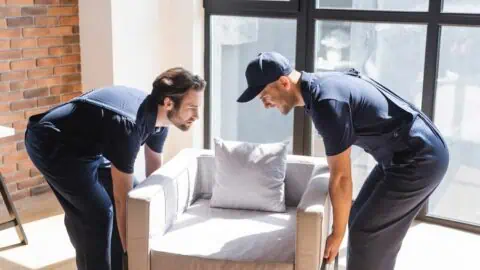
When you lift items, always bend at the knees, using the weight of your lower body to hoist the item. By trying to rush the lift, you could seriously injure your back and strain other muscles, effectively ending your day.

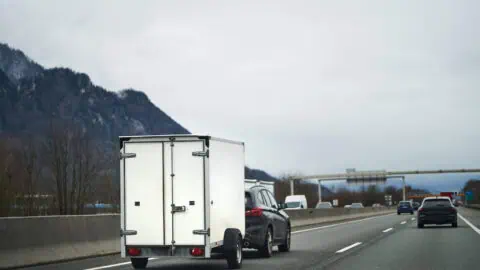
Also, if you’ve packed up a truck with several items and have some dangling perilously outside the bed, follow proper protocol by tying red flags or flyers on the very end to signal drivers behind you of extended items. And if you have bungee cords, make sure they are secured as much as possible over the entire load.

Conclusion

Moving into a new apartment doesn’t have to be a struggle if planned out right. Finding an ideal landing spot just takes a few extra minutes of research. Ask others who have lived there or go online to look through credible reviews. From there, it’s all about execution. Create a detailed checklist of items packed, do a quick scan of your previous residence for any leftover items and signal to the movers (or your friends) it’s time to head across town or the country to your new apartment.

___

About The Guest Author
Kyle works as a freelance writer and consultant writing about moving tips and tricks and other relocation issues for a local moving company, Great Day Moving.

Moving With Your Pet

Moving can be an extraordinary pain even without added complications — but when you have to take a couple of animals with no understanding of what you’re doing or why, the problems will quickly compound faster than you’re able to figure out why your furry companions are getting upset. Confused and angry pets can create all kinds of havoc on a move — even if it’s only to the next block over.

Fortunately, there are some measures you can take during each step of the moving process to increase the chances of the move going more smoothly. And if you love your pet as much as I do (you know, the type of person who treats them more like family than pet, buys them the best food, utilizes the best pet insurance, and makes sure all their toys are free of toxins), then you want to make sure this move goes as easy on your pet as possible.

Before You Start Packing

  • If you know where you’re going, and it’s only a few hours away (or less), take your pets to visit the place before you move in.
  • Give them a chance to sniff around, get acquainted with the terrain and the house itself.
  • Keep them on a tight leash of course. Pets are always at risk to get scared and run away when they are in an unfamiliar place.
  • By and large, give the pets an hour or so just to get themselves familiar with their new environment.
  • If you are making a longer move to a new area where you will not have the same veterinarian, take the pets in for a medical checkup before leaving and make sure they are healthy and all their shots are up to date.
  • Get fresh ID tags with your new address and put them on all of your pets. If they manage to escape along the way, you want them sent to the right place.

When You Start Packing

The day the real hardcore change-the-entire-look-of-the-house packing begins, set a room aside for your pets and keep them in there while you pack everything up. Dogs can usually be kept in a fenced in area outdoors, but cats are generally better left indoors.

Travelling

  • For shorter trips, you want to stop for about 5 minutes every hour and a half to allow your pet the opportunity to move around a bit, potty, and have a snack.
  • For longer trips, give the pets a 30 minute break every six hours or so.
  • For the safety and protection of your animals, take pictures of them the day you travel. Unfortunately, it is all too common for pets to disappear while travelling or shortly after moving into a new dwelling. Having recent photos is a good emergency measure to take in the event of this worst case scenario.
  • This may sound crazy to some, but it sometimes helps to talk to the pets while travelling and tell them what’s going on. They might not understand your words, but they’ll be comforted by your attention and attitude.

Moving In

  • After you arrive at your destination, set up your animal’s favorite stuff in a new ‘saferoom’, and move them in first.
  • Arrange to be able to stay with your pets for the first 24 hours and keep a close eye on them.
  • Establish a new routine of feeding, sleeping, going potty, etc. as quickly as you can — it’ll help your pets adapt to the new surroundings.
  • If possible, try to make their new routine similar to the old one. Don’t coddle them too much. This essentially rewards their fear, which is not good for them in the long run.

Settling Down

If you are moving to a new area, head over to the local veterinarian once you’re settled and introduce them to your pets. It is always good for the new vet to have your pets’ information on file as soon as possible in case the pets have a need for medical treatment. Making sure you have a vet that accepts your dog insurance for your pup will ensure you always have access to good veterinary care should any health issues arise.

If you follow these tips, your move should go relatively smoothly for your pets for what might otherwise be confusing for them. Making them feel comfortable, but also displaying confidence will ensure they are not panicked during the move, which will be the best way to keep them happy as you move into your new home.

Photo credit: mikebaird on flickr

 
About the Guest Author
Rob Toledo is an avid dog lover and encourages considering adopting from a shelter for your next pet. He resides in Seattle where he hopes to one day own at least 10 dogs.

What to do Before Moving Your Items Into Storage

Picture of a Storage Unit HallwayMoving your items into storage can feel like a daunting task. It’s never easy to part with your precious possessions, even if only for a short time. It always helps to start out with a good plan. The right kind of preparation will maximize your storage space, ensure your items do not get damaged, and will make your items easy to retrieve right when you need them. To make storing your items less stressful, here are 5 things to do before your big day:

Know Your Options
When it comes to choosing a storage facility, choose wisely. Not every storage facility is alike. There are several options to consider when it comes to the type of units available:


- Do you want a unit that is climate controlled?
- How about a unit that is indoor or with drive-up access?
- Do you want your unit monitored by surveillance cameras?
- What type of lock do you need?

Research all of your options. StorageFront.com provides an in-depth listing of the storage facilities in your area, enabling you to compare facilities. Choose the one that best fits what you need and want.

Choose the Right Size
Start out on the right foot by choosing the correct size storage unit. Storage facilities offer units varying in size, so choose the right fit for all that you have. Nothing is more stressful than trying to “stuff” all of your items into too small of a unit. This will result in items being damaged because they’re not placed into the unit properly. Check out this free self storage calculator for precise calculations. This tool will take the exact measurements of your items and put together a map of how much space is needed. Don’t just take a shot in the dark hoping you’ll get the size right. Use the online tool for accuracy.

Let Go of Your Inner Pack Rat
Don’t be afraid to get rid of stuff that you know you will never use again. There’s no need to hold onto items just for the sake of holding on. By getting rid of items you do not need, you will save yourself a lot of time, storage space, and stress! A Lifehacker article mentions the common idea to “toss it if you haven’t used it in the last year.” Throw away items that are damaged and worn out, and donate to a charity or church the items that you have no need for anymore. You will make others happy by giving them an item they may really need, and you will make yourself happy by not wasting any of your storage space!

Go Label Crazy
Feel free to go crazy with labeling everything you own. Put items such as dishes, photo albums, winter clothes, kids’ art projects, etc. into boxes and storage bins marked with the proper label. Labels are an excellent way to organize, making items easier to find when it’s time to pull them out of storage. Saying good-bye to your items becomes much less stressful when you know you can find them quickly and easily when you need to in the future.

Prepare Your Items Properly
Research how to store your specific items properly. Make a list of the supplies you will need, as well as which furniture items will need to be specially prepared. Some things to remember:
- Blankets and draperies need to be cleaned beforehand and then placed on hangers in wardrobe boxes.
- Dishes and breakables need to be bubble wrapped.
- Most furniture items need to be broken down.

You will need to follow specific storage instructions for some of your items to prevent damage. Read more self storage tips from the professionals at StorageFront.com on how to best store your items.

photo credit to Tim Patterson on Flickr

How to Avoid Moving Scams

Picture of a Moving Truck Not to Hire

Hi world wide web. Just wanted to say, as I was reading through moving-related news today, I noticed most the articles were about moving scams. What frustrates me the most is that we’re now going on decades of this behavior without a clear end in sight. You’d think at some point the criminals would be caught and locked up leaving the rest of us a little less stressed about our next move. Moving is stressful enough even if it all goes perfectly. So I put together a quick note with some tips on how to avoid moving scams. Read more of this post

Follow

Get every new post delivered to your Inbox.