

Whether you’re a painter, sculptor, photographer, or textile artist, your art studio is where the creative magic happens. That’s why it’s understandable if you’re dreading the idea of packing and moving everything involved in your craft.
But don’t worry. We have you covered with plenty of artist-recommended packing tips that’ll help you move your workspace with as few hiccups as possible. You’ll learn how to pack art supplies, tools, and original works to transport them safely. We also explain how to organize your belongings so that setting up your next studio is a breeze. Before you know it, you’ll be settled in your new space with your creative energy flowing again.
Start With a Plan to Avoid Headaches

Before we focus on packing and moving your art supplies, let’s run through some tried and true tips that make any kind of relocation easier. These strategies give you a solid foundation for tackling your move.
- Use a checklist. There are many details to take care of in the weeks leading up to a move besides packing. Our moving checklist outlines what needs to be done — and when — to help you stay on top of key tasks.
- Streamline your belongings. A move is a great time to declutter. Downsizing your belongings will speed up the packing and moving process and make it cheaper to move.
- Create a moving inventory. No more opening boxes in a mad scramble to find your paintbrushes or tripod. Color-coding boxes and tracking the contents in a spreadsheet takes a few extra minutes but can save you headaches later.
- Figure out the logistics. Are you renting a truckand hiring someone to do the loading and/or unloading? Or do you want to be hands-off and book full-service movers? Schedule your movers early for the best choice of times and dates.
- Keep important items accessible. Not everything goes on the moving truck. Figure out what items should stay with you on moving day. For items you do pack, flag the ones you need quick access to so they go on the truck last.
How to Pack Art Supplies
Moving your art studio calls for quality packing supplies. Sure, free boxes work when you’re moving into your first apartment. But for expensive and/or delicate art supplies, invest in heavy-duty materials to protect your belongings.
What You’ll Need for a Mess-Free Move
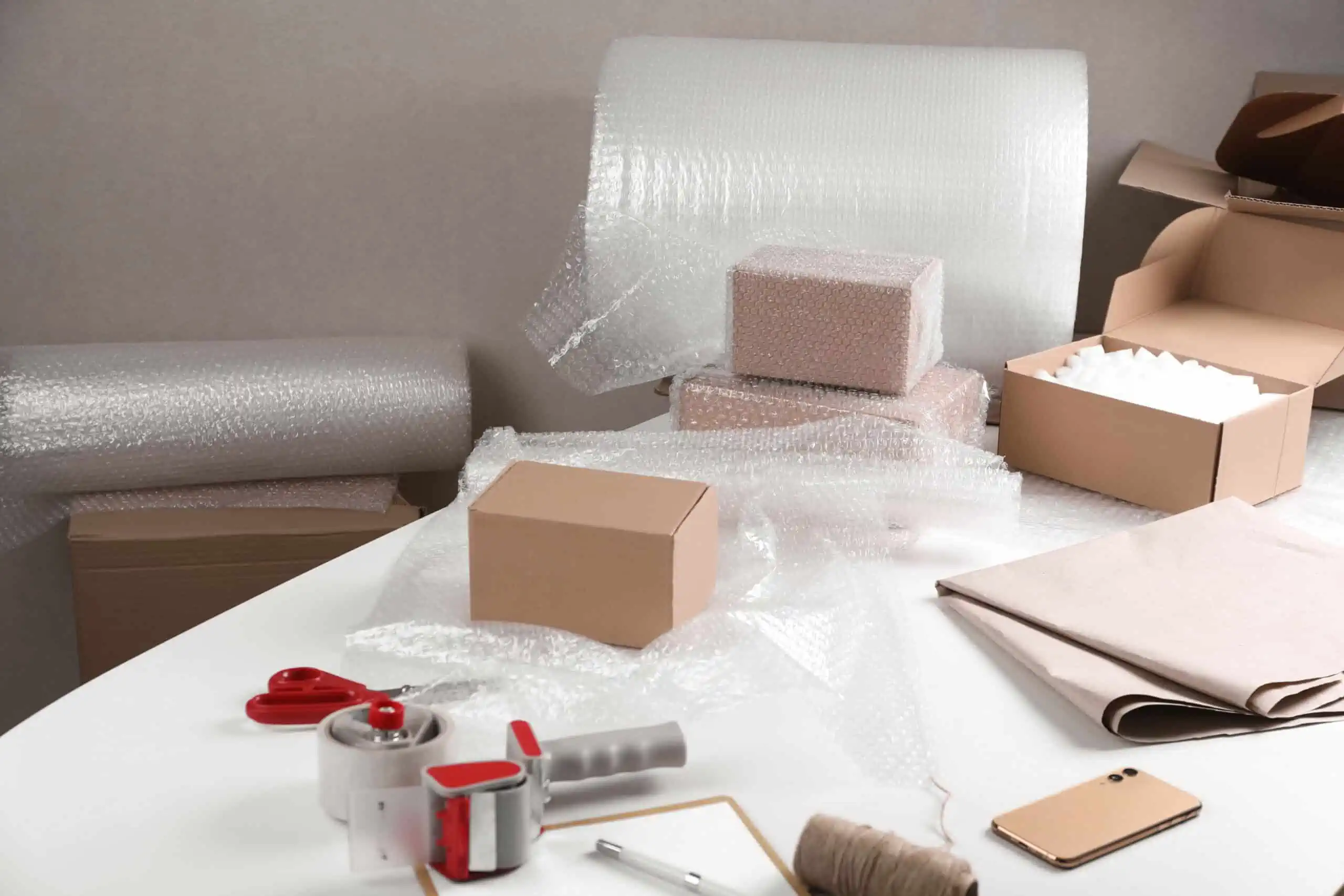
From brushes to bottles of paint, art supplies come in all shapes, sizes, and potential for spills and breakage. These are the packing materials that’ll keep everything secure, sealed, and splatter-free:
- Sturdy cardboard boxes: We recommend buying at least a few boxes designed for moving and specifically for moving delicate items. They’re reinforced and sturdier than regular boxes, so there’s less of a chance they’ll tear and scatter your art supplies everywhere. You can buy specialty moving boxes at home improvement stores such as Home Depot and Lowe’s, suppliers like ULINE, or moving companies like U-Haul.
- Crates: For heavier items, use plastic crates or totes instead of cardboard. Plastic crates make for excellent storage post-move. In some cities, you can rent plastic bins just for moving.
- Packing peanuts: Use packing peanuts to fill in the empty spaces in boxes. This keeps items from bouncing around and getting damaged inside the box, especially on long-distance moves. Plant-based packing peanuts are biodegradable and won’t add to landfills.
- Bubble wrap: Cushion ink jars and other breakables in bubble wrap before boxing them up. The pockets of air help protect delicate art supplies from impact during a move.
- Newspaper: Reuse newspapers for an eco-friendly way to protect your art studio supplies. Scrunch them up to fill empty spaces or wrap items to protect them from scratches. However, DO NOT use newspapers to wrap canvases, as the ink will transfer!
- Labels: Color-coded labels make unpacking much easier and save you from trying to locate specific items in a sea of boxes. You can also use colored duct tape to mark boxes.
- Plastic wrap: Shrink wrap is a versatile material for bundling small items together and protecting large pieces of furniture. It’s great for keeping drawers closed and ensuring shelves and hardware don’t get separated.
- Cardboard tubes: Unframed paintings or drawings can get crumpled or bent during a move. Gently roll loose artwork into cardboard tubes to reduce the likelihood of damage.
Packing Tips for All Kinds of Art Supplies
Art studios are stocked with a wide range of tools and materials depending on your discipline. We asked experts how to pack various art supplies, whether you specialize in painting, needlework, pottery, or woodworking.
Brushes

What to watch out for: Even the cleanest brushes can have traces of paint and other flammable substances. Clean your brushes before packing them, and label boxes containing used brushes so you can unload them first.
How to pack: Bundle the brushes together and secure them with elastic bands without crushing the bristles. Then, wrap the brushes tightly with plastic wrap before putting them in a box. Avoid putting heavy items on top of the brushes.
Paints
What to watch out for: First, most paint is flammable and should be packed carefully and clearly labeled. Second, buckets of paint are often prohibited on moving trucks, so you might need an alternative transportation plan. If you’re unsure if your paints are flammable, check the manufacturer’s labels. Take extra care to keep paint out of direct sunlight.
How to pack: Paint is notorious for leaking, even when the jars and tubes are tightly closed. Secure each container in plastic wrap before packing. This prevents an accidental abstract painting when you open your moving boxes.
Canvases and finished artwork
What to watch out for: Avoid placing art next to materials like newspapers and packing peanuts. They can transfer ink or stick to your canvases, marking up the artwork you painstakingly created.
How to pack: Protect your canvases with glassine paper (or other acid-free paper) before wrapping them in plastic or bubble wrap. Once your artwork is wrapped, stand them upright in boxes. Cushion them securely with crumpled paper and packing peanuts.
Ceramics

What to watch out for: Ceramics are more susceptible to breaking than other art supplies. Protruding pieces like spouts and handles can break off as items move around inside boxes.They can also break if other heavier items inadvertently knock into the container they’re in, so be careful where you place them in the truck, car, or moving container.
How to pack: Use newspaper or foam sheets to wrap your ceramics, with extra padding on parts that jut out. Secure everything in place with packing tape, and try to wrap the pieces so you can’t see or feel protrusions. Wrapping them this way takes up more space, but the extra bulk is worth the protection. Pack the padded pieces snugly in boxes to avoid excess movement while driving.
Pastels, charcoal, pencils, and markers
What to watch out for: You might be tempted to toss small things like drawing utensils into a box, but charcoal, pastels, and pencils can break if they’re jostled. Not to mention they can leave graphite streaks on the inside of boxes or poke through plastic if not packed properly.
How to pack: Start by grouping similar items together. Bundle markers with elastic bands, ensuring caps are on tightly. You can also secure pencils with rubber bands, placing a layer of soft foam or plastic wrap around the tips. Store the pencils in a pencil box that can be packed in a larger box. Charcoal and pastels should also be transported in rigid containers, separated with tissue paper or foam to prevent rubbing and movement.
Cameras

What to watch out for: Cameras andcamera equipment require special care if you’re moving a photography studio. It can be easy for lenses to crack or the internal components to get damaged if they’re packed improperly.
How to pack: Pack your camera equipment securely in small boxes before placing them in larger moving boxes. Ideally, your camera should be transported in a hard-shell camera case with dense foam. If not, line a small box with a few layers of bubble wrap to reduce vibrations and prevent movement, then wrap your camera body and lenses with an old t-shirt, blanket, or other soft fabric.
Chemicals
What to watch out for: Chemicals like acetone, butane, and aerosol sprays that are commonly found in art studios and need special attention. In fact, most moving companies won’t move chemical substances due to the potential danger. Double-check with the movers you hired before loading chemicals onto their truck.
“Start fresh at your new workspace by tossing out dried-up paints, broken pens, and things you “might use” someday instead of packing them.”
How to pack: Make sure these items are wrapped tightly in plastic to prevent leaks and placed into sealable bags to contain spills. Place them upright in the box — ideally a plastic tote. Clearly label the boxes and be sure to take them out of your vehicle first when you reach your new place. Also, pay attention to the temperature in your car: it’s hazardous for these chemicals to get too hot or too cold while you’re traveling.
Easels
What to watch out for: Easels have many pointy pieces that can scratch or puncture other items. To avoid damage, be mindful of how and where you pack them.
How to pack: Take your easel apart and place screws or extra parts in a plastic bag. You can tape the bag with the screws to the easel itself, and bubble wrap any other pieces. Then, get a sturdy box filled with packing peanuts, and nestle the easel inside. Larger easels can be collapsed and wrapped in plastic wrap and moving blankets that are secured with straps or ties. They can be transported like furniture, but avoid placing items on top of them.
Pottery wheels

What to watch out for: Pottery wheels have components that can be damaged from constant vibration or impact during transport. Make sure you cushion them properly with packing, otherwise, they could be unbalanced or fail to work entirely when you get to your new home.
How to pack: First, detach removable components like the motor and legs. Wrap your entire wheel in bubble wrap. This reduces vibration transfer and keeps everything in place. Then, use packing foam to line a box that’s just slightly larger than the wheel. Fill the empty spots around your wheel with packing peanuts or padding before you close the box.
Soldering irons
What to watch out for: Soldering irons have delicate tips that can bend or break, so it’s Important to wrap your tool properly to prevent damage.
How to pack: When your soldering iron is completely cool, coil and secure the cord. Wrap the iron in plastic or bubble wrap, carefully protecting the tip. Place it in a small, well-padded box or tool case to keep it from being crushed by heavier items, and then box it up with your other art studio supplies.
Model figurines and collectibles

What to watch out for: Model cars, planes, trains, and boats are made up of small, delicate pieces that can snap off. The paint can also chip or transfer onto other items.
How to pack: Wrap each figurine in bubble wrap to avoid scratches and chips. Packing peanuts can stick to some paints, especially in the heat, so avoid using them. Instead, use soft cloths to cushion your collectables and prevent damage.
Glass panes
What to watch out for: Glass breaks easily, of course, but also keep in mind that sharp corners can poke through the outside of boxes if they’re not well protected. Additionally, glass is heavy, so avoid overloading boxes or using ones that are too large to carry comfortably.
How to pack: Wrap each glass pane in newspaper and secure it with packing tape. Fold foam or extra paper into protective bumpers for the corners, then add a layer of bubble wrap for extra protection. It’s best to pack the glass panes upright in a TV or picture box instead of laying them flat, and cushion them with plenty of packing peanuts.
String and yarn
What to watch out for: Some yarns are flammable, like those made from acrylic and acrylic blends. Make sure those are kept away from paint, chemicals, and other combustibles.
How to pack: After securing the ends of each skein to prevent tangles, place them in sealable plastic bags to keep out pests and moisture. Place them loosely in a box and make sure that anything you pack with your yarn won’t leak onto it.
A Note About Digital Art and Electronics
Digital art relies on equipment that’s often fragile, expensive, and bulky. Drawing tablets, studio lighting, 3D pens, and other tools need careful handling to arrive at your destination in good condition.
Wacom tablets and drawing devices

What to watch out for: Drawing tablets let you create artwork using touch-sensitive screens, but if the tablet’s surface or internal sensors get damaged, your artistic vision can turn into a mess.Make sure you pay extra attention to these parts of your tablets.
How to pack: First, disconnect cables from the ports and store the stylus in its case. You’ll have to protect the tablet from pressure or impact with multiple layers of protection. Start by nestling the tablet in a microfiber cloth, then add a layer of bubble wrap, before finally placing the wrapped tablet inside its original box or a protective laptop sleeve. This bundle then goes inside a well-cushioned box.
Photography lighting
What to watch out for: It takes a lot of components to light a set, and each one requires special care. Fabric panels on softboxes can tear during a move, while metal stands can bend or damage other items. Lighting needs plenty of padding to prevent breakage.
How to pack: Collapse or disassemble stands and wrap them in shrink wrap to keep them compact. Pack them in sturdy boxes or cases with padding. Fold softboxes neatly and store them in pouches or clean bags, and then they can be placed in large boxes to prevent bending. Lights should be bubble wrapped and placed in their original cases or in sturdy boxes with crumpled packing paper to fill in unused space.
Scanners
What to watch out for: Much like drawing tablets, scanners have delicate glass surfaces and sensitive internal components that are vulnerable to impact.
“Chemicals like acetone, butane, and aerosol sprays that are commonly found in art studios and need special attention. In fact, most moving companies won’t move chemical substances due to the potential danger.”
How to pack: Remove any cords and adapters from the scanner. If your model has a transport lock, slide it to the locked position to stop the scanning head from sliding during transit. Place a soft cloth between the lid and the scanning bed and secure the lid shut with painter’s tape. Wrap the entire unit with several layers of bubble wrap. Use a sturdy box that’s just slightly larger than the scanner. Place the unit in the center of the box and pad it well on all sides to stabilize it. Tuck the cables in the box before sealing it. Label the box to ensure it remains upright during the move.
3D pens
What to watch out for: The nozzle of a 3D pen can break if handled roughly, and some filaments are also brittle. Be careful not to misplace cables and accessories like extra tips or stands.
How to pack: Unplug the pen and wrap it securely in bubble wrap, taking extra care around the nozzle. Pack the pen in a well-padded, small box before placing it in a larger box. Store filaments in a resealable bag with a desiccant pack to prevent moisture.
Light tables
What to watch out for: Light tables are delicate pieces of equipment, with bulbs and panels that can crack or bend.
How to pack: Remove the power cord and wrap the light table in bubble wrap. Add extra padding on the corners. Place the light table in its own box with generous padding on all sides so it doesn’t slide around.
Studio lighting
What to watch out for: The last thing you want when you start unpacking is a box full of glass shards. Broken bulbs, as well as bent or creased shades, are the most important things to prevent when you move your art studio lighting.
How to pack: Pack your lightbulbs separately from your other art supplies, and secure them in bubble wrap or place them in a box with packing peanuts. Gently wrap lampshades in paper, then nest them in a box with packing peanuts. Make sure to label this box with “Nothing On Top” so your shades won’t get crushed by heavier items.
Pro Tips for a Smooth Move
Packing art supplies can be an arduous task. Without a plan, you might be digging through endless boxes after your move — looking for your favorite tools and works of art. Here are a few tips to help your studio relocation go smoothly.
- Start fresh at your new workspace by tossing out dried-up paints, broken pens, and things you “might use” someday instead of packing them.
- Scan photographs, articles, and inspiration pieces so you have less clutter to pack and move.
- Pack a box with your favorite tools and essentials so you can get to work right away.
- Take photos of your current set-up so it’s easier to recreate your studio space.
- Pack your works-in-progress separately from completed art so you can pick up where you left off.