Atlanta Neighborhood Guide: Find the Best Areas to Move in 2026

Author:

Publish Date:

Last Modified Date:

Category: Where to Move

Tags: Tags: , , , , , , , , , , , , , , , ,

The most popular neighborhoods in Atlanta include Midtown, East Atlanta Village, Inman Park, Candler Park, and Grant Park. With plenty of cultural attractions, outdoor space, educational facilities, health centers, and shopping and dining hotspots, Atlanta is a thriving city that blends convenience and fun — and it’s growing. Per HireAHelper’s 2026 Migration report, 61,406 people moved to Atlanta, GA, in 2025.

With plenty of experience helping people select the best movers to cities all across the country, HireAHelper knows the ins and outs of every neighborhood in them. We’ve put this guide together that goes in-depth into some of the most sought-after communities in Atlanta, so you can make the best pick for your lifestyle.


Should You Move to Atlanta?

Atlanta is ideal for young professionals, students, families, and retirees. It has:

On the other hand, Atlanta does have some drawbacks that may not appeal to people adverse to the city lifestyle, such as:

  • Year-round traffic
  • Limited public transportation
  • A higher-than-average crime rate

Real Estate in Atlanta, GA

As of the end of 2025, the value of a typical Atlanta home was $379,908, down 4.3% from the previous year. Values are, however, up when looking at the last five years: average home values were $333,038 at the end of 2020.

As a median, homes in Atlanta take approximately 76 days to go from listing to pending sale. In January 2026, just over 4,000 homes were available for sale, with about 600 of those having been listed that month,

Atlanta rentals sit just above the national average: $1,897 a month. Year over year, prices increase at about 3.6%.


Atlanta Neighborhood Map

Across Atlanta, neighborhoods vary widely, from walkable, busy urban areas to quiet, family-oriented suburbs. Housing costs, leisure offerings, and social scenes reflect different lifestyles and budgets. Looking for somewhere eclectic and cool? East Atlanta Village or Cabbagetown may check your boxes. If you want to be close to the action, Midtown is tough to beat, while Inman Park is ideal if you love being outdoors, and Bucktown Village is great for enjoying the finer things in life.

At HireAHelper, we connect people with convenient movers for all neighborhoods. The map below shows at a glance the best places to live in Atlanta.

Best Neighborhoods in Atlanta

With so many amenities, beautiful landmarks, and entertainment, it can be hard to choose which area of Atlanta seems the most appealing. But the best neighborhood is always the one that matches your lifestyle. We’ve dug into what each area has to offer and laid out what makes them unique, so you can see at a glance where your new home might be. Check out these neighborhoods in Atlanta when planning your move to A-Town.

Midtown
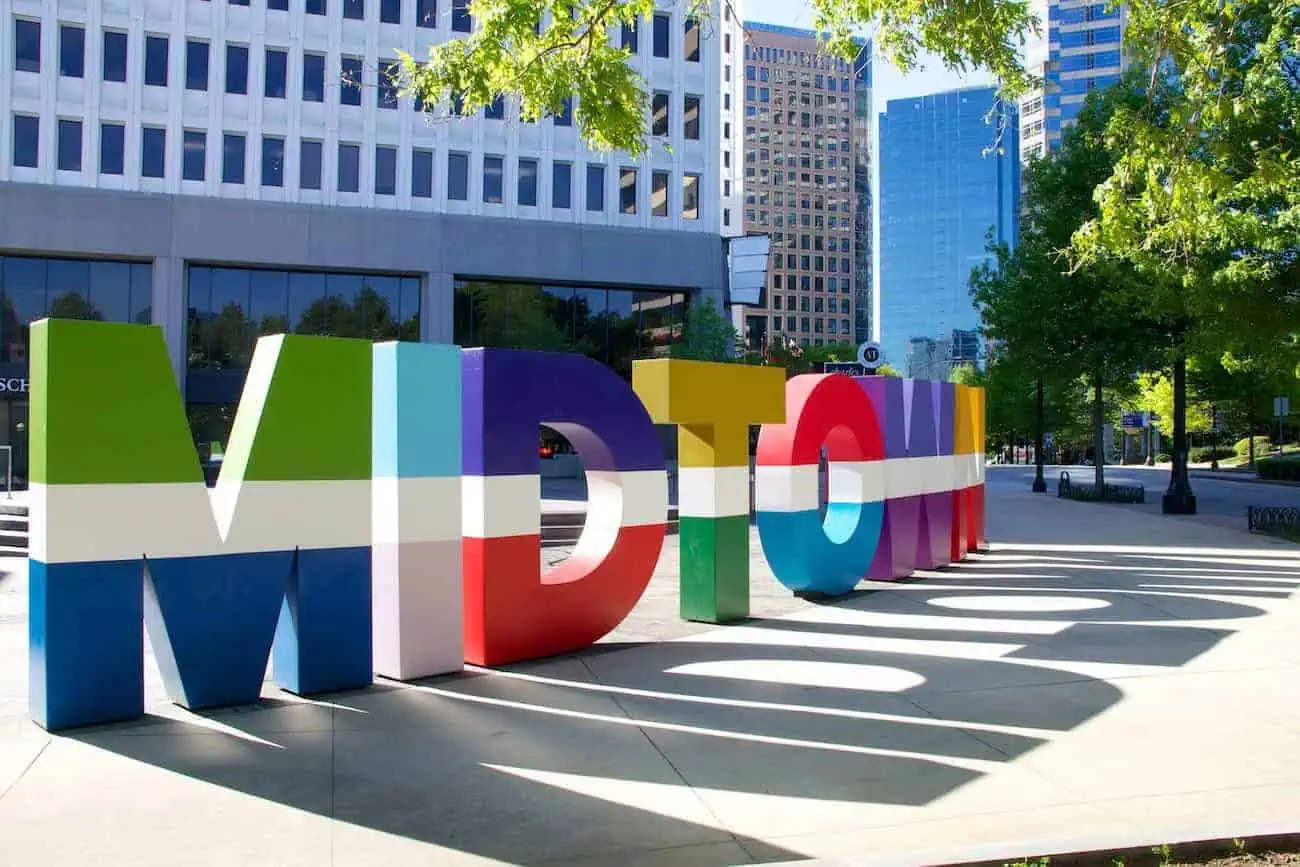
A colorful sign reading "Midtown" in the neighborhood of the same name in Atlanta, GA

Located between the dynamic Downtown and the trails and trees of Piedmont Park, Midtown bridges the gap between the concrete urban jungle and nature. The west side of the neighborhood is more commercial, with ample places to shop, eat, and drink. Check out the Midtown Mile for retail therapy, while the eastern side boasts the Midtown Historic District and movie-famous Peachtree Street.

Keep up with all the latest events and opportunities to get involved in your new community via the Midtown Alliance, and if you want to head into Downtown, MARTA will get you there in a matter of minutes.

Inman Park

  • Vibe: Hip, trendy, and affluent
  • Location: East of Downtown, Inman Park nestles between the John Lewis Freedom Parkway NE and I-20.
  • Great for: Families and professionals
  • Median home sale price: N/A
  • Average rent: $1,897

As Atlanta’s first planned suburb, Inman Park is known for its walkability. Several parks add plenty of green spaces to the neighborhood, most notably Freedom Park and the Freedom Park Trail, which runsalong the northern edge of the community.

The affluent area isn’t short of trendy dining establishments either, including the Krog Street Market. It’s a part of the Krog Street District and is a hive of shopping and dining activity. The MARTA train connects with the city in around 15 minutes.

Candler Park

  • Vibe: Peaceful and outdoorsy
  • Location: Candler Park neighbors Druid Hills, Lake Claire, and Edgewood.
  • Great for: Families, couples, and creatives
  • Median home sales price: N/A
  • Average rent: $1,897

Home to its namesake Candler Park, which features a swimming pool, golf course, play area, and basketball court, the neighborhood also includes a significant slice of Freedom Park. Victorian and bungalow homes also enhance historical charm throughout the neighborhood.

Don’t be fooled by the peace, though! The residential area has its own exciting dining scene, and the two-day Candler Park Fall Fest is a yearly highlight that also funnels funds back into the local community. If you relocate here, access to the Downtown area is a breeze, with the MARTA passing right through the neighborhood.

East Atlanta Village
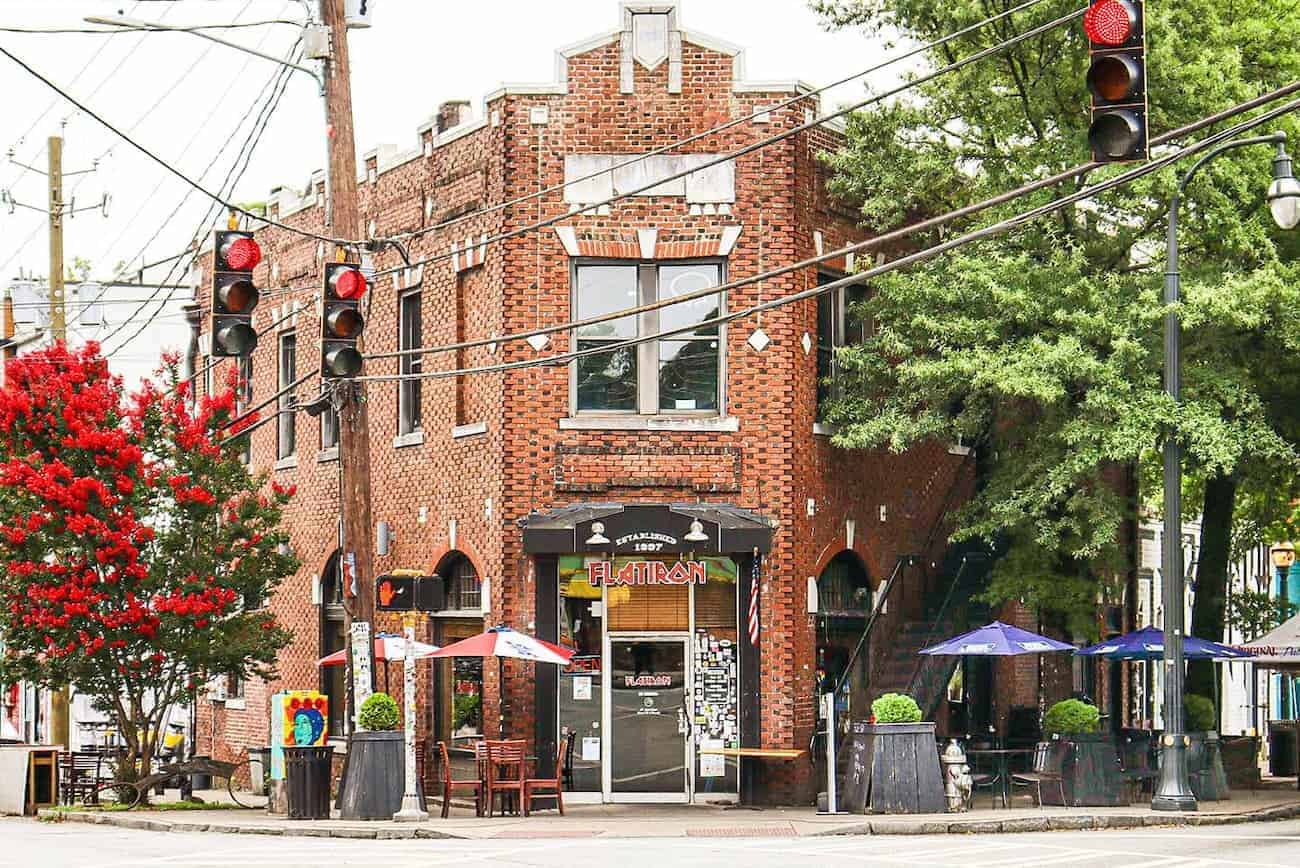
A view of an intersection in East Atlanta Village in Atlanta, GA

  • Vibe: Hip, stylish and small-town feel
  • Location: East Atlanta Village centers around Glenwood and Flat Shoals Avenues, just below I-20.
  • Great for: Musicians, artists, and creatives
  • Median home sale price: 1,897
  • Average rent: N/A

Despite its small size, East Atlanta Village packs a lot into its space. “Atlanta’s Hippest Hood” is a top spot for live music, nightlife, dining, and entertainment. There’s creative street art to admire, and Brownwood Park is ideal for unwinding in peace and fresh air.

The much-loved EAV Farmers Market is a top spot to pick up sustainable, ethically sourced produce and artisan goods, and you can even take a seat in the grassy park area to feast on pre-made specialties. Each year, the community celebrates and hosts a vibrant parade during the fall East Atlanta Strut. Transport-wise, several bus lines connect EAV to the wider area, and the I-20 sits near Moreland Avenue.

Virginia Highland

  • Vibe: Suburban and community-focused
  • Location: Sitting on the south-eastern edge of Atlanta Botanical Garden, Virginia Highland also bounds US Route 78.
  • Great for: Families and couples
  • Median home sale price: N/A
  • Average rent: 1,897

Comprised largely of quiet residential streets, Virginia Highland is great for those who want to be close enough to Downtown to enjoy its amenities but want a peaceful haven to retreat to. For outdoor living, green spaces include Orme Park, John C Howell Park, Piedmont Park, and the flower-filled displays ofAtlanta Botanical Garden.

There are many single-family homes, though prices tend to run on the higher side. For those seeking community engagement, the Virginia Highland District Association offers volunteer opportunities, wellness activities, and leisure amenities.

Grant Park

  • Vibe: Suburban, outdoorsy, and family-friendly
  • Location: Grant Park is southeast of Downtown, with I-20 running through the neighborhood and I-85 to the west.
  • Great for: Families and young professionals
  • Median home sale price: N/A
  • Average rent: 1,897

Though the residential streets in sprawling Grant Park are laid out in an urban-style grid, the Victorian homes and greenery-filled yards give the area a suburban feel. A vibrant and varied food scene beckons, while Zoo Atlanta is a family favorite.

You can also relax in the area’s namesake: the historic Grant Park. With woodlands, trails, grassy spaces, and wildlife, you can enjoy al fresco dining and keep active at the basketball courts and tennis courts. The park also offers volunteer opportunities and year-round special events, like the Summer Shade Festival.

Cabbagetown

The Krog Street Tunnel in the Cabbagetown neighborhood of Atlanta

  • Vibe: Socially progressive, artsy, casual, and creative
  • Location: Bounded to the west by Oakland cemetery and the south by Memorial Drive SE, Cabbagetown lies around 3 miles east of Downtown.
  • Great for: Young professionals, freelance workers, families, and retirees
  • Median home sale price: N/A
  • Average rent: 1,897

A place with a unique name is bound to have a rich and interesting history. Originally built to house mill workers, Cabbagetown is listed on the US National Register of Historic Places. Today, it’s a friendly community with plenty going on. The yearly Chomp and Stomp fundraising festival helps raise money to improve the neighborhood, and there are regular events at the amphitheater and park.

Cabbagetown is compact and walkable, and dog-walkers are a familiar sight. Places like Krog Street Tunnel lead straight to Inman Park, and the graffiti and murals make it a destination in itself.

Buckhead Village

  • Vibe: Urban, sophisticated, and high-end
  • Location: North of Downtown, the sub-neighborhoods are surrounded by Interstates 75, 85, and 285
  • Great for: Affluent families and couples
  • Median home sales price: N/A
  • Average rent: 1,897

Comprising approximately one-fifth of the total area of Atlanta, Buckhead is home to several smaller communities. Its upscale lifestyle has also earned the location the nickname of the Beverly Hills of Atlanta.

With over 50 designer shops and eateries, Buckhead Village Districtis the place to go for luxury shopping and some of the best dining in Atlanta. Several parks dot the area, and you’re also near historical spots and art galleries.. The walkable neighborhood also offers on-demand shuttle services, linking residential areas with MARTA stations.

Decatur

  • Vibe: Small-city-meets-big-city, urban-suburban, and civic focus
  • Location: The city of Decatur lies about 7 miles northeast of Atlanta, with Scottdale and Belvedere Park to its east.
  • Great for: Professionals and families
  • Median home sales price: $281,927
  • Average rent: $1,785

While Decatur is its own municipality, its proximity and easy access to Atlanta on MARTA’s Blue Line make it seem like part of the city. Then again, with its small-town vibe, Decatur can also feel a world apart. It’s even been called the most charming small town in North America. Parks, seasonal festivals, casual bars, live music venues, diverse eateries, and a vibrant shopping scene mean there’s always something to do.

A Walkers’ Paradise, Decatur also ranks high in bike-friendliness. Especially pleasing for parents, the city became one of just three cities nationwide to earn recognition as a UNICEF USA Child-Friendly City in 2025. If you’re looking for somewhere that straddles the line between city and suburb, consider Decatur.


Moving Costs and Logistics in Atlanta

In Atlanta, neighborhood choices strongly influence moving costs and logistics. Different areas present practical challenges related to access, housing type, traffic, and parking, all of which affect time, labor, and overall moving expenses.

Housing style plays a major role. Neighborhoods like Midtown, Downtown, and parts of Decatur have many apartments and condos. These often involve elevators, tight corners, and shared entrances. Walk-up apartments may also raise costs due to stairs and limited access.


“As a median, homes in Atlanta take approximately 76 days to go from listing to pending sale. In January 2026, just over 4,000 homes were available for sale, with about 600 of those having been listed that month…”


Dense, walkable neighborhoods, like Midtown or East Atlanta Village, may have limited street parking as well. Narrow roads also make it harder for trucks to park close by. In contrast, suburban areas often offer easier driveway access, wider streets, and fewer parking restrictions, often reducing moving time and cost.

Choosing an Atlanta neighborhood is not only a lifestyle decision but also a practical one. Understanding access, building type, parking, and distance can help people better plan their move and manage moving costs.


How to Choose the Right Mover for Your Atlanta Move
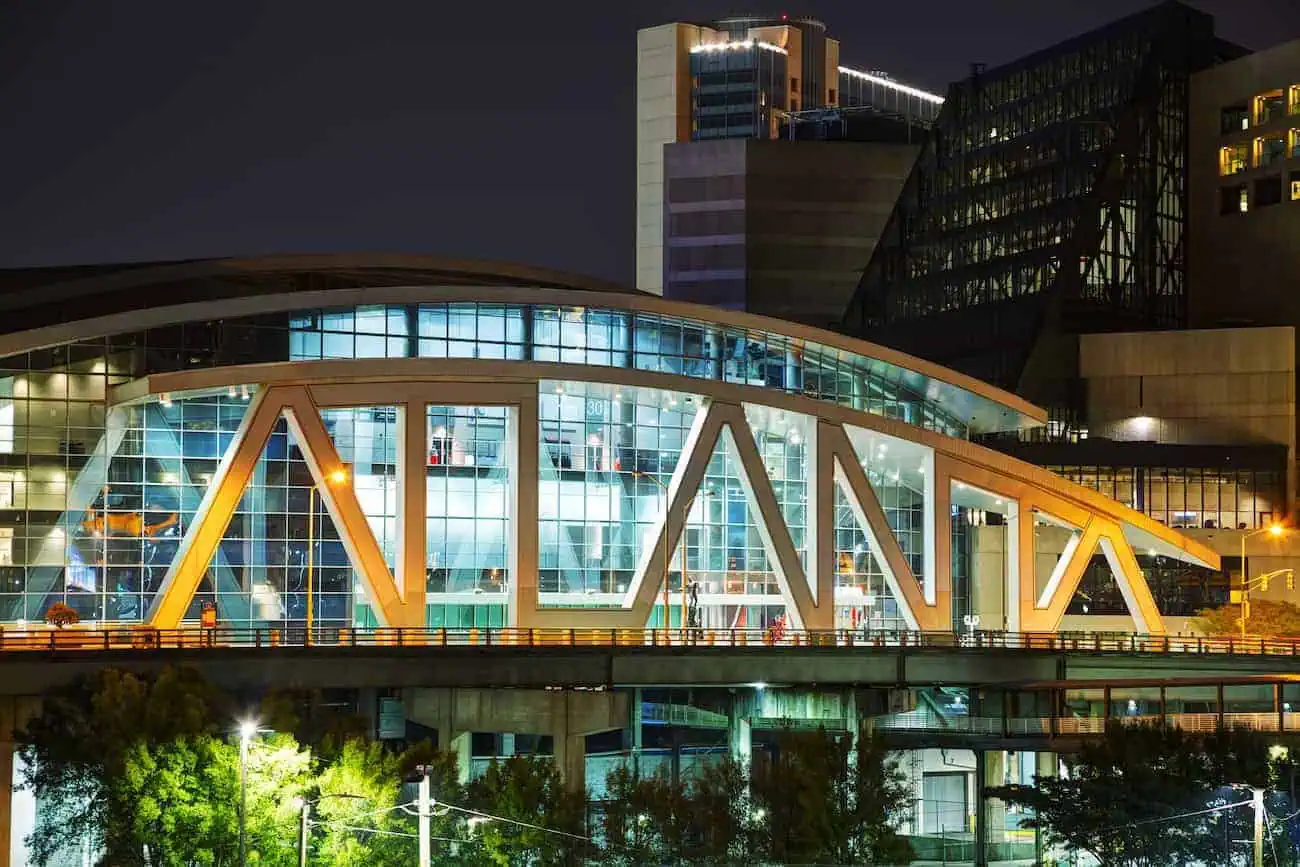
A sign on top of the Philips Arena and CNN Center in Atlanta, GA

Finding reliable movers in Atlanta requires understanding the type of move and the specific challenges posed by different neighborhoods. Atlanta is a large, spread-out metropolitan area, and moving needs can vary significantly depending on whether the move is local or long-distance.

For local in-area moves, it is usually best to hire movers who are familiar with the city’s traffic patterns, parking rules, and neighborhood layouts. Local movers can work more efficiently when they know how to navigate areas such as Midtown, Decatur, or East Atlanta.

For long-distance moves, whether within Georgia or to/from another state, it’s important to use companies that specialize in long-distance logistics and provide written estimates. Confirm delivery windows, insurance coverage, and delay policies, as long-distance moves involve more coordination and higher risks.

Finding great movers in Atlanta means matching the mover’s experience to the type of move and the neighborhood environment. Planning ahead, asking detailed questions, and choosing movers familiar with local conditions can reduce stress, delays, and unexpected costs.

Highly rated Atlanta movers include:

Connect with local movers in Atlanta through HireAHelper’s marketplace and obtain real-time quotations to help make planning your move easier. Our platform connects you with companies that meet your needs. You’ll also find movers that help with packing if you’d prefer assistance with just pre-move organization.


FAQs About Atlanta Neighborhoods

How many neighborhoods are in Atlanta?

The City of Atlanta recognizes over 240 distinct neighborhoods, and there are over 20 Neighborhood Planning Units assigned to specified zones that contain several neighborhoods.

What are the major Atlanta neighborhoods vs smaller areas?

Major neighborhoods in Atlanta include Midtown, Buckhead, Downtown, Old Fourth Ward, and East Atlanta Village, which stand out because of their size, higher population density, and popularity. Smaller and quieter neighborhoods include Candler Park, Ormewood Park, Reynoldstown, Adair Park, and Mozley Park, which are more residential and locally oriented.

What neighborhoods in Atlanta are walkable?

Midtown is one of the most walkable Atlanta neighborhoods. While Downtown is walkable for work, universities, and attractions, it’s less residential. Old Fourth Ward and Inman Park offer BeltLine access, and East Atlanta Village is walkable within its core. Outside the city proper, Decatur is a pedestrian-friendly area.

What neighborhoods in Atlanta have good nightlife?

Midtown offers a large selection of bars, lounges, and Buckhead Village is known for upscale nightlife, including rooftop bars and nightclubs. Old Fourth Ward blends trendy bars and music venues, East Atlanta Village offers a hip and alternative local scene, and West Midtown’s growing night scene boasts stylish bars and late-night dining.

What neighborhoods in Atlanta have parks?

Midtown provides access to Piedmont Park, while Grant Park surrounds the city’s oldest park. Old Fourth Ward has Historic Fourth Ward Park and BeltLine trails, and adjoining Inman Park and Candler Park offer BeltLine access.


Why Trust HireAHelper

With a long history of helping people achieve a comfortable and convenient relocation, HireAHelper has built deep, practical insight into what makes a neighborhood a good fit. After coordinating thousands of moves across different cities, housing types, and lifestyles, HireAHelper has seen firsthand how factors like walkability, parking access, building layouts, commuter patterns, and local amenities affect moving experiences and satisfaction.

This experience goes beyond mere logistics; it reflects real-world, on-the-ground knowledge. Essentially, HireAHelper understands not just how to move efficiently, but how neighborhood choice plays a crucial role in a successful move.

Nashville Neighborhood Guide: Find the Best Areas to Move in 2026

Author:

Publish Date:

Last Modified Date:

Category: Where to Move

Tags: Tags: , , , , , , , , , , , , ,

Downtown, Germantown, The Gulch, and East Nashville are among the most popular neighborhoods in Nashville. As one of the fastest-growing cities in the Southeast, these areas will only get even more in-demand, so if you want to follow the 31,431 people who moved into the area last year (according to HireAHelper’s 2026 Migration Report), knowing which neighborhood you want to settle in ahead of time is important.

At HireAHelper, we’ve helped thousands of people relocate to Music City, giving us unique insight into what makes each neighborhood tick. This guide will help you discover which areas align best with different lifestyles and budgets.


Should You Move to Nashville?

A view of the Nashville, TN skyline and the John Seigenthaler Pedestrian Bridge

Nashville is a strong fit for young professionals, creatives, and families looking for economic opportunity mixed with Southern charm. The city’s job market ranks among the nation’s best, particularly in healthcare, music and entertainment, finance, and tech. The cost of living sits just below the national average (excluding housing), and Tennessee’s lack of state income tax is a major draw for higher earners.

Nashville appeals to people who enjoy live music, a vibrant food scene, and access to outdoor recreation, like parks, greenways, and hiking.

However, Nashvillehousing costs have risen sharply in recent years, making affordability a challenge for some buyers and renters. The city’s public transportation is also limited compared to major metros, so owning a car is often necessary. Not to mention, traffic congestion has also increased as the population has grown. If you prefer a slower pace, a highly walkable city, or cooler climates, Nashville might not be the best match.


Real Estate in Nashville, TN

Nashville’s real estate market has seen significant growth over the past decade, with home values rising as the population has surged. According to Zillow, the typical home value in Nashville is approximately $428,500 as of early 2026. Homes typically sell in about 45 days, reflecting a steady demand despite some cooling from peak prices in 2022.


“For moves in East Nashville or Germantown, where historic homes often have narrow doorways and steep staircases, experienced movers who know how to navigate these obstacles are essential.”


The market has shifted toward more balanced conditions after years of rapid appreciation. Homes are staying on the market slightly longer than during the pandemic boom, giving buyers more time to make decisions. However, competition remains strong in desirable neighborhoods like Germantown, The Gulch, and East Nashville, where move-in-ready homes often receive multiple offers.

For renters, the average apartment costs around $1,750 per month, with most leases falling between $1,000 and $2,000. Rental availability has improved as new apartment complexes have opened across the metro, particularly in areas like Downtown and Midtown. Overall, Nashville’s real estate market remains robust, driven by job growth, population influx, and the city’s expanding reputation as a cultural and economic hub.


Nashville Neighborhood Map

Understanding Nashville’s neighborhoods starts with knowing how they’re defined. Unlike some cities with strict district boundaries, Nashville’s neighborhoods often overlap and blend into one another, shaped more by culture and character than official lines. Some areas, like Downtown and The Gulch, are compact and walkable, while others, like East Nashville, sprawl across multiple smaller neighborhoods with distinct vibes.

Still, you can check out the map below to see an overview of where the hottest neighborhoods are located. And if you’re using this as help when planning your move to the city, finding reliable movers in Nashville will make the transition smoother and less stressful, too.

Best Neighborhoods in Nashville

From quiet, family-friendly streets to lively hubs, and from modern, upscale to down-home and practical, Nashville neighborhoods differ widely by lifestyle, budget, and atmosphere.But when you’re spoiled for choice, it can be hard to know where to start. That’s why we’ve elaborated on some of the most exciting and best neighborhoods Nashville has to offer. Check them out, and find a place in Music City to call your very own.

Downtown

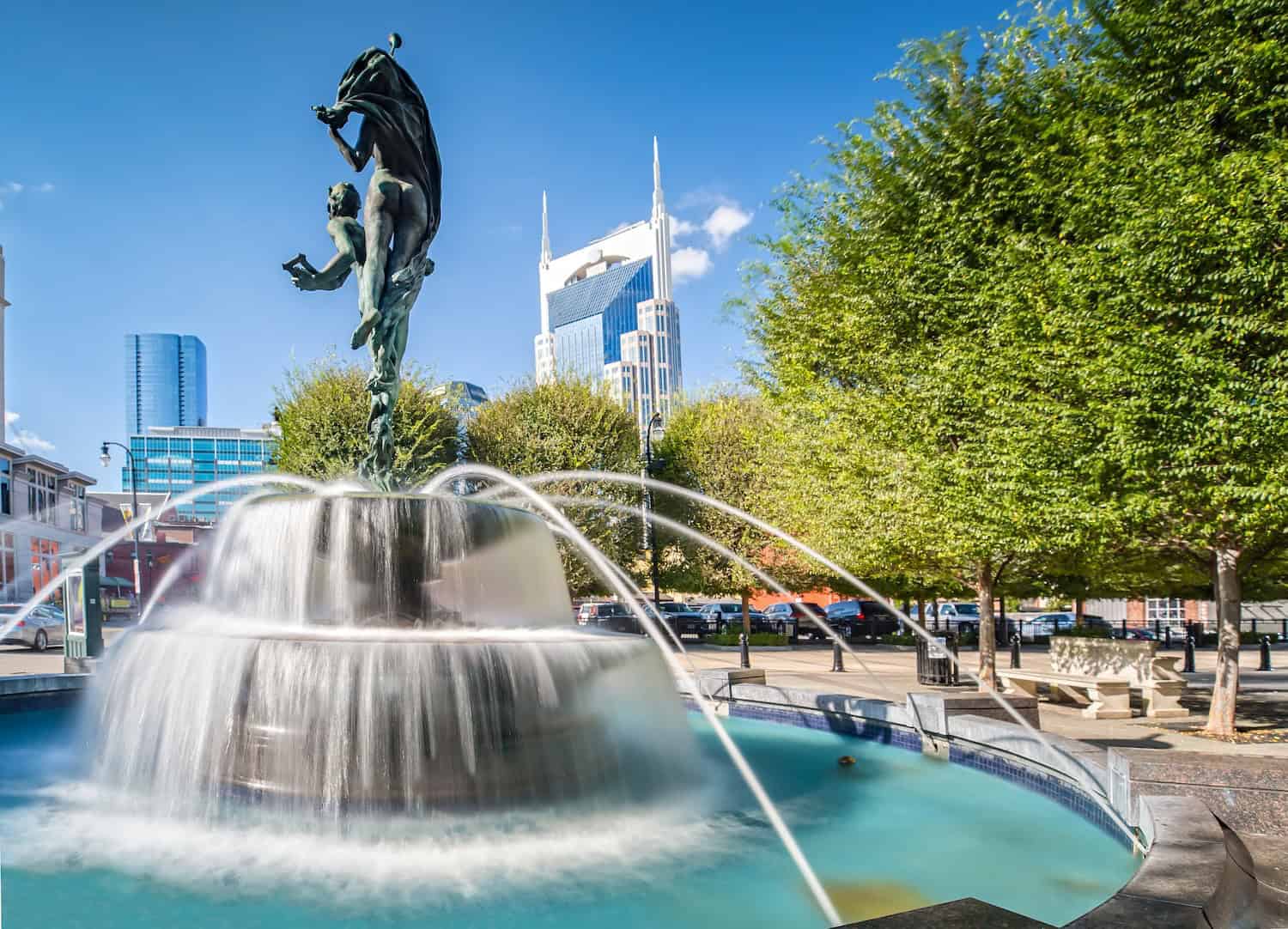
A view of the Nashville Symphony Statue Fountain in the Downtown neighborhood

  • Vibe: Urban and energetic
  • Location: The central core of Nashville, bordered by the Cumberland River to the east and I-40 to the south
  • Best for: Young professionals and nightlife enthusiasts
  • Median home sales price: $597,000 (Zillow)
  • Average rent: $1,891/month

Your initial instinct might be to avoid this area for the sheer amount of tourists and tourist-adjacent amenities that populate Downtown, but there actually is more to the area than the Country Music Hall of Fame and Museum and Honky Tonk Highway. It’s the beating heart of everything Nashville, and you’ll find cultural institutions like the Frist Art Museum and the Tennessee State Museum at the north end of Bicentennial Capitol Mall State Park.

And outside of the vortex of tourists, Downtown has the energy you might expect from the center of a big metro. Condos, lofts, and high-rise apartments offer plenty of opportunities to put all the dining, drinking, and partying options right outside your doorstep. Plus, if you want to escape the urban jungle for a bit, the city’s greenways offer the opportunity to walk, jog, or bike to multiple other spots in the city.

Germantown/Salemtown

  • Vibe: Historic with upscale dining
  • Location: North of Downtown, stretching from Rosa Parks Boulevard east to the Cumberland River
  • Best for: Professionals and foodies seeking walkable historic charm
  • Median home sales price: $712,000 Germantown / $752,000 Salemtown (Zillow)
  • Average rent: $2,270/month Germantown / $2,231/month Salemtown

Germantown sits along the north edge of Downtown, stretching from Rosa Parks Boulevard to the east-lying Cumberland River.The western side of the neighborhood is where you’ll find lots of single-family homes, brick sidewalks, some of Nashville’s best dining, and, appropriately for a place called Germantown, plenty of great beer.

To the east, development projects are underway, transforming the banks of the river into a region of mixed-use living that’s starting to rival the variety and glitz of Downtown.Between the two areas, you’ll absolutely find something that fits you and your lifestyle. And yes, Nashville’s Oktoberfest takes place right here!

Salemtown, just across Hume Street to the northwest, is essentially an extension of the western part of Germantown, with slightly larger homes, yards, and streets. With a proud reputation for having a tight communal feel, Salemtown remains Germantown’s quieter, more laid-back twin. So, if you’re interested in a more suburban or laid-back vibe to the bustling and busy feel of other areas, then Salemtown is definitely worth a look.

The Gulch

  • Vibe: Trendy and cosmopolitan
  • Location: South of Downtown, between I-40 and Broadway
  • Best for: Young professionals seeking modern urban living
  • Median home sales price: $890,000 (Zillow)
  • Average rent: $2,650/month

The name of this neighborhood may not elicit images of urban color and cosmopolitan flair, but that’s exactly what you’ll find here.A low-lying expanse of land that was once home to Nashville’s railroad yard, The Gulch is nowone of Music Town’s trendiest places to live, with boutique to brand-name shopping, great dining options, and some Instagrammable murals scattered around this charming area.

The allure of the neighborhood has not escaped the attention of tourists, either. This side of the tracks gets its fair share of attention and foot traffic coming from Downtown, but The Gulch remains a magnet for the young, energetic crowd and is a great place to live.

Midtown

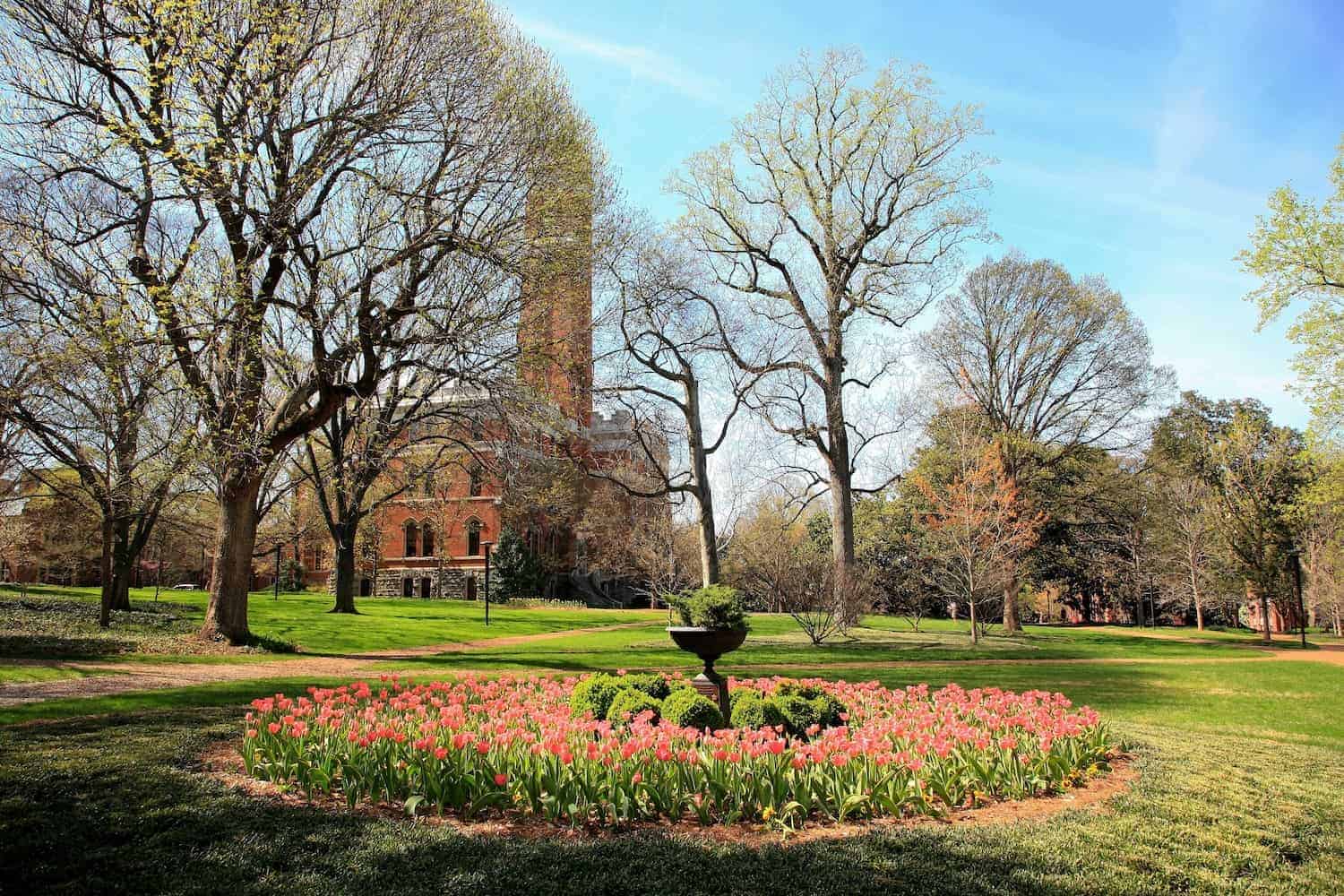
Vanderbilt University's campus in the Midtown neighborhood of Nashville, TN

  • Vibe: College town energy
  • Location: West of Downtown, centered around Vanderbilt University and Music Row
  • Best for: Students, young professionals, and music industry workers
  • Median home sales price: $632,000 (Zillow)
  • Average rent: $2,000/month

This neighborhood has a great food and drink scene, along with an energy that’s all about the people who live here.Namely: college students. Vanderbilt University (along with its Medical Center) lies in this neighborhood and is one big aspect of the Midtown vibe. The musicians who congregate around Music Row on the eastern side add more local flavor, and Centennial Park brings out the recreation and relaxation lover in everyone.

With all that’s crammed into Midtown,it’s no surprise there aren’t a lot of single-family homes available. There are, however, plenty of apartments and condos. And while Midtown leaves little to be desired, Downtown is just a short bus ride away.

East Nashville/Five Points

  • Vibe: Eclectic and artsy
  • Location: East of the Cumberland River, centered around the five-way intersection where Main Street becomes Gallatin Avenue
  • Best for: Families, creatives, and those seeking a neighborhood feel
  • Median home sales price: $578,000 Five Points / $572,000 East Nashville (Zillow)
  • Average rent: $2,100/month in Five Points / $1,800/month in East Nashville

As the name suggests, this area is centered around the five-way intersection that sits off where Main Street curves north and turns into Gallatin Avenue. Here you’ll find many single-family homes, giving the neighborhood a more suburban feel. It’s also a great place for families or those looking to start one. But, if you long for that busy metro vibe once in a while, Five Points is still quite close to Downtown.

Speaking of interesting neighborhoods just next door, Five Points is actually part of the broader East Nashville district, which includes Shelby Hills, home to the delightfully green and faculty-rich Shelby Park, and Capitol View for even quieter streets a little further north.

Sylvan Park

  • Vibe: Quiet, walkable, community-focused
  • Location: West Nashville, just west of Midtown and Vanderbilt
  • Best for: Families, professionals, and those wanting a neighborhood feel close to downtown
  • Median home sales price: $650,000 (Zillow)
  • Average rent: $1,900/month

Nestled in West Nashville, Sylvan Park offers a more laid-back alternative to Nashville’s busier urban centers. One of the neighborhood’s standout features is McCabe Greenway & Golf Course, a public green space with walking trails and a golf course woven directly into the community. It’s a favorite for runners, dog walkers, and families.

Sylvan Park also stands out with a big draw when it comes to food. It’s home to destination dining spots like Answer Restaurant, a nationally recognized restaurant known for its rotating tasting menus. With easy access to Downtown and nearby Warner Parks, Sylvan Park offers a rare balance of neighborhood charm, outdoor space, and city access, all without the high-rise hustle.


Moving Costs and Logistics in Nashville

Where you choose to live in Nashville directly impacts your moving experience and costs. Neighborhoods with narrow streets, limited parking, or high-rise buildings can add time and complexity to your move, which often translates to higher labor costs.

Downtown and The Gulch, for example, feature condos and apartment buildings with elevators, parking restrictions, and strict building access rules. Many buildings require you to reserve freight elevators in advance and limit moving hours to weekdays. If you’re moving into a high-rise, expect additional charges for stairs or elevator usage, and factor in extra time for loading and unloading in tight urban spaces.


“…[The] typical home value in Nashville is approximately $428,500 as of early 2026. Homes typically sell in about 45 days, reflecting a steady demand despite some cooling from peak prices in 2022.”


In contrast, neighborhoods like East Nashville, Germantown, and Salemtown have more single-family homes with driveways and street parking, making moves more straightforward. However, some historic homes in these areas have narrow staircases, which can complicate furniture placement and require more careful planning.

Neighborhood layout can also impact crew size and equipment needs. Longer carries from street to unit may require extra movers or specialized dollies, while buildings without loading docks can slow the process. Parking enforcement is another factor. Tickets or tow risks in busy areas can cause delays that cost you time and money.


How to Choose the Right Mover for Your Nashville Move

Finding reliable movers in Nashville starts with understanding your move type and the unique challenges your neighborhood presents. Local moves differ significantly from long-distance relocations, both in logistics and pricing. Local movers typically charge by the hour, while long-distance moves are priced based on weight and distance.

Neighborhood-specific challenges also matter when selecting a mover. If you’re moving into a Downtown high-rise, you’ll want movers experienced with building access requirements, freight elevator scheduling, and tight parking situations. For moves in East Nashville or Germantown, where historic homes often have narrow doorways and steep staircases, experienced movers who know how to navigate these obstacles are essential.

HireAHelper makes it easy to find and compare movers across the country. For Nashville specifically, check out our Nashville movers page to browse top-rated local companies with verified reviews and transparent pricing.

Here are two highly rated Nashville movers to consider:

  • All-Star Movers consistently earns high marks for professionalism and efficiency. Their crews are trained to handle everything from apartment moves to full-house relocations, and they’re familiar with the unique challenges of Nashville’s diverse neighborhoods.
  • All Around Movers offers flexible labor-only services, perfect for those who need help loading or unloading a rental truck or moving container. They are consistently praised for their expertise, but overwhelmingly for their speed and efficiency. Their model works well for budget-conscious movers who want professional assistance without paying for full-service transport.

Before booking any mover, understand how HireAHelper works, review our guide on how to choose a good moving company, and check out who the best moving companies are. Also, don’t forget to ask the most important questions before hiring a moving company to help with your move.


FAQs About Nashville Neighborhoods

How many neighborhoods are in Nashville?

The Metro Nashville government recognizes around 26 major planning districts, but within those districts are many smaller, unofficial neighborhoods with their own distinct identities. When you include sub-neighborhoods and community areas, the number can exceed 50.

What are the major Nashville neighborhoods vs smaller areas?

Major Nashville neighborhoods include Downtown, The Gulch, Midtown, Germantown, East Nashville, and 12 South. These areas are well-known, heavily populated, and offer a wide range of amenities. Smaller and less-known neighborhoods include Salemtown, Shelby Hills, Capitol View, Sylvan Park, and Inglewood. These areas tend to be quieter, more residential, and often offer a tighter community feel.

What neighborhoods in Nashville are walkable?

Downtown, The Gulch, Germantown, and Midtown are Nashville’s most walkable neighborhoods. All four areas score well in walkability, offering easy access to restaurants, shops, parks, and public transit. East Nashville’s Five Points area is also relatively walkable, especially along main corridors like Gallatin Avenue and Main Street.

What neighborhoods in Nashville have good nightlife?

Downtown is the epicenter of Nashville’s nightlife, with Honky Tonk Highway, live music venues, and late-night bars. The Gulch offers a more upscale nightlife scene with rooftop bars and trendy cocktail lounges. Midtown, particularly around Elliston Place and Demonbreun Street, attracts a younger crowd with college bars and live music. East Nashville has a more laid-back nightlife vibe with neighborhood bars, breweries, and intimate music venues.

What neighborhoods in Nashville have parks?

Centennial Park is located in Midtown and features the iconic Parthenon replica, walking trails, and open green space. Shelby Park in East Nashville offers 361 acres of trails, a golf course, and a community center. Riverfront Park sits along the Cumberland River in Downtown, providing scenic views and event space, while Germantown and Salemtown residents enjoy easy access to several smaller neighborhood parks and greenways that connect to the broader Nashville trail system.


Why Trust HireAHelper

At HireAHelper, we’ve spent years helping people move across the country, and that experience has given us unique insight into what makes a great neighborhood and a successful relocation. We’ve facilitated hundreds of thousands of moves, connecting people with trusted moving companies in cities like Nashville and beyond.

Our annual Migration Report tracks real-time moving data, showing us where Americans are relocating and why. This firsthand knowledge helps us understand which neighborhoods are growing, what amenities matter most to those on the move, and the general demographic or vibes that go along with the different lifestyles and budgets. When you’re choosing a Nashville neighborhood, your decision impacts your daily commute, the quality of life you’ll have, and your overall satisfaction. We’re here to help you make that choice with confidence.

Houston Neighborhood Guide: Find the Best Areas to Move in 2026

Author:

Publish Date:

Last Modified Date:

Category: Where to Move

Tags: Tags: , , , , , , , , , , , , , , , , ,

In Houston, Downtown, Midtown, and Montrose remain the top neighborhood choices for 2026, and Memorial or The Heights are best for families. But no matter the neighborhood, everywhere in the city keeps on growing. According to HireAHelper’s 2026 Migration Report, more than 50,000 people moved to Houston from outside the area in 2025 alone.

At HireAHelper, we help thousands of people plan their moves every year, so we see exactly where locals and newcomers settle down. And from that experience, we know the best neighborhood isn’t necessarily the one with the most parks or best nightlife, it’s the one that matches your lifestyle. No matter what you’re looking for, you can find it inour top picks for Houston neighborhoods in 2026.


Should You Move to Houston?

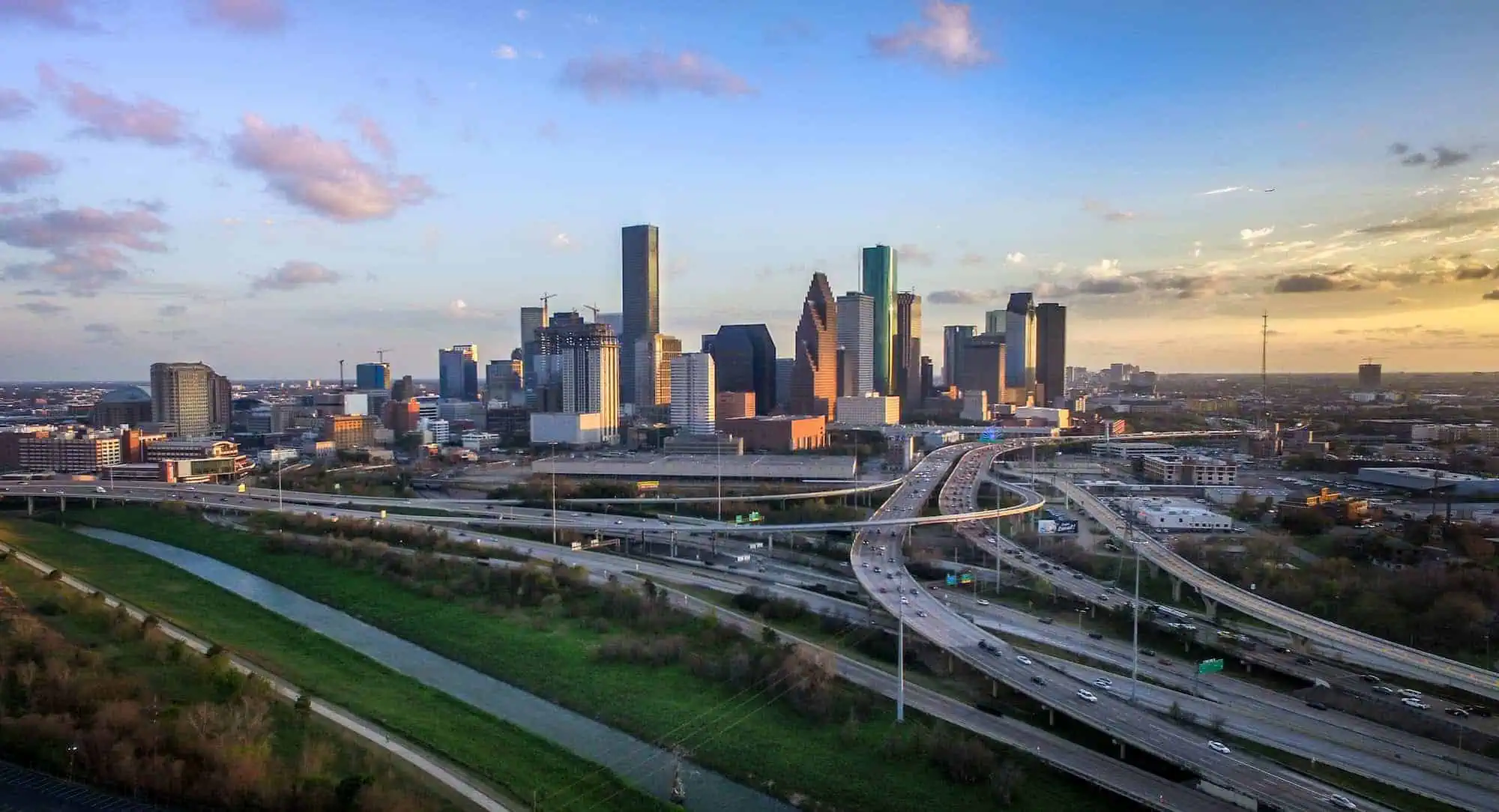
A view of Houston, TX's skyline behind the freeways and highways that lead into and out of the city

Houston is great for people who want to live in a big city without the huge price tag. The job market is strong, especially in health care, energy, and tech, so it’s a smart pick for families and professionals looking for cheaper homes and a lower cost of living. Plus, if you hate shoveling snow, you will love the mild winters.

However, skip Houston if you hate driving. While there are buses and trains, you really need a car to get around most areas. Not to mention, the traffic can get heavy, too. And while you’ll avoid snow and ice, the extreme heat and humidity are inescapable. In general, if you love walkable cities or need four distinct seasons, you might want to look elsewhere.

Moving to Houston: Pros and Cons

Pros

Cons

  • Lower cost of living: Costs are 7% below the national average.
  • Food scene: A wide variety of restaurants with food from all over the world.
  • No state income tax: You get to keep more of your paycheck.
  • Affordable housing: Rent and home prices are lower than in other large cities.
  • Heavy traffic: Commute times can be long.
  • Extreme weather: Summers are very hot and humid.
  • Natural disasters: There’s a risk of hurricanes and flooding.
  • Car dependency: You will likely need a car to get around.

Real Estate in Houston, TX

The Houston housing market is in a great spot for buyers in 2026. While prices in other major cities keep pushing sky-high, the trend here is actually cooling down. According to recent Zillow data, the typical home value in Houston is roughly $260,121. This is a slight dip of about 3% compared to last year, which gives you more negotiating power.


“…[If] you pick one of the trendy Houston neighborhoods inside the Loop, [parking a moving truck gets] a bit trickier. You might need to apply for a street parking permit from the city to avoid tickets.”


Homes are spending about 50 days on the market before going pending. This gives you a little more time to breathe and compare your options than in previous years. You likely won’t have to rush into a bidding war the second a “For Sale” sign goes up.

If you’re not ready to buy, renting is still a solid option. The average rent hovers around $1,528, which is well below the national average. Overall, while prices have cooled a bit, the real estate market in Houston remains stable and active.


Houston Neighborhood Map

Houston is huge, covering more than 600 square miles. Because the city is so spread out, where you choose to settle down changes your daily life completely. Finding the right spot is the most important part of your move to Houston.

Most locals divide the city into two main parts: “Inside the Loop” and “Outside the Loop.” The Loop is the 610 highway that circles the middle of the city. Houston neighborhoods inside this circle are usually older, busier, and closer to big jobs. Areas outside the circle feel more like suburbs with bigger lawns and newer schools.

Whether you want a large house or a high-rise condo, there is a place here for you. Use the map below to see where our top picks are located.

Best Neighborhoods in Houston

Every area in Houston has its own unique personality. Some neighborhoods are perfect for young professionals who want to walk to dinner. Others are built for families who need large backyards and top-rated schools. Your budget will also play a role, as prices can vary wildly from one street to the next.

With dozens of communities to choose from, finding the right one can feel overwhelming. That’s why we narrowed it down for you and made a list of our favorite Houston neighborhoods for 2026.

Downtown

Main Street at night in Houston's Downtown neighborhood

  • Vibe: Busy, energetic, and urban
  • Location: The central core of the city, located inside the I-610 loop
  • Great For: Young professionals and those looking for an active nightlife
  • Average Home Value: $350,669
  • Median Rent: $2,216/month

This two-square-mile area is made up of ten smaller, unique neighborhoods where you can find practically everything you need. If you enjoy being outdoors, there are many grassy spaces like Sam Houston Park, Market Square Park, and Discovery Green for walking or jogging. The area also features the artsy Theater District, the Historic District, and East Downtown, which is home to Shell Energy Stadium.

Downtown is the heart of the city’s diverse and world-class food scene. If you enjoy staying out late, the nightlife along Main Street will keep you busy well into the night. The city even features the Downtown Aquarium. If you want to be right in the middle of a lively, bustling metro area, Downtown is a place you should check out.

Midtown

  • Vibe: High-energy, social, and walkable
  • Location: Directly southwest of Downtown
  • Great For: Young professionals and students
  • Average Home Value: $344,595
  • Median Rent: $1,905/month

This area sits just southwest of Downtown. It offers the same lively feel as the city center but stays a bit quieter during sports events or concerts.

Three METRORail stops along the Red Line run right down Main Street in Midtown. This makes it very easy to get downtown in minutes, but you also have great shopping, dining, and nightlife options right outside your front door.

Midtown Park is an oasis of green spaces that hosts many festivals and markets, and nearby Bagby Park sits close to many restaurants that make this area a paradise for foodies. With students from Houston Community College and many young workers living here, Midtown is full of energy. It’s a top choice for people who want to be in the middle of the action but not necessarily the city center.

Montrose

  • Vibe: Creative, eclectic, and lively
  • Location: Inside the Loop, directly west of Midtown
  • Great For: Young professionals, artists, and foodies
  • Average Home Value: $592,924
  • Median Rent: $2,049/month

Montrose sits just west of Midtown. It’s famous for its creative energy and has a cool, trendy reputation. It’s close to the Museum District and sits near Buffalo Bayou Park to the north. The streets are packed with restaurants, vintage stores, and coffee shops. You will find plenty of green spaces and good schools here, too. It’s one of the most diverse and welcoming spots in the city, so if you want a neighborhood with personality, look no further.

The area is also famous for its historic homes. Many of these older houses are in Hyde Park, a historic section within Montrose. Some of these properties cost millions of dollars, which is out of most people’s price range, but they give the streets a unique charm you won’t find elsewhere.

Getting around is fairly easy. The light rail doesn’t run directly through the neighborhood, but buses on West Gray Street and Westheimer Road can get you to the nearest station in Midtown quickly. That might not matter, though. With so much great food and art right outside your door, you may hardly ever want to leave.

Medical Center Area

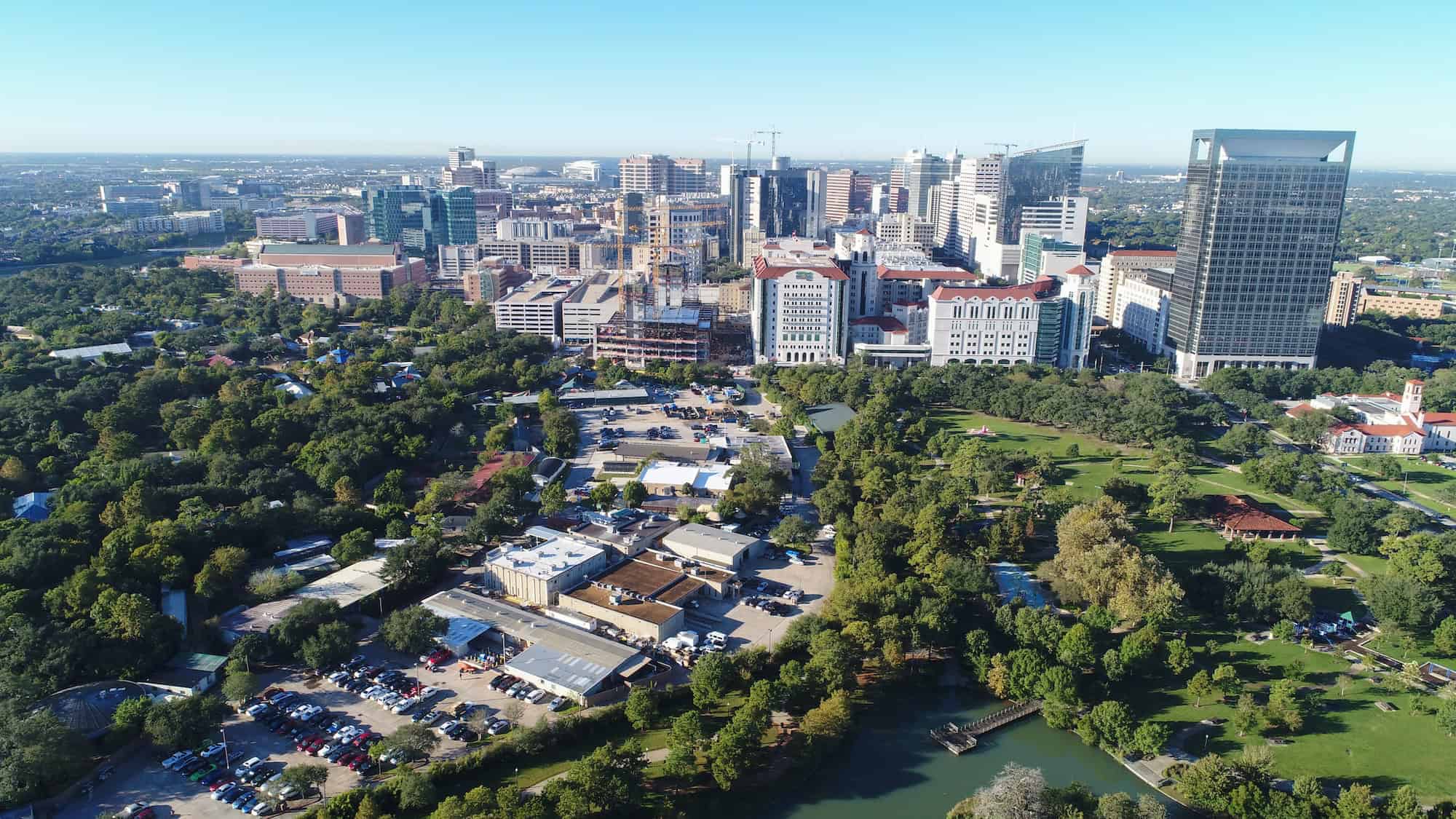
An arial view of Hermann Park and medical facilities in Houston's Medical Center Area

  • Vibe: Bustling and professional
  • Location: South of Downtown, near Rice University and Hermann Park
  • Great For: Medical workers, researchers, and university staff
  • Average Home Value: $509,315
  • Median Rent: $1,964/month

As the name suggests, this area is the heart of Houston’s health care scene. It’s home to the Michael E. DeBakey VA Hospital, Texas Children’s Hospital, the Baylor College of Medicine, and the world-class Texas Medical Center. These centers employ almost 75,000 people. Plus, Rice University is right next door.

It’s not all about work and studying, though. The north end of the neighborhood is perfect for fun and relaxation. Hermann Park covers nearly 450 acres. It offers grassy spaces, a Japanese garden, a golf course, and the Houston Zoo. You can also find a kids’ train and an outdoor theater.

But finding a house here can be tricky. The hospitals and schools take up a lot of land, so inventory is often low. However, if you work in health care or research, living here can make your commute very short. Finding a home in this busy area might be worth the effort to save time every day.

Museum District

  • Vibe: Artsy, cultural, and walkable
  • Location: Directly south of Downtown and adjacent to Hermann Park
  • Great For: Lovers of art, history, and culture
  • Median Home Sale Price: $530,000
  • Median Rent: $2,440/month

While people sometimes argue over the exact borders of the district, one thing is clear: if you love art and history, this is the place to be. True to its name, this neighborhood has over 20 museums, and some are even free to visit! You will find the Museum of Fine Arts here, which is one of the 10 largest in the country.

Getting around the city is easy from this neighborhood, too. The METRO Red Line runs right through the area on San Jacinto and Fannin Streets. On Binz Street, you will find some of the best food in the neighborhood, and whether you crave Southern comfort food or cafe fare, there’s a spot for you.

Memorial

  • Vibe: Suburban, peaceful, and green
  • Location: A 30-minute drive west of Downtown Houston
  • Great For: Families and professionals
  • Average Home Value: $699,633
  • Median Rent: $1,898/month

Memorial feels like a quiet suburb, even though Interstate 10 runs right along its northern edge. Once you enter the neighborhood, you will find big houses, quiet streets, and plenty of green spaces. Thanks to the Edith L. Moore Nature Sanctuary and Buffalo Bayou, you’ll feel like you’re far from the busy city.

And the natural features don’t stop there. Just across the highway, Bear Creek Pioneers Park offers 2,000 acres of trails and wildlife. To the west, George Bush Park is even bigger at 7,800 acres

The west side of Memorial sits near the Energy Corridor, a huge business district full of major energy and tech companies. It’s perfect if you work nearby and want a short commute. With top-rated schools and lots of space, Memorial is a great choice for families who want a balance of nature, their careers, and city life.

The Heights

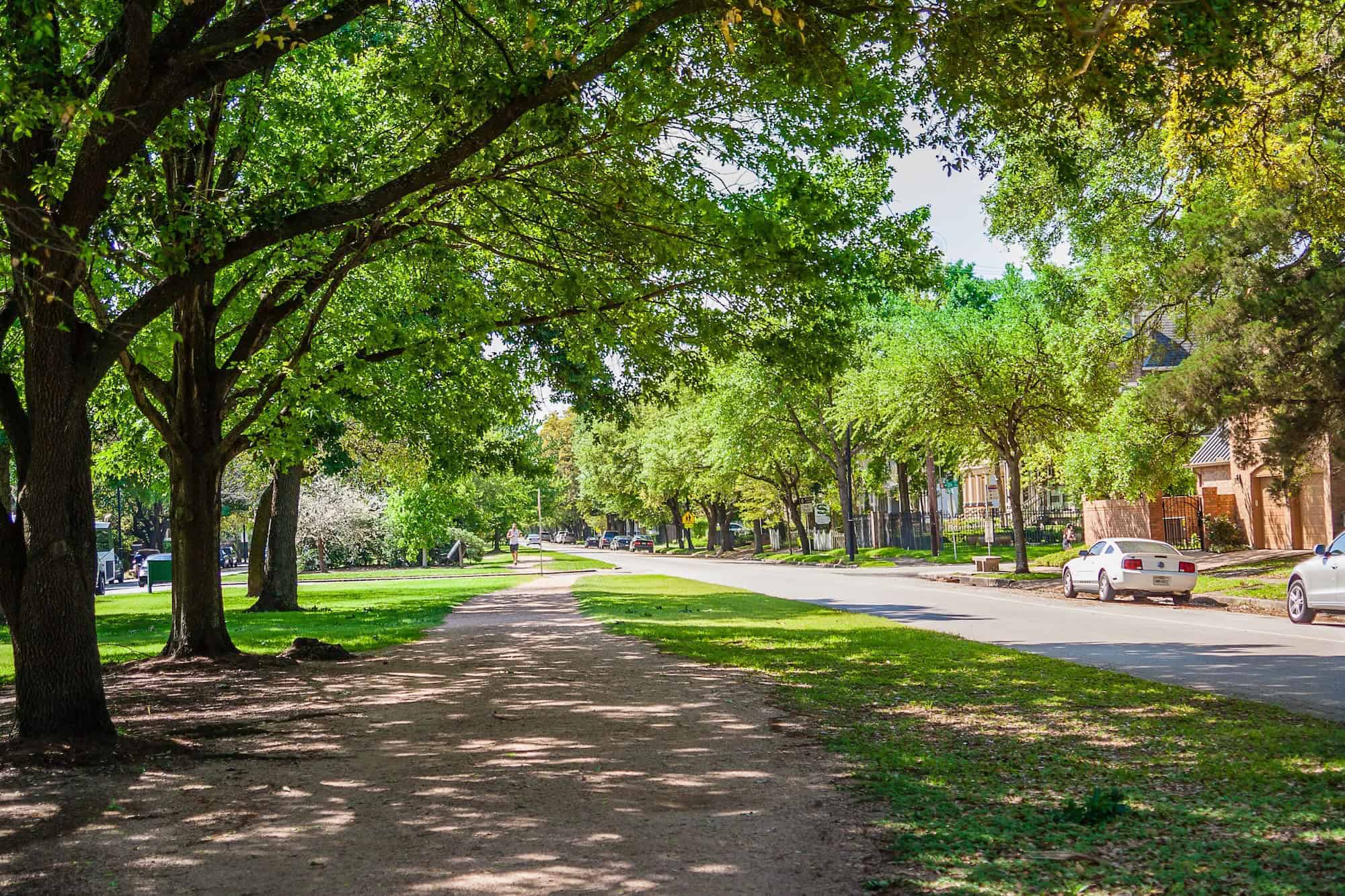
A shaded running path beside a residential street in The Heights neighborhood

  • Vibe: Historic, artsy, and lively
  • Location: Northwest of Downtown, inside the Loop
  • Great For: Young families and creative professionals
  • Average Home Value: $599,192
  • Median Rent: $1,952/month

Back in the 1890s, investors built this community on higher ground. That’s how it got its name. Today, you’ll find homes listed on the National Register of Historic Places all over The Heights.

But there’s much more to do here than just look at old houses. You can catch live music at The Heights Theater or explore the buzzing coffee and craft beer scene. And don’t miss the First Saturday Arts Market! It’s a monthly event with art, food, and music for the whole family.

If you need to commute, the Heights has great access to buses and freeways. Even better, you can hop on your bike. The White Oak Bayou Greenway is a scenic path that runs along the edge of the neighborhood and goes straight into Downtown.


Moving Costs and Logistics in Houston

Choosing between different Houston neighborhoods will change more than just your commute. If you’re heading to the suburbs, you will likely have a wide driveway, whichmakes parking a rental truck simple. But if you pick one of the trendy Houston neighborhoods inside the Loop, things get a bit trickier. You might need to apply for a street parking permit from the city to avoid tickets.

Old streets in places like The Heights are often narrow, and these high-rise condos in Montrose usually have strict rules about elevators. These details directly affect your moving costs. If your movers have to carry a sofa down three flights of stairs or park the truck a block away, it takes more time, and since labor-only movers usually charge by the hour, that extra time adds up.

Here are a few things to watch out for:

  • Traffic jams: If you move during rush hour, you’re paying for time spent sitting on the highway. Try to book your move for mid-morning to skip the jams.
  • Elevator vs. stairs: Many older apartments don’t have elevators. Carrying heavy boxes up to the third floor takes a lot of effort and time. Make sure your movers know this so they bring the right equipment.
  • Truck clearance: Some older neighborhoods have narrow streets or low-hanging trees that can block large moving trucks.
  • Walking distance: If your front door is far away from where the truck can park, this not only adds more time, but can also incur a “long carry” fee.

We recommend keeping a detailed moving checklist to stay on track. Make sure to note any specific rules your new neighborhood or apartment building has regarding moving hours. Being prepared for these small details will help you avoid stress and keep your move as affordable as possible.


How to Choose the Right Mover for Your Houston Move

Finding movers in Houston doesn’t have to be difficult. Whether you’re staying inside the Loop or heading to the suburbs, you want a team that knows the city’s traffic and tight streets. Using a marketplace like HireAHelper makes it easy to compare local options.


“….[You should] skip Houston if you hate driving. While there are buses and trains, you really need a car to get around most areas. Not to mention, the traffic can get heavy, too.”


A good moving company will be transparent about its rates and history. For local moves, you usually pay by the hour. For long-distance trips, the price may depend on the weight or volume of your items. Always look for teams that have plenty of verified, high-quality reviews from real customers.

We recommend checking out some of the best moving companies on our platform to get started. Here are two top-rated providers in the Houston area:

  • A1 Loyalty Movers: Based in Houston, this team has over 13 years of experience. They have completed more than 2,000 moves on our platform with an average rating of 4.9 stars. Customers point out that they’re professional and usually arrive on time.
  • Morris Moving and Storage: This Spring-based company is another local favorite with a 4.7-star rating and over 5,000 completed moves. They’re known for being efficient and strong. They specialize in loading and unloading storage containers with precision.

FAQs About Houston Neighborhoods

How many neighborhoods are there in Houston?

Houston is a huge city with many different areas. Officially, the city is divided into 88 “Super Neighborhoods.” These groups help residents work together on local goals. There are also hundreds of smaller subdivisions and historic areas within those borders.

What are some major Houston neighborhoods?

Major neighborhoods include Downtown, Midtown, and The Heights. These are popular and well-known spots. If you want something quieter or up-and-coming, look at places like the East End or Spring Branch.

What neighborhoods in Houston are walkable?

Montrose and Midtown are the most walkable spots in the city. You can easily reach coffee shops and stores on foot there. Downtown is also very friendly for pedestrians, especially with its underground tunnel system that connects many major buildings.

What neighborhoods in Houston have good nightlife?

If you love a night out, check out Midtown or Washington Avenue. These areas are packed with bars, clubs, and live music. Downtown also has a great scene around Main Street, offering everything from quiet lounges to high-energy dance floors.

What neighborhoods in Houston have parks?

You will find amazing green spaces near the Museum District and Memorial Park. Families often flock to these areas. They offer plenty of room for kids to play and are often considered some of the safest neighborhoods in Houston.

Why Trust HireAHelper

At HireAHelper, we’ve helped hundreds of thousands of people move over the years. This gives us a front-row seat to the moving process. We see which neighborhoods people love and understand the work it takes to get there.

Using our marketplace is simple and fast. Just enter your move date and ZIP code to see upfront pricing from moving companies in Texas. You can compare reviews and book the help you need in minutes. We’ll work to make your transition to a new home as seamless as possible.

×

I'm Moving

Moving? Thinking about moving? Whether your move is off in the distance or you already have one foot out the door, you'll learn about everything you should expect through our useful how-to's, cool articles and much more. It's all specially curated for you in our "I'm Moving" section.
Explore
×

I'm a Mover

For rookies or veterans alike, our "I'm a Mover" section is filled with extensive industry news, crucial protips and in-depth guides written by industry professionals. Sharing our decade of moving knowledge is just one way we help keep our professional movers at the top of their game.
Explore