

In Houston, Downtown, Midtown, and Montrose remain the top neighborhood choices for 2026, and Memorial or The Heights are best for families. But no matter the neighborhood, everywhere in the city keeps on growing. According to HireAHelper’s 2026 Migration Report, more than 50,000 people moved to Houston from outside the area in 2025 alone.
At HireAHelper, we help thousands of people plan their moves every year, so we see exactly where locals and newcomers settle down. And from that experience, we know the best neighborhood isn’t necessarily the one with the most parks or best nightlife, it’s the one that matches your lifestyle. No matter what you’re looking for, you can find it inour top picks for Houston neighborhoods in 2026.
Should You Move to Houston?
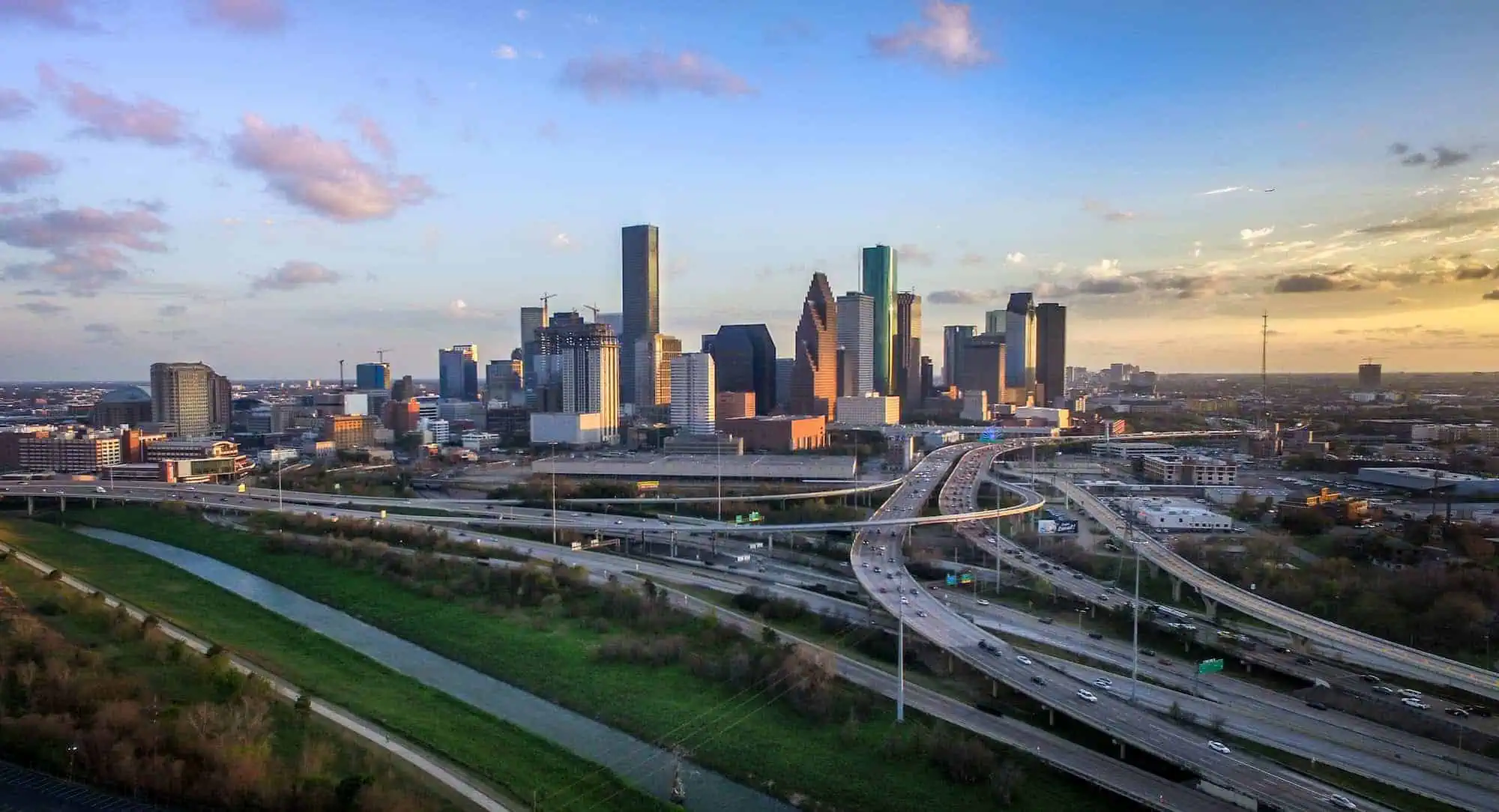
Houston is great for people who want to live in a big city without the huge price tag. The job market is strong, especially in health care, energy, and tech, so it’s a smart pick for families and professionals looking for cheaper homes and a lower cost of living. Plus, if you hate shoveling snow, you will love the mild winters.
However, skip Houston if you hate driving. While there are buses and trains, you really need a car to get around most areas. Not to mention, the traffic can get heavy, too. And while you’ll avoid snow and ice, the extreme heat and humidity are inescapable. In general, if you love walkable cities or need four distinct seasons, you might want to look elsewhere.
Moving to Houston: Pros and Cons
|
Pros |
Cons |
|
|
Real Estate in Houston, TX
The Houston housing market is in a great spot for buyers in 2026. While prices in other major cities keep pushing sky-high, the trend here is actually cooling down. According to recent Zillow data, the typical home value in Houston is roughly $260,121. This is a slight dip of about 3% compared to last year, which gives you more negotiating power.
“…[If] you pick one of the trendy Houston neighborhoods inside the Loop, [parking a moving truck gets] a bit trickier. You might need to apply for a street parking permit from the city to avoid tickets.”
Homes are spending about 50 days on the market before going pending. This gives you a little more time to breathe and compare your options than in previous years. You likely won’t have to rush into a bidding war the second a “For Sale” sign goes up.
If you’re not ready to buy, renting is still a solid option. The average rent hovers around $1,528, which is well below the national average. Overall, while prices have cooled a bit, the real estate market in Houston remains stable and active.
Houston Neighborhood Map
Houston is huge, covering more than 600 square miles. Because the city is so spread out, where you choose to settle down changes your daily life completely. Finding the right spot is the most important part of your move to Houston.
Most locals divide the city into two main parts: “Inside the Loop” and “Outside the Loop.” The Loop is the 610 highway that circles the middle of the city. Houston neighborhoods inside this circle are usually older, busier, and closer to big jobs. Areas outside the circle feel more like suburbs with bigger lawns and newer schools.
Whether you want a large house or a high-rise condo, there is a place here for you. Use the map below to see where our top picks are located.
Best Neighborhoods in Houston
Every area in Houston has its own unique personality. Some neighborhoods are perfect for young professionals who want to walk to dinner. Others are built for families who need large backyards and top-rated schools. Your budget will also play a role, as prices can vary wildly from one street to the next.
With dozens of communities to choose from, finding the right one can feel overwhelming. That’s why we narrowed it down for you and made a list of our favorite Houston neighborhoods for 2026.
Downtown

- Vibe: Busy, energetic, and urban
- Location: The central core of the city, located inside the I-610 loop
- Great For: Young professionals and those looking for an active nightlife
- Average Home Value: $350,669
- Median Rent: $2,216/month
This two-square-mile area is made up of ten smaller, unique neighborhoods where you can find practically everything you need. If you enjoy being outdoors, there are many grassy spaces like Sam Houston Park, Market Square Park, and Discovery Green for walking or jogging. The area also features the artsy Theater District, the Historic District, and East Downtown, which is home to Shell Energy Stadium.
Downtown is the heart of the city’s diverse and world-class food scene. If you enjoy staying out late, the nightlife along Main Street will keep you busy well into the night. The city even features the Downtown Aquarium. If you want to be right in the middle of a lively, bustling metro area, Downtown is a place you should check out.
Midtown
- Vibe: High-energy, social, and walkable
- Location: Directly southwest of Downtown
- Great For: Young professionals and students
- Average Home Value: $344,595
- Median Rent: $1,905/month
This area sits just southwest of Downtown. It offers the same lively feel as the city center but stays a bit quieter during sports events or concerts.
Three METRORail stops along the Red Line run right down Main Street in Midtown. This makes it very easy to get downtown in minutes, but you also have great shopping, dining, and nightlife options right outside your front door.
Midtown Park is an oasis of green spaces that hosts many festivals and markets, and nearby Bagby Park sits close to many restaurants that make this area a paradise for foodies. With students from Houston Community College and many young workers living here, Midtown is full of energy. It’s a top choice for people who want to be in the middle of the action but not necessarily the city center.
Montrose
- Vibe: Creative, eclectic, and lively
- Location: Inside the Loop, directly west of Midtown
- Great For: Young professionals, artists, and foodies
- Average Home Value: $592,924
- Median Rent: $2,049/month
Montrose sits just west of Midtown. It’s famous for its creative energy and has a cool, trendy reputation. It’s close to the Museum District and sits near Buffalo Bayou Park to the north. The streets are packed with restaurants, vintage stores, and coffee shops. You will find plenty of green spaces and good schools here, too. It’s one of the most diverse and welcoming spots in the city, so if you want a neighborhood with personality, look no further.
The area is also famous for its historic homes. Many of these older houses are in Hyde Park, a historic section within Montrose. Some of these properties cost millions of dollars, which is out of most people’s price range, but they give the streets a unique charm you won’t find elsewhere.
Getting around is fairly easy. The light rail doesn’t run directly through the neighborhood, but buses on West Gray Street and Westheimer Road can get you to the nearest station in Midtown quickly. That might not matter, though. With so much great food and art right outside your door, you may hardly ever want to leave.
Medical Center Area
- Vibe: Bustling and professional
- Location: South of Downtown, near Rice University and Hermann Park
- Great For: Medical workers, researchers, and university staff
- Average Home Value: $509,315
- Median Rent: $1,964/month
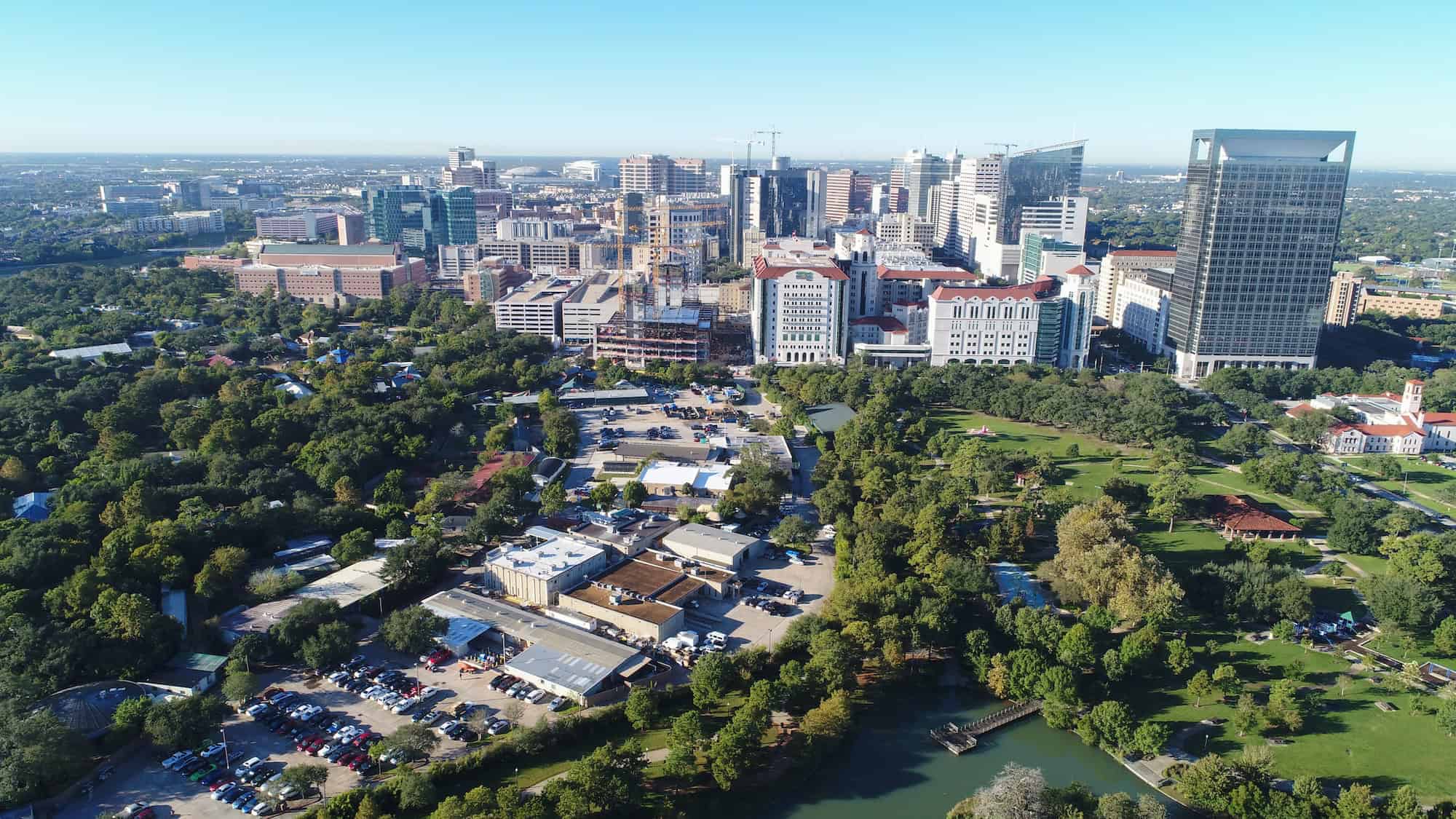
As the name suggests, this area is the heart of Houston’s health care scene. It’s home to the Michael E. DeBakey VA Hospital, Texas Children’s Hospital, the Baylor College of Medicine, and the world-class Texas Medical Center. These centers employ almost 75,000 people. Plus, Rice University is right next door.
It’s not all about work and studying, though. The north end of the neighborhood is perfect for fun and relaxation. Hermann Park covers nearly 450 acres. It offers grassy spaces, a Japanese garden, a golf course, and the Houston Zoo. You can also find a kids’ train and an outdoor theater.
But finding a house here can be tricky. The hospitals and schools take up a lot of land, so inventory is often low. However, if you work in health care or research, living here can make your commute very short. Finding a home in this busy area might be worth the effort to save time every day.
Museum District
- Vibe: Artsy, cultural, and walkable
- Location: Directly south of Downtown and adjacent to Hermann Park
- Great For: Lovers of art, history, and culture
- Median Home Sale Price: $530,000
- Median Rent: $2,440/month
While people sometimes argue over the exact borders of the district, one thing is clear: if you love art and history, this is the place to be. True to its name, this neighborhood has over 20 museums, and some are even free to visit! You will find the Museum of Fine Arts here, which is one of the 10 largest in the country.
Getting around the city is easy from this neighborhood, too. The METRO Red Line runs right through the area on San Jacinto and Fannin Streets. On Binz Street, you will find some of the best food in the neighborhood, and whether you crave Southern comfort food or cafe fare, there’s a spot for you.
Memorial
- Vibe: Suburban, peaceful, and green
- Location: A 30-minute drive west of Downtown Houston
- Great For: Families and professionals
- Average Home Value: $699,633
- Median Rent: $1,898/month
Memorial feels like a quiet suburb, even though Interstate 10 runs right along its northern edge. Once you enter the neighborhood, you will find big houses, quiet streets, and plenty of green spaces. Thanks to the Edith L. Moore Nature Sanctuary and Buffalo Bayou, you’ll feel like you’re far from the busy city.
And the natural features don’t stop there. Just across the highway, Bear Creek Pioneers Park offers 2,000 acres of trails and wildlife. To the west, George Bush Park is even bigger at 7,800 acres
The west side of Memorial sits near the Energy Corridor, a huge business district full of major energy and tech companies. It’s perfect if you work nearby and want a short commute. With top-rated schools and lots of space, Memorial is a great choice for families who want a balance of nature, their careers, and city life.
The Heights
- Vibe: Historic, artsy, and lively
- Location: Northwest of Downtown, inside the Loop
- Great For: Young families and creative professionals
- Average Home Value: $599,192
- Median Rent: $1,952/month
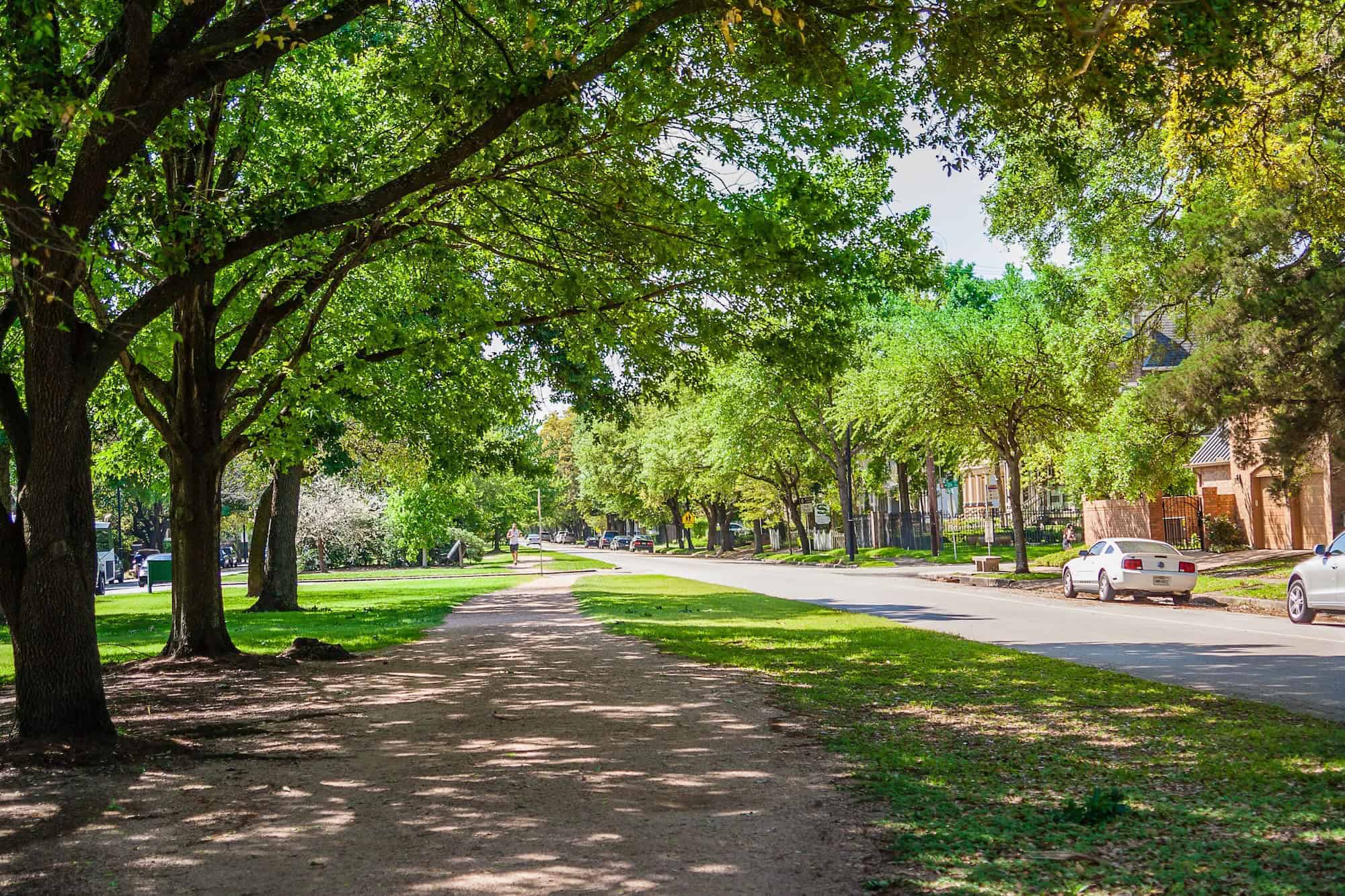
Back in the 1890s, investors built this community on higher ground. That’s how it got its name. Today, you’ll find homes listed on the National Register of Historic Places all over The Heights.
But there’s much more to do here than just look at old houses. You can catch live music at The Heights Theater or explore the buzzing coffee and craft beer scene. And don’t miss the First Saturday Arts Market! It’s a monthly event with art, food, and music for the whole family.
If you need to commute, the Heights has great access to buses and freeways. Even better, you can hop on your bike. The White Oak Bayou Greenway is a scenic path that runs along the edge of the neighborhood and goes straight into Downtown.
Moving Costs and Logistics in Houston
Choosing between different Houston neighborhoods will change more than just your commute. If you’re heading to the suburbs, you will likely have a wide driveway, whichmakes parking a rental truck simple. But if you pick one of the trendy Houston neighborhoods inside the Loop, things get a bit trickier. You might need to apply for a street parking permit from the city to avoid tickets.
Old streets in places like The Heights are often narrow, and these high-rise condos in Montrose usually have strict rules about elevators. These details directly affect your moving costs. If your movers have to carry a sofa down three flights of stairs or park the truck a block away, it takes more time, and since labor-only movers usually charge by the hour, that extra time adds up.
Here are a few things to watch out for:
- Traffic jams: If you move during rush hour, you’re paying for time spent sitting on the highway. Try to book your move for mid-morning to skip the jams.
- Elevator vs. stairs: Many older apartments don’t have elevators. Carrying heavy boxes up to the third floor takes a lot of effort and time. Make sure your movers know this so they bring the right equipment.
- Truck clearance: Some older neighborhoods have narrow streets or low-hanging trees that can block large moving trucks.
- Walking distance: If your front door is far away from where the truck can park, this not only adds more time, but can also incur a “long carry” fee.
We recommend keeping a detailed moving checklist to stay on track. Make sure to note any specific rules your new neighborhood or apartment building has regarding moving hours. Being prepared for these small details will help you avoid stress and keep your move as affordable as possible.
How to Choose the Right Mover for Your Houston Move
Finding movers in Houston doesn’t have to be difficult. Whether you’re staying inside the Loop or heading to the suburbs, you want a team that knows the city’s traffic and tight streets. Using a marketplace like HireAHelper makes it easy to compare local options.
“….[You should] skip Houston if you hate driving. While there are buses and trains, you really need a car to get around most areas. Not to mention, the traffic can get heavy, too.”
A good moving company will be transparent about its rates and history. For local moves, you usually pay by the hour. For long-distance trips, the price may depend on the weight or volume of your items. Always look for teams that have plenty of verified, high-quality reviews from real customers.
We recommend checking out some of the best moving companies on our platform to get started. Here are two top-rated providers in the Houston area:
- A1 Loyalty Movers: Based in Houston, this team has over 13 years of experience. They have completed more than 2,000 moves on our platform with an average rating of 4.9 stars. Customers point out that they’re professional and usually arrive on time.
- Morris Moving and Storage: This Spring-based company is another local favorite with a 4.7-star rating and over 5,000 completed moves. They’re known for being efficient and strong. They specialize in loading and unloading storage containers with precision.
FAQs About Houston Neighborhoods
How many neighborhoods are there in Houston?
Houston is a huge city with many different areas. Officially, the city is divided into 88 “Super Neighborhoods.” These groups help residents work together on local goals. There are also hundreds of smaller subdivisions and historic areas within those borders.
What are some major Houston neighborhoods?
Major neighborhoods include Downtown, Midtown, and The Heights. These are popular and well-known spots. If you want something quieter or up-and-coming, look at places like the East End or Spring Branch.
What neighborhoods in Houston are walkable?
Montrose and Midtown are the most walkable spots in the city. You can easily reach coffee shops and stores on foot there. Downtown is also very friendly for pedestrians, especially with its underground tunnel system that connects many major buildings.
What neighborhoods in Houston have good nightlife?
If you love a night out, check out Midtown or Washington Avenue. These areas are packed with bars, clubs, and live music. Downtown also has a great scene around Main Street, offering everything from quiet lounges to high-energy dance floors.
What neighborhoods in Houston have parks?
You will find amazing green spaces near the Museum District and Memorial Park. Families often flock to these areas. They offer plenty of room for kids to play and are often considered some of the safest neighborhoods in Houston.
Why Trust HireAHelper
At HireAHelper, we’ve helped hundreds of thousands of people move over the years. This gives us a front-row seat to the moving process. We see which neighborhoods people love and understand the work it takes to get there.
Using our marketplace is simple and fast. Just enter your move date and ZIP code to see upfront pricing from moving companies in Texas. You can compare reviews and book the help you need in minutes. We’ll work to make your transition to a new home as seamless as possible.
