How To Safely (and Quickly) Move a Photo Studio

Author:

Publish Date:

Last Modified Date:

Category: How To Pack, Pro Packing Guides

Tags: Tags: , , , , , , , , , , , , , , , , , ,

We often see advice on packing up your kitchen or safely transporting houseplants , and even steps for packing your entire home. But what happens when it’s not just your personal things in boxes, but something that affects your livelihood?

That’s a big issue for many photographers. With thousands of dollars in gear and a business that can’t afford delays, there’s no room for broken equipment or lost time. Every lens, light, and cable matters.

So to help make a move with all your equipment less daunting, we spoke with Seattle-area professional photographer Brianna Bray and asked her to walk you through the most important things about moving your photo studio.


Why Is Moving Photography Equipment a Big Deal?

Flat lay of photography equipment including cameras, lenses, and tripods.

Photography is more than just a creative hobby. It’s a profession that relies on attention to detail, timing, and expensive gear. A single camera body can run upward of $3,000. That’s before adding lenses, lighting kits, backdrops, or editing hardware. In fact, the average professional photographer has between $1,000 and $10,000 worth of equipment. You don’t want that tossed into a moving truck like a box of kitchen towels!

On top of that, the U.S. photography industry is valued at $16.2 billion, and many photographers are always on the move. They travel or relocate to meet client demand and find new opportunities. But when you’re packing up and moving your entire business, you’re moving high-value, highly sensitive tools of the trade. That means you have to plan ahead to make sure it all stays safe and free from damage.

The good news is, just like professional piano movers exist, so do professional studio movers.


How Professional Photographers Prepare to Move Photography Equipment

Whether you’re planning to move your photo studio somewhere permanent or just temporarily, the pros advise you to create a detailed moving plan anytime your equipment is transported anywhere.

Back Up and Secure Digital Assets

Person plugging in external hard drive to secure digital assets.

Before you unplug a single cord, back up your digital assets. Then, back them up again.

Client files, editing presets, and project archives are the lifeblood of your photography business. Losing them during a move could mean delays, broken contracts, and lost trust. The safest route? Back up everything to both a cloud storage service and an external hard drive. Redundancy is your friend here.

Cloud services like Google Drive, Dropbox, or Backblaze offer offline security and easy access from anywhere. But you should also invest in an external hard drive or SSD that stays with you during the move.

When packing your tech — laptops, monitors, or external drives — treat them with the same care you give your cameras. Use original boxes if you still have them, or wrap each item in anti-static foam or padded sleeves. Label cables and accessories clearly. You don’t want to waste hours untangling mystery cords later.

Give Your Photo Equipment Its Own Packing Day

When you decide to move, give yourself plenty of time to pack your equipment carefully. “It’s always better to be safe than sorry. Take your time packing your equipment and triple-check your gear,” says Brianna Bray. She recommends relegating your photo studio packing to its own day.

If you have glass or other delicate items, check out these tips for packing fragile items.

Write Down Important Measurements

If you have any large photo equipment in your studio — or just a lot of it —write down the height and width of your largest equipment and the dimensions of your new location. If you don’t have the measurements of the new area, ask your realtor to help you get them. If this isn’t possible, research storage units in the area so you have a backup plan in case something doesn’t fit.


“When it comes to your camera and lenses, you might be tempted to bubble wrap everything and put it in a box. However… [f]or this part of your gear, a proper camera bag or hard case is non-negotiable.”


Here’s a helpful guide for determining the space needed for a photography studio. An estimate also helps you decide what size moving truck you may need, whether you rent a truck or hire professional movers.

Inventory and Photograph Your Equipment

No matter if you’re an amateur or professional photographer, you likely have a lot of equipment. It’s a great habit to create an inventory list for every single item you own.

Your photo equipment inventory list should include:

  • Cameras
  • Tripods
  • Computer equipment
  • Lighting apparatus
  • Backdrops
  • Photo gear cases
  • Camera bags
  • Lenses
  • Digital accessories
  • Reflectors

Make a separate column to record the condition of all of your items. Even better if you take photos and create digital receipts in case you need to be reimbursed through your insurance. You can use a pre-written equipment list to help jog your memory.

Consider Camera Moving Insurance

Before you start packing, take a serious look at insurance for your photography gear. If you’re moving a studio full of equipment, you’ll want insurance.

Here’s what you need to know about how it works.

What is camera moving insurance?

While standard homeowners or renters policies only cover theft or fire, camera moving insurance is coverage that protects your gear specifically during transit. So if there’s accidental damage or loss while your equipment is being moved to your new place, you can submit a claim and hopefully collect reimbursement or get a replacement.

How does it work?

There are typically two routes:

What does it cost?

Pricing varies, but most policies range from $150–$500/year, depending on:

  • The total value of your gear
  • Whether the coverage is domestic or international
  • Your deductible
  • The types of risks you want covered (damage, loss, theft, etc.)

If you only have a beginner DSLR and a tripod, insurance might not be worth it. But if your camera bag is worth more than your car, insurance is one of the smartest moves you can make.

Pro tip: After you create an equipment inventory, share it with your insurance company. Include photos, condition notes, and receipts to streamline the policy setup. This also saves you a ton of time in case you ever need to file a claim.


Camera Cases

Open camera case with organized photography equipment and lenses.

When it comes to your camera and lenses, you might be tempted to bubble wrap everything and put it in a box. However, bubble wrap is not the best option in this scenario.

For this part of your gear, a proper camera bag or hard case is non-negotiable. Brianna suggests investing in a high-end case to avoid both damage and stress on your equipment during a move: “A hard case with shock-absorbent padding inside is always going to be the best option.”

These cases can be pricey in themselves, especially for higher-end brands like Pelican. So, if you’re already spending this much to keep your equipment safe, it’s best to get a custom case that will fit your equipment like a glove. Here are some of the most popular brands you might consider using.

Budget Option: Casematix Hard Shell Camera Case

If you’re moving on a budget, Casematix makes a solid basic camera hardshell case. It won’t be as durable and weather-resistant as a more deluxe option, but the egg-crate foam on the inside and hard plastic shell still make this a top choice for moving day.

The Casematix 8-inch hard case is a solid budget option. It’s lightweight yet rugged with foam padding and an IP67 waterproof rating. It provides dependable protection for compact equipment at an entry‑level price point.

Higher-End Option: Pelican 1510

It’s no secret in the photography world that Pelican makesgreat cases. For photographers who can spend a little more on a case, Pelican 1510 is a great carry-on-sized option. It’s perfect for short or long distances and has both roller wheels and a pull handle.


“If you’re moving your studio across the country…[keep] your cameras with you at all times. If you’re flying [instead], put your most expensive camera in your carry-on.”


The 1510 is a military‑grade, waterproof hard case designed for airline carry‑on sizes. It is pretty durable and will keep your gear safe in all kinds of weather and temperatures. You can customize it with foam inserts, padded dividers, or mesh lid organizers for the best fit and protection.

Custom Option: My Case Builder, Nanuk 945

For those looking for a custom hardshell, My Case Builder offers a variety of options. The Nanuk 945 is fully customizable. You can use a builder app to look up your camera equipment and find foam that matches your gear. It’s also dustproof, waterproof, and fully TSA-compliant.

Pro tip: If you earn income from your photography and pay taxes, you may be able to deduct these cases as a business expense when you file your taxes. Double-check with your accountant for specific tax guidance.

For the Rest: Bubble Wrap, Stretch Wrap, and Foam

Boxes and bubble wrap can work nicely for less expensive and fragile equipment. This would be for your lights, backdrops, props, and hard goods. Just make sure that you buy enough so you don’t have to skimp on moving day.

Bubble Wrap

Hands rolling out bubble wrap for packing fragile items.

Bubble wrap is best for anything you don’t want getting scratched, or that needs some extra cushion, like monitors, external hard drives, battery grips, and props. We recommend getting a large, 100-foot roll of bubble wrap from an office supply store. For more on what type you should buy and how to wrap your belongings, check out our Bubble Wrap 101 guide.

Stretch Wrap

Stretch wrap or shrink wrap is typically used to hold things like moving blankets in place on large furniture. But in the case of packing up a photography studio, its main use will be to secure the legs of tripods and umbrellas, light stands, and stacks of hard goods. Make sure you get a dispenser as well — it can be tricky to use without one.

Packing Foam/Dish Foam

Packing foam can be used as a soft layer of protection and is good for smaller components like filters and lights. The foam prevents scratches and dust from forming, and adds just a little bit of extra padding.

How to Pack Camera Equipment If You Don’t Have a Special Case

Try to avoid using plain old cardboard boxes with no padding for your camera equipment. Get boxes that are big enough to properly fit your gear but not so large that everything you pack into one rattles around. You’ll also want to have enough on hand to avoid overloading a single box. Not only are too-heavy boxes dangerous to lift, but they also run the risk of collapsing.

If cardboard won’t protect everything you have, use a wooden moving crate instead. They might be a little more expensive, but they’re a better way to prevent damage during a move.

Pro tip: No matter what you use, avoid empty space inside the packing space. Empty spaces allow items to move and knock into each other in transit, which can cause damage. Bubble wrap is a great way to take up space, but you can also use crumpled newspaper, dish towels, or a bunch of plastic bags.


Transporting Your Studio

Got everything packed? Now you have to choose the best way to get things moved. Photo studios come in many different shapes and sizes, which means you have a lot of options on how to move them. Here are the best ones.

You Should Always Hand-Carry Your Photography Equipment, If Possible

Someone carrying a camera case in the airport.

If you’re moving your studio across the country, Brianna suggests keeping your cameras with you at all times. If you’re flying, she highly recommends you put your most expensive camera in your carry-on.

If you can’t carry your gear with you, keep it packed separately from everything else and clearly label those boxes as fragile. You might also want to give them an additional label, so you know that it’s your photo gear.

Mailing Your Camera Equipment Is a Realistic Option

You also have the option to use a postal provider like FedEx to ship your gear to you. If you do this, make sure you plan to ship them far enough in advance to ensure you’re not waiting for your items to arrive after you, and cover your purchase with insurance and tracking.

As Brianna explained;

“If you have to ship your gear, I would heavily research the carrier company prior to using their services. See what company has the least issues, best insurance options, ideal shipping speed, etc. Make sure everything is labeled as ‘fragile’ as well.”

Also, don’t advertise that the boxes contain photography gear. A simple “PS” (for photo studio) will tell you the materials belong in your studio. There’s no need to announce to potential thieves that the box contains expensive goods.

Properly Secure Them in Your Rental Truck or Vehicle

If you’re transporting your items in your own vehicle, rental truck, or container, ask yourself:

  • Will all the items fit in my vehicle?
  • Do I need to rent a moving truck?
  • Can I drive a moving truck large enough to fit my studio?

When packing the vehicle or container, you’ll need to make sure your cases and boxes are secure. This means:

  • Renting or buying moving blankets
  • Using straps and bungee cords to secure boxes in place
  • Creating a way to prevent theft during the move

And it might seem obvious, but Brianna stresses, “Never leave your equipment unattended. I always have my gear properly packed and then stored in the trunk of my vehicle. You never know when your car could be broken into so it’s best to not leave anything in sight.”

Get Moved by Professional Studio Movers

Your photography studio is a large investment — and might also serve as your livelihood. Because of this, you may want to hire a professional moving company to help. Some moving companies are actually professional studio movers. This means they have experience moving equipment just like yours.

“Cloud services like Google Drive, Dropbox, or Backblaze offer offline security and easy access [to your backup data] from anywhere. But you should also invest in an external hard drive or SSD that stays with you during the move.”

If you’re moving locally, take time to get to know moving companies in your area. You may be able to find movers who have experience moving studios. You can also skip some of the legwork and instead see mover profiles, compare quotes, and read customer reviews all on HireAHelper.


Common Mistakes to Avoid

Now that you’re aware of all the options you have when it comes to moving your photo studio, there are still some pitfalls you should be aware of. After all, missing certain steps in the process can be costly. Here are some of the most common mistakes photographers make when moving:

  • Not doing backups before you unplug: Make sure all your photo files, presets, and client records are backed up to at least one other location (ideally two).
  • Not giving yourself enough time: Packing delicate gear takes time. Coordinating transport is also a challenge. Give yourself more time than you think you’ll need. This is especially important if you have any upcoming shoots booked close to your move date.
  • Not labeling boxes clearly: A box labeled “Fragile” is a start, but it’s typically not enough. Mark your gear boxes with something specific (like “PS Lights” or “PS Cases”). That way, you know exactly what’s inside and where it needs to go.
  • Forgetting to update your location online: Do clients book you through a website, Google Business profile, or online marketplace? Update your location ASAP. You don’t want to miss potential gigs or cause confusion for new clients.
  • Leaving equipment unsecured during transport: If you don’t strap down cases and protect your gear, you can cause thousands in damages.

If you can avoid these mistakes, you’ll make your move more efficient — and safeguard the tools you rely on to do your job.


8 Jobs That Are Great If You Move A Lot (And How Much They Pay)

Author:

Publish Date:

Last Modified Date:

Category: Movehacks

Tags: Tags: , , , , , , , , , , , , , , , , , , , , , , , , ,

Do you long for a job that pays you to travel? If you’ve been stuck in the endless nine-to-five slog for a long time, the idea of traveling the world can seem like a distant and unattainable dream.

However, thanks to the internet and our always-connected world, there are plenty of jobs out there that can offer the freedom and fun of being constantly on the move alongside a regular paycheck. It’s true! Here are just a few of the remote-working jobs that will take you out of the cubicle and into the world.

Web Designer

This classic, on-the-go title is a classic for a reason.

Thanks to the wonderful technology of the internet, many jobs no longer require you to be physically present in the company you’re working for, which has created a generation of people who call themselves digital nomads.

What do web designers do?

Web design is the process of creating websites, from the aesthetics right down to navigation logic and, by its very nature, is done entirely online. This means that if you’ve got a laptop and a good Wi-Fi connection, it usually doesn’t matter where in the world you are.

How do I get started?

There are a number of routes you can take to become a qualified web designer, and because they’re so different, each employer will tend to have their own explicit definition of “qualified” which will often be detailed on a job listing. 

For most employers, entry requirements include skills in visual design, UX, SEO, coding software (like HTML, CSS and Javascript) and design software (like Photoshop and Illustrator). Many websites curate freelance job offerings, like the site Working Nomads, allowing you to make sure you’ve always got another project in the pipeline.

Want to start taking classes? Know that some employers may only be looking for a candidate with a college-level certificate in web design or a multimedia subject.

Once your skill set is up to par, you’ll be greatly rewarded. According to Payscale, entry-level salaries for full-time web designers can start around $33k, but quickly rise to $73k with more experience.

If you’re going freelance, you can set your own rates that reflect your level of experience, how picky the client is, how difficult the project is, etc. According to NJ Creatives Network, the average rate per hour is $59. That’s not bad going if you’re a nomad on the move.

Virtual Assistant

Virtual assistants (VAs) work remotely, and their job is to carry out administrative tasks for various clients. These tasks could be within the professional, technical or creative sectors and could include anything from bookkeeping and data entry to social media management and desktop publishing.

What do virtual assistants do?

Businesses tend to hire VAs because they don’t need someone full-time and in-house to do certain admin tasks. By taking on a VA, this saves the company money on space and providing full-time benefits.

To get started as a VA, you will need a reliable phone and internet connection, and at least five years of experience in a senior admin role within an office environment. If you can’t deal with a PC meltdown on your own, or can barely stay on top of your own to-do list, this may not be the role for you.

Get Help Loading Your Container

See prices for movers by the hour – instantly.

Read real customer reviews.

Easily book your help online.


How do I get started?

But if you are an organized person with in-house admin experience and a decent understanding of word processing, email and contact management software, you’re on the right track to becoming a VA. Bear in mind that your prospective clients will want to be sure you know what you’re doing before employing you. Therefore, getting some experience within a VA company, such as Zirtual, is also a good idea before you take the plunge.

Once you’ve learned the ropes, it’s fairly easy to fly solo. First steps include deciding your niche, setting up your brand and website, marketing your services, and getting your kit ready, such as a work phone and laptop.

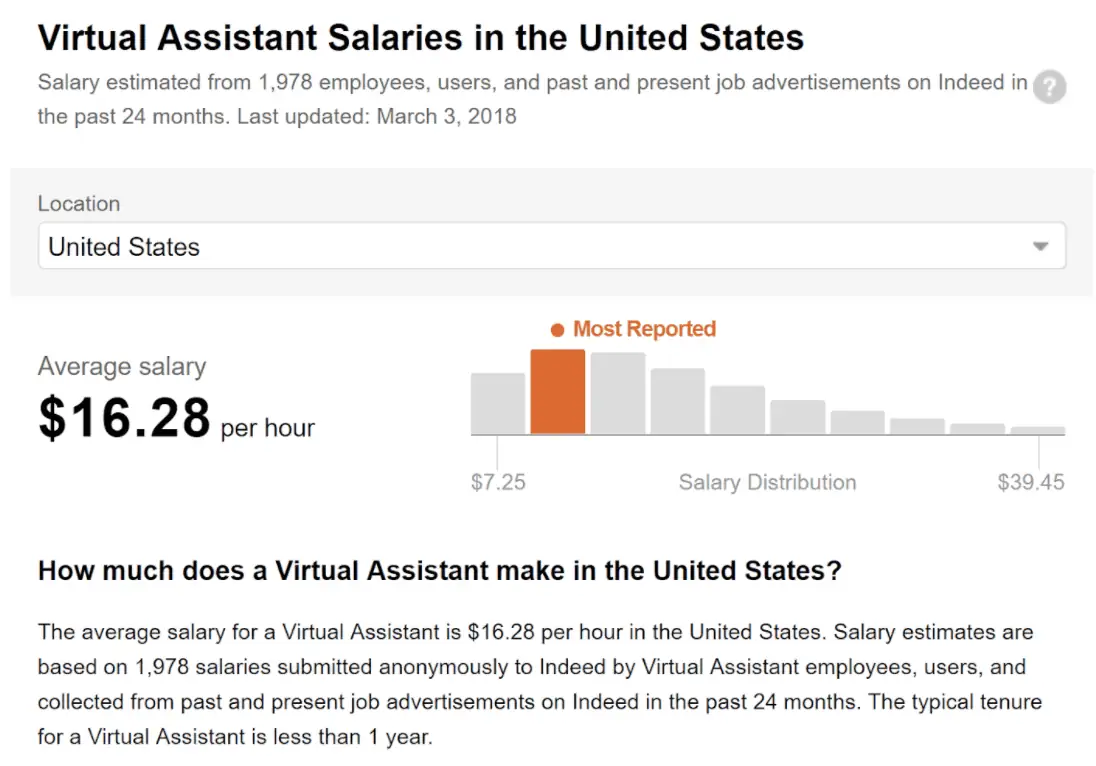
But you’re not doing this job for free—so you’ll need to decide your rate too. Though the earning potential at a basic level is low, you can make up to $100 an hour for a specialist virtual role, which is why it’s important to seriously consider your niche before you launch your brand, rather than take on any client that needs a hand with admin.

Source: Indeed

The real appeal of being a virtual assistant is working at home, working when you want, and supreme job flexibility. Also, if you find that freelancing as a VA is not working for you, but you love the job, you can always transition agency-side and reap the benefits of a permanent position once again.

Digital Marketer

Digital marketing is another job that perfectly suits remote working, as all you need is a laptop and a café or hotel with a decent Wi-Fi connection.

Digital marketing is a branch of marketing that sits under the umbrella term “online marketing.” Working inside the digital marketing industry involves developing a range of multi-channel communication strategies, such as social media, SEO, PPC, email, mobile marketing, and affiliate marketing. You can work horizontally across all of these things, or you can specialize in a certain vertical.

What do digital marketers do?

As a digital marketer, general duties include, creating and uploading website copy, writing and sending email campaigns, designing website banners, communicating with affiliate networks and partners, and managing contact databases, just to name a few.

How do I get started?

Start by getting some full-time, in-house experience. While employers will take on entry-level professionals with no experience, many seek candidates with a business, marketing, media, or journalism degree. If you lack this certificate, there is a broad range of digital marketing taster courses available online, such as the free courses from Google Digital Garage, which will help boost your skills for the digital world and help you land a work placement.

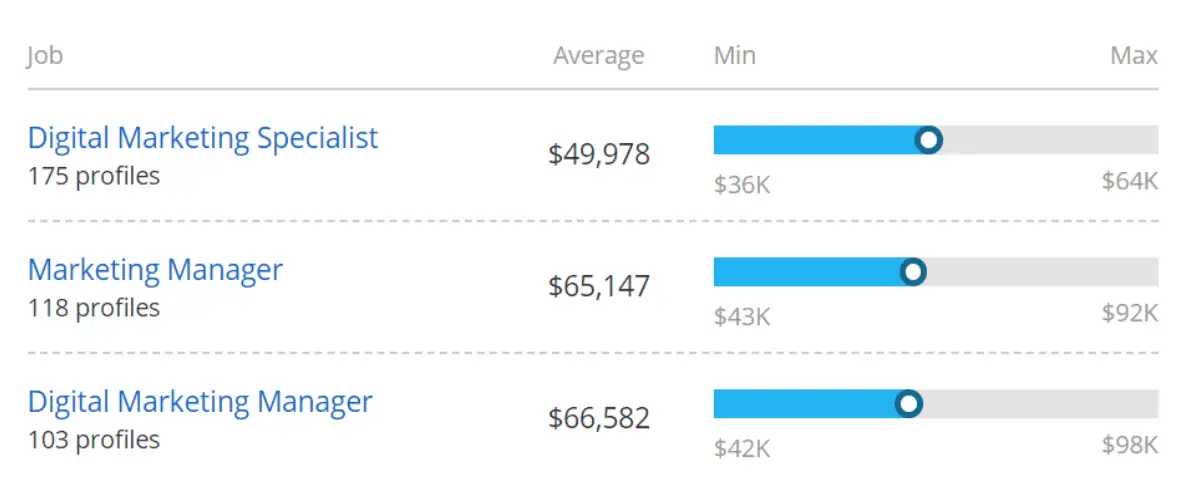
This time spent boosting your knowledge, ability and experience will eventually pay off. The average entry-level salary is only around $28k, but it quickly raises to at least $50k with a little experience.

Source: Payscale

Online Tutor

Did you know that you can teach online too? There are places on the web where tutoring is a viable job, and it can be a great job to have if you’re moving a lot.

What do online tutors do?

Traditional tutoring involves one-to-one teaching sessions with a student, helping them improve academically. As a tutor, you may go through the class material, homework, or help your pupils improve their note-taking.

Online tutors, or “e-tutors”, conduct the same line of work, but via online media. Sessions are typically carried out through video chat, but also phone calls and email. This means you can be anywhere in the world and still communicate.

How do I get started?

To become qualified, you tend to need a bachelor’s degree in your chosen subject, but be aware that the credentials to teach as a tutor vary from state to state. You need to be aware of homeschooling laws which may interfere with your work, as they are a completely different ball game regarding qualified teacher status.

If you’re inexperienced, it may be worth working for a tutoring company as it will deal with finding your clients and paperwork. Alternatively, you can go solo. Both options involve the potential to tutor on the move.

Online tutoring is well-paid work when you consider how few hours tutoring can take up. Glassdoor reports that the average hourly rate is $12 per hour, but salaries can go up to $55k in certain areas of the U.S.

Freelance Photographer

Becoming a successful freelance photographer requires tenacity as much as talent, and an income is never guaranteed. But travel photographers and photojournalists see some of the most amazing parts of the world, as well as some of the most distressing.

What do freelance photographers do?

Studio photography, product photography, stock photography, nature photography, pet photography … there are as many different types of freelance photography as there are things in the world! There are also some incredible options for travel, and quite often all you need is a camera and a laptop, enabling you to send your photographs to editors across the world in mere moments.

How do I get started?

A photography degree will be useful but not always necessary, as the most important thing is a good eye for a shot and a well-put-together portfolio demonstrating your talent.  

Pricing photography is quite a difficult task for any professional. Put your rate too high, and you may scare your prospect away. Too low though, and you could end up forcing yourself out of business.

Advice from photography expert Rosh Sillars states that if you’re an amateur, you should aim to charge between $25 to $100 an hour. You should go for the higher end if you have an online portfolio or dedicated website for your services.

If you’re a student photographer, shoot for anywhere from $35 to $90 per hour. This should increase to $50 to $160 per hour for semi-pros, and to $75 to $300+ per hour for the seasoned professionals.

Translator

Whether you can speak one other language or many, your skills as a translator are invaluable. How invaluable? According to the Bureau of Labor Statistics, this number is currently set to grow 46% by 2020, with the projected workforce of interpreters reaching almost 93,000 strong.

What do translators do?

The work usually involves converting written material from a “source language” to a “target language,” which is done on a computer and doesn’t require you to be physically present.

There is a variety of content that translators work with, including commercial, educational, legal, literary, and scientific, so previous experience or expertise in one area will be necessary, and you will have to do some training in translation before you take on any clients. 

How do I get started?

Translate Media boasts plenty of research for in-house translation opportunities, internships, and yes, freelance translation.

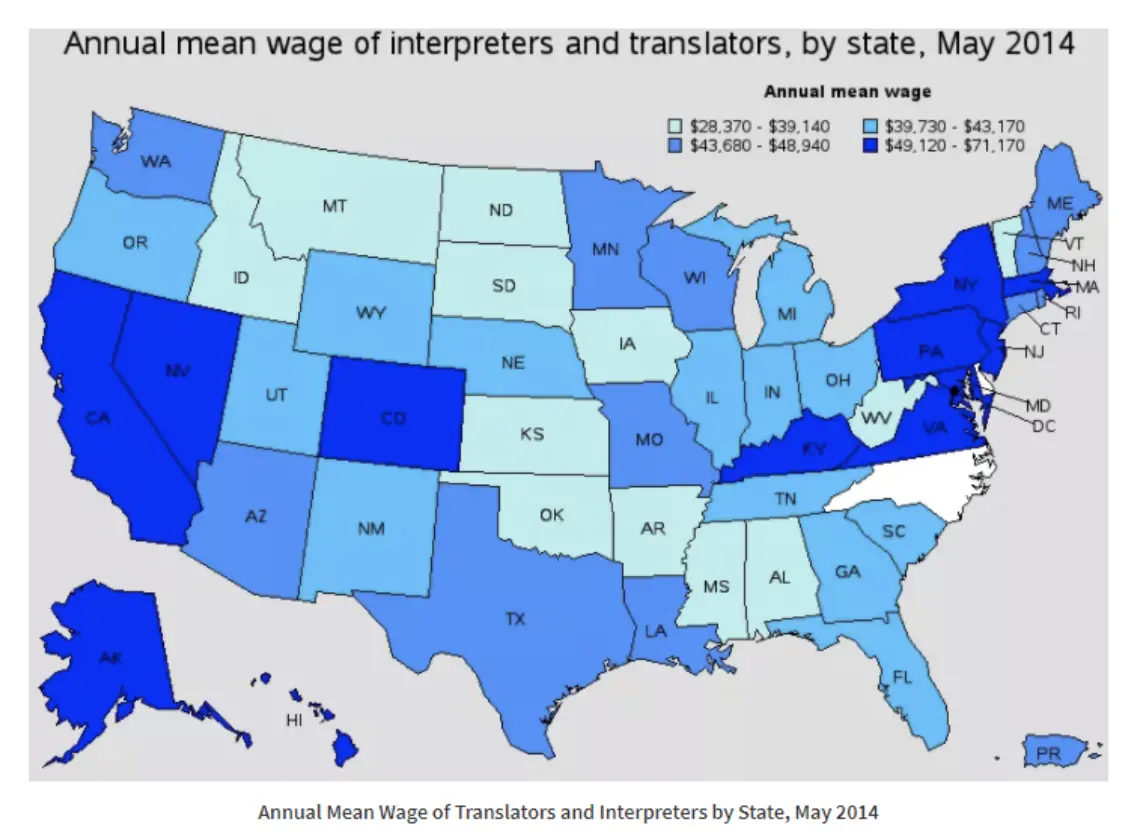
Translators can make a lot of money, especially if you specialize in a more difficult or in-demand language. Most translation agencies allow people to work at home, and freelancing is widespread throughout the industry. Here is a handy map of translation salaries from 2014, ranging everywhere from just under $30 thousand a year, to just over $70 thousand a year.

Source: Translation Rules

Freelance Writer

Are you reading this right now? Do you read articles online often? Thank your local freelance writer, and they’re easy to find, as many of them work remotely filling up coffee shops all around the world.

What do freelance writers do?

The internet is made of words, and somebody needs to write them. From copywriting to ghostwriting to content writing, there is an abundance of freelance writing opportunities if you know the right places to look.

How do I get started?

It can be difficult to get a freelance writing career off the ground, as most potential employers will want to see a large portfolio of good quality writing before they agree to give you a gig. But if you’re prepared to start small and put in the effort, this is very achievable.

If you have very little experience, the easiest way to gain some is by contacting small blogs and the websites you love for guest writing opportunities. While you may have to do a small amount of freebie work, it’s the simplest way of boosting your portfolio without enrolling in a course. You just need the drive and basic knowledge of spelling and grammar to succeed.

Your freelance career will take off more quickly if you have a background in writing, such as journalism. Job sites like Upwork are a great place to start getting clients and building your portfolio as you can advertise your services and display your most recent projects.

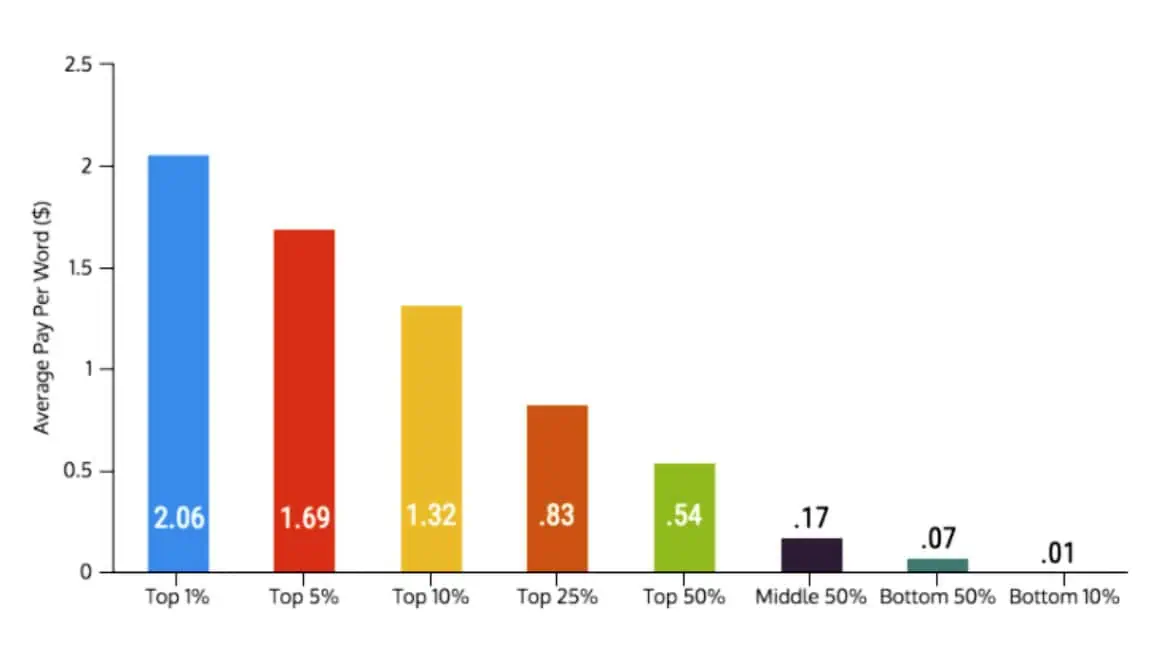
Most freelance writers charge by project or per number of words. The rate you should choose all depends on your years of experience and your subject matter knowledge. Typically, entry-level freelance writers can earn $30 per 800 words, whereas experienced writers can earn up to $100 for the same project. While you debate your rate, it’s also worth checking out the site Who Pays Writers to see what businesses are willing to pay for your talents.

In other words, that means that the average freelance writer makes .17 cents a word.

Caption: Venngage

While you’re at it, if you’ve got solid writing skills, setting up a website of your own is a great way to monetize your talents. Blogging is big business.

You might consider running ads on your blog. These “Ads by Google” will appear on your website and reflect the content you post—therefore, they don’t interfere too much with the aesthetic or branding of your blog. Every time a blog visitor clicks on one of these ads, you earn yourself some cash.

You can also monetize your blog by writing affiliate reviews. That means you write a review of a product on your blog. In your review, you insert a link that users can follow to buy the product. If a user clicks that link and makes a purchase, you can receive up to 10% commission. Now that’s easy money for a remote worker.

E-commerce Merchant/”Dropshipper”

One final flexible income route to go down if you move a lot is creating a dropshipping store. That might sound like a bunch of buzzwords, but it’s a lot simpler than it sounds.

What do e-commerce merchants/”dropshippers” do?

This job involves displaying products from someone’s digital store on your site. Once a customer buys one of these products, you place the order with the third-party supplier, and then the supplier pays you, as you’ve just given them extra visibility and a sale. It’s the quickest and easiest way to get set up as an e-commerce seller (other than selling on Amazon using their Fulfillment By Amazon option).

How do I get started?

This is less of a job you seek and more of an additional income if you have the right avenues open to you. But it can be underutilized.

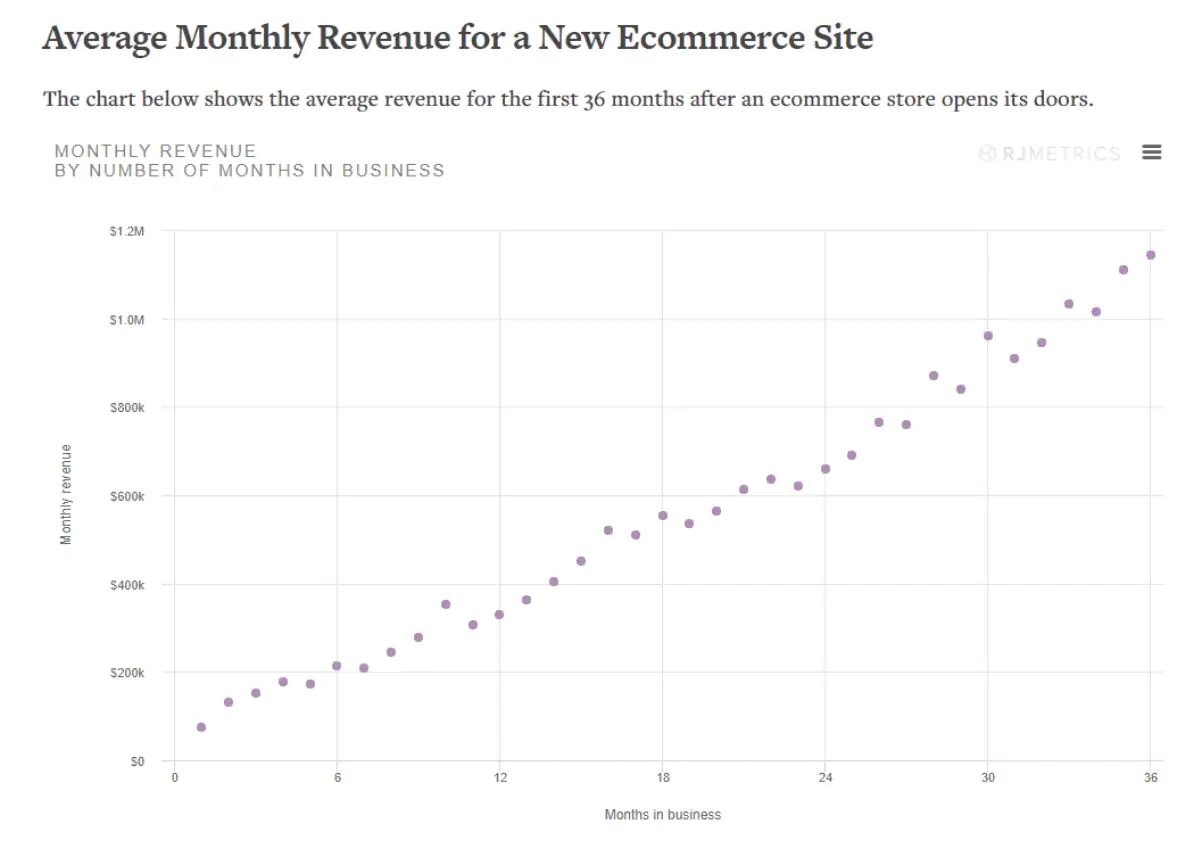
E-commerce is a potentially lucrative market to get into—if you get the product price and value proposition right. Though the initial investment in time and strategy can be hefty, the potential for earning a solid monthly revenue is high:

Source: The Data Point

Just remember to keep innovating and listening to your customers, and e-commerce could be the key to your remote work success.

These eight jobs are just a few of the options available if you’d like to make the leap from desk-bound worker bee to free-flying digital nomad. Especially as freelancing is convenient for the worker and reduces costs for the employer, it is an increasingly popular method of employment, offering you an incredible opportunity to travel while still earning a good salary. That’s what I call a win-win for everyone involved.


Victoria Greene is a branding consultant and freelance writer. On her blog, VictoriaEcommerce, she offers tips on how ecommerce business owners can take advantage of the latest technology in the industry.
×

I'm Moving

Moving? Thinking about moving? Whether your move is off in the distance or you already have one foot out the door, you'll learn about everything you should expect through our useful how-to's, cool articles and much more. It's all specially curated for you in our "I'm Moving" section.
Explore
×

I'm a Mover

For rookies or veterans alike, our "I'm a Mover" section is filled with extensive industry news, crucial protips and in-depth guides written by industry professionals. Sharing our decade of moving knowledge is just one way we help keep our professional movers at the top of their game.
Explore