

Although summer is the most popular moving season for several reasons, moving in the winter also comes with plenty of advantages — like scoring lower rates thanks to off-peak season pricing.
However, there’s one major challenge when moving in the winter: an icy pavement. Slippery outdoor surfaces on moving day can be extremely dangerous to anyone carrying heavy boxes or furniture. The good news? Treating your walkways with sand or salt can make these surfaces a lot safer to walk on.
In this article, we’ll break down how salt and sand work, when to use each, and eco-friendly alternatives to help you pick the safest option for your icy moving path.
There’s Ice on Your Driveway. Now What?
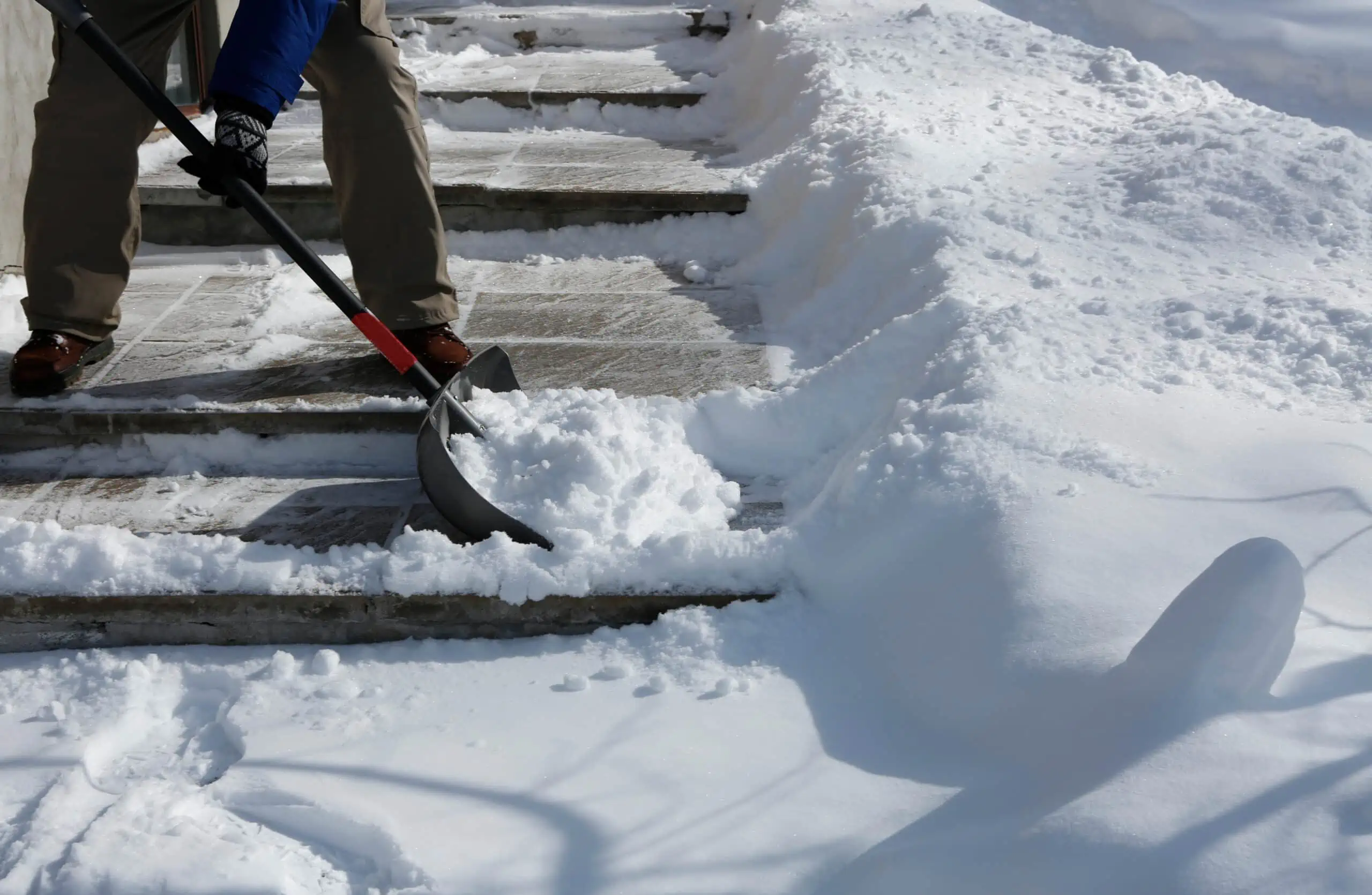
Whether it was a surprise snowstorm or ice storm, you might wake up on moving day to discover your driveway covered in a sheet of ice. This creates conditions for a risky move. But don’t panic — there are simple ways to manage it.
Prevention is key. As our notable expert, Kevin the Mover explains:
“If you live where temperatures can remain below freezing for days on end, it becomes more important to keep shoveling, multiple times over multiple days if necessary, to keep all that snow from getting packed down and turning into ice.”
It’s important to treat surfaces with salt, sand, or even both. Salt takes time to work, so be sure to apply it quickly after waking up, and tell anyone helping with your move to wear nonslip shoes to prevent them from slipping when they go outside while carrying your stuff.
Crampons are another good option. Also used by mountain climbers, these traction aids attach to the bottom of your boots and have small metal spikes that give your shoes more grip when walking on slippery paths. But these need to be used outdoors only — they can scratch indoor flooring. If you have enough people, you can form an assembly line, and those with crampons can stay outside. Otherwise, you need to lay down a floor runner inside the house.
What’s the Difference Between Salt and Sand for Ice?
Salt and sand are both useful for tackling slippery walkways — but they work in completely different ways. Depending on your home, the weather, and other circumstances, you may prefer one option over the other.
Sand for Ice
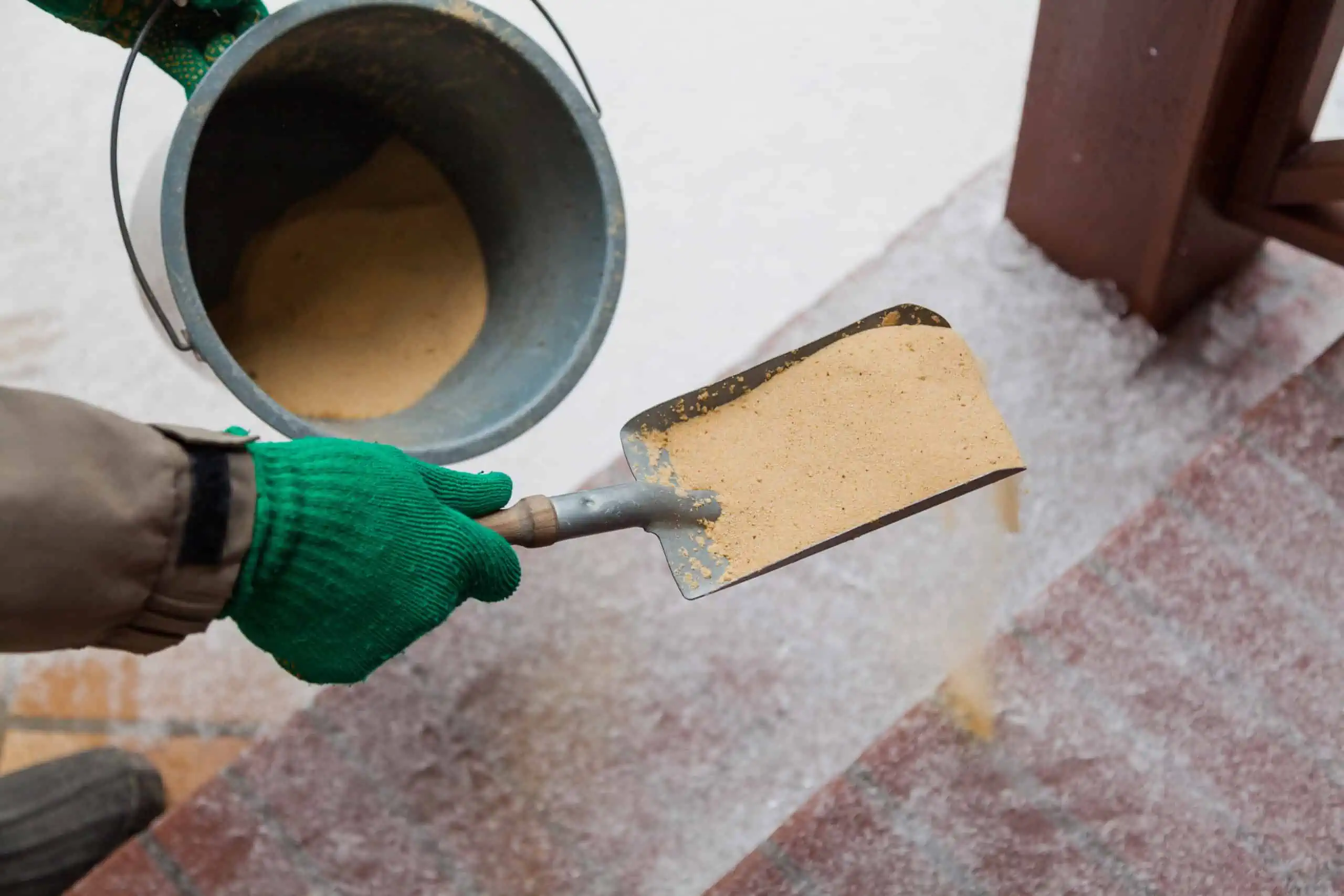
Sand works by providing more traction on slick surfaces, but it doesn’t melt ice. Many types of sand are available at hardware stores, but the kind you want to use is gritty and specifically designed for treating driveways and walkways. Play sand, the kind used in sandboxes, isn’t a good choice because it’s too smooth and fine.
Sand is easy to apply, works immediately, and tends to be cheaper and more eco-friendly than salt. Just make sure you reapply it often on moving day because it gets packed down with a lot of foot traffic. It also becomes less effective the more it gets ground into the snow and ice.
Sand won’t harm your water supply directly, but keep in mind that using too much can clog your storm drain over time, especially if it’s the only outlet for melting snow and ice. However, unless you’re using a ton of bags of it, this shouldn’t be a problem.
Salt for Ice
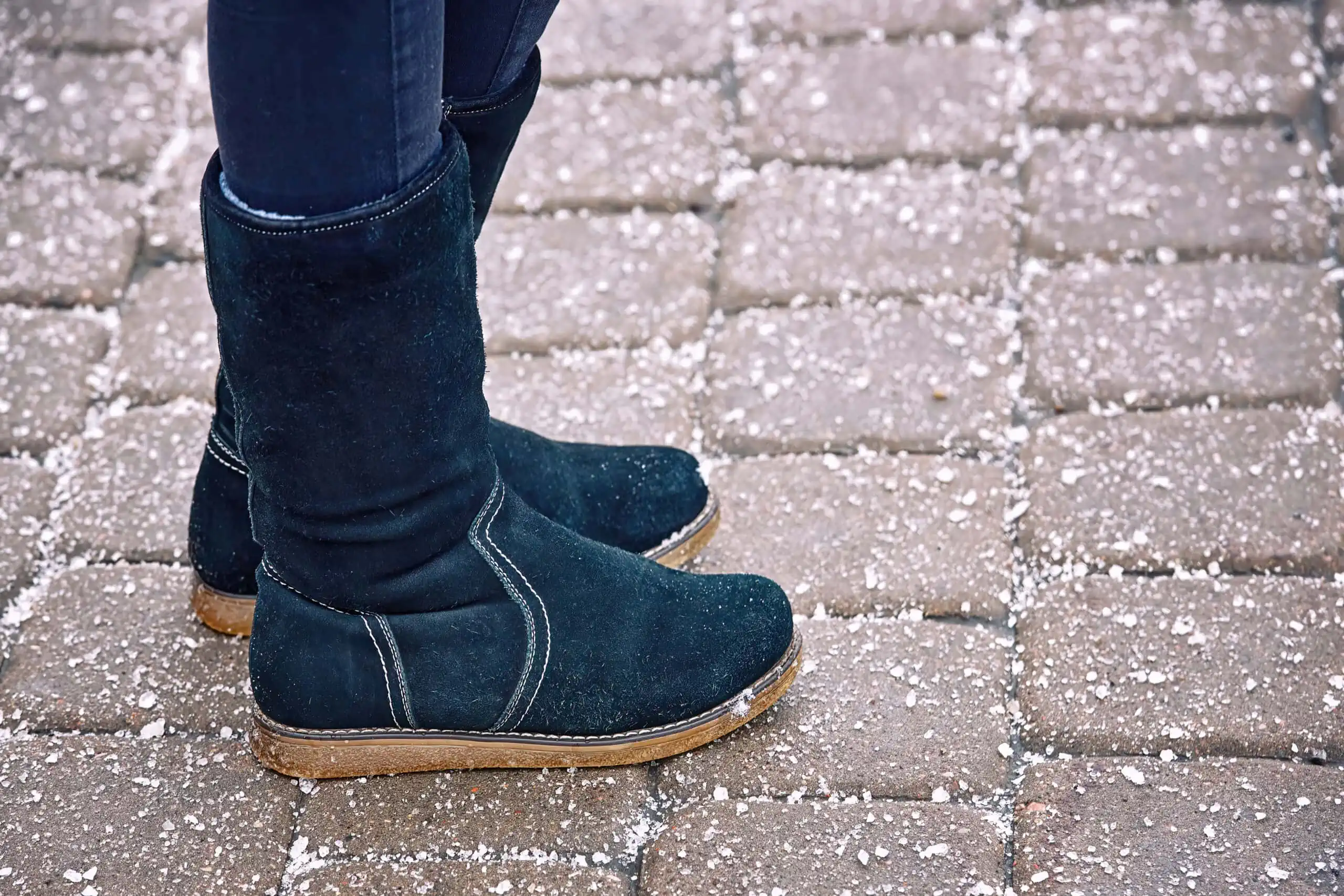
Salt melts ice by creating a brine solution — basically salty water with a lower freezing point. So when it’s super cold out (below 32 degrees Fahrenheit) the ice will melt away because of the salt. And, thankfully, the brine makes it more difficult for water to refreeze later.
Table salt won’t work for the job, though. You need to look for gritty rock salt at your local hardware store. It’s widely available and comes in bags or plastic containers that are easy to hold and spread over your icy pavement. Also, you usually don’t need to reapply salt once it’s down.
Salt takes time to work, so it should be applied well before your movers get there. The night before is best, if you can.
One drawback of using salt is its impact on the environment. Rock salt contains trace amounts of cyanide, which can cause problems for local wildlife and possibly your pets.
“Driveway salt causes contact burns if it gets between pets’ paws,” notes Kevin the Mover. If your furry friends are around on moving day, keep them away from driveway salt. Winter booties can help protect their paws and keep them comfortable, too.
When to Use Salt vs. Sand
While there are no hard and fast rules for when to use salt or sand, a few guidelines can help you decide which is best.
- Use salt when it’s above 15 degrees Fahrenheit. It still works below that, but it’s much slower and less effective. It starts taking longer to melt the same amount of ice, and some might not melt at all. But if melting the ice is your priority, use salt.
- Sand can be used in extremely cold weather, when salt is less effective and/or when traction is your priority. Sand is also a great option for steep or sloped driveways.
When in doubt, use both salt and sand. Salt melts the ice, and sand adds grip where it’s needed most.
Alternatives to Salt and Sand
If you don’t have any salt or sand on hand, or you’re concerned about its impact on the environment, consider these alternatives:
- Calcium chloride: Calcium chloride has a lower freezing point than regular rock salt, and also works a bit faster because it gives off heat as it dissolves in water. However, it leaves a slimy residue behind, and it’s corrosive to metal.
- Magnesium chloride: This works the same way as calcium chloride (releases heat as it reacts with water) and is slightly less corrosive. It’s often included as an ingredient in pet-friendly ice-melting products. However, magnesium chloride is damaging to concrete because it seeps into pores and causes the concrete to expand and crack.
- Kitty litter: While it has no ice-melting properties, kitty litter can provide some traction on slippery outdoor surfaces in a pinch.
- Beet juice: The sugars in beet juice work hand in hand with salt brine to lower the freezing point of water more effectively, making it a good choice to melt ice faster in extremely cold temperatures. It’s been used in commercial applications along with salt brine to treat roads and highways.
- Coffee grounds: The gritty texture of coffee grounds makes them a good alternative to sand for increased traction on ice.
- Sawdust or wood ash: Both of these eco-friendly alternatives can provide more traction on snow and ice.
- Heated driveway mats: If your budget can spare it, heated driveway mats prevent snow and ice from piling up where they’re rolled out. They can create a safe walking path from the house to the moving truck.
Eco-Friendly Salt Alternatives

With all the pros and cons of these salts and chemicals, you may be wondering if there’s an option out there that’s safe for your pets and the environment.
The good news is that there are many pet-friendly alternatives to rock salt out there. Even better, these also tend to be the ones that are easier on the environment as well.
The nonprofit media organization Grist lists some pet-friendly salt alternatives to help with ice melting. Chemical CEO has a list of a few alternatives to rock salt in an editorial, and Earth Guardians Online also offers some advice and options. However, if your concern runs really deep, your best bet is to look at the ingredients on any brand that claims to be pet or eco-friendly and research what effects it can have.
Roadway Ice and Moving Trucks
Go slow when driving a moving truck on icy roads, and stick to flat routes if you can instead of hills. But be careful — going too slow up a hill may cause you to lose momentum and slide backward.
“When in doubt, use both salt and sand. Salt melts the ice, and sand adds grip where it’s needed most.”
If you get stuck in snow or lose traction, make sure to have some key supplies on hand: a shovel, a bag of sand, and salt. Use the shovel to dig yourself out of the snow, then spread sand on the ground underneath spinning wheels to help with traction. Salt can be used to melt the ice and snow, but give it time to kick in.
Safety Tips for Ice on Moving Day
Icy conditions can make moving day feel challenging at an already stressful time. Here are 5 tips to help you stay safe and ensure your winter moving day is smooth.
- Shovel snow before applying salt or sand. Salt and sand are most effective when applied directly to the ground. Make sure the area is clear of snow before adding salt or sand (or both!)
- Apply salt and sand ahead of moving day. “Salt and sand the day before your move, if you can,” says Kevin the Mover. “Clear away any chunks or other bits of snow to keep it from refreezing overnight. If you absolutely have to apply salt the morning of your move, keep in mind the heat from all the foot traffic will help the melting process.” Adding some sand on top of the salt will help with traction as well.
- Assess the size of the areas to be salted or sanded. This will help you figure out how much salt and sand you need to purchase.
- Wear proper supportive footwear. Shoes with nonslip soles or those designed to provide more traction will help during the winter moving process. For people staying outside, crampons added to the bottom of boots can help provide more grip while walking on ice.
- Use a protective floor runner.To prevent indoor floors from getting excessively wet or scratched, ask your movers if they provide a protective floor runner or if you can add one to your moving package. Using one can prevent indoor falls and make it safer for movers.
FAQs
Still have questions about moving in the winter? Check out these FAQs.
Does salt ruin your driveway?
Yes, rock salt can potentially damage both asphalt and concrete driveways, especially if the concrete is new. The brine seeps into cracks and breaks down the structure during freeze-thaw cycles, creating new cracks. To prevent extensive damage, limit how much salt you use and consider other deicing alternatives.
Can I mix salt and sand together?
Yes, salt and sand can be mixed together for an effective way to manage snow and ice. Salt melts the ice, and sand provides extra traction.
Is sand safe for pets?
Yes, sand is generally considered safe for pets, as it doesn’t have any harmful chemicals.
What temperature is too cold for salt to work?
Salt is less effective at melting ice when temperatures drop below 15 degrees Fahrenheit. Other chemicals, like calcium chloride and magnesium chloride, can help rock salt be more effective when it’s super cold.