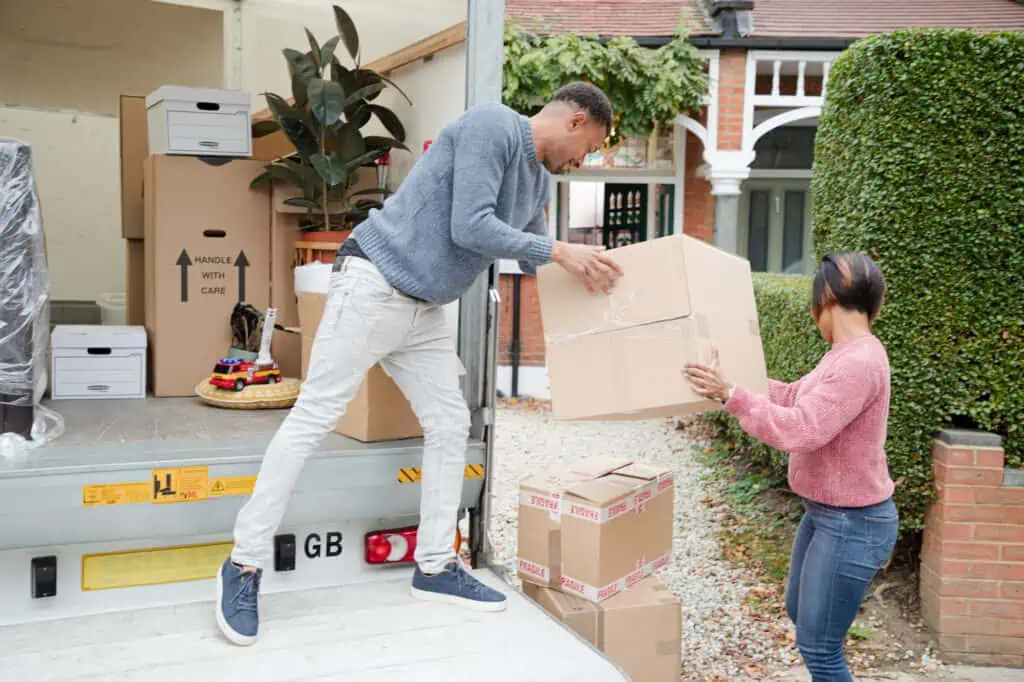
Moving Box Sizes: The Complete Guide

Author:

Publish Date:

Last Modified Date:

Category: Moving Advice

Tags: Tags: , , , , , , , , , , , , , , , , , , , , , , , , ,

Moving box sizes vary widely, and choosing and packing the right size takes some planning. Carelessly tossing all your dishes into an extra-large box spells trouble when it’s time for the mover to load it, and the bottom gives out from the weight.

A typical moving box size is 18″ x 18″ x 16″ (medium-sized), with a volume of 3 cubic feet. These boxes work well for most household items, but sometimes they won’t be right for packing certain things. Toys, oddly shaped items, bulky blankets, books, and many other odds and ends probably won’t fare well in this box size.

When you’re moving, it’s best to use a range of box sizes and types to give every item the right protection and support. We break down everything you need to know, from standard moving box sizes to when and how to use specialty boxes.


Standard Moving Box Sizes and Dimensions
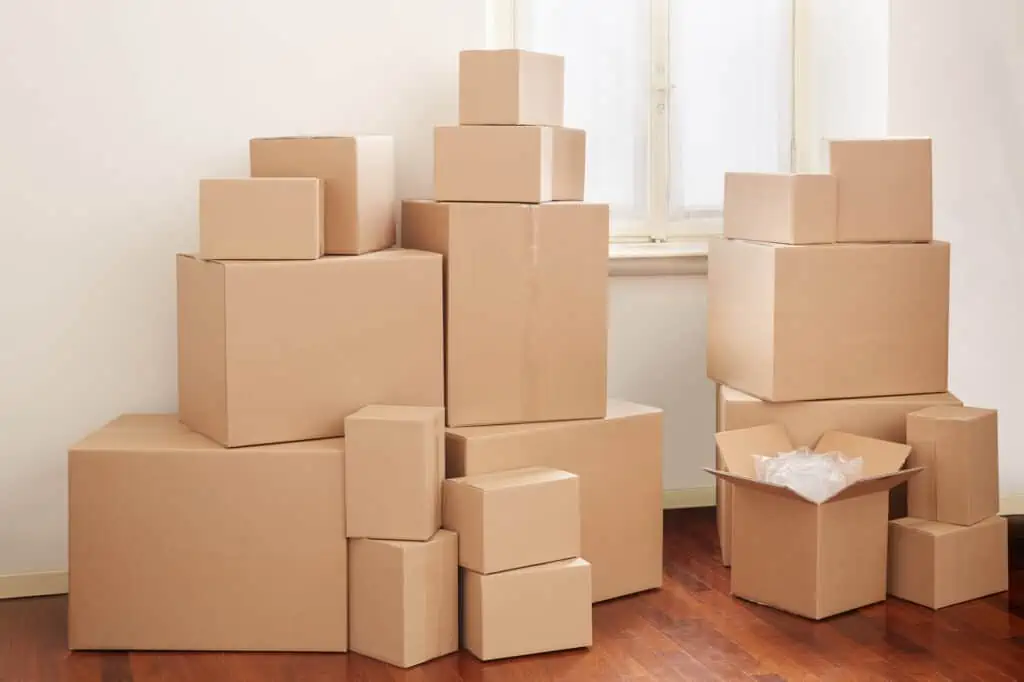
a stack of moving boxes under a window that are all of different sizes

Most average moving boxes come in small, medium, large, and extra-large sizes. Keep in mind that exact moving box dimensions and weight limits may vary, depending on where you buy them. However, they’re usually pretty close to the moving box size guide provided below.

Small Moving Boxes

  • Dimensions: 16″ x 12″ x 12″
  • Volume: 1.5 cubic feet (up to 65 pounds)

If you have small, dense items, such as canned goods, books, or tools that you want to pack together, a small moving box’s dimensions usually work well. They limit how much you can put in, keeping the weight manageable. They’re also great if you need to pack smaller items that go together, such as the contents of a drawer or silverware.

Medium Moving Boxes

  • Dimensions: 18″ x 18″ x 16″
  • Volume: 3 cubic feet (up to 65 pounds)

Medium moving box dimensions accommodate most common household goods. Just be careful not to overload them. They’re a top pick for kitchenware, decor, linens, medium appliances, toys, crafts, and office supplies.

Large Moving Boxes

  • Dimensions: 18″ x 18″ x 24″
  • Volume: 4.5 cubic feet (up to 65 pounds)

Large moving box dimensions are well-suited for tall, bulky, or oblong items that take up a lot of space. They’re great for clothing, desk lamps, heavy blankets, curtains, speakers, and small or medium electronics.

Extra-Large Moving Boxes

  • Dimensions: 24″ x 18″ x 24″
  • Volume: 6 cubic feet (up to 65 pounds)

Extra-large boxes are ideal for bulky but lightweight items, like bed comforters, pillows, lampshades, and winter coats. Just because these boxes can hold up to 65 pounds doesn’t mean they should be packed that heavy — overloading increases the risk of the box tearing or collapsing, and you should only be lifting boxes that weigh 40 lbs or less.


Specialty Moving Box Sizes and Dimensions

Not all moving boxes are structured the same. Some are made of corrugated cardboard for extra durability. Others have specialized sizes that make them useful specifically for one or two types of items, but they’re worth having on hand.

We’ve broken down the main specialty moving boxes and their common dimensions below.

Wardrobe Boxes
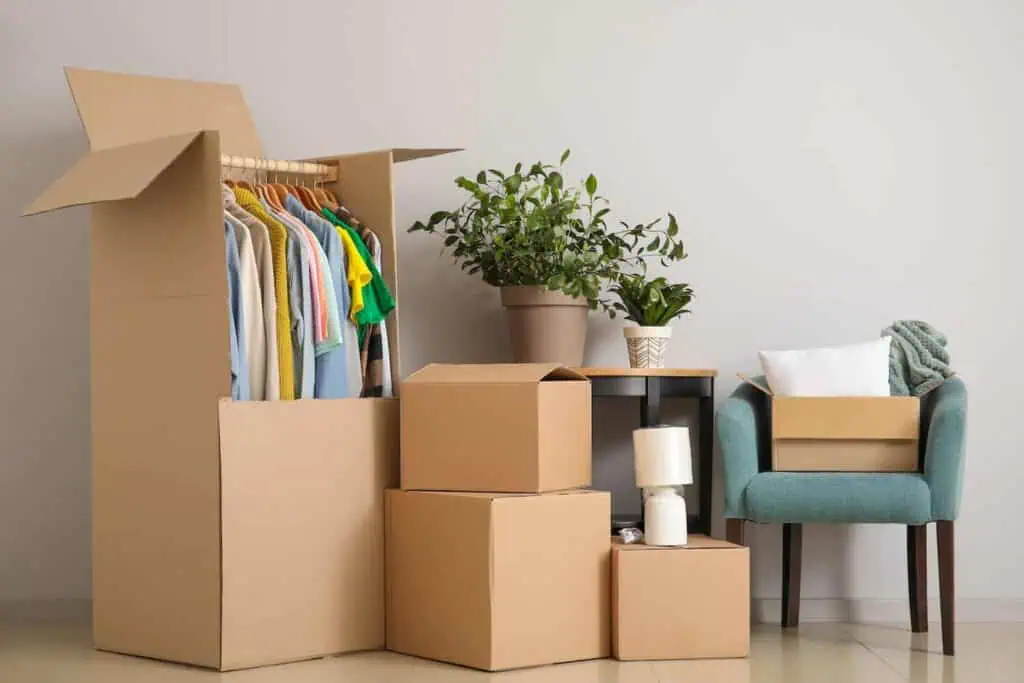
A wardrobe box and several other types of boxes sit near a wall

  • Dimensions: 18″ x 21″ x 46″ to 24″ x 21″ x 48″
  • Volume: 10 to 14 cubic feet (up to 100 pounds)

What they’re for: Clothes on hangers (coats, blouses, skirts, dresses, pants, suits, etc.)

How to pack them:

  • Pack a wardrobe box like you would a closet. Hang each piece of clothing on the box’s horizontal metal bar.
  • Use the bottom of the box for accessories like belts and shoes to maximize space and balance the weight of the box.

Alternatives: Plastic storage boxes or vacuum-sealed bags work well, especially for bulkier coats or winter garments. Or use pieces of casual clothing to cushion other delicate items in boxes.

Dish Pack Boxes

  • Dimensions: 24.125″ x 12″ x 11″
  • Volume: 1.85 cubic feet (up to 65 pounds)

What they’re for: Plates, bowls, glasses, coffee mugs, other cookware

How to pack them:

  • Cushion each item with bubble wrap or newspaper before packing.
  • Start with the heaviest, sturdiest plates on the bottom row of the divider. Then nest similarly sized dishes vertically in each slot, and pack each section tightly so the items don’t shift during transit.
  • Check out this kitchen packing video playlist, our detailed guide to packing dishes, for more tips.

Alternatives: A regular small or medium moving box works in a pinch. Just make sure you label it as fragile. Fill in all gaps so the items can’t move around and chip or break.

Glass Pack Boxes
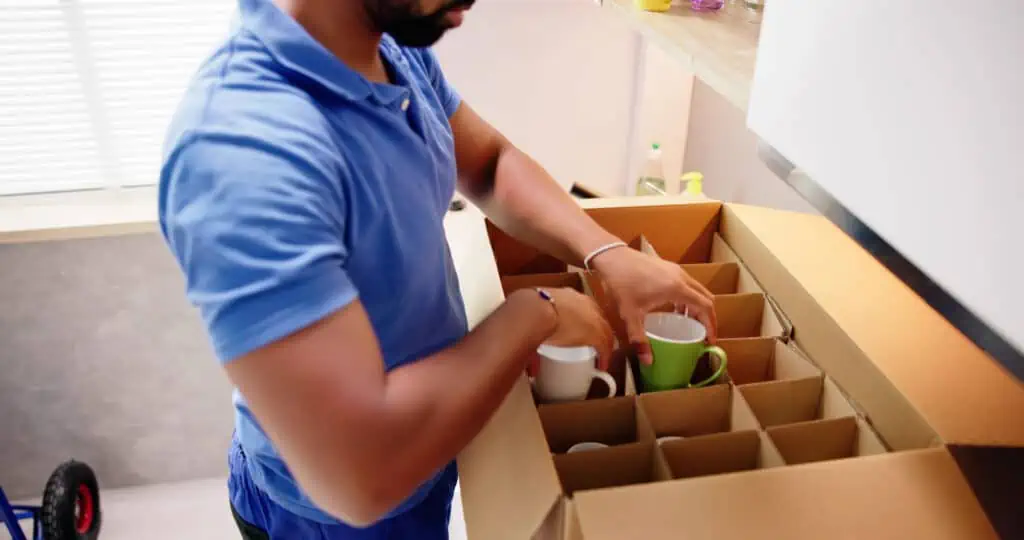
a man packs mugs in a dish ware box

  • Dimensions: 18″ x 18″ x 28″
  • Volume: 5.25 cubic feet (up to 120 pounds)

What they’re for: Glasses, mugs, champagne flutes

How to pack them:

  • Wrap individual items in bubble wrap or foam sheets before packing.
  • Place a layer of bubble wrap across the bottom of the box for extra cushioning.
  • Insert items in their designated sections in the glass pack box.

Alternatives: Use a regular small or medium moving box, and make sure there’s extra cushion between the items if you’re not using a divider.

Picture Boxes

  • Dimensions: 37″ x 4″ x 27″ to 48.25″ x 4.31″ x 70″
  • Volume: 2.3 to 8.42 cubic feet (up to 65 pounds)

What they’re for: Photographs, artwork, mirrors, plaques, other framed objects

How to pack them:

  • Wrap each item in bubble wrap or a towel to protect the glass.
  • Place one wrapped frame flat inside the box. If packing more than one, stack them horizontally with the heaviest on the bottom, and use dividers or padding between each to prevent damage.
  • Fill in excess gaps to prevent shifting while moving.
  • Got an odd-shaped frame? Follow our guide to packing odd-shaped mirrors. The same process applies to artwork and other framed items.

Alternatives: If you don’t have boxes that fit the size or shape of your frame, wrap it in a foam sheet or bubble wrap. Use a heavy blanket to double-wrap the frame, then secure it with tape on the corners.

TV Boxes

a woman and another person off-screen readies a tv to put it in a box

  • Dimensions: 24.5″ x 6.125″ x 48.75″ to 48″ x 6.31″ x 88″
  • Volume: 4.2 to 15.42 cubic feet (between 45 and 120 pounds)

What they’re for: Televisions and large computer screens (between 32 and 70 inches)

How to pack them:

  • Take a photo of your setup before disassembling. Then, put all cables, remotes, and accessories into a big zipper bag.
  • Remove the TV’s stand or wall mount.
  • Wrap the screen in a foam sleeve, moving blanket, or bubble wrap to prevent scratches.
  • Place the TV upright on a flat surface. Slide the first half of the box over the top of the TV, then secure it with packing tape. Avoid laying the TV flat, as this can cause internal damage.
  • Use furniture pads, towels, bubble wrap, or other soft materials to fill out the gap between the screen and the box’s wall.
  • Slide the second half of the box onto the TV. Use packing tape to secure the sides of the box.
  • Check this guide for everything you need to know about packing and moving a TV.

Alternatives: Carefully wrap the TV with a thick layer of bubble wrap. Use foam cushioning on the corners, then double-wrap the screen in a heavy blanket. Secure the blanket with moving tape. Just keep in mind, this isn’t as protective as a box, so move with caution.

Electronics Boxes

  • Dimensions: 20″ x 20″ x 12″ to 24.5″ x 24.5″ x 27.5″
  • Volume: 2.8 cubic feet to 9.55 cubic feet (between 65 and 125 pounds)

What they’re for: Computers, game consoles, microwaves, stereo systems, and other electronic appliances or devices

How to pack them:

  • Remove all batteries or cartridges to prevent leakage and corrosion.
  • Place cables and other attachments in a zipper bag, then tape the bag to the appliance.
  • Protect the device in bubble wrap, foam sleeves, blankets, or other soft material.
  • Load the heaviest items on the bottom, then stack the rest on top for a tight fit to prevent shifting.

Alternatives: Because electronics are delicate (and expensive), sturdy boxes are highly recommended. If you’d rather skip them, standard 3-cubic-foot boxes or large cartons with plenty of cushioning also work.

Book Boxes

  • Dimensions: 12″ x 12″ x 12″
  • Volume: 1 cubic foot (up to 65 pounds)

What they’re for: Books, board games, photo albums, small picture frames, DVD collections

How to pack them:

  • Double-tape the bottom of your book boxes to reinforce them.
  • Add a layer of bubble wrap across the bottom for extra cushioning.
  • Sort books by size and pack books with similar dimensions together. Lay books flat with spines facing each other.
  • Fill any gaps with packing paper or bubble wrap. Then seal the box with tape.

Alternatives: Any box or plastic storage bin works well. Just stick to the smaller sizes to avoid overpacking. Keep in mind that while book boxes can often hold upwards of 60 pounds, regular cardboard moving boxes aren’t usually as durable.

Plastic Storage Bins and Totes
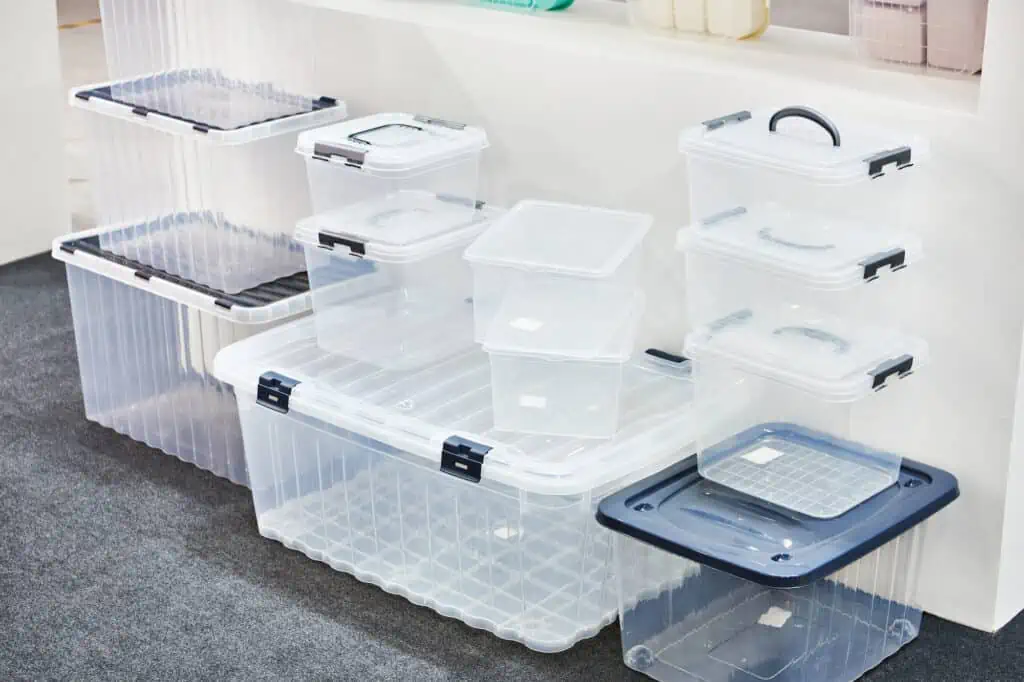
a stack of plastic storage containers in varying sizes

What they’re for: Cleaning products, office supplies, bathroom items, towels, linens, curtains, tools, miscellaneous accessories

How to pack them:

  • Plastic bins are durable and reusable, making them ideal for items you’d typically store in them post-move, like cleaning products or bathroom supplies. Just make sure to cushion the contents and seal any liquids in plastic bags to prevent spills or breakage.
  • Fold towels and linens and place them on the bottom. Arrange other items on top tightly to avoid excess room that allows for movement.
  • Reinforce the bin’s lid with moving tape.

Alternatives: Any kind of organizational container can usually substitute for a plastic storage bin. Metal or wood crates, wire baskets, and even spare suitcases, backpacks, or gym bags often fit these items just fine. In a pinch, you can leave lightweight items in your dresser or desk drawers and shrink wrap them shut, although this will make the larger item heavier to lift, so proceed with caution.

Plastic bins come in a wide range of sizes, making them incredibly versatile during a move. Whether you need something small to contain miscellaneous craft or office supplies or you want something large for holiday decorations, you can find a plastic bin that fits. Check out common volumes and their typical dimensions below.

Plastic Storage Bin Size Chart

Plastic Bin Size Volume Typical Dimensions (Height x Width x Depth)
Small 5 gallons 9.9″ x 13.2″ x 17.63″

8.9″ x 12.5″ x 17.1″

8.6″ x 12.3″ x 16.4″

Medium 12-20 gallons 12.5″ x 22″ x 16.3″ (12 gallon)

12.5″ x 26.9″ x 18″ (17 gallon)

16.25″ x 17.5″ x 23.75″ (20 gallon)

Large 20-40 gallons 15.75″ x 18.25″ x 23″ (20 gallon)

16.09″ x 21.92″ x 32.42″ (30 gallon)

16.4″ x 22″ x 38.2″ (40 gallon)

Extra Large 40-75 gallons 18″ x 21.37″ x 36.75″ (40 gallon)

23.2″ x 21.1″ x 46.5″ (64 gallon)

22.52″ x 23.71″ x 46″ (75 gallon)

How Many Boxes Do You Need?

a pile of boxes takes up every inch of the image's frame

Ultimately, it depends on how much you have to pack. If you’re a minimalist at heart or you have more stuff than usual, the number of boxes you’ll need might be more or less than what’s typically recommended by home size. Don’t be afraid to adjust based on your unique move and needs.

An easy way to estimate the number of boxes is to plan for 1 box for every 10 square feet of living space. It’s not a hard-and-fast rule, but it can give you a starting point. If you have rooms with more stuff in them, or if you’re packing in smaller boxes to cut down on weight, you’ll likely need more. You could also pick up a moving box kit to get started. Kits are usually packaged by home size.

If you need a general breakdown based on home size, read through the table below. It doesn’t include specialty boxes, like TV or wardrobe boxes. However, it’s a good starting point, and you can always pick up more boxes later if you decide you need them. In general, it’s better to have more boxes than you need than fewer.

Recommended Box Count Chart

Home Type Small Boxes Medium Boxes Large Boxes
College Dorm 2 5 2
Apartment 10 10 10
Small House (1 to 2 Bedrooms) 20 20 10-15
Large House (3+ Bedrooms) 25 35 15-25

What Are the Best Size Boxes for Moving?

The right size moving box depends on what and how much you’re packing. If you must settle for one size, medium boxes tend to work well enough for the vast majority of items.

Generally, it’s best to use a variety of sizes. That way, you can split your belongings in ways that make sense. For example, maybe you’re an avid reader with a home library. If you tried to shove everything into an extra-large box, it might fit and close just fine, but you’d want to think twice before trying to lift it. The weight would likely tear out the bottom, or be too heavy to move safely.


“In a pinch, you can leave lightweight items in your dresser or desk drawers and shrink wrap them shut, although this will make the larger item heavier to lift, so proceed with caution.”


On the other hand, trying to shove lightweight but bulky items (like towels) into small boxes creates its own issues. You’ll likely be left with far more boxes to move than if you’d chosen a larger option.

Review the chart from the previous section to help you choose the right assortment of sizes based on your home size.


Tips for Choosing and Using the Right Size Boxes

To help you decide what the right box sizes should be for your move, consider these tips:

  • Try to keep boxes 40 pounds or under each, regardless of dimensions or how much the box is rated to hold. This prevents strain while lifting and reduces the risk of the box’s bottom falling out. If you think a box looks overloaded or if it’s heavier than 40 pounds, split up the items. It’s better to have two smaller boxes filled correctly than one big box that’s difficult to move.
  • Choose specialty boxes when they make sense. They usually offer better protection for those specific items, so they’re a good investment, especially if you have things like work clothes, paintings, or electronics that would benefit from the extra care.
  • Pack fragile items in the smallest boxes they’ll fit in with plenty of padding. They’ll have less room to move around, making it less likely they’ll break.
  • Leave extra-large boxes for big items that can’t be broken down or for large, lightweight items like comforters and pillows. Everything else should go into small and medium boxes, which are usually easier to move.
  • Choose a plastic storage bin instead of a cardboard box if you’re packing liquids like cleaners or food products. That way, if something leaks, it won’t disintegrate the box.
  • Consider looking for free moving boxes. While this is great in a pinch or if you need to keep costs low, it’s often recommended to buy new moving boxes. They don’t have the wear and tear that could leave them prone to breaking.

What’s the Cheapest Way To Move? A Guide for Thrifty Moving

Author:

Publish Date:

Last Modified Date:

Category: Money Saving, Moving Advice

Tags: Tags: , , , , , , , , , , , , , , , , , , , , , ,

Moving is a common part of life, whether you’re seeking new opportunities, upsizing, downsizing, or just looking for a change. With the rise of remote work, there’s even more flexibility with where to live. Recent data indicates that people are still moving, so the demand for moving services keeps costs relatively high.

Fortunately, moving doesn’t have to break the bank. By planning carefully, starting early, and following the tips outlined below, you can save hundreds — if not thousands — while making your move as smooth and budget-friendly as possible.

A Guide to Getting the Cheapest Move Possible

Don’t know where to start? We’ve compiled a lot of info on getting the most out of your move on a budget. Here’s our expert guide to moving on a budget.

Step One: Declutter Your Stuff

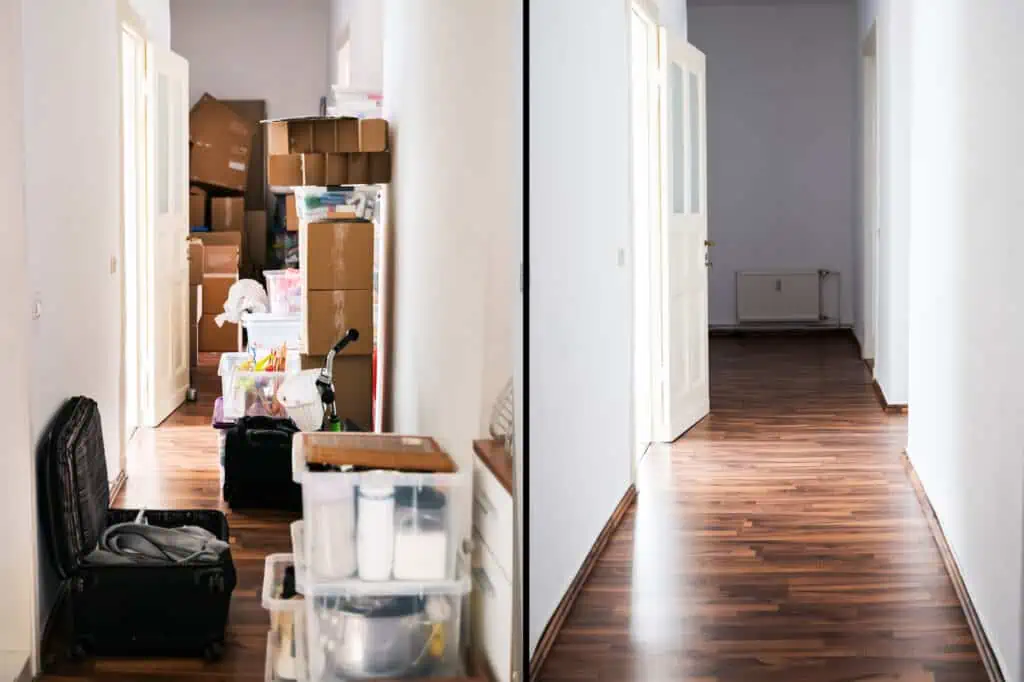
a side by side comparison of hallway filled with enough boxes and miscellaneous items to fill a room, and the same hallway but empty of all the items

Regardless of what else you may have heard, the two biggest factors that influence moving costs are:

  1. How you move: Whether you handle everything yourself, hire labor-only movers, or go full-service, every option comes with a cost
  2. The size of your move: The less you have, the less you pay. That’s why decluttering before your move is one of the best ways to cut costs

For example, a short-distance move costs between $900 and $2,500. Compare that to a long-distance move, which can cost up to $5,000 in transportation and moving expenses.

So, if you have a large apartment and sell or donate about a room’s worth of stuff, then you’re paying significantly less to move what’s left. As a bonus, you get a fresh start when decorating your new space.

To make your decluttering more practical and budget-friendly, try the following methods:

  • One-year rule: If you haven’t used an item in a year, let it go
  • The KonMari Method: Keep only the items that bring you joy. This approach encourages you to hold onto possessions that add value to your life
  • Four-box method: Sort items into four categories — keep, donate, sell, and trash

Ready to move? Use HireAHelper’s cost comparison tool to find the best movers for your local or long-distance move.


Step Two: Avoid Buying Packing and Moving Supplies

plastic bags in a cardboard box that can be used as packing material

One pack of tape is a negligible expense, but all of your packing and moving materials can add up (over $700 for a 4+ bedroom moving kit).

One way around this is to stash plastic bags, packing materials, and boxes in the months before your move. However, not everyone has this kind of foresight, much less the space in their house.

A week or two before your move, you can start seeking out free moving boxes. Places like your local grocer, liquor stores, furniture stores, and hotels often have boxes you can take, and they don’t tend to run out of them quickly like superstores. You can also check Facebook Marketplace, where people sometimes sell or even give away their used boxes.

Looking for a sustainable option? Utilize your own blankets, sheets, clothes, and towels as packing materials in addition to newspapers and magazines. You can also rent packing materials (like plastic boxes) and return them when you’re done.

Step Three: Pick the Right Time to Move

Timing is everything, as they say, and that’s especially true for moving. For one thing, you should avoid peak moving season (May through September) if you want to save cash and eliminate stress. But even the day of the week and time of day can affect your moving price tag.

For instance, it’s cheaper to move in the middle of the month, since leases typically start and end on the first. But moving on a Monday as opposed to a Saturday can also be cheaper when you’re renting a moving truck. As we found out, a U-Haul quote for Wednesday was $1.09/mile, but on Saturday, it jumped to $1.39 per mile!


“…if you’re moving between states and need to stay somewhere overnight to break up the drive, the price of hotels and fuel costs might cancel out what you were trying to save by going DIY”


If you’re paying for a rental truck or movers by the hour, then you’ll want to avoid rush hour — getting caught in traffic can send your prices through the roof. This happened to a friend of mine when she was moved across town in NYC, taking her $400 quote up to $750. The moral of the story? Booking your move earlier in the day to avoid traffic can help you save when hiring movers.


Step Four: Decide if DIY Is Best for You

a couple loading boxes into a moving truck already filled with more boxes and furniture

Believe it or not, DIY might not be the cheapest option for you. In general, doing the entire move yourself does cost less (DIY moves average about $660, while a full-service move can cost up to $2,568), but depending on how you go about it, there can be a lot of hidden costs.

Your biggest expense is probably going to be your own time. You have to plan, take time off from work or school, get childcare if needed, and spend days doing really tiring work. Not to mention, if you’re moving between states and need to stay somewhere overnight to break up the drive, the price of hotels and fuel costs might cancel out what you were trying to save by going DIY.

If you research hotels and the route beforehand (and are smart about your PTO), you can still save. But that’s still more time spent planning out your move.

DIY is best if you:

  • Don’t have a lot of stuff, or it’s all pretty cheap and replaceable
  • Can easily take time off work or school
  • Plan out driving routes, hotel stays, and other stops to find the cheapest options

Step Five: Decide if You Want Moving Help

a couple signs off on a move that a pair of movers have just completed. A stacks of boxes are visible in the background.

Your other option is to hire moving help. You might already be thinking: How does hiring people help me save money? For one thing, it’s a lot cheaper to hire loading and unloading help when you’re driving than to hire a moving company to do it all for you. This is known as a “hybrid” move a blend of DIY and a full-service move. Essentially, you handle the driving or arranging a container (like PODS) but pay for help to load and unload your stuff.


“If your vehicle can tow, renting a trailer may be more economical than a moving truck.”


Paying for moving help not only spares your back but can help you save on your truck or trailer rental. By using their expert packing skills, movers can help you fit more stuff into the space than you could on your own, all while securing your items so nothing gets damaged or breaks during the drive. It may be well worth dishing out an extra couple hundred to hire help if you can rent a smaller moving truck and protect your possessions.

Hiring moving help is best if you:

  • Have a large home with a lot of heavy or fragile furniture
  • Worry about being able to arrange childcare or PTO
  • Can’t lift or carry heavy furniture easily
  • Have several flights of stairs or tight corners to maneuver

Make sure any company you hire movers from is fully licensed and insured before committing. You should also look for honest reviews from past customers to get a sense of what the company is like. Avoid getting overly thrifty; good help is invaluable when you’re in the middle of a big move, and bad help can turn an already stressful experience into a nightmare — if not turn out to be an outright scam.


Step Six: Consider Portable Moving Containers

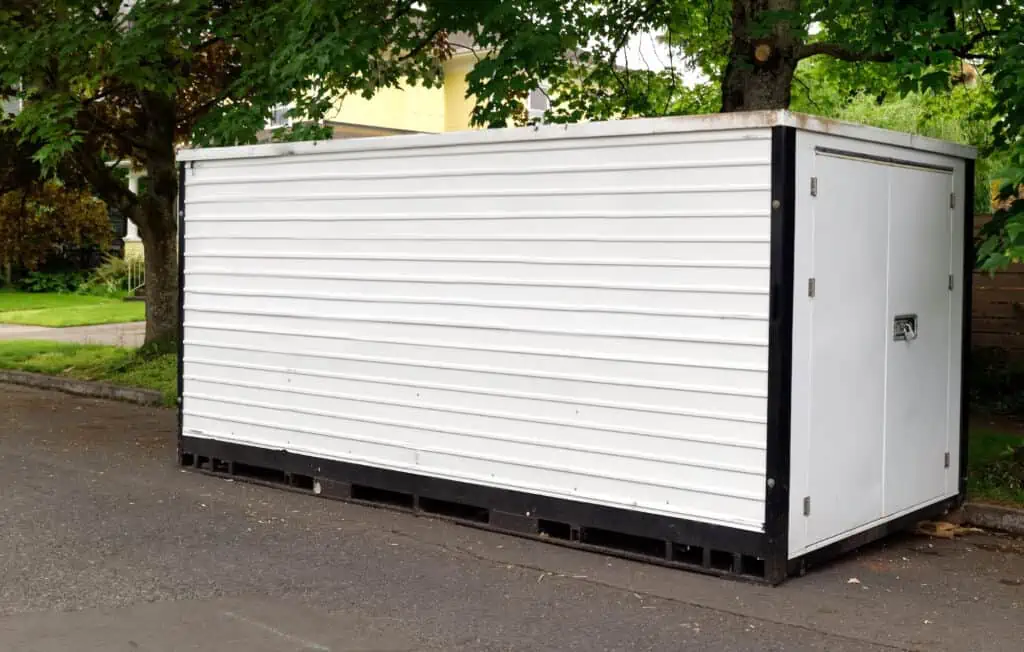
a white moving container sitting on a residential street, waiting to be loaded

Portable moving containers serve as a flexible and cost-effective solution for those seeking a middle ground between a full-service move and a complete DIY approach. These containers are delivered to your location, allowing you to pack at your own pace. Once packed, the company transports the container to your new destination or a storage facility.

Benefits of using portable moving containers include:

  • Flexibility and convenience: You can pack and unpack on your schedule without the pressure of tight deadlines.
  • Cost-effectiveness: Using containers tends to be more affordable than hiring full-service movers, especially for long-distance relocations.
  • Security: Containers are typically weatherproof and lockable, keeping your belongings safe and sound during transit.
  • Storage options: If your new residence isn’t ready, the container can be stored at a secure facility until you’re prepared to move in.

Another advantage of moving containers is that they’re helpful in some specific yet quite common scenarios. If you’re situation is one of the following, you could really benefit from using a moving container:

  • Staged moves: If there’s a gap between moving out of your old home and into your new one, containers provide a seamless storage solution.
  • Home renovations: Be sure to store furniture and belongings safely during home improvement projects.
  • Downsizing: When moving to a smaller space, containers can help you manage excess items until you decide what to keep, sell, or donate.

Step Seven: Look for Other Ways to Save on Your Move

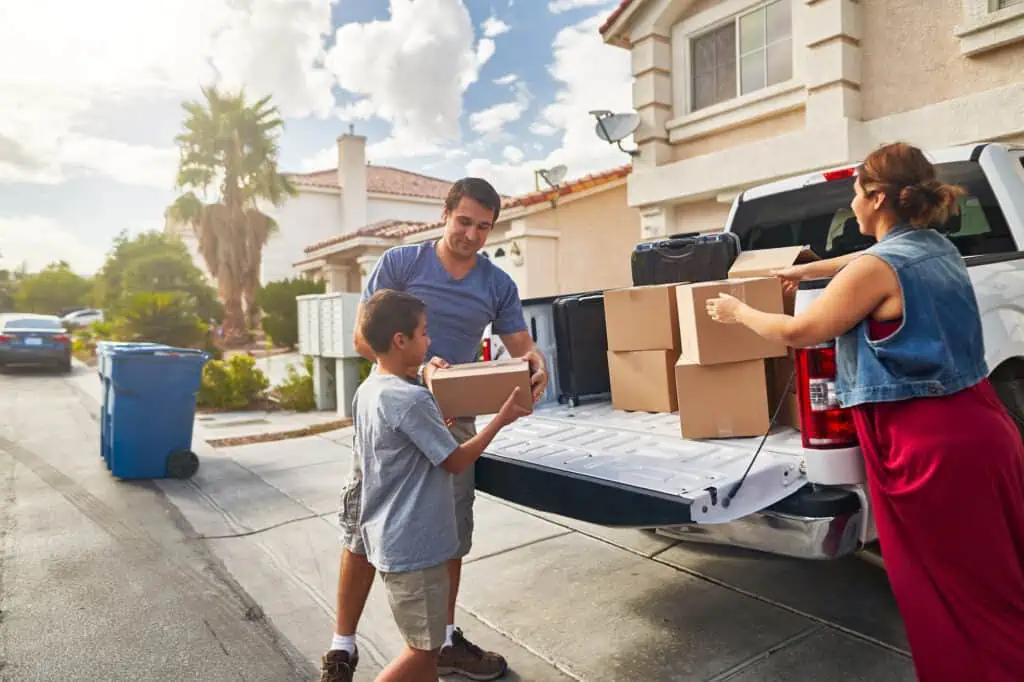
a family packs boxes and suitcases into the bed of their truck

Beyond the primary moving methods, consider these additional strategies to save money when moving:

  • Use your car: Maximize space in your car by transporting smaller items yourself, reducing the load for movers.
  • Rent a trailer: If your vehicle can tow, renting a trailer may be more economical than a moving truck.
  • Get help from friends: Recruit friends or family to assist with packing and loading, offering meals or small incentives as a thank-you.
  • Gather household items for packing: Use towels, blankets, and clothing as padding for fragile items, minimizing the need to purchase packing materials.
  • Meal planning: In the weeks leading up to your move, plan meals that use perishable food items, reducing the amount you need to transport.

Step Eight: Make Some Extra Cash to Offset Moving Costs

Beyond cutting costs, you can make extra cash to help pay for your move. Selling items you no longer need can significantly offset your expenses. Here are some ways you can turn your clutter into cash.

Host a garage sale

A woman hosting a garage sale takes money from another woman for a pair of yellow heels

With the advent of the internet, garage sales might seem a little outdated to some, but they’re still a great way to get rid of unwanted items while earning some cash. Follow these steps to have a successful garage sale:

  • Pick a good date: Weekends, particularly Saturdays from 8 am to 1 pm, usually get the best traffic.
  • Advertise effectively: Post in local forums and place clear signs around your home.
  • Price strategically: Clearly price all items with removable stickers. Bundle smaller items together to encourage more purchases.
  • Set up neatly: Organize items by category (clothing, furniture, toys) to make browsing easy and appealing.
  • Have change on hand: Prepare plenty of small bills and coins.

Sell online based on item type

Did you know that different platforms work best for different items? By tailoring where you sell what online, you have a better chance of the right person seeing your listing and getting a successful sale. See which sites you should be selling your stuff on:

  • eBay: Ideal for collectibles, electronics, and unique vintage items. Use clear, bright photos, detailed descriptions, and respond promptly to potential buyers.
  • Depop: Perfect for stylish or vintage clothing, shoes, and accessories. Good photos and detailed item descriptions can make your listings stand out.
  • Craigslist or Facebook Marketplace: Best for selling furniture and larger items locally. Provide clear dimensions and offer safe public meeting places for pickups.

There are definitely more than this list out there, too! When you’re considering which sites to use, take a quick look around other listings to get an idea of what kinds of items sell best, and tailor your own to match.

Sell items in person

If you’re not keen on a garage sale but still want to sell your items IRL rather than online, you’ve still got options. You can make money by dropping off certain items in person:

  • Consider consignment shops: These stores sell your items and give you a percentage of the sale. It’s a great option for high-quality furniture and clothing. Keep seasonal trends in mind and negotiate the terms for higher payouts.
  • Recycle electronics for cash: Instead of throwing out old electronics, take advantage of trade-in programs offered by Best Buy, Apple, or Amazon. You can trade in old devices like smartphones, tablets, or laptops for gift cards or cash.
  • Sell scrap metal and appliances: Local recycling centers will buy scrap metal and appliances like old washers or refrigerators. Check local metal recycling businesses to compare prices and ensure you’re getting the best rate.

There also might be antique stores or similar shops in your area that will buy furniture or clothing from you. It doesn’t hurt to do a quick search or ask around on a local forum to see if there are places in your neighborhood that would be happy to buy.

Sell your car if moving long-distance

a white four door car with a For Sale sign taped to its window

Driving your car cross-country is impractical, and shipping it can be prohibitively expensive in some cases. Consider selling your car to help finance your move (or a new ride at your new place). You can follow these steps to help you prepare and get the best price:

  • Prepare your car: Thoroughly clean it, and gather all maintenance records and the title.
  • Determine your car’s value: Check websites like Kelley Blue Book for accurate pricing.
  • List your vehicle online: Platforms such as Autotrader and Cars.com can help you find serious buyers.
  • Write a strong listing: Include multiple clear photos and an honest, detailed description.
  • Arrange safe test drives: Meet potential buyers in public, secure locations.
  • Close the sale: Carefully complete the paperwork, ensuring payment is confirmed securely before handing over the keys.

Additional ideas

Here are some additional ideas to make some extra cash:

  • If your new home has a spare room, consider renting it through Neighbor.com. This platform connects you with neighbors looking for storage, creating passive income with minimal effort.
  • Sell textbooks or books on BookScouter or Amazon.
  • List unused gift cards on websites like CardCash to get immediate cash.
  • Use ThredUp to sell gently used clothing online without much effort.

Making Your Move Affordable and Stress-Free

Moving doesn’t have to be expensive or overwhelming. Decluttering, using free packing materials, choosing the right time to move, and considering DIY options or moving help can significantly reduce costs. Exploring portable moving containers and finding ways to earn extra cash during the process can further ease the financial burden. With careful planning and smart choices, you can transition to your new home without unnecessary stress or expenses.

×

I'm Moving

Moving? Thinking about moving? Whether your move is off in the distance or you already have one foot out the door, you'll learn about everything you should expect through our useful how-to's, cool articles and much more. It's all specially curated for you in our "I'm Moving" section.
Explore
×

I'm a Mover

For rookies or veterans alike, our "I'm a Mover" section is filled with extensive industry news, crucial protips and in-depth guides written by industry professionals. Sharing our decade of moving knowledge is just one way we help keep our professional movers at the top of their game.
Explore