
How to Change Your Address Everywhere Before You Move

Author:

Publish Date:

Last Modified Date:

Category: Moving Advice, Moving Checklists & Planning

Tags: Tags: , , , , , , , , , , , , , , , , , ,

Whether you’re moving down the hall or across the country, using a change of address checklist to notify people of your whereabouts ensures important things like checks, statements, and notices don’t go missing.

There are so many people, companies, and institutions that need our addresses that it can be difficult to keep track of them all, so we’ve created a comprehensive list of where to change your address when you move. There are links to make things easier and highlighted organizations to prioritize. You’ll even find a printable change of address checklist, so you can keep track of updates you have left to do. By organizing your move efficiently, everything from bills to birthday cards will seamlessly follow you to your new digs.


When Do I Need to Change My Address?

Start letting businesses know about your relocation around 4 weeks before you move — it’s one of the key tasks on your moving checklist. Some places need to know sooner than others, especially when it comes to financial or legal reasons:

  • Homeowners/Renters insurance policy: Whether you rent or own, let your insurance provider know of your new address and moving date. They can adjust your policy for your next residence and ensure seamless coverage.
  • Utilities and internet: Make sure you have heat, hot water, and internet at your new location on moving day. Close your old accounts so you’re no longer responsible for bills at your former address.
  • U.S. Postal Service: Arrange for the USPS to forward your mail so nothing falls through the cracks during your transition.

The Ultimate Checklist of Where to Change Your Address

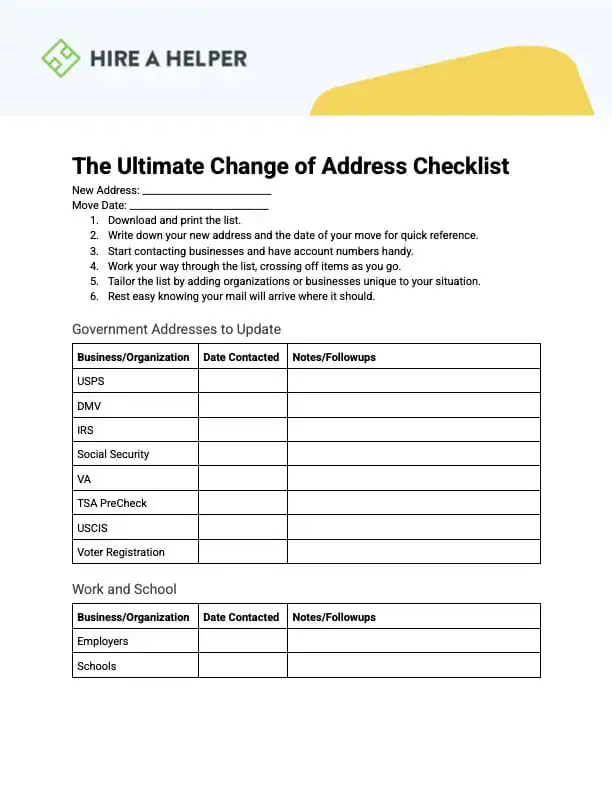
Our downloadable checklist covers all the places you need to change your address and guides you through the process. Here are the steps to take:

  1. Download and print the list.
  2. Write down your new address and the date of your move for quick reference.
  3. Start contacting businesses and have account numbers handy.
  4. Work your way through the list, crossing off items as you go.
  5. Tailor the list by adding organizations or businesses unique to your situation.
  6. Rest easy knowing your mail will arrive where it should.
Mail Forwarding

USPS

At least 2 weeks before you move, submit a change of address form with USPS to reroute your mail. Most mail is forwarded for free, but there may be a fee for parcels like Media Mail. Standard mail forwarding lasts for one year and can be extended up to 18 months.

Government Agencies

Department of Motor Vehicles (DMV)
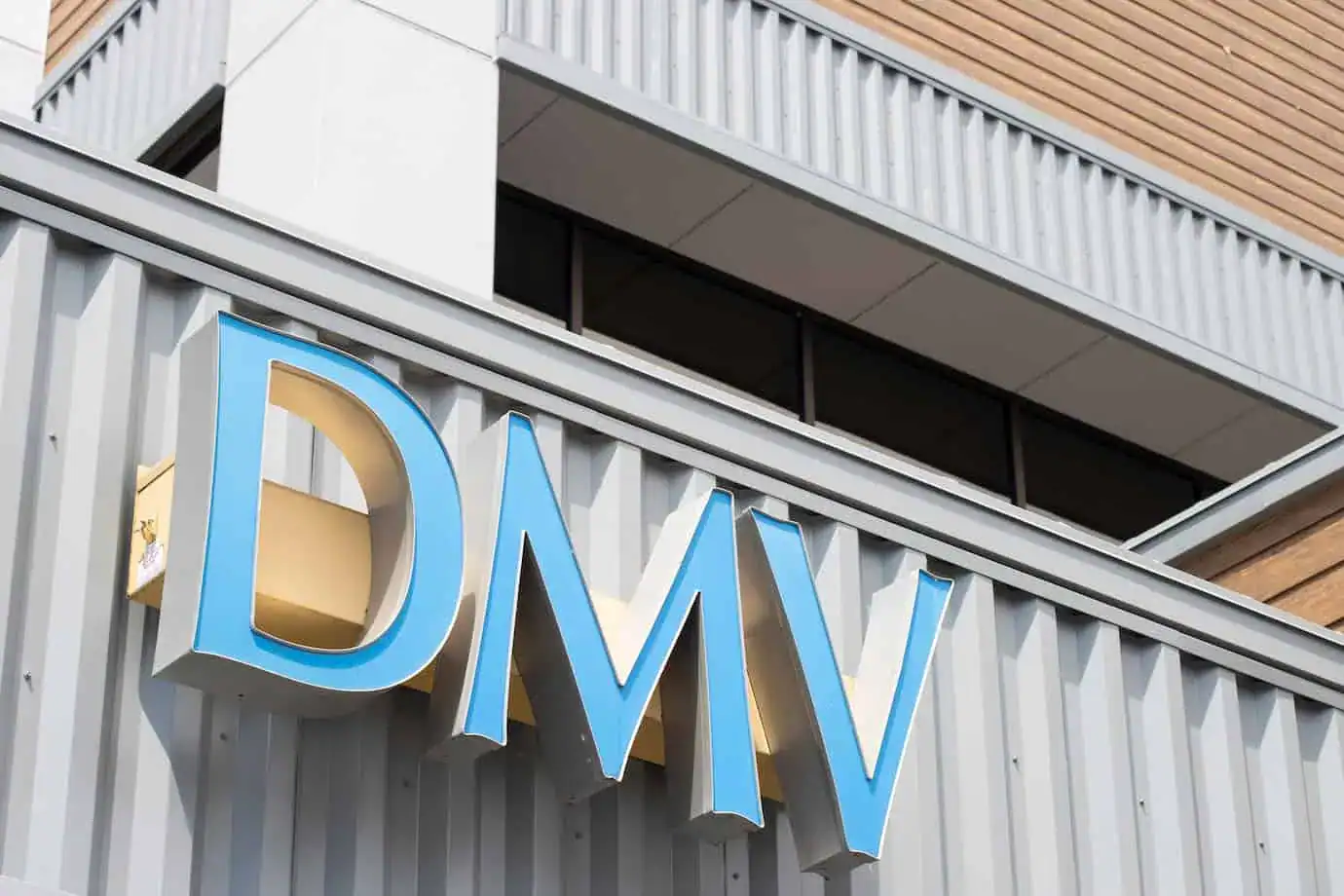
DMV building exterior, where people update their driver’s license and vehicle registration address after moving.

Most states require you to update your address with your local DMV within a certain period of time after moving. Change your address on your driver’s license and vehicle registrations. You can do these updates online or book an in-person appointment.

Alabama https://www.revenue.alabama.gov/division/motor-vehicle/
Alaska https://doa.alaska.gov/dmv/
Arizona https://azdot.gov/motor-vehicle-services
Arkansas https://www.dfa.arkansas.gov/motor-vehicle
California https://www.dmv.ca.gov/portal/
Colorado https://dmv.colorado.gov/
Connecticut https://portal.ct.gov/DMV
Delaware https://www.dmv.de.gov/
District of Columbia https://dmv.dc.gov/
Florida https://www.flhsmv.gov/
Georgia https://dds.georgia.gov/
Hawaii https://hidot.hawaii.gov/
Idaho https://itd.idaho.gov/itddmv/
Illinois https://www.ilsos.gov/departments/vehicles/home.html
Indiana https://www.in.gov/bmv/
Iowa https://iowadot.gov/#services
Kansas https://www.ksrevenue.gov/dovindex.html
Kentucky https://drive.ky.gov/Pages/default.aspx
Louisiana https://www.expresslane.org/
Maine https://www.maine.gov/sos/bmv/
Maryland https://mva.maryland.gov/Pages/default.aspx
Massachusetts https://www.mass.gov/orgs/massachusetts-registry-of-motor-vehicles
Michigan https://www.michigan.gov/sos
Minnesota https://onlineservices.dps.mn.gov/EServices/_/
Mississippi https://www.mmvc.ms.gov/
Missouri https://dor.mo.gov/motor-vehicle/
Montana https://dojmt.gov/driving/
Nebraska https://dmv.nebraska.gov/
Nevada https://dmv.nv.gov/
New Hampshire https://www.dmv.nh.gov/
New Jersey https://www.state.nj.us/mvc/index.html
New Mexico https://www.mvd.newmexico.gov/
New York https://dmv.ny.gov/
North Carolina https://www.ncdot.gov/dmv/Pages/default.aspx
North Dakota https://www.dot.nd.gov/divisions/mv/vehicle.htm
Ohio https://www.bmv.ohio.gov/
Oklahoma https://oklahoma.gov/dps.html
Oregon https://www.oregon.gov/odot/DMV/Pages/index.aspx
Pennsylvania https://www.dmv.pa.gov/Pages/default.aspx/home/index.shtml
Rhode Island https://dmv.ri.gov/
South Carolina https://www.scdmvonline.com/
South Dakota https://dor.sd.gov/individuals/motor-vehicle/
Tennessee https://www.tn.gov/content/tn/driver-services.html
Texas https://www.txdmv.gov/
Utah https://dmv.utah.gov/
Vermont https://dmv.vermont.gov/
Virginia https://www.dmv.virginia.gov/#/
Washington https://www.dol.wa.gov/
West Virginia https://transportation.wv.gov/dmv/Pages/default.aspx
Wisconsin https://wisconsindot.gov/Pages/online-srvcs/external/dmv.aspx
Wyoming https://www.dot.state.wy.us/driverservices
(info above from usa.gov)

Internal Revenue Service (IRS)

While you can notify the IRS of your new address when you submit your tax return, it’s best to update your account as soon as possible so you don’t miss refunds, notices, and important documents. You can do this in person, by phone, by letter, and by submitting Form 8822.

Social Security Administration (SSA)

If you receive retirement, disability, Medicare, and other benefits, update your contact information with the SSA. Even if your benefits are direct deposited, the government needs your correct mailing address on file.

Veteran Affairs (VA)

Whether you’re a veteran, service member, or family member, log into your VA account online to change your contact information. This ensures correspondence related to benefits, medical care, and loans gets to you promptly.

TSA PreCheck and Trusted Traveler Programs

Traveler going through TSA security checkpoint, updating address for TSA PreCheck and Trusted Traveler programs.

The government needs your current address for identification verification if you have travel privileges through TSA PreCheck and Trusted Traveler.

U.S. Citizenship and Immigration Services (USCIS)

Update your address in your USCIS account to receive documents related to green cards, work permits, citizenship, and other immigration benefits. Depending on your status, you may be required to notify USCIS within 10 days of moving.

Voter registration

In some states, the DMV can update your voter registration when you change your driver’s license information. Otherwise, the National Association of Secretaries of State can connect you to your state election office.

Work and School

Employers

Your boss needs a heads-up about your new address for tax and payroll forms. Some employers also base salary and benefits on location. Contact your HR department as soon as you’re able so they can get the process started for you.

Educational institutions

Don’t miss tuition bills, financial aid notices, transcripts, report cards, and certificates. Whether you’re studying full-time or part-time, or your kids are in school, each institution needs your current address to send important documents.


“…You must update your address with every organization separately. USPS only reroutes mail sent to your old address. It doesn’t make address changes for you.”


Keep in mind that your change of address might come with a change in school district, so be sure to keep track of all the paperwork involved in that as well.

Household Utilities and Services

Electricity, water, and gas

If you’re still within the same service area, you can transfer utility accounts to your new address. Otherwise, close your accounts and arrange for services to begin at your new address. There are sites that use your zip code to tell you what utilities are available near you.

Voice, internet, and cable

Many cable, phone, and internet providers have processes to help you change your address on your account and transfer service. Below are links to a few of the larger providers.

Miscellaneous utilities

Depending on where you live, you might be billed separately for sewer, recycling, or trash. Don’t forget to change your address with these companies and cancel service if you’re moving to an area where they don’t operate.

Financial & Legal

Banks

Even if you bank online or receive e-statements, certain communications (or checks!) may be sent by snail mail. Make a list of, and follow up with, institutions where you have:

  • Checking and savings accounts
  • Safety deposit boxes
  • Investment portfolios
  • Lines of credit

Credit cards

Person holding wallet with multiple credit cards while updating address with credit card companies after a move.

Credit card companies also need to learn of your new address. Pull out all the plastic in your wallet and call the customer service number on the back of each card. You can also log into each card’s online portal or app and update your address there.

Lenders

If you have any type of loan, including mortgages, car loans, and student loans, change your address with the lenders so you can receive important information and updates.

Investment accounts

Think about investments that you have tucked away, and contact brokerage or investment companies you have accounts with. You’ll want a reliable way to receive statements and tax forms aside from email.

Insurance providers

Follow up with companies where you hold house, car, health, and life insurance. Forgetting to update a policy could cause it to lapse, especially if the insurance is related to your residence. Speak with someone directly to ensure your coverage stays active.

Digital payment platforms

Mobile apps like PayPal, Venmo, Apple Pay, Google Pay, and Zelle may use your address to verify your details and provide tax information. Log into your profile on each payment app to ensure your details are accurate.

Financial and legal consultants

Your financial planner, accountant, attorney, estate planner, and other professionals should also be on your change of address checklist. Run through your contact list and send quick e-mails to your advisors so they can update their records and share important documents.

Health and Wellness

Health care providers

Include your health care providers on your list of addresses to change when moving to receive bills, reminders, and notices. Reach out to your:

  • Doctor
  • Dentist or orthodontist
  • Optometrist
  • Physiotherapist
  • Naturopath

Pharmacy

Whether you pick up prescriptions in person or have them delivered, your pharmacy needs current information. Give them a call to update your address or transfer prescriptions to a pharmacist closer to your new home.

Veterinarian

Don’t forget about your furry friends! Give your vet clinic your new address and update your pet’s microchip registry in case your animal goes missing. If you use traditional collar tags for more than your pet’s name, make sure the contact information on the engraving is correct.

Memberships and Subscriptions

Newspapers and magazines

Whether you like to read about fashion or finance, you’ll want your favorite newspaper or magazine to land on your doorstep after a move. Updating your subscription information online ensures you don’t miss an issue.

Institutions and associations

Give your new address to any organization that you’re involved with. These can include:

  • Places of worship
  • Professional memberships and networking groups
  • Licensing boards or credentialing bodies
  • AAA
  • AARP
  • Alumni groups
  • Charities
  • Children’s clubs
  • Civic clubs
  • Country or social club
  • Neighborhood association
  • PTA
  • Political parties

Shopping and Services

Warehouse clubs

Costco, Sam’s Club, and membership-based retailers need your address to send rebates, coupons, renewal notices, and online orders.


“Start letting businesses know about your relocation around 4 weeks before you move…some places need to know sooner than others, especially when it comes to financial or legal reasons.”


Stop by the membership desk next time you’re in the store or log into your account to make changes.

Online retailers

Many online retailers store your address to make it easier for you to check out. The next time you use sites like Amazon or Walmart, change your shipping information so your order goes to the right place.

Loyalty programs

If you collect points for air travel, hotels, groceries, or other purchases, let the company know your whereabouts so you can receive membership cards and offers, and claim your rewards.

Subscription boxes

If your Hello Fresh, BarkBox, or similar deliveries go to the wrong house, that’s cool for the new residents, but not so much for you. Double-check that your new home is still within their delivery areas and update your address so your curated goodies make it to your new home.

Auto-ship items

Woman picking up a package on her doorstep, ensuring auto-shipments like household essentials reach her new address.

Regular shipments of toilet paper, vitamins, laundry soap, coffee, and pet food keep your household running smoothly — but only as long as they show up in time. Change your address for any auto-shipping purchases. You might also pause them until after your move to simplify packing.

Streaming platforms

Even though digital streaming services don’t send mail, they need your current billing address to process payments. Keep your account information updated on platforms like Netflix, Hulu, Spotify, and Apple Music so they don’t stop working in the middle of your binge.

Home care

Do you have regularly scheduled visits from cleaners, pest control, landscapers, pool maintenance services, or snow removal companies? Book your last appointment at your old place and arrange service at your new home if needed.

Family and Friends

Sometimes, surprises arrive on your doorstep: birth announcements, wedding invitations, care packages, and flowers. Email your new address to family and friends (or send a message in your group chat) to stay connected.


FAQs

If I change my address with USPS, do I still need to let each of these places know I’m moving?

Yes, you must update your address with every organization separately. USPS only reroutes mail sent to your old address. It doesn’t make address changes for you.

When do I need to change my address when I move?

Start notifying people of your new address about 4 weeks before you move. Prioritize the USPS, insurance, utilities, banks, and government on your change of address checklist. Less urgent accounts can be updated closer to or after your move.

What happens if I forget to update my address when I move?

Set up mail forwarding by USPS to ensure nothing is lost. Each time you receive a forwarded piece of mail, add the sender to your change-of-address checklist, so you’ll know who still needs your new address.


The Home Buying 101 Guide for Millennials

Author:

Publish Date:

Last Modified Date:

Category: Buying & Selling a Home, Money Saving

Tags: Tags: , , , , , , , , , , , , , , , , , , , , , ,

In 1970, the median age of first-time homebuyers was 30.6 years. Today, according to MarketWatch, the median age of American homebuyers is 47 years. Since the 2007-2008 financial crisis alone, the median age has increased by eight years, and that rise is largely attributed to the dramatic decrease of millennials entering the housing market.

The American Dream is changing, and with it, the fundamental desire to own a home.

Why Aren’t Millennials Buying Homes?

In 2019, only 43% of millennials owned the homes they lived in, compared to 66% of generation X and 77% of baby boomers. A combination of debt, high housing costs, and a generation with different priorities all contribute to millennials forgoing homeownership.

An important policy goal of the US government has long been to encourage homeownership. Historically, that’s been done through the federal tax code and residential mortgage regulation. But since these things benefit mostly higher-income, better-educated homeowners, these policies are no longer as effective as they once were.

The Brookings Institute points out that a better path to encouraging homeownership at a younger age would be implementing policies that create more opportunities for wealth-building. But until that happens, the median age is likely to keep increasing.

Here are the biggest factors contributing to the wealth gap.

Student loan debt

Student loan debt plays a massive role in millennials deciding not to buy a home. In a survey of student loan borrowers, 83% of non-homeowners cite student loan debt as the reason they haven’t bought a house. Indeed, the average monthly student loan payment is $393 a month, which leaves many unable to save for a down payment on a home.

The most recent student loan debt statistics show that in 2020, there were almost 45 million student loan borrowers who had an average debt of around $33,000.

Rent burden

Millennials are more rent-burdened than any other generation. Rent burden occurs if more than 30% of your income goes toward paying rent — and millennials spend 45% of their income on rent. And while the average living wage is $68,808 a year, the average millennial makes just $35,592 a year, and rent burden plus low wages create a double-whammy for many young people.

“Whether or not you can afford to buy a home depends on your income, the property prices in your location, how much other debt you have, and how good your credit score is.”

Delayed marriage

Marriage increases the chances of homeownership by 18%, and according to the Urban Institute, delayed marriage is one of the biggest factors for why millennials aren’t buying homes. In 1960, couples typically entered their first marriage in their early 20s, but today, the median age for a first marriage is nearly 30.

Delayed procreation

Having children is another important factor in people’s decision to buy a house — having kids increases a person’s chance of homeownership by 6%. But millennials are in no big hurry to have kids. In 1990, 37% of married couples aged 18 to 34 had children, but in 2015, just 25% of young couples were parents.

More diversity, more inequities

The millennial generation is far more diverse than previous ones. According to the Brookings Institute, the young adult age group was 73% white in 1990. In 2000, it was 63% white. Today, the millennial generation is around 56% white, with 30% of its population made up of Hispanics, Asians, and people who identify as two or more races. Historically, homeownership rates are lower among Black, Hispanic, and Asian Americans when compared with white Americans — and today, just 14.5% of Black millennials own a home, compared with 39% of their white counterparts.

What Does it Realistically Take to Buy a House or Condo?

rent a condo

Maybe you’re not interested in becoming a homeowner at a tender age, and that’s perfectly fine. Renting definitely has advantages over buying, and if you prefer the unencumbered life, apartment living frees you up to move wherever, whenever.

However, if you dream of homeownership — but feel like it’s only a pipe dream — you might want to look into homeowner rates to be sure. In many cases, a mortgage is less expensive than rent, and a number of federal and state programs exist solely to help first-time homebuyers like yourself. You might be surprised to find you can afford to buy a home, after all.

You have to use the “28/36 Rule”

Whether or not you can afford to buy a home depends on your income, the property prices in your location, how much other debt you have, and how good your credit score is.

A good starting point for figuring out whether you can afford to buy a house is to use the “28/36 rule”. This rule states that your total household expenses (including your mortgage, utilities, and property taxes) shouldn’t exceed more than 28% of your gross monthly income, and your total household debt (like credit cards and car loans) shouldn’t be more than 36% of your gross monthly income. So figure out those percentages, and you’ll have a rough idea of what you’re working with.

The lowdown on home loans: How do mortgages work?

Unless you’re loaded with cash, you’ll need to get a mortgage like most people. But what specifically is a mortgage, anyway?

A mortgage is an agreement between you and a lender (typically a bank but not necessarily) that says the lender will give you money to buy a house, but if you don’t make the monthly loan payments, they’ll take it away, and you’ll lose any equity (ownership) you’ve built up. A mortgage payment is like rent, but for homeowners. When you borrow money to purchase your home, you pay it back over, say, 15 or 30 years, with interest. The bank figures out how much this adds up to each month, and that’s your mortgage payment. Once your mortgage is paid off, you have full ownership of your home.

What’s the deal with interest rates?

Interest rates are calculated as a percentage of your mortgage loan. Each mortgage payment you make pays back a portion of the principal (the full amount you borrowed) plus the interest that accrued that month.

Fixed-rate interest means that your interest rate won’t change during the life of the loan, and you’ll pay back the same amount each month.

Adjustable-rate interest means that the interest rate may change under certain conditions, and if it does, your lender will adjust your monthly payments up or down until the next rate change.

The longer you take to pay off your mortgage, the more you’ll end up paying in interest. The best way to keep your interest rate low is to pay back the loan as soon as possible, never forget a payment, and pay more than your monthly minimum, if possible.

What Are ALL the Costs Involved in Buying and Owning a Home?

buying a home

Here is a list of important terms to learn and keep handy, even if you know them backward and forwards.

Down payment

Traditionally, people buying a home pay 20% of the price of the house up-front. It’s possible to buy a home with a smaller down payment, although that could mean increased borrowing costs and higher monthly payments.

Closing costs

Closing costs are lender and 3rd party fees and expenses that are paid at the close of the sale transaction. These costs run roughly 2-5% of the loan amount and could include things like appraisals, taxes, insurance, prepaid interest, and application, origination, and attorney’s fees.

Some lenders allow you to fold the closing costs into the loan, but that makes your loan payment higher, and you’ll end up paying interest on those costs for the life of the mortgage! Your lender will outline your closing costs in a Loan Estimate, which you’ll receive when you apply for the loan.

Monthly mortgage

Your monthly mortgage payment depends on the amount of the loan + your interest rate.

Property taxes

The Man’s gotta take his chunk, and property taxes is how it’s done. Your property taxes pay for things that make your community better, like schools and road repairs. Property taxes are based on the value of your home, and rates vary by location and fluctuate often due to changing needs and priorities in the community.

“In 2019only 43% of millennials owned the homes they lived in, compared to 66% of generation X and 77% of baby boomers.”

Homeowner’s insurance

Homeowner’s insurance covers losses and damages to your house and assets due to theft or damage. Rates vary by state and region, but the average annual premium in 2017 was about $1,200.

Hazard insurance

Hazard insurance is a more extreme homeowner’s insurance—it protects you from structural damage caused by natural disasters. Hazard insurance is determined by local risk factors such as fires, flooding and earthquakes, and it’s usually included in your homeowner’s insurance policy.

Mortgage insurance

Mortgage insurance protects your lender against loss if you default on the loan. This could cost up to 2% of your total loan amount per year if you didn’t make a down payment of at least 20%.

HOA/Co-op/Condo fees

These are monthly membership fees used to pay for improvements like landscaping and painting and for amenities like swimming pools and gyms. The fee varies dramatically based on the organization and where you live. Upscale condos and homes typically have higher fees and stricter rules than more modest digs.

Utilities

Electricity, gas, water, trash collection, recycling, internet, cable, and security monitoring are daily essentials that you pay monthly, and their costs vary depending on where you live. Bigger homes generally have higher utilities.

You better shop around!

You probably wouldn’t buy the first car you looked at, or the first pair of shoes you tried on, and so it is with the first lender you come across. Shopping around for the best mortgage takes time, but it’s time that can save you lots of money.

Mortgages don’t just come from banks—credit unions, brokers, and independent lenders also deal in mortgages. Know how much you can afford for your down payment, then choose a few institutions to approach for a loan. Ask for all of the costs involved in the loan, including all the stuff above. Compare the loans, and then approach the lender you like best. If you’re charming and savvy, you may be able to negotiate lower fees or better terms. Once you’re happy with what the lender is offering, get it in writing, or it’s not real!

The Most Trusted Moving Checklist on the Web

The Moving Checklist: Everything You Need to Know to Move

The Real Pros and Cons of Buying Vs. Renting

Studio apartment

Which is generally better, buying a home or renting? Millennials often don’t really get a choice. But let’s say you do, or are rising the economic ladder. Maybe you just want to know what your situation is affording you.

Buying a home is a big decision and a major financial commitment, but it offers more stability and the freedom to do what you please with your home. It also offers the opportunity to better accommodate lifestyle priorities, such as indoor and outdoor living and environmental sustainability.

Of course, renting is appealing because it comes with fewer responsibilities, yet you also don’t get as much autonomy or privacy as with homeownership. There’s no easier way to make sense of buying versus renting than with good, old-fashioned pros and cons lists:

The PROS of RENTING vs. buying

  • You don’t have to pay property taxes or spring for homeowners insurance
  • When the furnace breaks down or the roof leaks, you don’t have pay for new ones
  • You’re free to move out with a 30-day notice
  • You don’t risk foreclosure if you lose your job or take a pay cut
  • A rental deposit is far less expensive than a downpayment on a home
  • You have fewer responsibilities, including upkeep
  • Utilities are generally less expensive in an apartment, and some are even included in the rent

The PROS of BUYING vs. renting

  • Mortgage payments build equity in the home
  • Homeowners often enjoy more tax deductions than renters
  • Homeownership offers a sense of stability and putting down roots
  • You can do whatever you want with your space
  • Pets are always allowed
  • Monthly payments end once your mortgage is paid off
  • You have an asset to borrow against if you want to make improvements

The CONS of RENTING vs. buying

  • Rent often increases, unless it’s fixed
  • Renting offers no tax benefits
  • Less stability—if the landlord sells and the new one wants you out, you have to go
  • You generally can’t customize your space—painting, knocking out walls, etc.
  • You have to rely on someone else to get things fixed or improved
  • Rent payments never end
  • Pets might not be allowed

The CONS of BUYING vs. renting

  • It costs a lot upfront to buy a house
  • It’s more expensive to maintain a home you own than a rental
  • You have to be more responsible—making sure the mortgage is on time, your sidewalks are shoveled, you don’t alienate your neighbors
  • Your home price might lose value, making it a poor investment
  • It requires a long-term commitment, which may be scary for some people
  • It’s far more difficult to move, since you have to sell your home first
  • You may be liable for injuries sustained on your property (hence the homeowner’s insurance)
  • If something happens and you can’t pay the mortgage, your bank may foreclose on you
  • Ideally, you need to have a buffer in savings in case something goes wrong

The Pros and Cons of Buying a Condo vs. Buying a House

Well, what about condos?

Houses and condos are like apples and oranges—sure, they’re both a place you live in, but other than, that they vary quite drastically. Your lifestyle might be better suited to a house over a condo, or vice versa. Don’t just look at prices when choosing which housing situation is best for you—here are some of the differences to take into consideration.

PROS of BUYING A CONDO vs. a house

  • A condo is generally less expensive per square foot than a house
  • Many condos have concierge services
  • Landscaping and exterior maintenance and repairs are covered by the homeowner’s association or HOA
  • Amenities like a gym, pool, or clubhouse are usually included
  • Homeowner’s insurance is less expensive
  • You’re part of a community

PROS of BUYING A HOUSE vs. a condo

  • A single-family residence offers more privacy than a condo
  • A house is easier to sell than a condo
  • You have direct, easy access to a private outdoor space to build a garden or install a pool
  • You have more creative freedom with your space

CONS of BUYING A CONDO vs. a house

  • You have less privacy since other people live on the other side of your walls
  • Potentially strict HOA can make it impossible to customize your condo
  • HOA fees can be expensive, and you pay them on top of the mortgage
  • Many condos don’t allow animals
  • You can’t DIY your outdoor space

CONS of BUYING A HOUSE vs. a condo

  • You’re responsible for handling the exterior issues, like painting, landscaping, maintenance
  • Utilities are more expensive
  • Potentially strict HOA may limit what you can do with your home

Rev-Up Your Credit Score, and Drive Down Your Interest Rate

credit score

Alright, but what about credit scores? Do they matter?

Without good credit, it’s going to be virtually impossible to score a low-interest rate on your home loan. Before you embark on a home-buying journey, it’s a good idea to check your credit score and pull your credit reports. If your credit reports have incorrect information, getting mistakes resolved before you apply for a loan can raise your score and net you a better rate.

“And while the average living wage is $68,808 a year, the average millennial makes just $35,592 a year…”

Three credit bureaus maintain files on how you handle credit, including whether you pay bills on time, skip credit card payments, or have items in collection. Different lenders have different criteria for various interest rates, but even a few points on your credit score can mean the difference between half a percentage point—and thus dramatically affect your monthly payments.

Many lenders use the Fair Isaac Corp. (FICO) model for ranking your credit score. This system grades you on a scale of 300 to 850 points, with 800 points or more indicating exceptional credit and under 579 points indicating poor credit. It’s not super easy to increase your credit score—it can take a little time, but the time is well worth it if it means a lower interest rate on your loan.

If you’re worried about your credit, here’s what you can do

Find your current credit score

First, check out your current credit score so you know what you’re dealing with. Order your credit report, which will give you information on which factors are most heavily influencing your score, such as late payments, credit-to-debt ratio, and items in collections.

Focus on virtually nothing else but paying off your debts

Make a budget plan to pay off any outstanding debts you have. Pay off the most expensive debts first, and work your way down the line. Try to pay more than the minimum balance on loans and credit cards each month, and utilize low-interest, balance transfer credit cards to keep the interest low.

Make all your bills scheduled to be automatic

Everyone forgets to pay a bill now and then, but chronic lateness has a negative impact on your credit score. This goes for all of your bills, including utilities, credit cards, and loans. Set up automatic payments for your bills, or set calendar reminders to help you pay on time.

Maintain good credit card debt-to-limit ratios

Credit card companies look at your credit utilization ratio to see how well you manage credit. This is calculated by taking the total amount of all of your credit card balances and dividing that amount by your total credit limit. Keeping your credit utilization ratio low shows lenders that you’re good at managing credit.

Don’t apply for new credit accounts unless you absolutely must

As you’re remedying your old debt, try not to rack up any new debt. Avoid opening up more credit accounts unless it’s absolutely necessary. The more credit accounts you have, or the more you apply for new accounts, the riskier you appear to be.

Keep unused credit cards open

It sounds logical to close your unused credit accounts, but doing so actually increases your credit utilization ratio and lowers your credit score. Unless the unused accounts are charging you fees, keep them open.

Check your credit report at least once a year

Once you’ve got your credit score under control, make sure to check it at least once a year, and report any inaccuracies to the appropriate bureau.

See prices for movers by the hour – instantly.

Read real customer reviews.

Easily book your help online.


How to Save Money for a Down Payment Without “Giving Up Your Daily Latte”

You probably love it when people tell you that if you’d just quit your daily Americano or avocado toast habit, you’d be able to afford a house, but you don’t have to listen to them. With a little creativity, you can save money without giving up your favorite creature comforts.

First, set a goal. Figure out roughly how much you’ll probably spend on a house, then figure out how much a 20% down payment will be. If that amount makes you spit out your coffee, try 10%. But don’t go any lower than that. Then, open a savings account if you don’t already have one, and start socking away money as you can.

Here are a few hot tips to help you reach your goal faster.

Treat your savings like a bill

Instead of looking at your savings like an optional expense that you can put off until next month, think of it as a fixed cost that you must pay, just like your electricity and phone bills. Have the money deducted from your paycheck and sent directly to savings so it never crosses your path.

Cut recurring expenses from your budget

Look at your spending habits, and decide where you’re able to cut down. Can you cancel your $100-a-month gym membership for a few months and hit the running trail instead? Eat or drink at home most of the time instead of ordering in or going out? Pare down your digital subscriptions to just the essentials? A little here and a little there will add up faster than you think.

Find a side hustle

Make some extra scratch each month with a second job. Rideshare services or food and grocery delivery are great options for a little extra cash if you have a reliable car. Bartend one night a week at your local dive bar, or tutor online.

Focus on your high-interest debt

Start hacking away at your credit card or loan with the highest interest rate. After you’ve paid off the balance, move on to the next. Transfer your high-interest rate balances to your card with the lowest interest rate.

Try These Sweet Programs for First-time Home Buyers

first time home buyer

First-time buyers may be eligible for special grants and zero-interest loans through various state and local programs. Requirements for each program vary, so check with your state’s housing finance agency or the organization providing the loans to see what you’ll need to do. These are some of the loans available to first-time home buyers.

FHA loan

FHA loans are insured by the Federal Housing Administration and are for low-to-moderate-income buyers – they generally have lower credit score and down payment requirements than other loans.

Click here.

USDA loan

The US Department of Agriculture guarantees loans for some rural properties and offers up to 100% financing. These loans are for low-income folks who don’t qualify for traditional mortgages. USDA loans are low-interest and don’t require a down payment.

Click here.

VA loan

The Department of Veterans Affairs offers zero-down payment loans for veterans, military personnel, and their spouses. They have low-interest rates and don’t require a minimum credit score to qualify. These loans have the option of being used to refinance an existing mortgage.

Click here.

Good Neighbor Next Door

These loans are offered by the Department of Housing and Urban Development (HUD) for firefighters, law enforcement officers, teachers, and emergency medical technicians. Those who qualify receive a 50% discount off the listed price for homes located in “revitalization areas.”

Click here.

State and local first-time buyer programs and grants

States and cities provide down-payment and closing cost assistance through these programs and grants if you’re a first-time buyer. Look into your state’s housing authority program for more information on the type of assistance available to you.

Click here.

Native American Direct Loan

This is a VA-backed program that provides Native American veterans and their spouses to buy, renovate, or build houses on federal trust land. There is no down payment and the closing costs are low.

Click here.


While the average age of first-time homebuyers is rising, that doesn’t mean there’s no hope for young people to buy a house if they want to. If you’re thinking you’re about ready to put down some roots, maybe grow a garden, and stomp around all you want without disturbing your downstairs neighbors, start saving today, improve your credit score, and find yourself a little piece of the earth to call your very own.

×

I'm Moving

Moving? Thinking about moving? Whether your move is off in the distance or you already have one foot out the door, you'll learn about everything you should expect through our useful how-to's, cool articles and much more. It's all specially curated for you in our "I'm Moving" section.
Explore
×

I'm a Mover

For rookies or veterans alike, our "I'm a Mover" section is filled with extensive industry news, crucial protips and in-depth guides written by industry professionals. Sharing our decade of moving knowledge is just one way we help keep our professional movers at the top of their game.
Explore