
Best Place To Buy Moving Boxes in 2026: Compare Costs at U-Haul, The Home Depot, and More

Author:

Publish Date:

Last Modified Date:

Category: Moving Boxes & Supplies

Tags: Tags: , , , ,

The average cost of moving boxes can range from $1.00 to $10.00 per box, depending on size and type. Typically, you’ll find the cheapest options at Walmart at $1.64 for a typical medium-sized box. And if you are not able to get to a physical store, you can buy moving boxes online from Amazon, The Home Depot, and U-Haul.

Finding the right packing supplies does not need to be complicated or too expensive. This guide breaks down exactly where to get the supplies you need to keep your move on track. We cover everything from where to score free cardboard in your neighborhood to essential packing tips that protect your back. We also explain exactly when you need specialty boxes for valuable items and where to find the best deals on them.

Key Takeaways

  • Walmart offers the cheapest overall prices for standard moving boxes.
  • U-Haul is the best one-stop shop for both standard and specialty box sizes.
  • You can often find free moving boxes at grocery stores or on Facebook Marketplace.
  • Always pack heavy items in small boxes to keep the weight manageable.

Table of Contents


2026 Moving Box Pricing Summary

Walmart stands out as the absolute best option in terms of costs. They offer the lowest prices across almost all standard box sizes. U-Haul and The Home Depot both offer excellent mid-range pricing, while ULINE tends to be the most expensive option because they require minimum bulk orders.

Here is a quick breakdown of how the top brands compare.

Moving Box Costs by Brand

Brand

Pricing

Best For

Walmart -Cheapest: $1.64 for a medium-sized box.
-Total price range: $1.00 to $4.44.
Best price moving boxes for apartments
The Home Depot -Mid-Range: $2.18 for a medium-sized box.
-Total price range: $1.68 to $6.98.
Best heavy-duty moving boxes
U-Haul -Mid-Range: $2.19 for a medium-sized box.
-Total price range: $1.63 to $7.95.
Best for long-distance moves
ULINE -Expensive: $2.54 for a medium-sized box.
-Total price range: $1.51 to $9.35.
Best eco-friendly moving boxes

Comparing Best Places To Buy Moving Boxes in 2026

Two women carrying boxes into a home. There is a pile of more boxes next to them.

There are a lot of places where you can buy boxes, and figuring out the best, most convenient, or cheapest one can feel overwhelming. To help you choose, we broke down the costs, sizes, and availability at the top retailers so you can see, at a glance, what each option offers.

Walmart Moving Boxes: Best For the Lowest Price

Walmart’s moving boxes range in price from $1.00 to $30.94, with a typical medium-sized box being $1.64. Walmart offers the most affordable basic moving boxes, although they do not carry the smallest sizes or specialized dish packing kits.

Walmart Box Sizes and Prices for 2026

Box Size

Dimensions

Price

Small 16 in. x 12 in. x 12 in. $1.08 per box
Medium 18 in. x 18 in. x 16 in. $1.73 per box
Large 18 in. x 18 in. x 24 in. $2.26 per box
X-Large 24 in. x 18 in. x 24 in. $2.86 per box
Wardrobe 24 in. x 20 in. x 21 in. $13.88 per box
TV Box Fits most flat screens $22.67 – $49.98 per box
Mirror Box N/A $25.80/pack of 4

The Home Depot Moving Boxes: Best For Heavy-Duty Needs

The Home Depot’s moving boxes range in price from $1.68 to $6.98, with a typical medium-sized box being $2.18. The Home Depot carries the fullest size range of standard moving boxes, and they provide excellent heavy-duty options for packing your most fragile items.

The Home Depot Box Sizes and Prices for 2026

Box Size Dimensions Price
X-Small 15 in. x 12 in. x 10 in. $1.28 per box
Small 16 in. x 12 in. x 12 in. $1.78 per box
Medium 18 in. x 18 in. x 16 in. $2.28 per box
Large 18 in. x 18 in. x 24 in. $2.78 per box
X-Large 24 in. x 18 in. x 24 in. $3.78 per box
Wardrobe 24 in. x 24 in. x 34 in. $23.48 per box
Dish Packing 24 in. x 12 in. x 11 in. $19.98 per box
Glass Packing 24 in. x 12 in. x 11 in. $13.00 per box
TV Box Fits most flat screens $24.98 to $46.96

U-Haul Moving Boxes: Best For Size Variety and Specialty Items

U-Haul’s moving boxes range in price from $1.39 to $39.95, with a typical medium-sized box being $2.04. U-Haul is the ultimate one-stop shop, offering a variety of standard box sizes alongside hard-to-find specialty boxes for TVs, mirrors, and dishes.

U-Haul Box Sizes and Prices for 2026

Box Size Dimensions Price
Small 16 in. x 12 in. x 12 in. $1.39 per box
Medium 18 in. x 18 in. x 16 in. $2.04 per box
Large 18 in. x 18 in. x 24 in. $2.48 per box
X-Large 24 in. x 18 in. x 24 in. $3.49 per box
Wardrobe 24 in. x 24 in. x 34 in. $21.50 per box
Dish Packing 24 in. x 12 in. x 11 in. $15.49 per box
Glass Packing 24 in. x 12 in. x 11 in. $15.50 per box
TV Box Fits most flat screens $20.25 to $39.95
Mirror Box 37 in. x 4 in. x 27 in. $6.95 per box

U-Haul vs. Home Depot Moving Boxes

Looking at the numbers, U-Haul beats The Home Depot on price for standard boxes. Small boxes are $1.39 at U-Haul versus $1.78 at The Home Depot, and those savings add up fast. Both retailers offer sturdy cardboard and a great selection of specialty kits for dishes and TVs. If you want to grab everything in one trip while saving cash, U-Haul is your best bet. If you need heavy-duty options for tools or extra-small boxes, The Home Depot is a fantastic choice.

U-Haul vs. Amazon Moving Boxes

U-Haul consistently beats Amazon on price since you avoid hidden shipping markups. Both retailers offer high-quality standard and heavy-duty boxes that will keep your items safe during a DIY move. However, Amazon delivers unmatched convenience. If you do not own a large car or simply want to skip the drive across town, having Amazon drop boxes right on your porch is incredibly helpful and often worth the slightly higher cost.

Home Depot vs. Walmart Moving Boxes

Walmart takes the prize for the lowest prices on basic moving boxes. A small box at Walmart is just $1.08 compared to $1.78 at The Home Depot. However, The Home Depot wins big on overall quality and size variety. Walmart boxes often run slightly smaller than standard sizes, and the cardboard feels noticeably thinner. If you are handling a DIY move on a strict budget, head to Walmart. If you need serious durability to protect fragile items, choose The Home Depot.


Cheap Alternative Places to Get Moving Boxes

The absolute best price for moving supplies is free, and the good news is you can find free moving boxes right in your own neighborhood. If you’re on a budget, it’s well worth spending some time searching the right places for inexpensive boxes.


“As a strict rule, you should pack each container to weigh 40 pounds or less. You need to be able to comfortably lift and carry every single box you pack.”


You can absolutely reuse old boxes for your move, and they are perfectly safe as long as they remain structurally sound. Just inspect them first to ensure they are dry and sturdy. Always avoid taking boxes from outdoor recycling bins that look wet or damaged, and skip any boxes that previously held raw meat or frozen goods.

Here are five alternative places to get cheap moving boxes off the beaten path:

  • Big-Box Bookstores: Head to the nearest big-box bookstore and check the cardboard recycling bins in the back. They usually brim with clean boxes that employees only used once to transport books.
  • Facebook Marketplace: Yes, Facebook Marketplace absolutely has moving boxes. Search the platform for free moving supplies to see what your neighbors recently posted.
  • Grocery Stores: Grocery stores frequently give away free boxes. Ask the produce manager for leftover apple or banana boxes, as these are incredibly sturdy.
  • Office Supply Stores: Retailers selling office supplies often have excess boxes up for grabs. Empty copy paper boxes are perfectly sized and easy to stack.
  • Liquor Stores and Restaurants: These local establishments are excellent places to find free boxes, and they often include built-in dividers perfect for packing glass.

Keep in mind that you likely will not find specialty boxes using these free methods. If you have an expensive or valuable item you want to keep safe, spending money on a specialized box made exactly for that item is highly recommended. For more clever tips, check out our full guide on where to get free moving boxes.


Moving Box Sizes and Cost Explained
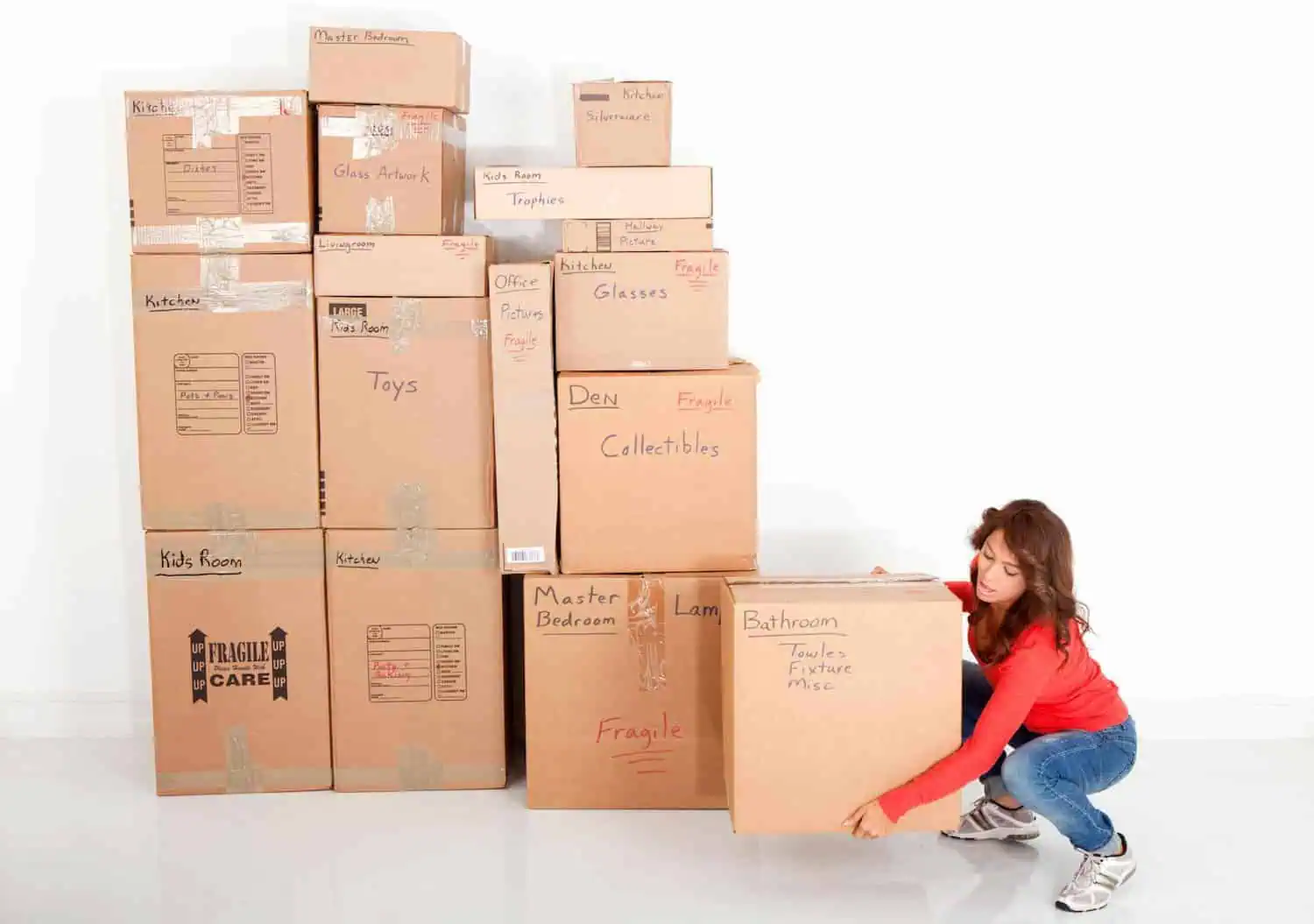
A woman picks up a large box that's next to a section of moving boxes in all different sizes

You might assume that moving boxes are standard across the board. However, small, medium, and large labels do not actually mean the exact same thing at every single store. Retailers manufacture boxes with varying dimensions, and a large container from one hardware store might be noticeably smaller than a large container from a competitor. To protect your belongings and your back, you need to understand exactly what you are buying.

We consolidated the common dimensions and typical prices below so you know what to expect.

Standard Moving Box Size Ranges

Moving Box Size

Dimensions

Recommended Use Typical Price
Small Height: 12 to 14 inches

Width: 11 to 14 inches

Depth: 14 to 17 inches

Heavy items like books, dishes, or electronics $1.00 to $1.78 per box
Medium Height: 12 to 18 inches

Width: 14 to 18 inches

Depth: 15 to 21 inches

Mid-weight items like clothing, plastic dishware, or shoes $1.64 to $2.54 per box
Large Height: 16 to 24 inches

Width: 15 to 18 inches

Depth: 18 to 27 inches

Light, bulky items like towels, blankets, or linens $2.10 to $3.23 per box
X-Large Height: 18 to 24 inches

Width: 18 to 24 inches

Depth: 22 to 26 inches

Large, light, bulky items like pillows or sleeping bags $2.86 to $6.22 per box
Wardrobe Height: 21 to 34 inches

Width: 20 to 24 inches

Depth: 24 inches

Hanging clothes, coats, and long dresses $13.88 to $23.48 per box
Dish Packing Height: 11 inches

Width: 12 inches

Depth: 24 inches

Fragile kitchenware like wine glasses, mugs, and plates $15.49 to $19.98 per box
TV Box Varies heavily Flat screen TVs $20.25 to $105.41 per box
Mirror Box Varies heavily Mirrors and framed artwork $1.97 to $25.80 per box

Should I use small or medium boxes for heavy items?

Always use small boxes for heavy items. As a strict rule, you should pack each container to weigh 40 pounds or less. You need to be able to comfortably lift and carry every single box you pack. If you fill a medium or large box with books or hand weights, the container will quickly become too heavy to lift safely. Save the bigger containers exclusively for lighter items.


How Many Moving Boxes Do You Need?

The exact number of moving boxes you need depends entirely on how many belongings you actually own. While square footage gives you a helpful starting point, it doesn’t account for lifestyle. In other words, despite both living in a two-bedroom home, a true minimalist will need far fewer supplies than an avid collector.

To make your planning process easy, we ran the numbers through our own moving box calculator to give you a solid baseline for what a typical move requires.

How Many Moving Boxes You Need Based on Home Size

Home Size Small Boxes Medium Boxes Large Boxes Total Est. Box Cost
Dorm/Studio 15 10 5 $55.00
1-Bedroom Apartment 20 15 10 $85.00
2-Bedroom Apartment 30 25 15 $132.50
1-Bedroom House 30 20 15 $122.50
2-Bedroom House 40 30 20 $170.00
3-Bedroom House 50 40 25 $217.50
4-Bedroom House 70 50 30 $280.00
5+ Bedroom House 90 70 40 $375.00

What Size Box is Best For My Item?

You want to match your belongings to the correct container size to prevent damage and avoid overly heavy loads. Here is exactly what you need for common household items:

  • Books: Small boxes keep the weight per container perfectly manageable.
  • Dishes: Specialized dish packing boxes keep fragile items secure and prevent shifting.
  • Clothes: Medium boxes work perfectly for folded clothes, while tall wardrobe boxes protect your hanging garments.
  • Records: Small boxes prevent heavy vinyl collections from becoming too difficult to lift.
  • TV: Specialty TV moving boxes provide the exact dimensions and padding necessary to protect delicate flat screens.
  • Shoes: Medium boxes give you plenty of room to stack multiple pairs easily.
  • Albums: Small boxes protect heavy photo albums while keeping the total weight safe for your back.

Methodology

To give you the most accurate pricing, we researched the top moving box retailers online and in stores across the country. We compared costs, sizes, and overall cardboard quality for standard and specialty boxes from major brands like U-Haul, The Home Depot, Amazon, and Walmart. We update this data regularly to ensure you always have the best information to plan your DIY move.


Frequently Asked Questions

Who sells moving boxes near me?

Walmart and The Home Depot are the most prolific retail stores selling supplies nationwide. If you live far from a physical location, Amazon is a fantastic alternative that delivers high-quality supplies directly to almost any home.

Where can I get cheap or free moving boxes?

You can easily find free supplies at local grocery stores, bookstores, or on Facebook Marketplace. For a complete list of creative sourcing ideas, check out our guide on where to get free moving boxes.

Are free moving boxes worth it?

Yes! Free boxes save you serious money during an expensive transition. Just inspect them closely for structural damage, moisture, or lingering odors before you pack your valuable belongings.

How much are moving boxes?

You can expect to pay $1 to $10 for a single moving box, depending on the exact size, heavy-duty status, type, and the retailer you choose. While that sounds incredibly affordable, buying supplies for an entire house quickly adds up.

Who sells moving boxes?

Major hardware stores, national retailers, and truck rental companies all sell packing supplies. Top brands include U-Haul, The Home Depot, Walmart, Lowe’s, and Amazon.

What are standard moving box sizes?

Standard sizes generally include small, medium, large, and extra-large options. However, exact dimensions vary slightly by retailer. A typical small box usually measures around 16 by 12 by 12 inches.

Are U-Haul boxes cheaper than Home Depot?

Yes, U-Haul standard boxes generally cost slightly less than comparable sizes at The Home Depot. However, The Home Depot provides highly competitive pricing on its heavy-duty corrugated options.

Are moving box kits or bundles cheaper than buying them individually?

Yes, buying your supplies in bundles usually saves you money. Retailers like Walmart and ULINE frequently offer bulk discounts when you purchase packs of 10 or 25 boxes at once.

Can I return unused moving boxes?

Most major retailers like U-Haul and The Home Depot allow you to return unused, flattened boxes for a full refund. Always keep your physical receipt and verify the specific return policy at your local store before you check out.


30 Places to Get Free Moving Boxes

Author:

Publish Date:

Last Modified Date:

Category: Moving Boxes & Supplies

Tags: Tags: , , , , , ,

Moving on a budget? Free moving boxes can help you cut down on moving costs, and reusing them is an easy way to help save the planet. So instead of buying all your boxes brand new (which can get pricey!), you can find used boxes, oftentimes for free. Just follow these tips to help you trim those costs with just a bit of strategy.

We’ll cover the types of moving boxes to look for, where to source them, and when you might want to buy some new boxes. With expert guidance, including insight from moving expert Kevin Kato, you can learn to source free packing boxes without putting your stuff unnecessarily at risk during transport.


What Types of Moving Boxes Should You Look for?

labeled moving boxes of varying sizes and types are stacked together in a small space

When you’re hunting for free boxes, it pays to be picky. Not every cardboard container is created equal, so look for heavy-duty options like book boxes, dishpacks, and mirror cartons. If manufacturers and retailers trust them to ship heavy or fragile items, they’ll be strong enough for your move, too.

As Kevin Kato says, “It’s best to have a general idea of what types of boxes you need, mainly to avoid getting boxes that are too small or too big for most of your things.” By taking a quick inventory of what you need to pack, you can create a list of box types you’ll actually use.

Here are some common box types worth tracking down:

  • Book boxes (1.5 x 3 ft): For books, CDs, small photo frames, knickknacks, beer mugs, and wine bottles.
  • Medium boxes (3 x 3 ft): For clothing and non-breakable kitchen items.
  • Large boxes (4.5 x 3 ft): For bulky, lightweight items like bedding, pillows, winter coats, and kids’ toys such as Legos, board games, and stuffed animals.
  • Dishpacks (4.5 x 3 ft): Made with double-thick cardboard for fragile kitchenware, electronics, and large photo frames.
  • Mirror cartons: Four overlapping corner pieces that fit snugly around large pictures and mirrors.

When you know which boxes you need, you can head straight to the right stores or locations, saving time and avoiding frustration — and you won’t end up with a stack you’ll never use.


30 Places to Get Free Moving Boxes

Pretty much any business ends up with empty boxes, because that’s usually what inventory, office supplies, or consumer goods ship in. But not all those boxes are good for moving. Here’s a rundown of where to get free moving boxes when you want high-quality options, and what options those businesses, websites, and other places provide.

1. Craigslist

Craigslist’s “Free” and “Wanted” sections can be a goldmine of moving boxes. Search daily and respond quickly to snap up moving boxes before someone else does. Post your own “wanted” ad for the specific type of boxes you need, and set notification alerts so you can respond quickly to box offerings.


“Auto shops and dealerships get reinforced boxes designed for heavy or oddly shaped parts. They often come with protective inserts, which makes them useful for fragile household goods.”


When you do manage to snag some, take a few minutes to inspect boxes for pests, stains, or damage before you load them — you want to bring only your stuff to a new home and not anything else!

2. Nextdoor

Nextdoor is an easy way to connect with neighbors in your area. Browse posts to see if anyone has boxes to give away, and make a post describing your moving-box needs. Pickups on Nextdoor are usually within walking distance, making it a quick way to get boxes. If you luck into a neighbor who has just moved, you may be able to cover most or all of your box needs without driving around town.

3. OfferUp

Many users on OfferUp list free items, including moving boxes. Search “boxes,” filter for free listings, and set a location preference to see if anyone in your area has moving boxes to give away. Check often to snag clean, sturdy options before someone else does.

4. Facebook Marketplace & Local Groups

Close up of man using smartphone to orden take away asian food from delivery

Between Facebook Marketplace and neighborhood swap or Buy Nothing social media groups, you can find free boxes fast. Post a request, enable notifications, and reply promptly to offers. These boxes tend to go quickly, so responding right away boosts your chances.

5. Freecycle & Buy Nothing Networks

Freecycle and Buy Nothing networks exist so people can give items away for reuse, and boxes are a frequent find. Join these networks early in your moving process, be specific in your requests, and check listings often. Many boxes sourced from these groups are in great shape thanks to community members’ reuse efforts.

6. Big-Box Retailers (Walmart, Target, etc.)

Retail chains like Walmart often have shipping cartons and boxes available after restocks. However, you don’t want just any box lying around between the aisles. As Kato notes:

“You’ll want to stay away from produce boxes, which usually have holes and bits of leftover organic matter in them. Instead, look for the big cardboard cartons used for paper towels, diapers, Kleenex, toilet paper, and dry foods like cereal.”

7. Liquor Stores & Bookstores

Kato notes, “Boxes for wine and liquor are not only very sturdy but may come with cardboard divider inserts that help with packing things like mugs and glassware.”

These boxes are built to handle heavy, liquid-filled bottles, so they’re a great option for your drinking glasses. Bookstore boxes are also ideal for heavy loads. Pack your own books in them, or use them for dishes or other heavy but fragile items.

8. Grocery Stores & Pharmacies

Grocery stores and pharmacies restock frequently, which generates plenty of boxes. Avoid produce boxes, which can harbor pests or mold. The best time to ask for boxes is right after restocking, when sturdy dry-goods cartons are still intact and ready for reuse, giving you the best shot at clean, strong options.

9. Recycling Centers & Yard Sales

Recycling centers sometimes have stacks of clean, broken-down boxes ready for reuse. Yard sales can also be a win, as sellers often give away boxes at the end of the day rather than store them. Arrive around lunch or mid-afternoon for the best shot at boxes, or show up early and ask the seller to save boxes you’ll pick up later that day.

10. Apartment Complexes & Leasing Offices

Leasing offices often have boxes left behind after move-outs. Stop by and let the leasing staff know you’re moving soon and could use a few spare boxes, ideally right after the first of the month when turnover is highest. Some staff may even set aside a stack for you if they know you’re coming.

11. Offices, Schools, & Libraries

Modern library interior with bookshelves, study desks, and reading lamps

These locations receive regular deliveries in clean, sturdy boxes. Approach administrative or facilities staff during slower times, and ask if you can take boxes headed for recycling. Office supply cartons are often reinforced, making them ideal for books, files, or heavier household goods.

12. Neighbors, Friends, & Family

Your own network can be the easiest source for free moving boxes. Post a quick request in group texts or local chats. Many people are happy to pass along boxes after their own moves — and you can keep the cycle going by re-gifting them afterward. Don’t forget to hit up frequent online shoppers, as they often have boxes on hand.

13. Moving Companies & Van Lines

Kevin Kato used to be in the moving business as a mover, and based on that experience, he knows of a good place to find moving boxes:

“I am willing to bet that the most extensive supply of used boxes anywhere will be at your local agency for one of the big van lines. United, Atlas, North American, Allied, Mayflower: any of them will very likely have stacks and stacks of used boxes, in all sizes and in decent, usable condition.”

However, keep in mind that when sourcing boxes from actual moving companies or van lines, you might pay a small fee. That’s true even if you’re asking for used boxes. But, it’s a fraction of what buying all new boxes would ultimately be.

14. U-Haul Customer Connect

U-Haul’s Customer Connect program helps people give away leftover moving boxes. All you have to do is enter your ZIP code to find free boxes nearby. It’s a lesser-known resource that often yields moving-grade containers without much hunting. It’s also a great option for passing on your boxes when you’re done with them.

15. Save Your Own Delivery Boxes

Delivery worker handing a customer a box at the doorstep

Hold onto delivery boxes from Amazon, Chewy, or other online retailers in the weeks before your move. Consider asking family members and friends to save these types of boxes for you, too. These types of boxes are typically clean, sturdy, and easy to break down for storage. Reinforce them with packing tape before reuse for added strength.

16. College Dorms

Dorm move-in and move-out days create piles of usable boxes. Ask campus housing offices if you can show up to claim boxes, or check designated disposal areas near dumpsters. This strategy works especially well in late summer and spring, when students are moving in or out en masse.

17. Banks

Banks receive regular shipments of paper and promotional materials in reinforced boxes. These boxes tend to be compact, clean, and ideal for heavy or fragile items. Call or visit during non-peak hours to see if they have extras headed for recycling.


“If a box feels flimsy or has questionable areas, skip it — using compromised boxes risks damaging or contaminating your belongings.”


Banks are usually busiest on Mondays and Fridays and may get small rushes upon opening, during traditional lunch hours, and after 5 pm. Consider asking for boxes mid-afternoon on Tuesday or Thursday, or on Saturday morning, if the branch is open.

18. Your Workplace

Workplaces often let employees have first dibs on delivery boxes before they’re recycled. Check with the loading dock or intake staff at your own workplace to see what’s available.

19. Warehouse Clubs (Sam’s, BJ’s, Costco)

These stores break down large quantities of shipping boxes daily. Check with a manager to see if they can set aside boxes for you, since some locations save them for members or other purposes first. Non-members can sometimes still get boxes if they stop by during slower hours and members have not already requested them.

20. Furniture & Appliance Stores

Furniture and appliance retailers receive large boxes perfect for lightweight, bulky items like pillows, blankets, or lampshades. Avoid using them for heavy loads, as the cardboard can buckle. Call ahead to find out when new shipments arrive and ask if they can set aside boxes for you.

21. Restaurants & Cafes

Local restaurants, coffee shops, and fast-food chains are often an overlooked source for free boxes. And not all of them contained produce or other food. Many locations have boxes that previously held only paper goods, for instance.

“Fast-food joints especially will have plenty of sturdy fry boxes that are usually clean inside, since they are typically used for frozen food,” says Kato. These types of boxes are great for medium-weight items.

22. Home Improvement Stores

Stores like Lowe’s, Home Depot, and Ace Hardware get frequent shipments in large, clean boxes. Check early in the day or right after restocking for the best selection. These boxes are ideal for bulky, lightweight items like bedding or lampshades.

23. Pet Supply Stores

Pet stores often have extra-large boxes from dry food and litter shipments. Let the manager know you’re moving soon and see if they’ll set aside a few boxes for you, and avoid any with spills or odors. Your best chance of finding sturdy, clean boxes is to stop by on delivery days, so call ahead to find out when new stock arrives.

24. Farmers Markets & Produce Stands

People shopping at an outdoor farmers market

Vendors at farmers’ markets or produce stands often have sturdy, easy-to-carry boxes after they unload and sell their goods. Check them for moisture or residue before taking them. Visiting near closing time is best, when vendors are packing up and ready to part with extra boxes.

25. Event Venues & Convention Centers

After trade shows or large events, these venues often have stacks of boxes from booths and displays. Call staff near the end of an event to ask about picking some up before they’re recycled. Event halls, trade shows, and convention centers are an overlooked source for boxes, but especially in larger cities, they can be a high-volume option.

26. Printing & Copy Shops

FedEx Office, UPS Store, and local print shops get shipments of paper and supplies in small-to-medium reinforced boxes. They’re often clean and sturdy enough for books, documents, or kitchen items. Ask location staff if they have extras bound for recycling. You could also let them know you’re willing to come pick up boxes at a time convenient to them.

27. Storage Facilities

People moving out of storage units frequently leave boxes behind. Ask unit managers if they have a “free box” section or can save some for you. These boxes are often moving-grade, as previous users might have purchased them for that purpose.

28. Local Theaters (Movie or Stage)

Theaters receive boxes for posters, concessions, and equipment. Visit between show times and ask the manager if they can spare any extras. These boxes are usually medium-sized, clean, and well-suited for fragile items.

29. Car Dealerships & Auto Shops

Auto shops and dealerships get reinforced boxes designed for heavy or oddly shaped parts. They often come with protective inserts, which makes them useful for fragile household goods. Your best bet is to check with the parts or service department.

30. Craft & Hobby Stores

Stores like Michaels and Hobby Lobby receive frequent shipments of lightweight goods in clean, medium-sized boxes. These boxes are rarely damaged and are easy to tape and reuse for household items. Find out from the staff when restocking days are and show up then for the best selection.


How to Ask for (and Get) Boxes Successfully

The best way to get free moving boxes is to be courteous and thoughtful in your approach. If you show up during rush hour for the business, employees won’t have time to consider your request. It’s best to show up toward the end of the day or after deliveries have been handled.

Here’s what to say to increase your chance of getting free packing boxes:

  • Introduce yourself: When people know your name and where you’re from, it personalizes the situation. That increases the chance they want to help you.
  • Provide a reason: Let them know you’re moving and need boxes.
  • Use your manners to build goodwill: Phrases like “please,” “thank you,” and “I appreciate it” show respect for the employee’s time and make them more likely to want to help you.
  • Make it convenient: Offer to pick up boxes at a time that’s more convenient or go through boxes before employees spend time breaking them down.

If you can turn your ask into a small favor — “Let me get these boxes out of your way so you don’t have to spend time getting them ready for recycling” — you increase your chances of scoring free boxes.


When Free Boxes Might Not Be Enough

Free moving boxes can cover most of your needs, but there are times when it’s worth investing in new or specialty ones:

  • Dishpacks: Double-walled boxes with dividers that protect fragile kitchenware during transit.
  • Wardrobe boxes: Let you move hanging clothes without folding them, saving time and preventing wrinkles.
  • Specialty boxes: TV boxes, mirror cartons, plastic bins, and file boxes offer extra protection for high-value or delicate items.

A smart strategy is to mix free and paid moving boxes for cost and protection:

  • Use free boxes for sturdy, non-breakable items like books, linens, and décor.
  • Reserve purchased specialty boxes for fragile, oddly shaped, or expensive-to-replace belongings.

This approach keeps your costs down while protecting your items. A few dollars spent on the right box now can save you from the higher cost and stress of replacing damaged items later.


Pro Tips for Using Free Boxes

Moving like a pro can involve getting boxes for free, but you have to know how to put them to use. These quick tips help you pack safely and reduce waste when you’re done with your move.

Safety Tips for Using Free Moving Boxes

Inspect every box before you start packing. Look for signs of pests, like chewed edges and droppings. Also look for moisture stains or soft spots in the cardboard. Even a small amount of damage can weaken a box, making it more likely to buckle during the move.


“Pickups on Nextdoor are usually within walking distance…[and if] you luck into a neighbor who has just moved, you may be able to cover most or all of your box needs without driving around town.”


If a box feels flimsy or has questionable areas, skip it — using compromised boxes risks damaging or contaminating your belongings.

Save the strongest boxes for fragile or heavy items, and use lighter-duty ones for linens or other soft goods.

Tips for Making Moving Boxes Eco-Friendly

Once you’ve unpacked after a move, pass your boxes along to friends, neighbors, or people in local Buy Nothing groups so they can get a second life. If they’re too worn to reuse, break them down and recycle them.

When sealing boxes, use only as much tape as necessary and remove labels or packing slips before recycling. Small steps like these help keep boxes in circulation longer and make recycling simpler for facilities.


FAQs About Free Moving Boxes

If you’re new to hunting for free moving boxes, or just want to make the most of your search, these common questions can help you find, choose, and use boxes more effectively.

Where are the best places to find Free moving boxes?

Big-box retailers, liquor stores, bookstores, and online communities like Facebook Marketplace or Nextdoor tend to be reliable options in most areas. Asking nicely and visiting stores frequently when you know recent deliveries have occurred increases your chances of getting good moving boxes.

Are free boxes safe to use for moving?

Yes, as long as you inspect them first. Check for moisture, stains, pests, or weak spots in the cardboard. Avoid produce boxes, which can carry mold or residue. Use only clean, sturdy boxes for heavy or fragile items to protect your belongings during the move.

When is the best time to ask businesses for boxes?

The best time is during downtimes in the store, and right after deliveries or restocking efforts, which often occur in the morning or late afternoon. Avoid peak customer hours so staff can help you without being rushed or stressed. If possible, call ahead to learn about delivery schedules and arrange pickup when boxes are still intact and haven’t been broken down.

Can you mix free and purchased boxes?

Absolutely. Use free boxes for durable, lightweight items, and save purchased specialty boxes for fragile, heavy, or valuable belongings. Mixing the two keeps costs down while ensuring your most delicate possessions are well protected. Specialty boxes like dishpacks and wardrobe boxes are often worth the investment.

What should you avoid when picking boxes?

Avoid boxes with visible damage, dampness, or signs of pests. Don’t use anything that previously stored produce or hazardous materials. These can compromise your belongings or attract unwanted pests. Stick with sturdy, clean boxes from trusted sources.

8 Clever Holiday Cardboard Hacks

Author:

Publish Date:

Last Modified Date:

Category: Seasonal & Holidays

Tags: Tags: , , , , , , ,

Happy Holidays! Whether you just moved into your new place or are an avid online shopper, most of us are guilty of having a little extra cardboard around the house at any given moment. And for most of us, this valuable tool does its job transporting and then quickly gets retired to the garbage.

Instead of hauling that leftover cardboard to the curb immediately, have you ever thought of using it in a new way in your home? Maybe to help stay organized or just to add a little extra holiday spirit around your place?

No, we have not gone crazy and yes, we do believe with a little creativity your old moving boxes can be repurposed to actually dress up your new place for the holiday! Not only would this be cutting down on your waste, upcycling your leftover cardboard could even save you some money this holiday season.

Before you officially think we’ve bought a one-way ticket to Crazytown, check out these super clever holiday cardboard hacks. One moving box at a time, we are determined get in the holiday spirit…. (more…)

×

I'm Moving

Moving? Thinking about moving? Whether your move is off in the distance or you already have one foot out the door, you'll learn about everything you should expect through our useful how-to's, cool articles and much more. It's all specially curated for you in our "I'm Moving" section.
Explore
×

I'm a Mover

For rookies or veterans alike, our "I'm a Mover" section is filled with extensive industry news, crucial protips and in-depth guides written by industry professionals. Sharing our decade of moving knowledge is just one way we help keep our professional movers at the top of their game.
Explore