

You might think that getting everything off the truck is going to be easier than getting everything onto it. But unloading your moving truck still requires planning to make the most of your time, prevent injuries, and protect your property.
The goal? Get everything out of the truck and into your space as efficiently as possible. Thankfully, this guide is packed with practical tips to help streamline the unloading and move-in process so you can unload your moving truck and set up your new home with confidence.
Plan Ahead for Successful Unloading
An unloading plan shouldn’t start when you arrive with your belongings at your new destination — it should start at least several weeks before then. Moving is usually chaotic, but coming up with an effective unloading strategy can mean the difference between manageable and unmanageable chaos.
Use this list to make sure you have all the necessary plans in place during the pre-move process:
- Secure a parking permit near your new home.
- Know your exact new address.
- Scout the street ahead of time to determine the best unloading spot.
- Have a Certificate of Insurance, if needed.
- Clearly mark the boxes with what’s in them and where they go.
- Decide if you need furniture disassembly/reassembly or loading/unloading services.
- Create a floor plan for each room in your new home so furniture can immediately go into place.
- Make childcare/pet care plans (if needed) to ensure their safety on moving day.
- Measure doorways, hallways, and stairwells so you know what bulky items will fit through.
- Make a furniture navigation plan through tight spots and narrow hallways in your new home.
How Long Does it Take to Unload a Moving Truck?
The time it takes to unload a moving truck depends on things like how many helpers you have, whether there are stairs or an elevator, and the volume/weight of your belongings. Hiring professional movers may speed up the process — they’re experts in efficient unloading techniques and can get the job done quickly and carefully.
“When using a dolly, make sure the wheels go down before you do. You should always be higher than the dolly when rolling stuff down the ramp.”
But whether you have the pros or fantastic family and friends helping you unload a moving truck, being organized and labeling boxes properly can make a huge difference. If everyone knows where each box and piece of furniture goes, they don’t have to stop to ask you or rearrange anything while unloading.
What to Do Before You Start Unloading on Moving Day
Now, you’ve arrived at your new home and are ready to unload the moving truck. As tempting as it might be to throw open the doors and run to get started, it’s better to take things one step at a time. The following tips are important to keep in mind when you arrive and before you start bringing in your belongings.
Park on flat, safe ground with clear access

The more room you have to maneuver, the better. Flat ground is obviously ideal, but that’s not always possible. As Kevin The Mover says, “If you simply have to park on a sloped surface, point the front of your truck downhill.”
Use the emergency brake
Do this whether you park on a hill or a flat surface. This small step can prevent serious accidents. It protects you, anyone helping with the move, and others in the vicinity.
Open doors carefully to avoid falling items
Flinging open the truck’s back door when you arrive risks something dropping out and shattering or, even worse, falling on your head or foot. Lift the door slowly and use a flashlight to peek in and check if items are at risk of falling while you’re opening the door.
Check for damage or shifting during transit
Going over bumps and making turns can easily cause cargo to shift. Before you start moving everything out, readjust the stacked items in the truck to keep them from falling while you’re unloading. Also, make sure nothing was damaged.
Gather supplies
Take out all your moving gear, including gloves, furniture sliders, and dollies, and set them beside the truck so they’re easily accessible.
Be careful sliding out the ramp
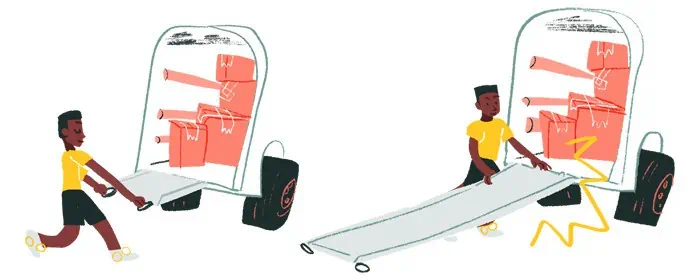
Don’t rush when you’re sliding out the moving truck ramp, especially considering how heavy it is. Go slow and take your time. As Kevin The Mover advises: “It’s extremely important to remember to set those hooks at the top of the ramp securely in place!”
Don’t leave belongings outside in a busy area
It’s one thing if you’re in a rural or suburban setting, and there’s plenty of yard space between the front door and the street. However, if you’re on a busy street, never set your items down outside while you unload — someone can swipe your box or bag in just a minute.
Have someone in the doorway at all times
Only prop open one entrance and make sure you or a helper is by the door throughout the process. Not only does this keep kids or pets from slipping out, but it also makes sure that no strangers have the opportunity to enter.
Protect Your Home From Damage
Moving heavy furniture around runs the risk of it knocking into the walls, corners, and floors. Prevent your home from getting scratched, scuffed, and dented by following these tips:
- Use door jamb protectors.
- Wrap handrails and banisters with old blankets or other fabric.
- Temporarily remove doors from hinges if you’re bringing in bulky items.
- Don’t drag items across floors.
- Cover belongings with furniture pads.
- Cover floors with moving mats, but secure them to prevent shifting.
- Keep walkways and stairs clear.
Establish Teamwork and Communication Flows
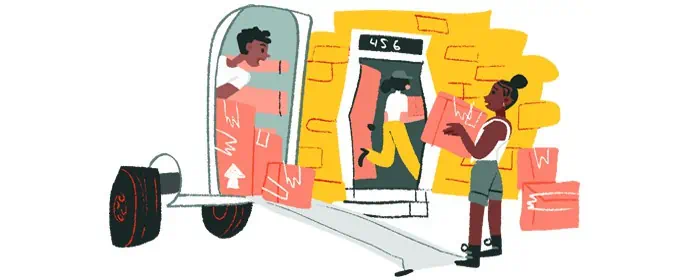
Teamwork and communication are key for a seamless moving day. Having everyone do their own thing without instruction can lead to chaos, stress, arguments, and damaged items. Your best option is to give everyone a role. As Kevin the Mover puts it, “Assign someone to stay on the truck and break down the load. That way, they’re not constantly hopping in and out, and you’re saving your back.”
You could also have one person on the truck handing boxes to another helper on the ground. That person can pass them to someone in the doorway. Have at least one person inside for a single-level home or two people for a two-story house, with each person covering a designated floor. The doorway helper can then hand the boxes off and indicate where they should go.
And don’t forget to take breaks! Have some snacks, drink plenty of water, and chit-chat for a few minutes before getting back to work.
Getting Help to Unload Your Moving Truck
The more help you have — if not from friends and family, then from professional movers —the faster the process will go. HireAHelper’s online platform makes it easy to find expert, affordable movers in your area. Full-service and labor-only moves are available, so you can choose how much (or how little) help you want. Don’t forget to check out the add-ons, such as furniture disassembly/assembly and packing/unpacking services, if you want to make your move completely effortless on your part.
Safely Lift and Carry Your Belongings
We get it — you want to get the move-in process done and over with so you can enjoy your new home. We don’t blame you! However, rushing might result in you or a helper being down and out with an injury. There are plenty of ways to be both safe and efficient when it comes to lifting and carrying, including:
- Lifting with your legs and not your back
- Using a dolly as much as possible
- Keeping the weight of boxes you pack at 40 pounds and under
- Carrying boxes, bags, and other belongings with two hands
- Taking breaks before you need to
- Not running up or down stairs
- Securing floor mats so you don’t slip and fall
- Wearing sneakers that won’t slide off your feet
- Team-lifting heavy items like dressers, tables, and couches
- Taking your time and moving carefully
A Note About Safety and Your Moving Truck
When you’re unloading your moving truck, a hand truck (also known as a dolly) is your best friend. It can save trips, reduce strain, and keep your move on track. Here are some tips on unloading safely, with or without a dolly:
- Start centered: Whether you’re rolling or carrying a big, heavy appliance or piece of furniture, you want to get centered on the back of the hand truck before you head for the ramp.
- Stay above the dolly: When using a dolly, make sure the wheels go down before you do. You should always be higher than the dolly when rolling stuff down the ramp.
- Watch your ramp angle: You also want your dolly to hit the ramp squarely. If one wheel starts going downhill before the other, your dolly will start to tip to one side.
- Use a second set of hands: If you’re moving something large or heavy with a dolly, have an extra set of hands at the lower end to keep that thing moving steadily — and slowly!
- Know who leads: If you and a buddy are carrying that item, whoever’s holding the bottom end needs to travel down first.
Unload Strategically

What you unload first and what you choose to leave until later can have an impact on how quickly the process goes. Plus, getting your stuff out in the proper order can also help with organization, so here are some suggestions on when you should unload what:
- Put away perishables. The first things out of the truck should be food and medication that need to go into your refrigerator or freezer. Put boxes of nonperishables on counters so you know where they are and can put them away later.
- Bring in essentials and fragile items. This includes a wide range of items, such as dishware, a first aid kit, toiletries, and necessary pet items. Make sure you also pack outfits for the first few days, including pajamas and shoes, so you don’t have to go digging through the boxes.
- Remove heavy and large items. Next up is everything bulky, including appliances and furniture. Before you start moving them in, double-check that the protective floor covering didn’t shift out of place during the first wave of unloading.
- Finish with lighter boxes and soft goods. Bringing in the large and heavy items will probably take a lot out of you, so leave the lightest items for last.
Avoid These Mistakes
It’s easy to make mistakes while you’re unloading a moving truck, especially if you’ve already been at it for a while. However, it’s important to remain vigilant from start to finish. Here’s what to watch out for:
- Opening the truck door too quickly
- Not wearing secure footwear
- Moving without a loading and unloading plan
- Not asking for help
- Lifting too much by themselves
- Not giving yourself far more moving time than you’ll probably need
- Skipping protective measures
- Not securing the ramp properly
- Not effectively communicating with helpers
- Forgetting to hydrate and take breaks