How To Pack an Office Chair for Moving

Author:

Publish Date:

Last Modified Date:

Category: How To Pack, Pro Packing Guides

Tags: Tags: , , , , , , , , , , , , , , , , , , , , , ,

It’s easy to underestimate the awkwardness of packing an office chair. That is, until you try balancing one in a moving truck without it tipping, toppling, tearing, or scratching something you care about. With protruding arms, rolling casters, and sometimes delicate upholstery, office chairs are among the most commonly damaged items during a move.

Below, we’ll show you how to pack an office chair for moving, using techniques real movers use every day.


Moving Supplies You’ll Need to Wrap an Office Chair for Transport
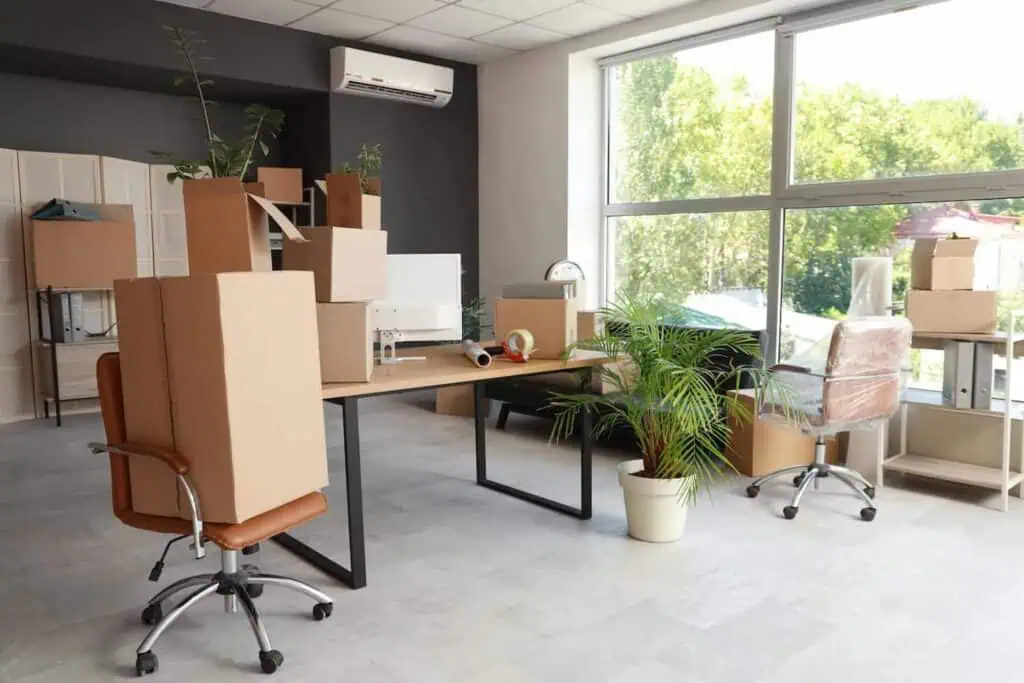
an image of an office being packed up, as well as several office chairs

Here’s what to have ready to protect your office chair for a move:

  • Moving blankets or furniture pads: This is used to cushion sharp edges and keep finishes safe.
  • Packing tape: It’s best to secure padding tightly without sticking directly to the chair’s surface.
  • Stretch wrap: Will add another layer of stability and protect against dirt, dust, and moisture.
  • Bubble wrap or packing paper: Used to wrap around protruding parts like armrests, knobs, or levers to prevent impact damage.
  • Screwdriver or Allen wrench: A necessary tool for removing parts like the backrest or arm supports.
  • Plastic zip bag: These are to keep screws, washers, or wheels together so nothing gets lost mid-move.
  • Labels and a permanent marker: You’ll need these to help you match parts quickly when it’s time to reassemble.

Tip: Lay down a soft surface like a rug or towel before you start. It makes packing easier and prevents accidental scuffs on floors or your chair.

Step-by-Step Instructions: How to Pack an Office Chair for a Move
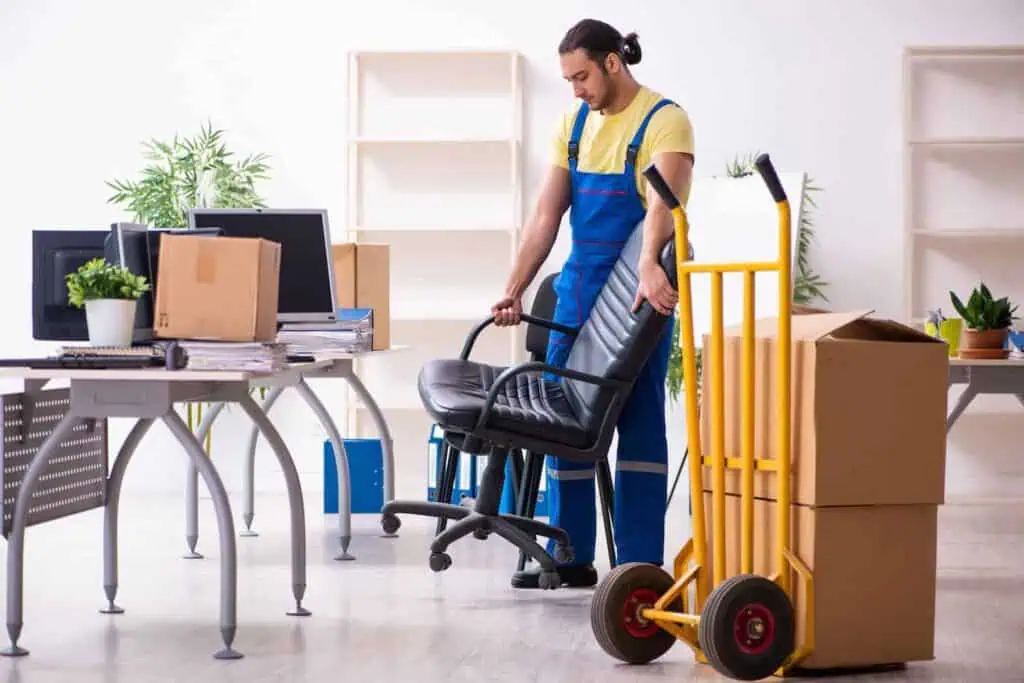
 

A mover picks up an office chair to prepare it for wrapping and packing

If you’ve ever tried wrapping a chair in a moving blanket only to have it come undone in the back of a truck, the problem likely wasn’t the blanket—it was the size. Most office chairs aren’t built to sit still, so unless you’ve got a blanket big enough to fully wrap and secure it, things tend to shift (or worse, tip over).

Kevin the Mover, a longtime HireAHelper expert, shares a simple method used by professionals:

“The key to wrapping a chair properly is having a big enough pad. From there, the rest is as easy as 1-2-3-4.”

1. Clean the Chair

Dirt can grind into finishes during transit, and wrapped-up dust tends to reappear in your new place. Give the chair a quick clean before you pack:

  • Wipe plastic or metal frames with a damp cloth.
  • Vacuum mesh backs and seat cushions to remove crumbs and debris.
  • Use a leather-safe cleaner for leather chairs, and allow them to fully dry before wrapping.

Cleaning only takes a few minutes, and it’s the easiest way to avoid unpacking a dirty, scuffed chair later.

2. Lay It Down

Spread your moving blanket on the floor and place the chair on its back, off-center toward the top corner of the blanket. That extra room gives you enough fabric to wrap around the base and legs without bunching or gaps.


“If your chair is heavy or hard to maneuver, taking it apart makes it easier to carry — and safer to pack.”


If you’ve already taken the chair apart, start with the seat or backrest (whichever is largest) and lay the other components nearby.

3. Wrap It

This is the step where a lot of people go wrong. Just tossing a blanket over the chair and hoping for the best can easily result in a torn armrest or exposed caster.

Instead, do this:

  • Fold the blanket’s sides over the chair first, snugly wrapping the arms and seat.
  • Pull the top corner down over the backrest.
  • Lift the bottom portion of the blanket over the chair’s base, tucking the excess between the legs.

If your chair has sharp angles or fragile adjustments — like a lumbar knob or headset mount — add a layer of bubble wrap before covering with the blanket.

an image of an office chair being wrapped, as instructed, with a moving blanket

4. Pull Up the Corner

Now comes the detail that separates a loosely wrapped chair from one that holds together all the way to your new place. Take the bottom corner of the blanket (now near the floor, between the chair’s legs) and pull it up over the seat.

Tucking this piece in tightly helps anchor the wrap and covers the underside — an often overlooked area that’s vulnerable to scrapes and pressure points during a move.

An image of an office chair wrapped in a moving blanket with one corner remaining, just as the instructions say

5. Secure It in Place

Once your chair is swaddled, it’s time to lock that cushioning and protection in. Use packing tape or stretch wrap to hold everything tight.

  • Packing tape: Wrap it fully around the bundle so it sticks to itself, not to any fabric, plastic, or leather.
  • Stretch wrap: Start at the base, work your way up, and overlap as you go. Stretch wrap also adds some waterproofing if you’re moving during bad weather.

As Kevin advises, “Tape doesn’t stick well to pads — remember to let the tape stick to itself, not the chair.”

Double-check that no parts are exposed. The most common place people miss? The wheelbase.


Common Mistakes to Avoid

It’s easy to cut corners when juggling boxes, furniture, and a ticking timeline, but overlooking small details with your chair can lead to big regrets. Here’s what not to do:

  • Taping directly to leather, mesh, plastic, or wood. Adhesive residue can stain finishes or peel surfaces and may not stick properly to certain plastics. Always wrap first, then tape over the wrap.
  • Skipping bubble wrap on sensitive parts. Armrests, tilt levers, and adjustable knobs are easy to snap if they’re not cushioned.
  • Using undersized blankets. A half-covered chair is an exposed chair. If needed, overlap two pads or blankets to get full coverage.
  • Ignoring office chair disassembly. If your chair is heavy or hard to maneuver, taking it apart makes it easier to carry — and safer to pack.
  • Not removing the gas cylinder. Leaving it attached — especially during long-distance moves — can put strain on the cylinder or seat base if the chair is jostled.

If you’re dealing with ergonomic chairs, mesh chairs, gaming chairs, or leather upholstery, take the time to wrap each part individually. A few extra minutes here could help you avoid expensive repairs.


Additional Moving Tips for Office Equipment

An image of a home office packed up into boxes, along with a monitor wrapped in plastic and an office chair

Office chairs are usually just one piece of a bigger setup. Desks, monitors, drawers, and all the tangled cords in between. Each part of your home office deserves just as much attention if you want everything to arrive in one piece. These items are just as prone to dents, scratches, and stress damage if they’re packed carelessly.

Once your chair’s ready to go, here’s how to handle the rest of your office essentials with the same level of care.

Tip Why It Helps
Label all parts and cables Makes reassembly of desks or electronics faster
Group small office items into bins Keeps everything together — think monitors, mouse pads, and cords
Wrap electronics separately Original packaging or plenty of cushioning in boxes protects equipment
Empty or remove drawers Lifting empty desks or filing cabinets is safer and easier
Call for help when moving heavy desks A second set of hands can help prevent injury

Frequently Asked Questions

Do I have to disassemble my office chair for moving?

No, most office chairs can be moved without disassembly. If it fits through doorways and isn’t too heavy, wrapping it whole works well. However, if the chair is oversized or fragile, it’s smart to disassemble bulky parts like the backrest or wheels so it can fit in the truck and be moved up and down stairs.

Should I remove the wheels?

Removing the wheels is optional but recommended. Detached wheels mean your office chair won’t roll around in the truck, and the base can be wrapped more securely. Most pop out with a firm tug. If you do leave them on, make sure to wrap the wheelbase well and secure the chair so it can’t move.

Can I stack office chairs in a moving truck?

No, most office chairs aren’t made to stack, and doing so can damage upholstery or frames.

6 Things To Know About Office Relocation in 2024

Author:

Publish Date:

Last Modified Date:

Category: Corporate Relocation, Moving Advice

Tags: Tags: , , , , , , , , , , , , , , , ,

If you run a business, then you know the global pandemic’s influence on shifting office norms. Despite a lot of buzz about CEOs mandating RTO, the top 10 most populous US cities saw less than 50% office occupancy in the final quarter of 2023.

Given the rise in flexible work and less need for office space, companies now have more freedom to operate from anywhere. Rather than being confined to a specific location, business owners can move their offices out of top-dollar markets to save on costs. Some are closing their doors altogether, opting instead to manage operations entirely from home.

While an office relocation can be seriously beneficial, there are some logistical factors to think about before getting started. So if you run a small or medium business that’s undertaking a move, consider this your roadmap.   

Office Relocation in the New Workplace

a group of employees help pack up supplies and furniture for their office's move

First off, what does office relocation mean exactly? When you’re dealing with a business, it’s not simply moving to a new location — you have to inform vendors, employees, and clientele in addition to rebuilding your IT infrastructure.

But with that said, office relocation doesn’t always entail trading one location for another. You could downsize, or move entirely to a remote environment. 

But why consider a remote (or hybrid) office relocation? Here are some perks to pique your interest: 

  •  Global Workplace Analytics estimates the average small or medium business can save as much as $11,000 for each employee who works from home at least part-time. Those savings are due to increases in productivity, lower rates of turnover and absenteeism, and less overhead costs for office space.
  • A McKinsey poll of 100 business executives found that offering remote or hybrid work options can lead to a 58% boost in individual performance, a 54% boost in diversity and inclusion, a 49% boost in team productivity/collaboration, and a 36% boost in customer satisfaction. 
  • Accenture’s Future of Work Report shows that 68% of high-growth companies allow their teams to work from anywhere. This initiative makes employees 2.3 times easier to retain, and it raises the average worker’s “Net Better Off” score by 21 percent. This translates to 5% more revenue.
  • In 2021, Yelp chose to downsize its office space in San Francisco and New York while allowing its 3,900 employees to continue working from home. After just one quarter of decreasing real estate in these markets, Yelp cut costs by 13% and expects to save $10–12 million a year through 2024.

6 Things to Know About Office Moving

Whether you downsize to a smaller space, move to a less expensive area, or ditch bricks and mortar altogether, an office relocation could be the fresh start your business needs. It’s a major transition, but don’t let all those moving parts intimidate you. Here are six factors to keep in mind as you embark on relocating your office.

1. You Have Lots of Options

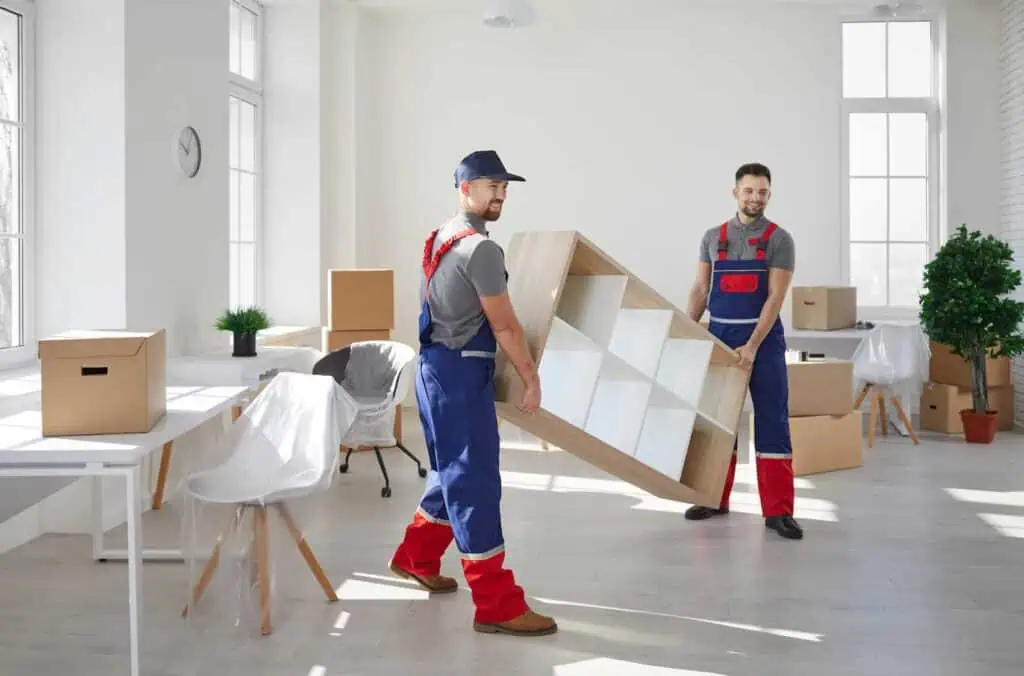
two movers dressed in overalls move a shelf from an office

The first step in any successful office relocation is the physical move itself. You have three moving options to choose from: DIY, hybrid, or full-service moving. Many businesses prefer the full-service route due to sheer convenience, but if you want to curb expenses, the other two choices are potentially a lot more affordable. Here’s a breakdown of each moving option, so you can determine which suits your needs the best:

  • DIY Move: With this option, you handle all the logistics yourself. This includes packing boxes, loading the vehicle, transporting your items, then unloading and unpacking once you arrive. The average cost is $660 (this will fluctuate based on travel distance), making it the cheapest of all three methods. For a smaller office, it’ll take you about 31 hours to complete this kind of move from start to finish. If you’re on a budget or want control over each aspect of the move, DIY is for you. But be advised that it’s time-consuming and labor-intensive.
  • Hybrid Move: With this option, you split the workload between your business and a team of hired helpers. Your job is to pack the boxes, supply the vehicle, transport the items, then unpack it all. Meanwhile, the moving helpers will load and unload for you. The average cost of a hybrid move is $910, and the process takes smaller businesses about 21 hours. While not as affordable as DIY, this option is still cost-effective — plus, it won’t require as much effort from you and your employees, so it’s definitely worth considering. Moving labor can also take care of packing and disassembling (and reassembling) furniture if you’d prefer.
  • Full-Service Move: With this option, a hired moving company does almost all the work. Aside from packing and unpacking (that’s still on you unless you pay for these as extra services), full-service movers will handle the rest. They’ll provide the truck, load the boxes, transport items, then unload everything at the final destination. But there are some drawbacks to be aware of. On average, a full-service move costs $2,568 (or upwards of $6,000 for long distances). It also requires a significant amount of planning, and can take several days for all the items to arrive if you’re moving long distance.

2. It’s Worth Considering Portable Storage

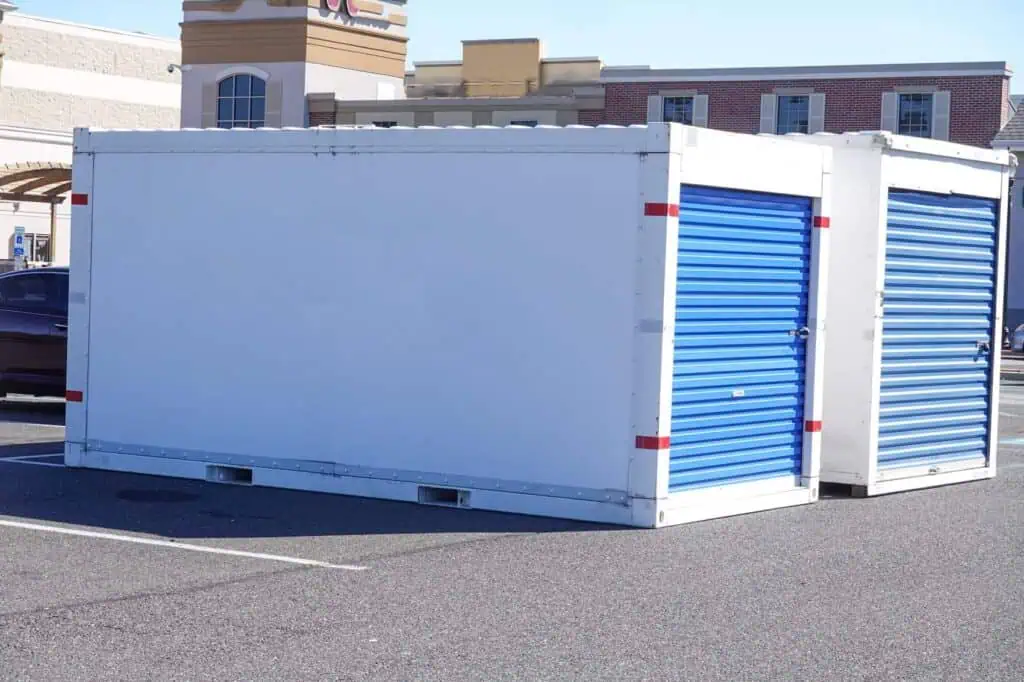
two white moving storage containers with blue doors sit on an asphalt surface

If you plan to downsize or transition to fully remote, or if you’re looking for some flexibility, portable storage containers can be a godsend for businesses. These units come in various sizes, and the average monthly cost is $180–$300 (significantly cheaper than a full-time office space). You can also store them in multiple locations — a local storage center, outside your business in the parking lot, or the driveway at home.

A portable container is a convenient, accessible, and secure place to house business files or documents, overstock inventory, and other items you don’t want to keep onsite. Portable storage is also useful if you’re remodeling the new office facilities before moving in. You can use your units for storing jobsite materials and tools as well as office furniture, making it easier to keep business operations going while renovations are underway.

3. Corporate vs. Residential Movers

Just because you’re moving a business doesn’t mean you need to opt for a corporate mover. In fact, there’s not much of a difference between a regular residential moving company and an office relocation company. The art of moving is basically the same whether you’re moving a home or a business facility.

The only difference you’ll notice is when it comes to billing. Corporate movers can invoice on net-30 terms, accept cash on delivery (COD), or offer a combination of both, whereas residential movers usually charge COD. Also, keep in mind that corporate movers are always full-service, so if you’re looking to cut expenses, this may not be the best option. Whichever route you choose, make sure your moving company is licensed in the state you’re relocating to.

4. There Are Ways to Cut Moving Costs

a woman in a blue suit jacket calculates the costs and budget for the office

It’s no secret that costs everywhere are on an upswing, and inflation is no stranger to the moving industry. As of writing, the national average for fuel prices is currently at $3.68 per gallon, with certain states exceeding $4.50, making even DIY moves extra pricey. Not to mention, moving expenses in general have increased by 5–10 percent all across the U.S. However, before you stress out, here are a few strategies to help minimize your office relocation expenses:

  • Sell or donate most of your office equipment. If you’re about to downsize or transfer business operations to your home, then chances are, you won’t need all the furniture, equipment, and decor from your old office. So don’t bother taking these items — the less you move, the less it will cost.
  • Forgo the cost of hiring full-service movers. While the full-service experience is an easy and convenient option, it’s also the least affordable. If you’re able to go DIY or hybrid, you can curb some serious costs by renting a truck yourself and hiring a few helpers to do the heavy lifting.
  • Skip purchasing boxes and packing materials. Between boxes, tape rolls, stretch wrap, foam cushions, tie-down straps, and other materials, you can expect to fork over as much as $550 for a moving supplies kit. So don’t buy new boxes — accumulate them over time from local supermarkets, liquor stores, furniture retailers, or neighbors.

5. You Need a Project Manager

a project manager looks at a tablet

Planning for an office relocation is a lot of work, but you can’t let it overshadow your normal business operations. This is where a project manager comes in. Choose a competent, trustworthy, and organized member of your team, then delegate all the administrative moving tasks to this employee.  

Of course, you’ll want to check in with your moving project manager regularly to see their progress and make final decisions. But funneling most of the daily execution through a point person will free your schedule to focus on keeping your company running smoothly during the transition. 

Here are some of the office relocation tasks that a project manager can spearhead: 

  • Setting a feasible budget for the move and gathering price quotes from moving companies or moving helpers
  • Tracking important dates, such as when the lease terminates at your current location and when you can move into the new space
  • Notifying relevant suppliers, vendors, banks, government organizations, and other service providers of your change in address
  • Taking inventory of office furniture, equipment, and amenities to determine what you need to pack versus what you can sell or donate
  • Decluttering office records and purging the files you no longer need to keep
  • Decommissioning all technology in the office your team is about to vacate and coordinating with IT staff or vendors to rebuild your infrastructure at the new office
  • Updating marketing materials to reflect the business’s new location and contact information
  • Overseeing the packing, loading, and other physical moving activities

6. Communication Is Key

a group of employees sits in a half-circle for a team meeting

One of the most important ways a corporate move differs from a residential move is the scope of people impacted by the relocation — namely, your staff and customers. So how do you keep these stakeholders informed? It all comes down to regular, transparent communication. Here’s how to ensure both employees and customers have all the necessary information — and feel excited about your upcoming move.

How to Communicate with Employees:

  • Alert your staff about the move as early as possible, so they have time to mentally adjust to the changes and make necessary arrangements
  • Offer transfer packages if the office relocation is long-distance or out-of-state
  • Discuss flexible remote or hybrid work options and confirm that employees have access to the equipment and virtual tools they’ll need to successfully work from home
  • Establish a feedback loop in which all team members at each level in the organization can ask questions, express concerns, or seek clarity about the impending move
  • Email an office relocation FAQ sheet to everyone with all the relevant information they need to know. You’ll also want to send out emails and make announcements in meetings whenever there’s an update to share, so the whole team stays informed at each stage in this process

How to Communicate with Clients:

  • Use this office relocation as an opportunity to connect with all your existing and previous clients, or potential clients. Email an announcement to detail the reasons for this move (such as company growth or expansion) and share the exciting news on social media
  • Send regular emails to make sure your customers are up to date on pertinent developments in the office relocation process
  • Plan a “Grand Re-Opening” to unveil the new location to clients once you’re all moved in

There are many reasons to undertake an office relocation, whether it’s downsizing to curb real estate costs, transferring operations into a more affordable market, or switching to a fully remote business model. No matter what kind of office move you have planned, be sure to consider the points above for a successful experience.

×

I'm Moving

Moving? Thinking about moving? Whether your move is off in the distance or you already have one foot out the door, you'll learn about everything you should expect through our useful how-to's, cool articles and much more. It's all specially curated for you in our "I'm Moving" section.
Explore
×

I'm a Mover

For rookies or veterans alike, our "I'm a Mover" section is filled with extensive industry news, crucial protips and in-depth guides written by industry professionals. Sharing our decade of moving knowledge is just one way we help keep our professional movers at the top of their game.
Explore