Penske Truck Rental Prices and Reviews

Author:

Publish Date:

Last Modified Date:

Category: Local Moving, Long Distance Moving Advice, Moving Trucks

Tags: Tags: , , , , , , , , , , , , , ,

Penske is a national leader in truck rentals, known for high-quality, newer trucks and offering unlimited miles on one-way trips. In 2026, a Penske truck typically costs between $1,200 and $1,700 for a two-bedroom, long-distance move of 1000 miles or less.

When you’ve done the hard work of finding a new home, you just need a truck to get your stuff there. Penske’s one of the many rental options out there, but is its higher price point compared to other companies worth it for your specific move?

At HireAHelper, we have been helping people move every day for over a decade. In this guide, we evaluated Penske based on pricing, real customer feedback, and how they stack up against U-Haul and Budget so you can make the best decision for your own move. Here’s everything you need to know before you book.

Table of Contents:


Who is Penske Best For?

Choosing the right truck rental often comes down to one question: Are you prioritizing your budget or your peace of mind?

Penske is widely considered a premium option in the DIY moving world. While they aren’t always the cheapest choice, they are known for being one of the most reliable. If you are willing to pay a little more for a newer truck and a smoother ride, they are a fantastic contender.

Penske is a great match if:

  • You are moving long-distance. They offer unlimited miles on one-way rentals, which saves stress on cross-country trips.
  • You have a heavy load. Their fleet includes heavy-duty diesel trucks that handle weight better than standard gas trucks.
  • You want reliability. You prioritize driving a newer, well-maintained vehicle over saving a few dollars.

Consider a different brand if:

  • You are moving locally. For short, round-trip moves, the mileage fees can add up quickly.
  • You are on a tight budget. Competitors like U-Haul often have lower daily rates for small moves.
  • You are booking last minute. Availability can be tighter than competitors with larger fleets.

How Renting a Truck With Penske Works

The booking process changes depending on where and how far you’re going. Penske separates reservations into “Local” (Round-trip) and “One-Way” (Long-distance).

How Penske Works for Local Moves

A local move means you pick up and drop off the truck at the same location.

  1. Reserve Online or by Phone: Select “Round-trip.” You will need your zip code and dates.
  2. Pay the Deposit: Local moves generally require a deposit. This is often $150 or more if paying by credit card.
  3. Pick Up: Bring a valid driver’s license and the credit card used for the reservation. Inspect the truck carefully before driving off.
  4. Refuel: You must return the truck with the same fuel level as pickup to avoid hefty fees.
  5. Pay Mileage: You are charged a daily rate plus a fee for every mile you drive.

How Penske Works for Long-Distance Moves

A one-way move means you drop the truck off in a new city.

  1. Get a Quote: Enter your starting point and destination. Penske calculates the allowed days and distance automatically.
  2. Secure the Rate: One-way quotes include unlimited miles. No deposit is usually required if you reserve with a credit card.
  3. Drive: You have a set number of days to complete the trip. If you need more time, you can purchase extra days (usually around $100/day).
  4. Drop Off: Return the truck to the designated location in your new city.

Tip: Always ask about discounts. AAA members, military personnel, and students can often get 10% to 12% off.


How Much Does Penske Truck Rental Cost?

There are several factors that go into the cost of your moving truck. Mileage, fuel, and other fees can be priced dynamically. In other words, it changes based on supply and demand, much like airline tickets, and that volatility is something you should keep in mind when booking.

What Goes Into Penske Pricing

  • Base Rental Rate: The flat fee for the truck itself.
  • Mileage: For local moves, you pay per mile (often $0.99 to $1.29/mile). Long-distance moves usually include unlimited miles.
  • Truck Size: Larger trucks have higher daily rates.
  • Seasonality: Rates spike during summer and at the end of the month.

Estimated Penske Costs by Move Type

Based on recent quotes, here is what you might expect to pay for different move scenarios:

Move Scenario Truck Size Est. Cost Notes
Studio / 1-Bedroom Local 12-foot or 16-foot $120 – $140 Includes daily rate + mileage (approx. 20-50 miles).
2-Bedroom Long-Distance 16-foot or 22-foot $1,200 – $1,700 One-way quote (approx. 1,000+ miles). Includes unlimited miles.
3+ Bedroom Cross-Country 26-foot $4,300 – $5,500 Coast-to-coast move. Includes unlimited miles.

Additional Costs and Fees to Watch For

Sticking to a moving budget is tough, especially when the initial truck quote is just the starting point. To help you plan for the full cost of your rental, we’ve broken down the common fees and add-ons that are typically added at the counter. Here is exactly what to look out for so you have a clear picture of your final bill.

Insurance

As with the other major truck rental companies, Penske offers several options for insurance and liability coverage:

  • Limited Damage Waiver (LDW): Waives your financial responsibility for covered damage to the truck or towing equipment, per contract terms, but not your personal vehicle or belongings.
  • Supplemental Liability Insurance (SLI): Up to $1,000,000 in protection for the renter and listed authorized drivers against claims made by a third party for bodily and/or property damage (age restrictions apply).
  • Cargo Protection (CAI): Protects your household items in the truck from loss or damage caused by accidents or natural disasters during transit, and only while in the truck (limits apply).
  • Personal Accident Insurance (PAI): Medical and accidental death coverage for the renter and cab passengers.
  • Towing Insurance (TWI): Covers a vehicle towed behind your Penske truck in case of damage while loading or unloading, or while in transit.

Make sure to review your policy in detail before checkout, as coverage may vary, and you’ll want to be sure you’re getting what you need.

Moving Supplies

In addition to a rental truck, your move will require moving supplies like boxes, tape, furniture pads, and a dolly. You have lots of options for buying and renting supplies and equipment, like borrowing from friends and family or purchasing them at your local hardware store.

If you need, you can buy or rent moving supplies from Penske as well. Prices may vary by date or location, but here’s what we saw in the quote flow for both local and long-distance quotes:

Item How it’s Offered Typical Details Quoted Price
Hand truck/Dolly Rental add-on Stair-climber style with straps -$15 for local move

-$15 for long-distance move

Furniture pads Rental add-on 4’×6’; available in 12-packs $20 per dozen

When researching, I was informed that there were supplies offered for sale at the location where I was picking up my Penske truck, although there were no specific details about which supplies were available. According to Penske’s website, they offer the following supplies for sale, but pricing varies by location:

  • Moving boxes
  • Bubble wrap
  • Mattress bags
  • Mattress covers
  • Ropes and bungee cords
  • Padlocks

Towing Equipment

Need to tow your vehicle as part of your move? Penske offers two options for towing equipment (available only with a Penske truck reservation): a tow dolly and a car carrier.

Each type serves a different purpose and is better for certain cars. Here’s what to know:

  • Tow dolly: This lifts the front wheels of your vehicle off the ground. It’s best for front-wheel-drive vehicles within Penske’s recommended size/weight limits.
  • Car carrier: This carries the entire vehicle and is typically used for AWD/4WD/RWD vehicles or when owners prefer to have all wheels off the road.

In the chart below, we break down each piece of equipment further:

Tow Dolly Car Carrier
Best for Front-wheel-drive cars AWD, 4WD, RWD vehicles
Key Limits – Load cap ~4,300 lbs

– Max towed width: 74 in

– Max wheelbase: 125 in

– Load cap 4,055–5,000 lbs (depends on truck size)

– Max towed width: 80.5 in

– Max wheelbase: 128 in

Considerations – Rear wheels on road (adds tire wear)

– Not for AWD/4WD

– Cheaper than car carrier

– All wheels lifted off road (no tire wear)

– More stability for long-distance moves

Quotes vary depending on factors such as date and distance. Generally speaking, adding a tow dolly or car carrier adds several hundred dollars to a move.

Common Cost Surprises

To keep your budget on track, watch out for common “hidden” costs. These are things you might not know about or expect, so they’ll seem like a surprise on your final bill. Here’s what to look out for:

  • Environmental Fee: A small mandatory fee added to most rentals.
  • Diesel vs. Gas: Penske’s large trucks use diesel. This fuel can sometimes be more expensive than regular gas.
  • Late Fees: Returning the truck late can result in being charged for an extra day.
  • Tolls: You are responsible for all tolls incurred during the drive.

Penske Truck Sizes and Features

Penske stands out for its regularly updated, well-maintained vehicles. Here’s what you can expect in terms of features:

  • Newer Trucks: Penske’s fleet contains newer, well-maintained vehicles for reliability and comfort.
  • Ramps and Lift Gates: Ramps are available on larger trucks to make loading and unloading easier. However, it appears that lift gates just come with Penske’s commercial trucks, and they may not be available for all trucks.
  • Towing Capabilities: Most trucks (all except the 12-foot size) can tow personal vehicles or trailers.
  • 24/7 Roadside Assistance: Nationwide 24/7 roadside support is available for all customers for breakdowns, flat tires, or other issues at no additional cost

Penske Truck Size Options

Like its major truck rental competitors, Penske offers several truck size options, and it falls somewhere between U-Haul and Budget in terms of its size offerings. Here’s a closer look at the dimensions and other details for each size option, along with recommendations for what size home it’s best suited for.

Rental Sizes Details Best For
Smallest Box Truck

(12-foot)

Cargo Dimensions: 12′ L x 6’6″ W x 6’1″ H

Exterior Dimensions: 18’6″ L x 6’7″ W x 8’9″ H

Capacity: 450 ft³, 3,100 lbs.

Fuel Type: Gasoline, Up to 12 mpg

– Can’t tow a car

Dormitory or studio apartment

1–2 rooms

Mid-range Box Truck

(16-foot)

Cargo Dimensions: 16′ L x 7’7″ W x 6’6″ H

Exterior Dimensions: 22’5″ L x 8′ W x 10’6″ H

Capacity: 800 ft³, 4,300 lbs.

Fuel Type: Gasoline, Up to 12 mpg

1 BR Apartment

(2–3 Rooms)

Large Box Truck

(22-foot)

Cargo Dimensions: 21’11” L x 8’1″ W x 8’1″ H

Exterior Dimensions: 31’5″ L x 8’6″ W x 12’6″ H

Capacity: 1,200 ft³, 10,000 lbs.

Fuel Type: Diesel, Up to 13 mpg

1–2 BR Home

(3–5 Rooms)

Largest Box Truck

(26-foot)

Cargo Dimensions: 25’11” L x 8’1″ W x 8’1″ H

Exterior Dimensions: 35’5″ L x 8’6″ W x 12’6″ H

Capacity: 1,700 ft³, 10,000 lbs.

Fuel Type: Diesel, Up to 13 mpg

3–5 BR Home

(5–7 Rooms)

Truck Options: Penske vs U-Haul vs Budget

How does this compare to Penske’s competitors? As far as traditional box trucks go, Penske has just as many size options as U-Haul. Budget only offers 3 options for small, medium, and large-sized moves. Here’s how the three fleets compare:

Penske U-Haul Budget
Pickup Truck Not an option – Pickup Truck

– 19 mpg

– 8′ × 6’1″ bed

– Can tow a car

Not an option
Cargo Van

Small studio apt

Limited availability – 18 mpg

– 246 ft³

– Can’t tow a car

– 8–14 mpg

– 323 ft³

– Can’t tow a car

Smallest Box Truck

Studio or 1 BR apt

12-ft Box Truck:

– Up to 12 mpg

– 450 ft³

– Can’t tow a car

10-ft Box Truck:

– 12 mpg

– 402 ft³

– Can tow a car

12-ft Box Truck:

– 8–14 mpg

– 380 ft³

– Can’t tow a car

Mid-range Box Truck

1–2 BR home

16-ft Box Truck:

– Up to 12 mpg

– 800 ft³

– Can tow a car

15-ft Box Truck:

– 10 mpg

– 764 ft³

– Can tow a car

16-ft Box Truck:

– 6–10 mpg

– 658 ft³

– Can tow a car

Large Box Truck

2–3 BR home

22-ft Box Truck (Diesel):

– Up to 13 mpg

– 1,200 ft³

– Can tow a car

20-ft Box Truck:

– 10 mpg

– 1,016 ft³

– Can tow a car

Not an option
Largest Box Truck

3–5 BR home

26-ft Box Truck (Diesel):

– Up to 13 mpg

– 1,700 ft³

– Can tow a car

26-ft Box Truck:

– 10 mpg

– 1,682 ft³

– Can tow a car

26-ft Box Truck:

– 8–10 mpg

– 1,698 ft³

– Can tow a car

Want a deeper dive into how these companies stack up on price? You can read more in our piece on Penske vs. U-Haul: Is Penske a Cheaper Alternative to U-Haul?

Penske Truck Rental Reviews: What Customers Say

To get a real sense of what it’s like to rent from Penske, we analyzed feedback from verified customers on platforms like ConsumerAffairs and Trustpilot. While Penske is often seen as a premium provider, user experiences highlight a mix of high-quality equipment and logistical headaches.

What Customers Like About Penske

When the rental goes smoothly, customers are quick to praise the quality of the drive and the helpfulness of individual staff members.

  • Newer, Well-Maintained Fleet: A major selling point for many reviewers is the condition of the trucks. Customers frequently mention receiving newer models that feel safe, clean, and road-ready, which is a significant step up from the older, high-mileage vehicles often found at budget competitors.
  • Reliability on the Road: Renters planning long-distance moves often cite peace of mind as a primary benefit. The newer fleet generally translates to fewer breakdowns, and users appreciate features like bright headlights, effective air conditioning, and functioning safety equipment.
  • Comfort for Long Drives: Several customers noted that the cabs are spacious and comfortable, making cross-country trips less fatiguing. Features like translucent roofs for easier loading and driver-friendly cabins are frequently highlighted as positives.

Common Penske Customer Complaints

Despite the high marks for vehicle quality, a pattern of administrative and logistical issues appears in negative reviews.

  • Reservation Reliability: The most consistent complaint revolves around “guaranteed” reservations falling through. A significant number of customers reported arriving on moving day only to find their specific truck size was unavailable, or being forced to drive to a different location hours away to pick up their vehicle.
  • Billing Disputes: Many negative reviews stem from unexpected charges. Customers have reported issues with deposit returns being delayed, as well as disputes over fuel levels — specifically being charged refueling fees even after returning the truck with the correct amount of gas or diesel.
  • Customer Service Inconsistencies: While some local staff members are praised as heroes, others are described as unhelpful or difficult to reach. Users have expressed frustration with long wait times for roadside assistance and a disconnect between local branches and the national corporate support team when problems arise.
  • Pickup and Drop-off Limitations: Because Penske has fewer locations than its biggest competitor, some renters found themselves driving significant distances just to pick up or return their trucks, adding stress and mileage costs to their move.

Pros and Cons of Renting a Penske Truck

Like any rental company, Penske has its strengths and weaknesses. It is generally considered a premium option — great for reliability and long hauls, but potentially pricey for short local trips.

Here is a quick look at where the brand shines and where it falls short compared to competitors like U-Haul and Budget.

Pros of Penske Truck Rental

  • Unlimited Miles on One-Way Moves: Unlike most competitors, Penske includes unlimited mileage on long-distance rentals. This offers huge peace of mind (and savings) if your route involves detours.
  • Newer, Reliable Fleet: Penske rotates its trucks more frequently than other companies. This means you are more likely to get a clean, modern vehicle with working A/C and fewer mechanical issues.
  • Potential for Price Matching: While their base rates are higher, Penske agents are often empowered to match competitor quotes if you ask. It’s not a guarantee, but it doesn’t hurt to try.
  • Transparent Pricing: The quote flow is straightforward, and one-way rentals use a simple flat rate rather than a complicated per-mile calculation.
  • Roadside Assistance: Every rental includes 24/7 roadside assistance, so you won’t be stranded if something goes wrong.

Cons of Penske Truck Rental

  • Higher Average Costs: You will typically pay more for a Penske truck than you would for a U-Haul or Budget truck, especially on local moves.
  • Fewer Locations: Penske has thousands of locations, but they are not on every corner like U-Haul. You might have to drive further to pick up or drop off your truck.
  • Booking & Availability Issues: As noted in customer reviews, “guaranteed” reservations can sometimes fall through due to tighter inventory.
  • Diesel Fuel Requirements: The larger trucks (22-foot and 26-foot) require diesel fuel. This can be more expensive than gas and harder to find at some stations.
  • Strict Deposit Policies: Local moves almost always require a credit card deposit, which can tie up your funds during the move

Is Penske a Good Choice for Your Move?

Penske

In the end, deciding if Penske is the right fit for you largely comes down to the distance of your move and your comfort level behind the wheel. If you are going far and want predictable, mileage-included pricing, Penske is a compelling option.

Penske is Best For:

  • Long-Distance Moves: With their unlimited mileage policy on one-way rentals, you won’t have to stress about the odometer if you need to take a detour or get lost along the way.
  • Heavier Loads: Penske’s fleet includes heavy-duty diesel trucks (22-foot and 26-foot models) that are built to handle the weight of a larger home better than standard gas trucks.
  • Drivers Comfortable with Larger Trucks: The newer fleet is reliable, but the larger diesel trucks can be intimidating if you are used to driving a sedan.

Penske is Not Ideal For:

  • Short Local Moves: For quick, in-town trips, the daily rate plus per-mile fees often make Penske more expensive than budget-friendly competitors.
  • Tight Budgets: If every dollar counts, youwill often find lower base rates with U-Haul or Budget.
  • Last-Minute Rentals: Due to a slightly smaller fleet, availability can be tight. You might struggle to find the right truck size if you wait until the week of your move to book.

Looking for the absolute lowest price? Check out our rankings of The 7 Cheapest Moving Trucks of 2025

A Smarter Way to Move: The Labor-Only Option

If you love the idea of a reliable Penske truck but hate the thought of lifting heavy furniture, you have options. A labor-only move gives you the best of both worlds: you rent the truck to control your timeline and budget, but you hire professional movers just for the loading and unloading.

By pairing a Penske rental with HireAHelper labor, you save significant money over a full-service moving company while still saving your back.

Pro Tip: If you do choose Penske, don’t forget to ask about discounts. They actively offer deals for AAA members, military personnel, and students, which can sometimes bring prices down to match competitors’.


Why Trust HireAHelper

With over 17 years of experience in the moving industry and more than 1 million moves under our belts, HireAHelper has built a nationwide network of over 1,700 vetted moving providers. With our deep industry insights drawn from nationwide customer reviews and first-hand shopper research, we pride ourselves on delivering the most up-to-date, unbiased data on moving companies like Penske — helping readers make confident, informed comparisons.


FAQs About Penske Truck Rental

How much does Penske charge to rent a truck per day?

Penske doesn’t have a universal daily price. The cost of a move depends on various factors. Local rentals, where you pick up and drop off the truck at the same location, are priced according to a daily base rate plus a fee per mile, which can vary by market or date.

One-way moves are priced differently as a flat rate that includes a certain number of days and unlimited miles, with extra days priced at $100/day. The best way to find out how much a Penske rental will cost you is to run a quote for your specific move.

How many days can you rent a Penske truck?

When renting a Penske truck for a local move (where you pick up and drop off at the same location), rental periods are usually same-day. However, you have the option to rent your truck longer at a per-day rate plus a per-mile fee.

With one-way Penske truck rentals, the number of days you rent your truck depends on the distance. If you need your truck longer, let your Penske representative know, and they can extend your rental period at $100/day.

What is cheaper than Penske?

According to our personal shopper research, U-Haul and Budget tend to offer truck rentals for less than Penske, especially when it comes to local or short moves. However, Penske has been known to price-match lower quotes, so be sure to check with your Penske rep before opting for a lower-priced competitor.

How many miles will a Penske truck go on a full tank?

On Penske’s website, the 22- and 26-foot diesel lists up to a 70-gallon tank and up to 13 mpg. In ideal conditions, that’s about 910 miles per tank (70×13).

Penske’s 12- and 16-foot trucks are listed online as having a fuel tank up to 33 gallons (up to 12 mpg). This would amount to 396 miles per tank in ideal conditions. Real-world numbers vary according to factors such as speed, load, terrain, and idling.

Pro Tip: Use Penske’s Fuel Estimator to estimate fuel costs for your truck size and distance.

Can You Hire Movers With a Penske Truck?

Yes, absolutely. This is often called labor-only or “hybrid” moving. You rent the Penske truck to handle the transportation yourself, but you hire professional moving labor to handle the heavy lifting (loading and unloading). This is a great way to save money compared to a full-service moving company.

Does Penske charge per mile?

It depends on your move type. For local (round-trip) moves, yes — Penske typically charges a daily rate plus a per-mile fee. However, for one-way (long-distance) moves, Penske usually includes unlimited mileage in the quoted price, which is a major perk compared to some competitors.

Are Penske trucks reliable?

Yes, Penske is widely known for maintaining one of the newest and most reliable fleets in the industry. Their trucks are rotated out of service sooner than many competitors, which generally means fewer breakdowns and better features like working A/C and automatic transmissions.

Does Penske include moving labor?

No, Penske is a truck rental service only. Your rental includes the vehicle and any equipment you add (like a dolly or furniture pads), but it does not include a crew to help you move your boxes or furniture.

Can I hire movers separately with a Penske truck?

Yes! You can book a crew through a marketplace like HireAHelper to meet you at your home. They will load up your Penske truck efficiently, and you can even hire a separate crew at your destination to help you unload.


How Much Does a U-Haul Really Cost in 2026? We Found Out

Author:

Publish Date:

Last Modified Date:

Category: Money Saving, Moving Trucks

Tags: Tags: , , , , , , , , , , , , , , , , , , , , , , , , , , , , , , ,

You have definitely seen the orange and white trucks driving around your town with “$19.95” plastered on the side. But if you have ever actually moved by using one yourself, you know that the final receipt rarely looks that small. To help you budget for your upcoming move, we dug into our database of real moves to see what people actually pay at the register when using U-Haul. The quick answers about pricing:

  • The average cost of a U-Haul truck is $138 for a local move of a medium-sized house
  • The average cost of a U-Haul truck is $1,809 for a long-distance move of a medium-sized house
  • The base rate of the truck is $19.95–$39.95 per day, depending on size, plus you typically pay a per-mile fee on top of that
  • The biggest factors that influence the cost of a U-Haul are mileage, truck size, and fuel usage
  • The famous $19.95 price U-Haul advertises generally only represents the base daily rate of their smallest rentals before you add in mileage fees, taxes, and insurance

While the low sticker price is catchy, the final cost depends heavily on your specific needs. We broke down thousands of real rental transactions to give you a clear picture of what you can expect to pay. Read our full guide on U-Haul trucks here.

Table of Contents


HireAHelper’s Rental Truck Price Database

We gathered data from thousands of real moves to build our Rental Truck Price Database. This is not just a list of advertised prices or online estimates. It is a collection of final receipts from people like you who actually rented a truck and completed a move.

U-Haul’s pricing structure looks simple on its website. But if you have ever rented a vehicle before, you know that fees can pile up fast, and the initial quote rarely matches what comes out of your bank account. Our database accounts for the real-world variables that change your price. We included the mileage fees, the insurance costs, the environmental charges, and even the surprise cleaning fees. This data represents the best look at what you will actually pay when you hand over the keys at the end of the day.


What You’ll Actually Pay: The Average Total Cost of a U-Haul By Distance and Move Size

If you look at the broad averages, a U-Haul rental typically costs around $150 for a local move and roughly $2,500 for a long-distance trip. But as we all know, “average” is a tricky word. The final number on your receipt is highly sensitive to how far you drive, how big your home is, and U-Haul’s own shifting price model.

To get the most accurate information, we utilize HireAHelper’s rental truck price database. This isn’t just a collection of online estimates, but instead is a log of what customers actually paid after their move finished. Because fees and pricing structures vary so wildly — based on location, date, and inventory — looking at a single quote won’t give you the full picture. Our database captures the holistic price, including the mileage fees, insurance, and taxes that tend to show up later.

The table below breaks down these real-world costs by home size. Since everyone packs differently, categorizing by the size of your home is the most accurate way to estimate your budget.

Real-World U-Haul Rental Costs: Total Average Price

(Includes base rate, mileage, fuel, taxes, and fees)

Local Move (ex. 25 miles) Long-Distance Move (ex. 1,400 miles) Cross-Country Move (ex. 2400 miles)
2 Bedroom House $130.50 $1,945.84 $2,948.55
3 Bedroom House $138.02 $2,110.52 $3,321.92
4 Bedroom House $157.20 $2,586.38 $3,458.36
5 Bedroom House $173.02 $3,293.13 $3,737.16

Source: HireAHelper’s rental truck cost database

The $19.95 a Day Myth

We have all seen the “$19.95” stickers plastered on the sides of trucks and vans. It is a great marketing hook, but it is important to know that this price is strictly a base rate.

Think of it like a cover charge at a club. Paying the $19.95 gets you through the door (or in this case, the keys to the vehicle), but it does not cover anything else. You are still on the hook for every mile you drive, the gas you use, the insurance you likely need, and any environmental fees. Realistically, you will never walk out of a U-Haul center having paid just twenty bucks.

If you are strictly hunting for the lowest bottom line, check out our breakdown of the 7 Cheapest Moving Trucks of 2025 to see who currently will save you the most.

Is U-Haul the Cheapest Rental Truck?

The short answer is: yes. Sometimes.

U-Haul is often the most affordable option for local moves because of that low daily base rate, especially if you aren’t driving very far. However, for long-distance or one-way moves, the math changes. Competitors often include unlimited mileage or have newer, more fuel-efficient fleets that save you money at the pump.

To see how U-Haul stacks up against the other big names in the industry, check out our head-to-head comparisons:


How U-Haul’s Pricing Structure Works

One of the most confusing parts of renting a truck is realizing that the price tag changes depending on how far you move. U-Haul uses two completely different math equations to calculate your bill, depending on whether you are moving across town or across the state.

  • Local Moves (In-Town): These are priced based on the distance you drive. You pay a flat daily fee for the truck, plus a specific fee for every single mile you drive.
  • Long-Distance Moves (One-Way): These use a flat-rate pricing model. You are given a set price that includes a specific number of rental days and a mileage allowance based on the distance between your pickup and drop-off locations.

Because of this, mileage costs are the biggest variable. For a local rental, you pay for every mile; for a long-distance rental, you generally only pay extra if you exceed the mileage limit they set for your trip.

U-Haul Truck Sizes and Price Structure for Local Moves

uhaul trucks are all parked and lined up in a row in a lot

For short moves, U-Haul’s price structure is simple: a base rate for the truck size plus a fee for every mile you drive. Typically, you will see a base rate between $19.95 and $39.95 per day, plus a mileage fee that often ranges from $0.99 to $1.39 per mile.

While that base rate stays the same, the mileage fee is what really drives up the cost. The bigger the truck, the higher your per-mile fee might be.

The table below breaks down the typical cost structure for a single-day local move, assuming a short trip of 30 miles.

Estimated Cost for a 1-Day Local Move (30 Miles)

Truck Size Typical Cost Structure Total Typical Cost per Day*
Pickup Truck $19.95 base + ~$0.79/mile ~$43.65
Cargo Van $19.95 base + ~$0.79/mile ~$43.65
10′ Truck $19.95 base + ~$1.19/mile ~$55.65
15′ Truck $29.95 base + ~$1.19/mile ~$65.65
20′ Truck $39.95 base + ~$1.19/mile ~$75.65
26′ Truck $39.95 base + ~$1.19/mile ~$75.65

Note: These estimates are pre-tax and do not include optional insurance or environmental fees. Mileage rates vary by location.

It is important to remember that this pricing structure generally applies to 1-day rentals. If you need the truck for several days to handle a local move, those daily base charges will multiply.

  • The Base Rate: The base rate is determined by the size of the truck and demand in your area. This is the advertised price you see on the side of the truck. It gets you the keys, but that’s it.
  • The Mileage Fee: This fee is calculated based on the odometer reading when you return the truck. Unlike some rental car agreements, local U-Haul rentals rarely come with “unlimited mileage”. The rate can fluctuate based on the day of the week, too, and we have seen mileage rates tick up on busy weekends.
  • Added Fees: On top of the truck and miles, you will likely see an environmental fee (usually small, around $1–$5), and potentially a cleaning fee if you return the truck dirty.

U-Haul Truck Sizes and Price Structure for Long-Distance Moves

For long-distance moves, U-Haul swaps the math for a flat-rate model. Instead of paying per mile, you pay a lump sum that covers the truck, a set number of rental days, and a specific mileage allowance.

Because this rate is calculated based on your specific route (e.g., Chicago to Atlanta), there isn’t a standard “daily price” like there is for local moves. The price fluctuates between any two cities based on supply and demand.

Truck Size Base Rate (1,200 Miles) Fuel Costs* Total Estimated Cost
10′ Truck (Studio / 1-Bedroom Apt) ~$1015 ~$350 ~$1365
15′ Truck (2-Bedroom Apt / Small Home) ~$1249 ~$420 ~$1669
20′ Truck (2- to 3-Bedroom Home) ~$1530 ~$420 ~$1950
26′ Truck (3- to 4-Bedroom Home) ~$1703 ~$420 ~$2123

How much to drive a U-Haul cross-country?

Typically, you should budget between $2,500 and $4,000. Our data shows that a cross-country move (approx. 2,400 miles) averages around $3,366 total, though this price jumps significantly for larger homes or during peak moving seasons.

Can You Rent a U-Haul for More Than a Day?

Yes, usually! For a local move, extending your rental is often as simple as calling the store before your truck is due back. As long as another customer hasn’t already reserved it, you can generally extend it for as many days as you need at the same daily rate. If the truck is booked, U-Haul might try to offer you a moving container as an alternative, but you may be forced to return the vehicle.

For long-distance, one-way moves, the rules are stricter. U-Haul assigns you a set number of days based on your distance (e.g., a 150-mile trip might get you 1 day, while a 1,200-mile trip might get you 5 days). You can purchase extra days, but you must coordinate this in advance.

Prepaid Fees for Extending a One-Way Rental:

  • U-Haul trucks: $40 per day
  • U-Haul trailers: $20 per day
  • U-Haul towing devices: $20 per day

Note that there is no discount for finishing early. If you drive like a superhero and return the truck two days ahead of schedule, you won’t get any money back—though you will get the peace of mind of having it off your to-do list.

How U-Haul Fees Work

You have your base rate and your mileage estimate, so you might think you know your total. But like a budget airline ticket, U-Haul rentals come with a menu of potential extra charges. Some of these apply to everyone, while others only kick in if you are moving long-distance or need extra time.

Here is the breakdown of the fees that often surprise people at the register.

Standard Fees (Apply to Most Rentals)

  • Environmental & Recovery Fees: You will almost always see a small charge — usually between $1.00 and $5.00 — labeled as an environmental fee or vehicle license recovery fee. It is mandatory, so just count on it being there.
  • Refueling Service Fee: This is the big one to watch out for. You must return the truck with the same amount of gas it had when you left. If you bring it back lower, U-Haul charges you for the missing fuel plus a “convenience fee.” We’ve seen service fees of around $30.00 just for the privilege of them filling the tank, on top of the price of the gas itself, which they may charge at a premium.
  • Cleaning Fee: If you leave a noticeable mess (like mud on the floorboards or trash in the cab), you could be hit with a cleaning fee.
  • Damage Fees: If you skip the insurance coverage and something happens to the truck (like a scratch or a dent), you are responsible for the repair costs.

Long-Distance & One-Way Fees

If you are dropping your truck off at a different location than where you picked it up, a few specific fees may apply.

  • Mileage Overage Fee: For one-way moves, U-Haul estimates the miles you will need and includes them in your price. If you take a detour and go over that limit, you will typically be charged $1.00 for every extra mile.
  • Extra Day Fee: Your long-distance quote includes a set number of days. If you need the truck longer, you have to pay for each additional day. U-Haul Trucks are $40 per extra day. U-Haul Trailers are an $20 per extra day. Towing Devices are about $20 per extra day
  • Wrong Destination Fee: Your reservation is for a specific drop-off location. If you return the truck to a different store without clearing it with U-Haul first, you may be charged a “wrong destination” or drop-off fee.

Understanding U-Haul’s Variable Pricing With Real Quotes

On the surface, U-Haul’s pricing looks like a simple equation: Base Rate + Mileage + Fees = Total. But after running countless quotes and renting trucks ourselves, we realized that the math isn’t as fixed as it appears. There is a layer of “behind-the-scenes” variable pricing that shifts based on the particular details of your specific reservation.


“It is a common misconception that booking online pays for your rental. In most cases, your credit card is only used to hold the reservation.”


This unpredictability is exactly why we rely on HireAHelper’s rental truck price database. Instead of guessing how the algorithm might treat your specific Tuesday rental in October, we look at the holistic price real customers actually paid. It remains the most accurate way to see the bottom line, because looking at the pricing model alone often leaves out the fluctuations that happen at the register.

Weekend vs. Weekday Pricing

During our hands-on testing, we found that simply changing the day of the week can significantly alter your mileage rate. U-Haul knows that most people want to move on the weekend when work and school aren’t factors, and their pricing often reflects that demand.

For example, when we quoted a move in Florida, the mileage rate for a truck on a Tuesday was $1.19 per mile. When we switched that same quote to a Saturday, the rate jumped to $1.39 per mile.

We saw this pattern repeat across the country in our testing:

  • Los Angeles: Box trucks were quoted at $1.09/mile on a Tuesday, but rose to $1.39/mile on a Saturday.
  • Columbus, Ohio: The weekday rate was just $0.99/mile, but the weekend rate bumped up to $1.19/mile.

Even for smaller vehicles like cargo vans and pickups, we saw weekday vs. weekend variances (e.g., rising from $0.89 to $1.09 in Columbus). The base price of the truck might stay the same, but the cost to actually drive it creeps up when demand is high.

Location Differences and Supply and Demand

Our research also highlighted how much your location dictates your rate. Supply and demand algorithms change the pricing structure from city to city, meaning a move in the Midwest might be cheaper per mile than a move on the West Coast.

Comparing the real quotes we pulled for Los Angeles versus Columbus, Ohio, the differences were clear:

  • Columbus (Midwest): We found mileage rates as low as $0.99/mile for box trucks during the week.
  • Los Angeles (West Coast): For the exact same truck on the same day, the rate was $1.09/mile.

While ten cents might not sound like much, it adds up over a 50-mile move. And interestingly, for cargo vans, the base mileage rate was consistent between the two cities ($0.89/mile on weekdays), but the weekend surge hit harder in Columbus (jumping 20 cents) than in LA (jumping only 10 cents). This proves that local supply and inventory availability are constantly influencing the price you see.


Factors that Influence the Price of Your U-Haul

While the advertised sticker price is a good starting point, the final number on your receipt is determined by a mix of variables. Based on our data, here are the factors that will have the biggest impact on your wallet, ranked from most influential to least.

  • Distance: For local moves, this is usually the single biggest expense because you pay a fee for every mile you drive on top of the base rate. For long-distance moves, the distance determines your flat rate, and you will face overage charges if you exceed the mileage allowance for your route. Check out our guide on How U-Haul’s Pricing Structure Works
  • Rental Duration: Local rentals are charged in 24-hour cycles, so keeping the truck for a second day instantly doubles your base rental fee. Long-distance quotes come with a set number of days included; needing the truck longer will trigger additional daily fees. We’ve put together a guide on this: Can You Rent a U-Haul for More Than a Day?
  • Truck Size: The daily base rate increases as the truck gets bigger—a 26-foot truck costs more per day than a cargo van. Larger trucks also have lower fuel efficiency, meaning you will spend more at the pump. To learn more, read our article on U-Haul Truck Sizes and Price Structure
  • Timing (Supply and Demand): Moving during peak times—like weekends, summer, or the end of the month—often leads to higher rates due to increased demand. We cover all of this and more in this article: Weekend vs. Weekday Pricing
  • Fees and Add-Ons: While smaller individually, costs like damage protection, environmental fees, and equipment rentals (dollies, furniture pads) add up to increase your total. Here’s more information on How U-Haul Fees Work.

Paying for Gas for Your U-Haul

Beyond the rental rate and mileage fees, you need to budget for gas. U-Haul trucks are thirsty vehicles, and fuel is a separate expense that you are responsible for covering.

  • For Local Moves: Bring the truck back with the same amount of fuel it had when you picked it up. If you drive off the lot with 3/4 of a tank, you must return it with 3/4 of a tank. If you return it with less, U-Haul will charge you for the missing fuel plus a service fee for the inconvenience. To avoid the penalty, just take a picture of the fuel gauge before you leave and top it off right before you return.
  • For Long-Distance Moves: For longer trips, fuel becomes a major line item. While U-Haul estimates that their 10-foot trucks get up to 12 MPG and their larger trucks get up to 10 MPG, these numbers are for ideal driving conditions. Once your truck is fully loaded with furniture and boxes, your fuel efficiency will likely drop.

If you’re planning a 1,200-mile drive in a 26-foot truck, you are looking at purchasing roughly 120 gallons of gas. At current prices, that can easily add several hundred dollars to your total moving cost. It’s smart to budget a little extra for fuel just to be safe. Read our guide on How to Save Money on Your Rental Truck’s Gas.


U-Haul Trailer and Hitch Pricing

If you have a vehicle with a hitch, renting a trailer can be a massive money saver compared to renting a full-sized box truck. U-Haul offers a wide range of options, from small enclosed trailers for a few boxes to heavy-duty transporters for your car.

Here is a quick snapshot of the lineup and what you can expect to pay for a local rental.

U-Haul Trailer Rental Prices

Trailer Type Trailer Size Trailer Dimensions Typical Daily Price
Cargo Trailer Small 4′ x 8′ $14.95
Medium 5′ x 8′ $18.95
Large 6′ x 12′ $29.95
Utility Trailer Small 4′ x 7′ $14.95
Medium 5′ x 8′ $18.95
Large (Ramp) 5′ x 9′ $24.95
XL (Ramp) 6′ x 12′ $34.95
Vehicle Trailer Tow Dolly N/A ~$44.95
Auto Transport N/A ~$54.95

Note: Prices are estimates for local moves and exclude taxes and hitch installation fees. For a deeper dive into the specs, check out our Moving Trailer Rental Guide.

Types of Trailers: What’s the Difference?

  • Cargo trailers ($14.95 – $34.95 per day): These are fully enclosed with lockable latches, making them perfect for protecting furniture and boxes from rain, snow, and road debris.
  • Utility trailers ($14.95 – $34.95 per day): These are open-air trailers with low sides, ideal for tall or oddly shaped items like a fridge or landscaping gear.
  • Vehicle trailers and tow dollies ($44.95 – $54.95 per day): Heavy-duty equipment designed specifically to tow a car behind another vehicle, either by lifting just the front wheels or the entire car.

For more on costs, read our Moving Trailer Rental Cost Guide.

Cargo Trailers

A red truck tows a uhaul trailer down a highway

Cargo trailers are the go-to for small apartment moves or dorm room cleanouts. Because they are enclosed, you don’t have to worry about your mattress getting soaked on the highway.

Key Features:

  • Sizes: 4’x8′, 5’x8′, and 6’x12′.
  • Security: Built-in lockable latches.
  • No Ramps: Be warned that cargo trailers generally do not come with a loading ramp, so be prepared to lift your heavy boxes into the back.

Real-World Costs:

  • Local Move: We were quoted exactly $14.95 for the 4’x8′ trailer and $29.95 for the 6’x12′ trailer for a single day.
  • Long-Distance Move: For a trip from Florida to Texas (approx. 1,100 miles), the quote jumped to $213 for the small trailer and $496 for the large one.

Utility Trailers

If you have a tall antique cabinet or a ride-on lawnmower, a utility trailer is your best bet. Just remember that your load will be exposed to the elements, so you might want to use a tarp to protect whatever you’re hauling.

Key Features:

  • Sizes: 4’x7′, 5’x8′, 5’x9′, and 6’x12′.
  • Ramps: Only the 5’x9′ and 6’x12′ trailers come with the “EZ-loading” fold-down ramp. The smaller ones do not.
  • Availability: Some sizes (like the 4’x7′) are often restricted to local moves only.

Real-World Costs:

  • Local Move: Prices mirror the cargo trailers, ranging from $14.95 to $34.95 depending on size.
  • Long-Distance Move: Our quote for a 5’x9′ trailer with a ramp for a cross-country trek was $425.

Tow Dollies and Vehicle Trailers

Transporting a car yourself is not for beginners, but it is often cheaper than paying a professional auto shipper. U-Haul gives you two choices:

  1. Tow Dolly: Lifts only the front two wheels of your car. It is cheaper and lighter but generally best for front-wheel-drive vehicles.
  2. Auto Transport: Lifts the entire car off the ground. This saves wear and tear on your vehicle’s tires and transmission and is the safer bet for long trips.

Real-World Costs:

  • Local Move: We found tow dollies starting at $44.95, and auto transports at $54.95 per day.
  • Long-Distance Move: For our sample 1,100-mile move, the tow dolly was quoted at $151, while the auto transport was $301.

Important Rules:

  • Hard Tops Only: U-Haul will not let you rent a trailer for a convertible or soft-top SUV.
  • Speed Limit: You are strongly advised not to exceed 55 mph when towing.

If you want more details or other options you have for moving your car, read our complete guide to shipping your car.

U-Haul Hitch Requirements

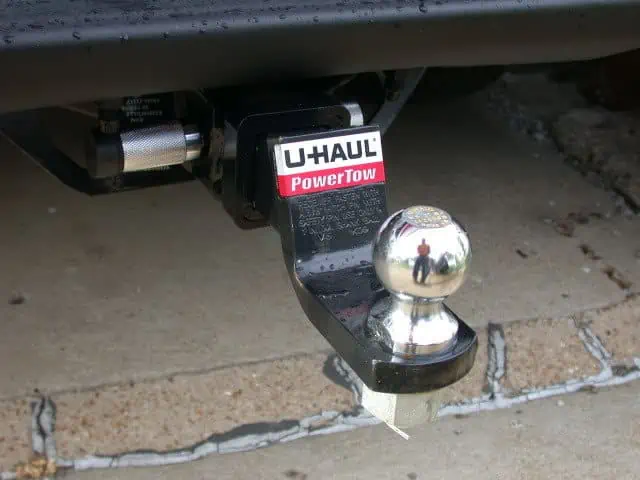
an example of a hitch installed by uhaul

Here’s the catch: you can’t rent any of these trailers without a hitch. If your car or truck doesn’t have one, you will need to install it.

U-Haul can install a hitch for you, but it is an investment. You are paying for the parts in addition to the labor. And no, you cannot buy a cheap hitch on Amazon and ask U-Haul to install it. They only work with their own equipment.

We asked U-Haul to outfit a 2025 Kia Soul for towing. Here is the real quote and cost for a hitch installation they gave us:

  • Hitch Receiver: $149.95
  • Wiring Kit: $91.95
  • Ball Mount & Ball: $37.90
  • Installation Labor: $132.00
  • Taxes & Fees: ~$47.00
  • TOTAL: ~$469.09

Prices vary by vehicle (older cars are often cheaper to wire), but you should budget at least $400–$500 if you are starting from scratch.


U-Haul U-Box Container Pricing

U-Haul’s answer to PODS-style moving containers is the U-Box. Instead of driving a massive truck yourself, U-Haul drops off a portable wooden container, you load it up at your own pace, and they ship it to your new home.

This is often a less stressful option if you aren’t comfortable driving a 26-foot vehicle on the highway. It also offers built-in flexibility: if your new place isn’t ready yet, U-Haul can store your containers in their secure warehouse until you say the word.

Average U-Box Costs by Home Size

(Includes container rental, delivery fees, and shipping)

Local Move(Under 50 miles) Long-Distance Move(~1,200 miles) Cross-Country Move(~2,400 miles)
1-Bedroom Apt $439.96 $1,968.09 $1,971.49
3-Bedroom Apt / 2-Bedroom House $561.87 $2,627.16 $2,948.55
4-Bedroom House $654.75 $3,607.18 $3,458.36
5-Bedroom House $755.60 $4,086.67 $3,737.16

Source: HireAHelper’s U-Box pricing analysis

How U-Box Sizes Work

Unlike rental trucks that come in various lengths, the U-Box only comes in one size.

  • Dimensions: 7’11” x 4’8″ x 6’11.5″
  • Capacity: 257 cubic feet (holds about 2,000 lbs)

Think of one U-Box as roughly enough space for one to one-and-a-half rooms of furniture. For a studio apartment, one box might be enough. But for a standard 3-bedroom home, you will likely need 3 to 4 containers to fit everything.


“…[It] is important to know that [the $19.95 price] is strictly a base rate…Realistically, you will never walk out of a U-Haul center having paid just twenty bucks.”


The best part of the system is that you can order more than you think you need and only pay for the units you use. For example, if you order four boxes but only fill three, U-Haul typically picks up the empty one and doesn’t charge you for shipping it. This isn’t standard for every container company, so it’s a big point in U-Haul’s favor for this service.

Read our full review of U-Haul U-Box dimensions and prices and Moving Trucks vs. Moving Containers: Which is right for you?


U-Haul Insurance Pricing

U-Haul offers several coverage options to protect you and your cargo. While you’re not required to buy insurance, it’s important to know that most personal auto insurance policies and credit card protections do not cover moving trucks. U-Haul generally offers two main tiers of protection for its trucks:

SafeMove ($14 – $30 per day) is the standard option. It includes:

  • Damage Waiver: Covers most accident damage to the rental truck itself.
  • Cargo Protection: Covers your belongings against fire, windstorm, or overturning (but typically not damage from shifting during transit).
  • Medical/Life Protection: Provides limited coverage for you and your passengers in the cab.

SafeMove Plus ($28 – $60 per day) provides significantly more peace of mind. Like the name suggests, this option includes everything in SafeMove, plus:

  • Supplemental Liability Coverage: This pays out for damage you cause to others (up to $1,000,000).
  • Overhead Damage Coverage: Standard SafeMove often excludes overhead collisions (e.g., hitting a low bridge), but SafeMove Plus usually covers this.
  • No Deductible: You won’t pay out-of-pocket for covered accidental damage to the truck.

Other Coverage Options:

  • SafeTow: Protection for trailers and the vehicle you are towing.
  • SafeTrip ($5 – $7): Supplemental roadside assistance for lost keys, jump starts, or getting stuck in mud/snow.

U-Haul Supplies and Equipment Pricing

You can technically move without special equipment, but your back (and your friends) might hate you for it. And while you can buy boxes anywhere, U-Haul makes it easy to grab everything you need in one place.

Here’s one important tip: Rent, don’t buy. You can rent expensive items like furniture dollies and appliance trucks for a fraction of the purchase price. Here is a breakdown of what you can expect to pay for common supplies.

U-Haul Equipment & Supply Costs

Item Estimated Price Notes
Furniture Pads $5.00 / half-dozen Rental price. Essential for preventing scratches.
Furniture Dolly $7.00 – $10.00 Rental price. The flat wooden board with 4 wheels.
Utility Dolly $7.00 – $10.00 Rental price. Standard upright hand truck.
Appliance Dolly $10.00 – $15.00 Rental price. Heavy-duty with straps for fridges/washers.
Moving Boxes $1.30 – $2.35 each Price varies by size (Small, Medium, Large).
Padlock $4.95 – $16.95 You need your own lock for the back of the truck.
Packing Tape ~$8.99 Includes 2 rolls and a dispenser.
Stretch Wrap $10.95 – $29.25 Great for keeping drawers closed or wrapping furniture.
Tie-Down Rope ~$3.95 Basic rope to secure items to the wall rails.

Note: Rental prices may vary slightly by location and whether you are moving locally or one-way.


U-Haul Moving Labor Pricing

When you rent a truck, U-Haul will almost certainly suggest adding “Moving Help” to your order. This is their online marketplace where local labor providers sign up to help load and unload trucks.

How much does U-Haul moving help cost?

two movers are loading a moving truck

Pricing varies because individual providers set their own rates, but the standard booking is for two helpers for two hours. In our testing, quotes typically ranged between $200 and $300 for a two-hour block.

While convenient, it is important to know that U-Haul acts strictly as a connector. If your movers cancel at the last minute or break your favorite lamp, U-Haul’s terms state that the issue is solely between you and the service provider.

The HireAHelper Difference: If you want the savings of a DIY move but the reliability of professional help, HireAHelper offers a safer alternative. We don’t just list names of companies for you to choose; we stand behind every job booked on our platform. Here’s how we’re different:

  • Smart Protection: Every move includes free standard repair coverage (up to $0.60/lb per item), with options to add extra coverage if you need it.
  • Best Price Guarantee: If you find the same movers for a lower price elsewhere, we will match it.
  • Service Guarantee: If your movers cancel on you, we will step in to find a replacement or cover the cost up to $1,000.

You can see exactly how HireAHelper works or browse top-rated movers near you to compare real pricing and reviews.

Other Things To Know About U-Haul Rentals

By now, you know the price of the truck, the gas, and the labor. But there are still a few logistics and other details that can trip you up at the counter. Here is what you need to know about paying for your rental and who is actually allowed to drive it.

How Will U-Haul Bill My Card?

It is a common misconception that booking online pays for your rental. In most cases, your credit card is only used to hold the reservation. When you arrive at the store to pick up your truck, you will need to present a physical card (or cash) to pay.

  • The hold: U-Haul will place a hold on your account for the estimated total cost of your move. This includes the rental days, the estimated mileage you plan to drive, and any insurance or supplies.
  • The final charge: You are not officially charged until you return the truck. The agent will inspect the fuel gauge and odometer. If you drove fewer miles than estimated, your final charge will be lower. If you drove more, it would be higher.

Note: If you use a debit card, ensure you have enough funds to cover the hold, not just the base rate. The funds might be tied up for a few days even after you return the truck.

Can You Pay Cash For a U-Haul?

Yes, U-Haul accepts cash, but it requires a few extra steps compared to paying with a card.

  • Local Moves: You typically need to pay the estimated rental charges plus a $100 deposit (or the total estimated charges, whichever is greater).
  • One-Way Moves: You generally pay the rental rate plus a $100 deposit.
  • Reimbursement: When you return the truck (clean and on time), U-Haul will refund the difference between your deposit and the final bill.

Note: Even if you pay cash, most locations still require you to present a valid credit or debit card with a major logo to secure the reservation.

What U-Haul Discounts Are Available?

If you are looking for a standard “10% off for students” or “AAA discount,” you might be disappointed. U-Haul does not offer a blanket discount for military members, seniors, or students on truck rentals. However, that doesn’t mean savings aren’t available if you know where to look.

  • Manager Discretion: Local managers often have the power to offer small discounts (typically 10-15%) to meet sales goals or help out customers. It never hurts to ask politely!
  • Hotel Partners: U-Haul customers can often get discounts at partner hotel chains like Choice Hotels (up to 15% off) and Wyndham (up to 10% off).
  • Military Perks: While there isn’t a rental discount, U-Haul often provides one free month of self-storage for active military members moving one-way.
  • Free Boxes: Check the “U-Haul Customer Connect” bin at your local store. This is a “take a penny, leave a penny” system where previous movers leave their used boxes for others to take for free.

For the most up-to-date offers, it is worth checking the official Discounts page on U-Haul’s website before you book.

How Old Do You Have to Be to Rent a U-Haul?

The rules are simple and strictly enforced:

  • Truck Rentals: You must be at least 18 years old with a valid driver’s license.
  • Trailer Rentals: You must be at least 16 years old with a valid driver’s license.

You do not need a commercial driver’s license (CDL) to rent even the largest 26-foot truck.


How to Save Money on U-Haul Truck Rentals

Now that you know the base price is just the starting line, the best way to save money is to control the variables. Plan your route efficiently to keep those per-mile fees low on local moves. Always refill the gas tank yourself just before dropping off the truck to avoid the expensive convenience fee. And take a hard look at those optional add-ons; if you have a friend with a dolly, bring it along!

For the full breakdown of other shortcuts and tips, read our guide on paying for a U-Haul and how to save money.

The Bottom Line

As we’ve outlined, nobody walks out of U-Haul paying just $19.95.

Based on our analysis of real customer receipts, a realistic estimate for a local move is closer to $150 once you add in mileage, gas, and fees. For long-distance moves, that number jumps significantly, with averages hovering around $2,500 for a standard trip.

How much you actually pay will depend on your specific route and load size, but if you budget for these real-world numbers instead of the sticker price, you won’t be caught off guard. Hopefully, you’ll save at least enough for some extra coffee on the drive to your new home!


FAQs

Can you really rent a U-Haul for $19.95 a day?

Technically, yes, but practically, no. That $19.95 only covers the base rental fee for a pickup truck, cargo van, or 10-foot truck. Once you add the mandatory per-mile fees, fuel, environmental charges, and taxes, your actual bill will almost always be higher.

How much do U-Haul trucks cost?

Based on our analysis of real customer transactions, here are the average total costs:

  • Local Move: ~$150
  • Long-Distance Move: ~$2,500
  • Cross-Country Move: ~$2,900

What is the cheapest U-Haul truck size?

The pickup truck, cargo van, and 10-foot box truck are all tied for the cheapest starting price. They all share the famous $19.95 per day base rate.

How much is U-Haul per mile?

For local moves, mileage fees typically range from $0.99 to $1.39 per mile. This rate isn’t fixed; it varies by location and can even go up on weekends when demand is higher.

Does U-Haul offer unlimited mileage?

Local rentals never come with unlimited mileage; you will always pay a fee for every mile you drive. However, one-way long-distance rentals include a set mileage allowance based on your specific route. You don’t pay per mile unless you exceed that limit.


Methodology

Provide a methodology statement. Use the information below to explain our rental truck cost database, then layer in additional methodology as needed.

This analysis is based on HireAHelper’s Rental Truck Cost Database, which contains data from 10,000 real rental truck transactions completed by HireAHelper customers over the past 6 years. The dataset includes moves of varying distances, sizes, and locations, and spans 12 rental truck and moving container brands commonly used across the United States.

Unlike studies that rely on online quotes, this dataset reflects actual amounts customers paid, including (e.g., mileage, insurance, taxes, add-ons), providing a more accurate representation of real-world truck rental costs. Because online price estimates often differ significantly from final charges due to factors like mileage overages, rental duration overages, and insurance add-ons, using completed rental data helps eliminate these discrepancies.

HireAHelper’s Hands-On Research Process

To verify this data, we didn’t just look at spreadsheets; we went out and rented these trucks ourselves. We drove the miles, filled the tanks, and paid the fees to see exactly how the pricing breakdown works in practice. Here are the actual line-item breakdowns from our recent hands-on tests.

Real Quote: Cheapest Possible U-Haul Rental

Item Cost
Rental Fee $19.95
Mileage Charge $7.92
SafeMove Insurance $14.00
Environmental Fee $1.00
1.6 Gallons of Gas $7.51
Tax $2.02
Total $50.38

Real Quote: U-Box Container (FL to TX)

Item Cost
U-Box Container (+1 mo use) $99.95
2-dozen furniture pads FREE
Shipping (Guaranteed Delivery) $1,242.00
Truck Delivery Fee $115.00
Total $1,456.95

Real Quote: U-Haul Trailer Hitch Installation

Item Cost
Hitch & Parts $190.80
Wiring & Service Plan $99.95
Installation Fee $180.00
Taxes $33.32
Total $475.75

Other Helpful Articles:

How I Afforded to Move to the Big City

Author:

Publish Date:

Last Modified Date:

Category: Money Saving

Tags: Tags: , , ,

For the first twenty-five years of my life, I lived in the same small town in south Florida. My hometown is nothing short of—well, boring.

While taking online classes at the University of Central Florida (UCF), I decided that in order to finally graduate, I needed to move straight into the heart of UCF. But the college campus is in Orlando and I had never moved more than thirty minutes away from my parent’s house, let alone a big city!

Moving from a small town to a big city can be intimidating. (At least, that’s how the movies make it seem.) However, what I learned from my own big move was that it shouldn’t be, and can actually be affordable – if you know what to do.

Step 1: Establishing a New Job

Step one when you are moving to a new city is to naturally find a job.

If you’re not moving for a career, establishing a new job in a big city was probably the most intimidating aspect of my move, especially since I was still in college.

In my small town, there were just a few chain restaurants here and there, only one hotel, and a handful of locally owned businesses. That’s it. Needless to say, jobs were scarce. (I worked at the same hotel for nearly four years because I heard horror stories about how hard it was to find work.)

Before I moved, I used the site Glassdoor because you can set up filters for the type of work I’m looking for. Every single day, I would submit resumes to jobs I considered accessible and efficient. My advice? Don’t be picky about the kind of job you start off with when you get to your new, big city home. You literally can’t afford to be.

Even if you aren’t a student like I was, one line of work I highly recommended is serving. Why? I needed to find something that would allow me to pay my budgeted rent and the ability to buy groceries without committing to forty hours a week. Serving not only teaches you humility, but it’s the easiest line of work to fall into; there are typically tons of opportunities, it’s an easily transferable trade, and the money isn’t bad, either.

Here are a few hacks to remember for getting a job in a big city:

  • Sign up for job search websites, such as Glassdoor
  • Schedule as many phone interviews as you can before you move
  • But don’t start taking interviews until you are 1-3 months away from your move date
  • For any in person interviews, let your potential employer know you are traveling for potential travel reimbursement
  • Calculate an exact starting so you can cite it for all your potential employers

Step 2: How to Budget for the Big City Prices

It can be hard to decipher what amount of rent you will be able to afford if you haven’t even started your new job. This was stressful for me at first, but I figured out a trick!

I saved up the equivalent of three months’ worth of rent so that I would have everything covered. I did this by saving 10% of my weekly earnings for my Big Move a year (yep, 12 months!) before I planned on moving.

An easy way to keep track of your money is to practice using a personal finance management app on a regular basis. There are plenty, but personally, I like to use Mint because it helps track what is going in and out of my bank account. (Which means I can see when I’ve been whipping out my debit card too much.) You can also set various different budgeting goals so you can start saving for your Big Move and traveling expenses.

I also set simple budgeting stipulations for myself that I implemented to last from the year before I moved, until the year after I moved.

During this time, my budget was strict, but worth it in the end. Here are the key components you need to keep track of:

  • Rent and Utilities: 35% of income
  • Life (food, gas, etc): 25% of income
  • Transportation: 15% of income
  • Debt Repayment (yes, get a credit card): 15% of income
  • Savings: 10% of income

Protip: Affording an Apartment


It was actually really easy to find a home within my budget. Unlike my hometown, Orlando has an insane amount of living options! Initially, I started by looking for studio apartments by UCF (there were a lot). But then I discovered Roomsurf, which lead me to find fellow students in need of roommates. It was a lot better (and safer) than using Craigslist.

I got to bunk with a fellow English major and met some of my best friends at my apartment complex. This was another great thing; I didn’t have to live in student housing, but I still lived around people my age.

Here are some things to keep in mind for you Big City home search:

  • Intricately figure out your rent budget before you start looking
  • Include three months’ worth of rent money in your savings (just in case)
  • Budget for traveling expenses and plan one full weekend to look at houses/apartments nonstop
  • Look for low-income housing, often near a city’s major college campuses
  • Find a roommate using Roomsurf, or another roommate app

Step 3: Getting Rid of Your Stuff

Next, start packing!

Rather than bring my baby photo albums and soccer trophies to my new, big city abode, I realized that there were some items that would be best left at my parent’s house. I also realized how much stuff I actually had! This meant either multiple trips or a pretty hefty moving truck rental.

Instead, I decided it was time to condense. Rather than dumping off a box of used clothes at Goodwill for them to make a profit, I found a way to use my old stuff to raise money for my Orlando move.

I hosted a garage sale. Then, I sold the remainder of my clothes to my local Plato’s Closet, a brick-and-mortar shop that will pay you for your slightly worn name brand clothes. What they didn’t want, I listed and sold on Poshmark. (Poshmark is a digital marketplace that allows to list and sell your subtly worn garments.)

Boom! Just like that, I was ready to start fresh, and I even had money in my pocket to fund my Big Move.

Get Help Unloading Your Rental Truck

See prices for movers by the hour—instantly.

Read real customer reviews.

Easily book your help online.


Protip: Affording Movers

Let’s face it, if you’re trying to save money, you probably aren’t going to drop a few grand on professional movers. 

But after I went through all the effort to sell a lot of my stuff, all I needed to do was haul a bedroom, bathroom, and kitchen’s worth of essentials in a small rental truck. So instead of getting some big moving company quote, I just got my rental truck separately and hired a couple movers à la carte. Thanks to this moving costs calculator, I was able to confidently hire the help I needed at a price that was well within my budget. 

How did it work? After packing all my stuff, they got it all loaded into my truck for me (plus my annoyingly heavy couch). Then, I drove my truck to my new place in Orlando with the movers following behind me. After I got there, they just opened up my truck and got it all upstairs to my new place.

Since it only took a couple hours, the whole process only cost me a couple hundred bucks on HireAHelper, which honestly saved my moving day and was way, way worth it for the cost.

Now I’m a City Girl!

Moving to a city completely different from your own will take some getting used to. However, it is a far easier feat than most people realize. If you are looking to move to your nearby metropolis, I highly recommend it. Just like any move, it just takes some budgeting and ambition to get the wheels turning. And with these little tips and tricks up your sleeve, you will be fully equipped to make the Big Move all on your own.

Tiffani is a writer and a dreamer who moved to the big city to explore her opportunities. She has a Bachelor’s in Creative Writing from UCF and likes to travel. She also likes to watch Marvel films while researching social media marketing tips and cuddling with her pup, Lady Pug.
×

I'm Moving

Moving? Thinking about moving? Whether your move is off in the distance or you already have one foot out the door, you'll learn about everything you should expect through our useful how-to's, cool articles and much more. It's all specially curated for you in our "I'm Moving" section.
Explore
×

I'm a Mover

For rookies or veterans alike, our "I'm a Mover" section is filled with extensive industry news, crucial protips and in-depth guides written by industry professionals. Sharing our decade of moving knowledge is just one way we help keep our professional movers at the top of their game.
Explore