
What to Do if Your Movers Don’t Show Up

Author:

Publish Date:

Last Modified Date:

Category: Moving Day

Tags: Tags: , , , , , , , , , , , , , , , , , , ,

A “no-show” happens when your movers are more than 15 to 30 minutes late without calling you, and the first thing you should do when this happens is to call the company for an update. If they don’t answer, it’s time for Plan B. You might need to find new labor quickly or rent a truck yourself.

While most delays are just due to traffic or bad weather, you still need to know when to wait and when to move on to a backup plan. This guide will help you find a fast solution to get your move back on track without losing your cool in case your movers don’t show up.


Immediate Steps When Movers Are Late or Absent

If your movers are late, don’t panic. Start by checking your email to confirm the date and time. Small delays often happen due to traffic or gas stops. At this point, it’s important to stay calm and keep a log of every call you make. This helps if you need a refund later.

If the delay lasts longer than a handful of minutes, follow this timeline to know exactly what to do:

Moving Day Delay Timeline

Timeframe What to Do
15 minutes
  • Check your phone for messages. The company may have already tried to contact you to explain the situation.
  • Call the company to ask for an update. They might just be stuck in traffic or finishing a quick stop.
1-2 hours
  • Keep calling until you reach someone.
  • Write down who you spoke with, if you managed to reach them.
Same day
  • Review your contract for delay policies.
  • Start looking for backup help. You can check HireAHelper’s marketplace to see if other local movers are available on short notice.
Next day
  • Treat this as a no-show, and start documenting everything.
  • Request a refund or file a claim.
  • Secure new movers through a trusted marketplace like HireAHelper.

There’s a big difference between a late crew and a total no-show. A late crew will eventually call you back with an excuse. But if the sun goes down and they haven’t gotten in touch with you, they’re likely not coming. In that case, you need to switch to your backup plan immediately to keep your move on schedule.

Verify Booking Details and Contact Dispatch

Double-check your email to confirm your move date, time, and address. Then call the mover’s dispatcher directly for updates. If you booked through the HireAHelper platform, reach out to our support team for quick help.

Document Every Interaction

Keep a detailed log of every phone call and text message. Write down the names of anyone you speak with and the time of the call. Save written emails and take timestamped photos of your packed items to help with any future claims.


Your Backup Plan if Your Moving Help Doesn’t Show

If your moving company is late or doesn’t show at all, that likely means you no longer have hired help to assist with your move. How you tackle this depends on the nature of your relocation.

  • For a local move: It’s time to activate your local network. Call friends, family members, long-time coworkers, or reach out through your church group or neighborhood social media page. Explain the situation and see if anyone is available to jump in. HireAHelper may also be able to help you find same-day movers.
  • For a long-distance move: You may need to hire help at your destination unless you already have friends in your new city. Just like with local moves, HireAHelper may be able to assist in booking moving labor at the last minute, so don’t hesitate to reach out for professional assistance.

If you planned on handling some of the move yourself, you may also:

  • Rent a truck and drive it yourself.
  • Reschedule your move through a more reliable company. HireAHelper can connect you with a trusted provider, ensuring a smooth and dependable move without any bumps.

Before moving day even happens, it may be worthwhile to begin formulating your plan B while you’re putting together plan A. Take note of your second and third choices of moving companies just in case. Let friends and family know your move date, your general plan, and that you may need some last-minute help.


My Stuff is Missing — Now What?

A man looks glumly down at his phone while sitting on a plastic covered couch and surrounded by moving boxes

If the issue evolves from movers being late for your final drop-off to not showing up at all, you have an even bigger problem at hand. Assuming you invested in a full-service move (that is, your movers are handling the transportation in addition to loading and unloading your belongings), the no-show means your stuff is missing. This can be a uniquely distressing situation.

First, know that the moving company cannot legally keep your stuff unless you’ve violated the terms of your contract. In some jurisdictions, moving companies have the right to hold onto your belongings if you:

  • Haven’t arranged a delivery time yet.
  • Agreed on a delivery time, but weren’t there when the movers arrived. In this case, you must schedule a new delivery time.
  • Haven’t paid the outstanding charges owed to the moving company.

If none of those scenarios apply, then your movers are legally required to return your belongings to you. Here’s what you should do if your moving company and belongings are nowhere to be found:

  • Call the authorities: Contact the police and inform them of the situation. Have all the important details handy, including your contract, the moving company’s name, the agreed-upon delivery time, and any steps you’ve taken to make contact and resolve the situation.
  • Buy the essentials: Put your and your family’s comfort first. Buying essentials, such as toiletries, clothes, and comfort items, may help you feel more at ease while you await a more permanent resolution. Furniture can be rented if you need a place to sit or sleep, or you can get blow-up mattresses and linens at a big box or secondhand store.

While it’s impossible to foresee every possible issue ahead of time, creating and sticking to a moving checklist can make it easier to bounce back from adversity. Creating an inventory list of everything you pack and put onto the moving truck will result in an invaluable resource if you need to make an insurance claim or sue.

Prepping to-go bags packed with essentials that travel with you instead of on the truck is a smart play, too. That way, you’ll have important items like medications, your child’s favorite bedtime books, and a change of clothes handy, just in case.

Know Your Rights and Claims Process

When you hire a full-service mover, you receive a Bill of Lading. This is your contract. It lists the delivery window, which is the range of dates when your items should arrive. But what’s a reasonable timeline for how long a moving company has to deliver? In most cases, movers are expected to deliver your belongings within the date range listed on the Bill of Lading, unless the contract allows for delays under specific circumstances.


“A real company should have a license and insurance. For moves between states, check their USDOT number online. If they’re not licensed, they’re operating illegally.”


You also have rights regarding your items. Most moves include basic coverage, which pays for a small amount per pound if your stuff gets lost during moving. For better protection, you can choose full-value coverage. This ensures the company pays the actual cost to fix or replace anything they lose or break.

If your movers are late, you can file a late-delivery claim. Most companies give you nine months to file, but it’s best to do it right away. You will need your Bill of Lading, your log of phone calls, and photos of your boxes. Keep all receipts for expenses incurred due to the delay. Being prepared with your paperwork makes the claims process much faster and easier.


What to Do if You Can’t Reach the Moving Company

The only thing worse than a late moving company is one that also doesn’t answer the phone. Here’s what to do if you can’t make contact.

  • Try alternate contact methods: If your moving company is late and you can’t reach them using the originally supplied contact method, try a different approach. Reach out via social media, email, or by texting the number instead of calling.
  • Check online reviews for common complaints: Read online reviews to see if lateness or no-shows are commonplace for the company. This may help you decide how soon to escalate to the authorities.
  • Consider reporting to the Better Business Bureau or FMCSA: In case of serious lateness or a total no-show, report the issue to the Better Business Bureau (BBB). If your move crosses state lines, you can file a report with the Federal Motor Carrier Safety Administration (FMCSA).

Recourse When Movers Are Late or Don’t Show Up

A couple sits on the front steps of their home with a laptop. Several boxes and other items are stacked all around the yard

If your movers don’t arrive, you still have options. You can take legal steps to get your money back or report the company. Here’s how to handle a bad moving experience.

Understand Your Rights Under Your Local Laws

Each state has different regulations for moving companies. Some laws protect you from surprise fees or long delays. Check your state’s rules to see if the company broke any during your scheduled move.

Check Whether the Movers Are Licensed and Insured

A real company should have a license and insurance. For moves between states, check their USDOT number online. If they’re not licensed, they’re operating illegally. Insurance, on the other hand, protects your items if damage or loss occurs. This information is key if you need to file a formal report.

File a Complaint With the Moving Regulator or Licensing Agency

You can report issues to agencies like the BBB or FMCSA, which track complaints from customers. Filing a report helps other people avoid the same trouble and puts pressure on the company to fix the issue.

Consult With a Lawyer About Serious or Repeated Violations

If the company took your money or items and disappeared, you may need legal help. A lawyer can tell you if you have a case for fraud. Because legal help is also expensive, this is a good choice only after you’ve tried other methods or if you lost a significant amount of money and belongings.

Consider Small Claims Court for Financial Losses

For missed services or damaged items, small claims court is an option. It’s low-cost, doesn’t require a lawyer, and works well for limited financial losses. You just need to show the judge your contract and proof that the movers never showed up to help. But like most legal escalations, this is best saved for after you’ve tried other means to get your stuff back or a refund.


Common Reasons Movers May Be Late or No-Shows, And How to Respond

Trucks and several other cars are stuck in bumper to bumper traffic

Delays and no-shows happen for many reasons. Knowing the cause helps you decide if you should wait or find new help immediately. Here are the most common causes of delays:

Traffic or Route Delays

Heavy traffic, accidents, or road construction can easily put a crew behind schedule. This is very common in busy cities or for long-distance moves. Most of the time, the movers are just as frustrated as you are. A quick phone call can usually clear this up.

Next steps:

  • Call dispatch for an updated arrival time.
  • Use the wait to finish packing or cleaning.
  • Document the delay in case you need to file a claim.

Delays on the Previous Job

Local crews often handle two or three moves in one day. If the family before you had more heavy furniture than expected, your move might start late. While this is common, the company should always call you to give you a heads-up.

Next steps:

  • Ask if they can send a second crew to help.
  • Confirm the crew will still have enough time and energy for your move.

Poor Scheduling or Overbooking

During the busy summer season, some companies take on too many jobs. If they don’t have enough trucks or workers, your move might turn into a no-show. This is why using a marketplace with verified reviews like HireAHelper is helpful when vetting movers so you can see if one company does this often.

Next steps:

  • Review your contract for delay policies.
  • Call the main office to see if a truck is actually assigned to you.
  • If they sound unsure, start looking for backup labor immediately.

Weather Conditions

Rain, snow, or high winds can make moving dangerous. A bad storm might cause a crew to stay off the road for safety. In most cases, they will try to reschedule for the next clear day and should contact you about this.

Next steps:

  • Check the local weather report for your area.
  • Ask about their policy for moving in the rain or snow.

Mechanical or Equipment Issues

Trucks can break down or get flat tires. If the moving truck is in the shop, the crew cannot get to your home. A professional company will try to rent a new truck quickly to keep your appointment.

Next steps:

  • Request a new estimated arrival time.
  • Ask if a replacement truck or crew is available.
  • Document the issue and arrange backup help if needed.

Protecting Yourself from Mover Issues in the Future

The best way to handle a no-show is to prevent it from happening. By taking a few extra steps before you book, you can find a team that is reliable, professional, and on-time.

Research Movers Thoroughly Before Booking

Take your time to learn how to choose a good moving company. Don’t just pick the first name you see. Look for companies that have been in business for several years and have a history of arriving on time.

Verify Licenses, Insurance, and Physical Address

Check if the company has a real office address and a valid USDOT number. Professional movers must have insurance to protect your items. If they can’t prove they’re licensed, it’s safer to look for another helper.

Read Reviews on Multiple Independent Platforms

Check reviews on sites like Google, the BBB, and Trustpilot. When you look at how HireAHelper works, you’ll notice that we only show verified reviews from real customers. This helps you see which crews are truly the most reliable.

Be Cautious of Very Low Quotes and Large Upfront Deposits

If a price seems too good to be true, it probably is. Shady companies use low prices to lure you in, then never show up or raise the price later on. Also, while most honest movers will ask for a small deposit up front, they won’t ask for a large or a full cash deposit before the work starts.

Get a Written Contract With Clear Timing and Penalties

Always ask for a written contract that lists your move date and arrival window. It should also explain what happens if they’re late. Having this in writing makes it much easier to get a refund if a no-show happens.

Confirm Details Several Times Before Moving Day

Don’t wait for movers to call. Confirm your booking yourself. Double-check the date, time, address, and the number of workers coming. A quick call or email keeps everyone on the same page and helps catch any scheduling errors early.

Have a Backup Plan and List of Alternative Movers

Keep a list of two or three other local companies just in case. Knowing who else is available can save your weekend if your first choice fails.

Quick Mover Quality Checklist:

  • Do they have a high rating (4 stars or more on HireAHelper)?
  • Do they answer the phone during business hours?
  • Are they transparent about their hourly rates?
  • Do they provide a written confirmation immediately?

Benefits of Booking Through HireAHelper

Booking through HireAHelper means you get flexibility and peace of mind. Our platform lets you compare movers by price and reviews, book instantly, and see transparent costs upfront. The providers are also vetted, so you know you’re choosing from trusted options.

If issues come up, we can also help mediate between you and the mover. Plus, optional SmartProtection coverage adds extra security if your belongings get damaged during handling.


Frequently Asked Questions

What counts as a mover no-show?

A mover no-show happens when the crew fails to arrive within the agreed delivery window. Most contracts allow a short grace period, often a few hours. If movers still don’t appear and you can’t reach anyone at the office, you should treat it as a no-show and start your backup plan.

How do I file a late-delivery claim?

Start by gathering your Bill of Lading and all phone logs. Contact the moving company to ask for their official claim form. If they don’t help, you can file a complaint with a state regulator. Clear documentation and deadlines matter, so file quickly to protect your rights.

Can I book same-day help if my movers never arrive?

Yes, you can often find last-minute help on our marketplace. Many local crews have openings in the afternoon or for small jobs. Prices may be slightly higher for a same-day booking, but it’s still, it’s a great way to save your move when your original plan fails.

Should I rent storage if my movers don’t show?

If you need to leave your current home as soon as possible, it’s smart to rent a short-term storage unit. This keeps your items safe while you find a new crew. Check the cost for one month of rent. It might be cheaper than paying a high fee to stay in your old home late.

What paperwork should I keep for a claim?

Keep your signed contract and all payment receipts. You also need a log of every call and text you sent to the movers, and timestamped photos of your home. These documents prove that you followed the rules and that the company failed to show up.


Last Minute Moving: Our Checklist for Getting Out in a Hurry

Author:

Publish Date:

Last Modified Date:

Category: How To Pack, Money Saving

Tags: Tags: , , , , , , , , , , ,

Planning to move soon? Like, really soon? Last-minute moving can cause panic, no matter the reason. You might have an exciting job opportunity that starts right away or an offer on your property that you can’t turn down. Maybe life got in the way, and your move-out date snuck up on you, or an emergency happened, and you have to relocate quickly. Whatever the cause, you’re left surveying your belongings and wondering how to get out the door fast.

But, despite how it might feel, moving in a hurry doesn’t have to mean chaos. As long as you have a plan and some smart shortcuts, you can box up your things and move out at warp speed.

You’re on a tight schedule, so we’ll get to the point. Read on to learn how to:

  • Create a last-minute moving plan.
  • Declutter your belongings.
  • Let people know you’re moving.
  • Recruit helpers.
  • Pack in a hurry.
  • Do a quick clean of your home.
  • Explore options for hiring professional movers.

Get Organized

As the clock starts ticking, you might be tempted to start packing as quickly as possible, but a bit of strategizing now saves you time and scrambling later. Use our moving checklist to map out your move. You’ll be moving faster than the suggested timeline, but you’ll know what needs to be tackled and when.


“To get you on your way faster, clean as you go. Wipe cupboards and shelves right after you’ve emptied them so you don’t have to come back a second time.”


The key to any successful move, no matter how last-minute, is to figure out the logistics. Here are the questions you should ask yourself when you begin planning:

  • How will you move your stuff? Renting a truck or using moving containers with labor-only help can cut costs, but requires more effort on your part. Full-service movers are pricier, but they handle almost everything—ideal if you’re short on time.
  • What items are you moving? Decide if you’re taking all of your furniture or if there are things that won’t fit your new place. You might even have pieces that aren’t worth moving, which means you can donate, sell, or get rid of them.
  • What items stay with you? Flag items not to pack in the truck, such as passports, birth certificates, cash, jewelry, health records, medication, and eyeglasses. Hard-to-replace items should go with you in your vehicle.
  • What packing supplies do you need? Free boxes and household items like linens and towels can work for everyday things, but delicate items like artwork or TVs are safer with sturdy, store-bought boxes like mirror boxes or TV kits, plus bubble wrap for extra protection.

Once you have a plan, book your movers or rental truck and start packing. The amount of time it takes to bundle up your stuff depends on what you own. It generally takes a few days to pack a one- or two-bedroom home. Scale your estimate up if you have a lot of clutter and fragile items, and down if you live a minimalist lifestyle.


Start Your Change of Address ASAP

an illustration of someone sitting at a kitchen table while on a laptop

It’s best to change your address at least a month before you relocate, but better late than never. Get the most important updates done first, like utility companies. Keep a list of who needs to be notified so nothing falls through the cracks. In the meantime, arrange mail forwarding with USPS in case anything gets mailed to you.

You can often log into online accounts and update your address with a click, especially for things like your bank account or subscription boxes. Otherwise, phone, email, or drop by in person, and have your account numbers handy.

Here are some businesses and government agencies that need to know your whereabouts:

  • Current landlord
  • Water, gas, and electric companies
  • Schools
  • Employers
  • Insurance providers (health, home, car)
  • Bank/credit card companies
  • Government agencies (passport, driver’s license, income tax)
  • Subscriptions
  • Healthcare providers

Get Rid of As Much as You Can

an illustration of someone taking out a huge pile of garbage bags

The #1 way to move in record time is to have fewer things to pack and haul. It might seem like it’s easier to shove everything in boxes, but moving items just because you’ve always had them slows you down. Be ruthless about donating items or throwing them away. Otherwise, you’ll spend too much energy moving things that don’t serve a purpose.

Be honest with yourself:

  • Do you use the item?
  • Is it a priority for your new space?
  • Do you love the item with all your heart?
  • Would you miss it if it were in storage for a year?

The cost of an item isn’t a reason to keep it, either! That expensive coat does you no good if it stays in your closet. You can donate items to a thrift store or offer them to Buy Nothing groups — people will often take things off your hands for free. You can also ask a relative to sell items for you while you focus on the move.

To make it easier to purge, have a friend be the voice of reason as you sort through your belongings. They can reassure you that yes, you can do without that exercise ball you used once or the pile of books you won’t read a second time.


Call for Reinforcements

It only takes a moment to spread the word about your last-minute move predicament to friends and family. Post a quick message on social media or in a group chat to see who’s willing to help pack up your kitchen cupboards or load boxes into your truck.

It’s also easier for them to say yes if you assign tasks, like taking apart furniture, emptying your bookshelves, or driving a load of boxes to your new place in their car. The key is to make the job manageable so they know they’re not losing an entire weekend. You can consider making the process more fun by hosting a packing party, where friends can socialize and sip cocktails while stashing your things in boxes.

Moving isn’t all about physical labor, either. Friends are likely to offer up dollies, carts, label-makers, and the extra boxes in their garages. They can run errands or look after your children or pets, so you can concentrate on moving. And even if you hire movers, any extra hands will help get things done faster and ease your stress.


How to Pack a House Quickly

You’ve got your movers lined up and address updates underway. Now let’s get to the heart of the matter: packing tips for moving in a hurry.

Step 1: Stock up on supplies.

an illustration of a moving trucked parked in a driveway. There are stacked cardboard boxes in the backgroundGather all the supplies you need before you start packing. You don’t want to run out of boxes or packing tape just as you’ve found your groove.

Step 2: Set aside essential items.

Place medications, documents, and valuables in a special designated area away from the rest of the packing so they’re not accidentally put into the moving truck. Include items you’ll need for the first day or two after your move, such as toiletries, a change of clothes, and phone chargers. You might not know where your favorite coffee mug or sweater is, but you’ll have essentials to tide you over until you find them.

Step 3: Cut down on the amount you have to pack.

Be ruthless when decluttering! Also, ask friends to take items to thrift stores and recycling centers, and call charities to pick up large furniture items.

Step 4: Start packing.

When you’re moving on the fly, the goal is to get everything into boxes. Don’t aim for perfection. You can pack dinner plates with stuffed animals, and paper towels with books. Take care to cushion items and fill in empty spaces so items aren’t bouncing around, but otherwise, when you’re this crunched for time, you can sort things when you arrive at your destination.


“Flag items not to pack in the truck, such as passports, birth certificates, cash, jewelry, health records, medication, and eyeglasses. Hard-to-replace items should go with you in your vehicle.”


Work room by room and continue decluttering as you pack. Moving hacks can help you get things done more efficiently, like packing cutlery trays in their entirety with a towel bundled around them to keep the forks and spoons in place. Light items can stay in drawers if you have a sturdy dresser that’s not too heavy.

Step 5: Write on boxes as you pack.

Numbered boxes and detailed spreadsheets are a great way to track inventory when you have the luxury of time, but for expedited moves, a permanent marker will do. After you’ve sealed each box, write what’s inside, such as “Living Room–board games.” You might forget your craft supplies are in there too, but you’ll have a general idea of the contents.

Packing Tips for Moving in a Hurry

Even when you’re in a rush, a little structure keeps you moving toward the finish line. When you need to gauge where you’re at, use this quick checklist:

  • Let friends and family know you need help.
  • Get rid of as much stuff as you can, ASAP.
  • Update your address with utilities, schools, and government agencies.
  • Check online for affordable last-minute movers.
  • Gather moving supplies and a volunteer crew.
  • Pack important items in a necessities bag that travels with you.
  • Don’t bother sorting, just pack and label.

Only Clean What’s Necessary

an illustration of a person cleaning their bathroom

If you’re currently renting your home, do a quick clean before you move out, especially to get that much-needed deposit back. And if new owners are moving in, it’s considerate to leave the space tidy.

While you don’t have to do a deep clean, remove visible crumbs and dirt to make a good impression. A damp cloth and a bottle of multipurpose spray will do the trick, along with a vacuum or broom.

  • Sweep or vacuum hallways and high-traffic areas like the kitchen.
  • Wipe down cabinets and counters.
  • Clean up spills in the refrigerator.
  • Lightly wipe the outside of appliances.
  • Spot clean the toilet, sink, tub, and bathroom mirror.

To get you on your way faster, clean as you go. Wipe cupboards and shelves right after you’ve emptied them so you don’t have to come back a second time. You can also delegate a friend to check empty rooms once the contents are moved onto the truck.


Consider Pro Moving Help

Even if you’re up to the task of loading your belongings into a rental truck, things go a lot faster when you hire professionals. Last-minute movers have experience loading boxes at surprising speeds. They can expertly angle that bookshelf to get it into the elevator and wield a moving cart to load things in fewer trips.

The most convenient option is a full-service moving company. The movers arrive with a truck, do the heavy lifting, and transport your belongings door-to-door. But if the cost of a full-service move is too high for your budget, pairing a rental truck (that you drive) with local labor-only movers who load and unload offers the best of both worlds. It’s more affordable than a full-service move and still gets you professional help with your move. You can also pay for packing services on top of your move if you’re running out of time.

Finding last-minute movers is simple with HireAHelper’s online marketplace. Enter a few details about when you want to move and how much stuff you have. Then, you’ll gain access to verified reviews and instant quotes from licensed and insured local movers. Professional movers can help streamline time-sensitive moves, getting you out the door and on the road faster.

2022 Study: The Best Side Hustle Nobody’s Talking About Is Starting a Local Moving Labor Company

Author:

Publish Date:

Last Modified Date:

Category: Business Basics, Moving Industry News, Operations

Tags: Tags: , , , , , , , , , , , , , , , , , , , , , , , , ,

Key Findings:

  • Moving companies tend to earn between $75-128/hr. or between $206-352 per move
  • Based on HireAHelper data from 2022 so far, average mover earnings are $110/hr.
  • Seattle is potentially the most lucrative place to become a mover, with hourly earnings as high as $137/hr.
  • Movers in Maine and Iowa make an estimated $132/hr. — the highest rate in the country
  • Sherman-Dennison, TX has the biggest gap in the moving services market, with 608 moves per moving company registered in the metro area

As inflation continues to rise, many Americans are beginning to notice the prices of consumer goods are drifting out of reach. This is likely why, according to a recent study, nearly half (44%) of Americans are turning to side hustles to make ends meet.

moversAnd while the internet is awash with articles listing all kinds of side hustles to consider, there is one lucrative side gig few are talking about: starting a local moving company (or joining one).

Despite some real estate markets cooling off, the demand for moving services is high. Homes are still selling fast, and as rents climb higher, many are moving out of their homes to find cheaper accommodations or to live with family.

While starting a full-scale moving company with a fleet of trucks, drivers, and movers is an undertaking too big for a side hustle, starting a moving labor company is actually relatively simple.

All you need is a business license and some start-up costs. Ultimately, if you are comfortable with lifting heavy items and have time to spare, you could realistically start a moving labor business and earn upwards of $100/hr. by helping people move.

And the data shows that people who are currently doing it are doing quite well.


Moving Labor Companies: How Are They Defined and How Do They Work?

We often think of movers as folks that drive up in a truck, load up all your earthly belongings and deliver them to your new home. In the “biz”, these are known as “full-service movers”. And they tend to be more expensive.

This is why in reality, the overwhelming majority of moving companies that exist are what we call “labor-only” movers.


“…even if you charged at the lower end…at $250 per move, or roughly $90-100 per hour, you only need to pick up four moves to make $1,000. Not bad for a weekend, huh?”


Labor-only

The difference is that a moving labor company is a company that helps people with loading, unloading, and, sometimes, packing up people’s possessions — no driving. The average person often books their truck or container separately, as this is far cheaper.

Here are a few reasons local moving labor works as a side hustle:

  • In most states, you don’t need a special mover’s license
  • There are minimal start-up costs, as you don’t need to purchase a moving truck
  • Demand for moving services is highest on a weekend, meaning you can do it alongside your work or studies
  • Moving costs (read: mover earnings) in 2022 are the highest they’ve ever been in U.S. history

Where Do Local Movers Find Customers?

Of course, it’s not quite as simple as registering as a moving labor company and watching business come flying through the door.

Here are the typical places movers tend to use to attract customers.

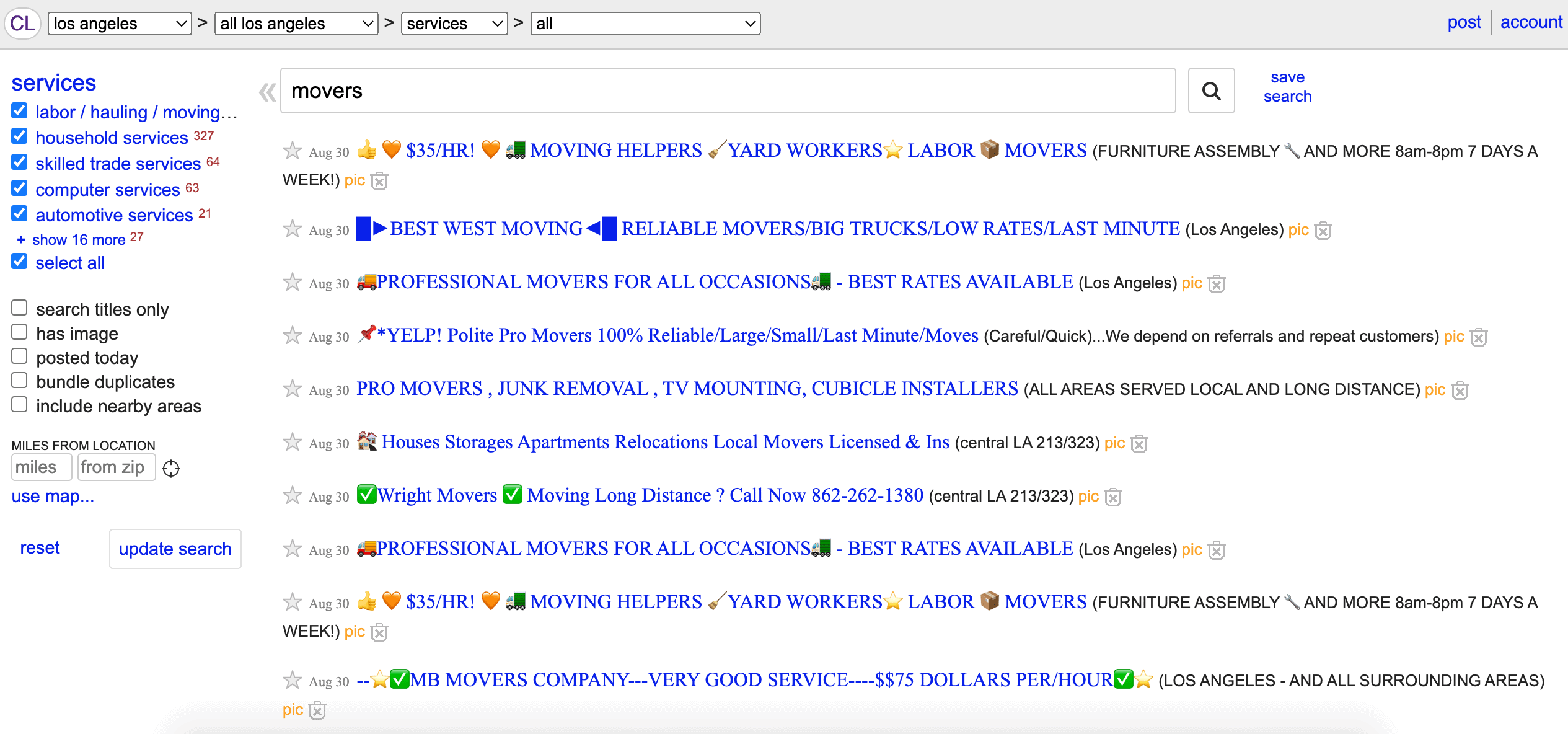
craigslist movers
Craigslist

Craigslist

+ The most famous classified ads website, this is a typical starting point for moving labor hopefuls, with millions of people checking the website every day.

Costs money to post ads in the moving section as a provider.

Customers can also be flakey, often looking for bargain-basement pricing, and often end up being very hard to service.

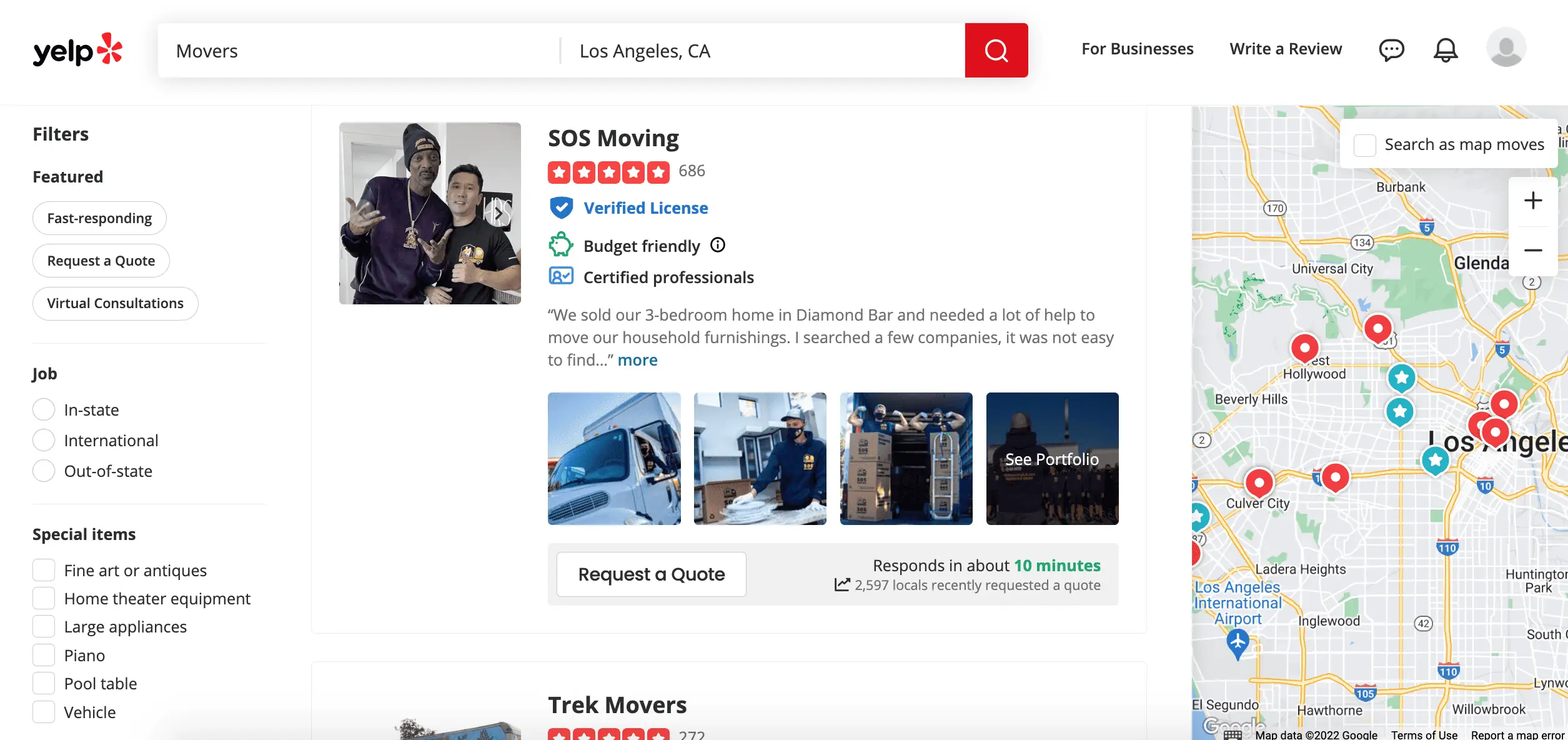
yelp movers
Yelp

Yelp

+ Popular with people looking for local businesses, it’s a free place to get attention/find customers. Business owner tools allow you to upload logo/team photos of you and your crew to boost credibility.

No actual online booking, you just accrue lots of “leads”. You’ll have to field lots and lots of messages, emails and phone calls from people looking for a price.

Low rates of converting mean most of this work will not turn into orders.

HireAHelper

hireahelper sign up
HireAHelper sign-up page

+ Completely free to list, no membership fees or cancellation fees.
+ Your very own landing page you can show to potential customers where you can easily display and edit your own rates/availability so people won’t call you to ask.
+ Insurance and 7-day-a-week customer service for both you and your customers.

Insurance and customer service operate on a fee that is charged per order booked through the platform, which is how they pay for all of the above.

Your own website

+ Full control over how you present your new brand and services.
+ Direct booking puts every dollar right in your pocket.

You need to create, design, and maintain the website.
You’re responsible for all the customer service, marketing, and insurance.
Cost of purchasing a domain, fees for website hosting.

Needless to say, you can also create a page for your moving labor company on Facebook and Instagram, or even list it on your local Yellow/White Pages. Oftentimes, a mixture of approaches is useful at the start, before you figure out which one works best for your moving side hustle.

How Much Can You Earn as a Mover?

movers

Let’s face it, if you already have a job or other commitments, you’re probably not going to launch into moving as a full-time pursuit.

The good thing about moving as a side job is that nearly one in three (30%) moves takes place either on Saturday or Sunday. In other words, if you’re looking to casually work as a mover over the weekend, you’re in luck, because that’s when the demand is highest.

To calculate a ballpark number of how much local movers earn, we’re going to make the following assumptions:

  • You only work on weekends
  • You don’t work more than eight hours a day
  • You have a partner with whom you work as a two-person team and split earnings 50-50

With that said, the average take-home an individual moving job earned on HireAHelper in 2022 was $110 per hour (after fees).

That rate is based on the service of two movers loading and unloading a customer’s belongings (meaning, not counting potential tips, one mover will typically get about half of that, or $55 per hour.)

“The data show that 6 of the 20 metros where the demand for moving services most outmatches the current supply exists in Texas, especially in Sherman-Dennison, TX, where the ratio of moves to moving companies is roughly 600 to 1!”


Similarly, Yelp reported a local move quote average of $128. Forbes suggests local movers charge between $25 to $50 per mover, per hour, while ConsumerAffairs estimates the average cost for a local move is $80 to $100 per hour for a team of two movers.

The following graph shows how much you could be earning as a two-person team, using the reported average duration of a move of two hours and 45 minutes.

Please note that the above figures are indicative only. As a newly registered moving company, you probably won’t be able to charge high rates straight away. Moves also come in all shapes and sizes, affecting how much you could charge for them. This is just an average.

That said, even if you charged at the lower end of that scale at $250 per move, or roughly $90-100 per hour, you only need to pick up four moves to make $1,000. Not bad for a weekend, huh?

Cities & States Where Movers Earn the Most Money

moving company city

Your earning potential, among other things, will depend on where you are in the country.

According to a recent estimate of moving costs, people pay the most for their moves in San Jose ($520) and Seattle ($495). But that’s just a broad snapshot. Let’s break it down more to see how services translate into mover earnings, and where it may actually be most lucrative to start a moving labor company.

Cities

Using data on moves booked through HireAHelper.com, taking into account commission rates and the typical duration of a move throughout different cities, here are the top 10 cities where movers make the most money per hour.

Looking at the data through this lens, Seattle grabs the top spot with an estimated $136/hr. net earnings. In cities like Columbus, OH ($126/hr.), San Francisco ($125/hr.), and Oakland, CA ($125/hr.) the earnings are all around the $125/hr. Mark.

States

Moving on to states’ potential mover earnings, we find Maine ($132/hr.) and Iowa ($132/hr.) with the joint highest earnings, with Utah and Washington closely behind ($129/hr.).

Going down the list, Arkansas is next with $128/hr. in potential net earnings. This highlights that moving is a universal need, and that small states can compete against states with big cities like San Jose or San Francisco, where the cost of living is highly expensive (and therefore potentially more lucrative). The average earnings for movers in California are comparatively middling in the take-home department, averaging around $110/hr. per move.

Check out the chart below to see what mover earnings are like in your state.

This section is based on data from moves booked through HireAHelper and their partner sites. Earning figures represent average estimates; actual earnings may vary.


Supply and Demand: Cities and States With the Greatest Need for New Moving Companies

movers

High earnings are great to aim for, but it’s worth bearing in mind that crowded markets where earnings are high are often hard to compete in — especially for a brand new company.

Like with any kind of business, the supply and demand (and thus the price people are willing to pay for moving services) vary by location. If you’re just starting out as a moving company, ideally you’d like to start where there’s a gap in the market.

Cities

Based on our analysis of moving company data and the number of moves in America’s biggest metropolitan areas, here are 20 metros where the gap between potential demand for moving services and their supply is the biggest.

The data show that 6 of the 20 metros where the demand for moving services most outmatches the current supply exists in Texas, especially in Sherman-Dennison, TX, where the ratio of moves to moving companies is roughly 600 to 1!

Among larger metros with favorable demand-to-supply ratios are the Phoenix-Mesa-Scottsdale, AZ area (393 moves per moving company), the Houston-Baytown-Sugar Land, TX area (276), and the Dallas-Fort Worth-Arlington, TX area (255).

States

At the state level, the opportunity is greatest in Arizona and Missouri, where there are more than 200 moves per moving company. Kansas (188), Washington (187) and Texas (186) round off the top five.

To see what the supply and demand for moving services look like in your state, check the graph below:

Convinced? Here’s How You Can Get Started

If you think you have what it takes to safely move some couches, luckily, you don’t have to go in blind.

If you really wanna get the ball moving, here’s a moving business guide for starting and running your own local moving company. It has information on how to register a business, set prices for your services, where to find customers, which tools you need to buy for the job, and way more.

Want a license to drive on the job too? Here’s a guide for starting a fully-fledged moving company, detailing the necessary steps for starting a moving business with links to the proper business licensing authorities in each state.


Sources and Methodology

General mover earnings were estimates were compiled using indicative rates from HireAHelper, Yelp, Forbes, and Consumer Affairs.
Mover earnings by state and city were calculated based solely on data from moves booked and completed through the HireAHelper platform and their partner sites. Earnings figures are indicative of the amount earned minus fees.
The number of moving companies was calculated using the U.S. Census Bureau’s American Business Survey (count of companies listed under “Transportation”) and Yelp (number of companies listed as “movers”).
The number of moves was taken from U.S. Census Bureau’s Current Population Survey, as available through the Integrated Public Use Microdata Series.
×

I'm Moving

Moving? Thinking about moving? Whether your move is off in the distance or you already have one foot out the door, you'll learn about everything you should expect through our useful how-to's, cool articles and much more. It's all specially curated for you in our "I'm Moving" section.
Explore
×

I'm a Mover

For rookies or veterans alike, our "I'm a Mover" section is filled with extensive industry news, crucial protips and in-depth guides written by industry professionals. Sharing our decade of moving knowledge is just one way we help keep our professional movers at the top of their game.
Explore