15 Tips for Moving With Kids: Practical Advice for Parents

Author:

Publish Date:

Last Modified Date:

Category: Kids & Pets

Tags: Tags: , , , ,

Moving to a new home is a lot of work, and when you add kids to the mix, it can feel like an even bigger challenge. A successful, stress-free move with children involves knowing how to talk to your family, how to keep everyone calm on moving day, and what you can do to help them settle into your new home.

HireAHelper has over a decade of moving experience, and we’ve helped thousands of families relocate successfully. To help you manage the chaos and acclimation, we put together 15 practical tips for moving with kids.

Table of Contents


1. Understanding Why Moving is Hard for Kids
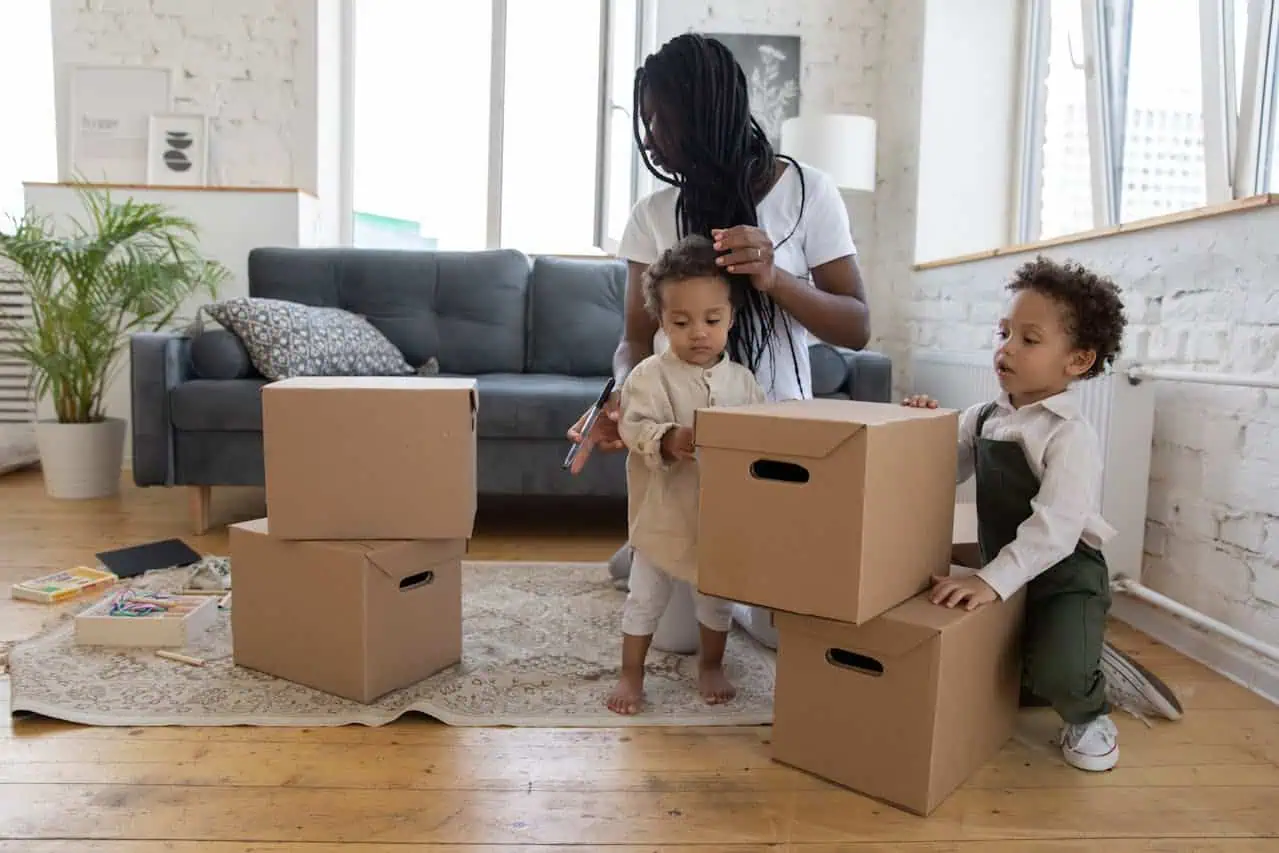
A woman and two children organize moving boxes in a living room, indicating a moving process.

Kids thrive on routine, and moving is one of the biggest disruptors of their sense of predictability, which can feel scary and stressful. They may worry about losing their friends or their favorite park, or not being able to do the fun things they usually do.

Children also pick up on and mirror your own stress. If you act anxious or worried about packing, your kids will feel that way too. That’s why it’s important to try to stay calm when you talk about the move. This helps them feel safe during the big change.


2. Consider the Logistics of the Change

Before deciding to move, families should consider how this change will affect their children. Understanding what will change in advance can help prepare you to speak to your kids about it and let you plan for any adjustments.

  • School quality and curriculum: Take the time to investigate the schools in your potential new neighborhood. Look into their academic performance, available extracurricular activities, and overall reputation. The new school must align with your child’s unique needs and interests.
  • Cost of living: Look at the financial implications of relocating. This includes housing, utilities, groceries, and health care costs. Understanding the cost of living in the new area will help you gauge how it might impact your family’s budget and overall quality of life.
  • Job market: If your move is job-related, it’s wise to research the local job market. Look for stability and growth opportunities that will benefit your family in the long run.
  • Support system: Consider how far you’ll be from extended family and friends. Leaving behind a strong support network can be challenging for kids, so it’s important to devise strategies for maintaining those vital connections.
  • Climate and culture: Consider the differences in climate and culture between your current home and the new location. These factors can significantly influence your family’s lifestyle and how easily everyone adjusts to the new surroundings.

3. Tell Your Kids About the Move Early (and Honestly)

Waiting until the last minute to share the news usually backfires. Kids need time to process big changes and say their goodbyes. When you keep them in the loop, they feel like a valued part of the team rather than just a passenger.

If they say they don’t want to go, don’t ignore it. Acknowledge their feelings, but stay firm and positive about the plan. Use these age-based guidelines to help you decide when to start the conversation:

  • Toddlers and preschoolers: Tell them a few weeks before the move. Their sense of time is short, so waiting just a bit keeps them from getting too anxious.
  • School-aged kids: Give them at least a month of notice. This gives them enough time to process the news and tell their friends.
  • Teenagers: Tell them as soon as the plans are certain. They need the most time to handle social changes and school transitions.

4. Use the Right Words When Talking About the Move

When you talk about the move, keep your language simple and direct. Validate their feelings without making promises you can’t keep. For example, avoid saying “you’ll love your new school.” Instead, focus on the facts and provide comfort.

Try using these phrases to help your children feel more at ease:

  • Focus on the house: “We’re moving to a new house, but we’re taking all our favorite things and our family with us.”
  • Validate feelings: “It’s okay to feel sad about leaving your room. I’m going to miss this kitchen, too.”
  • Explain the “why”: “This move helps our family have more space to play and be together.”

Also, avoid saying phrases like “don’t be sad” or “it’s no big deal.” These words can make kids feel like their emotions are wrong. Stick to honest, supportive language instead.


5. Tailor Your Approach To Your Child’s Age

Every child reacts differently depending on how old they are. A toddler might only care about their toys, while a teenager might be angry about leaving their best friends. You need to adjust your plans to fit their specific needs. Here’s how to handle the hardest parts of each stage.

Tips for Moving With Babies and Toddlers

Moving with toddlers and babies is mostly about managing their environment. Since they can’t fully understand the move yet, they rely on you for a sense of safety.

A common mistake is packing their favorite items too early, which can cause extra tantrums. Try to keep their world as normal as possible until the very last day.

  • Protect routines: Keep nap times and meal times the same as always.
  • Pack the nursery last: Leave their bed and toys out until moving day.
  • Visit the new home: If it’s local, take them to see the new house and yard.

Tips for Moving With Elementary-Age Kids

School-age kids understand what’s happening, and they may be excited about the newness and adventure. But they also worry about fitting in. They fear losing friends and starting over at a new school. You can help by giving them small jobs so they feel included in the process. This also makes them feel like they have a say in the change.

  • Involve them in packing: Let them pack up their toys (with supervision), choose which room they want in the new home, or decorate their own boxes with stickers.
  • Address school worries: Research the new school together to see photos of the playground, classrooms, or surrounding area.
  • Host a goodbye party: Give them a chance to say a proper farewell to friends.

Tips for Moving With Teens

Teenagers often feel like a move is being forced upon them. They value their independence and their social circles above all else. One of our top moving tips for families with teenagers is to give them real control over their own space. And don’t make the mistake of brushing off their drama and upset. To them, it’s a very big deal.

  • Respect their emotions: Let them be upset for a while without trying to “fix” it right away.
  • Give meaningful choices: Allow them to choose the layout and paint color for their new room, or even get new furniture if they’ve outgrown their older stuff.
  • Plan a return visit: Even with the internet and social media keeping everyone connected, in-person meetups are also important. Promise a trip back to see old friends in a few months.

6. Give Kids Control Where It Makes Sense
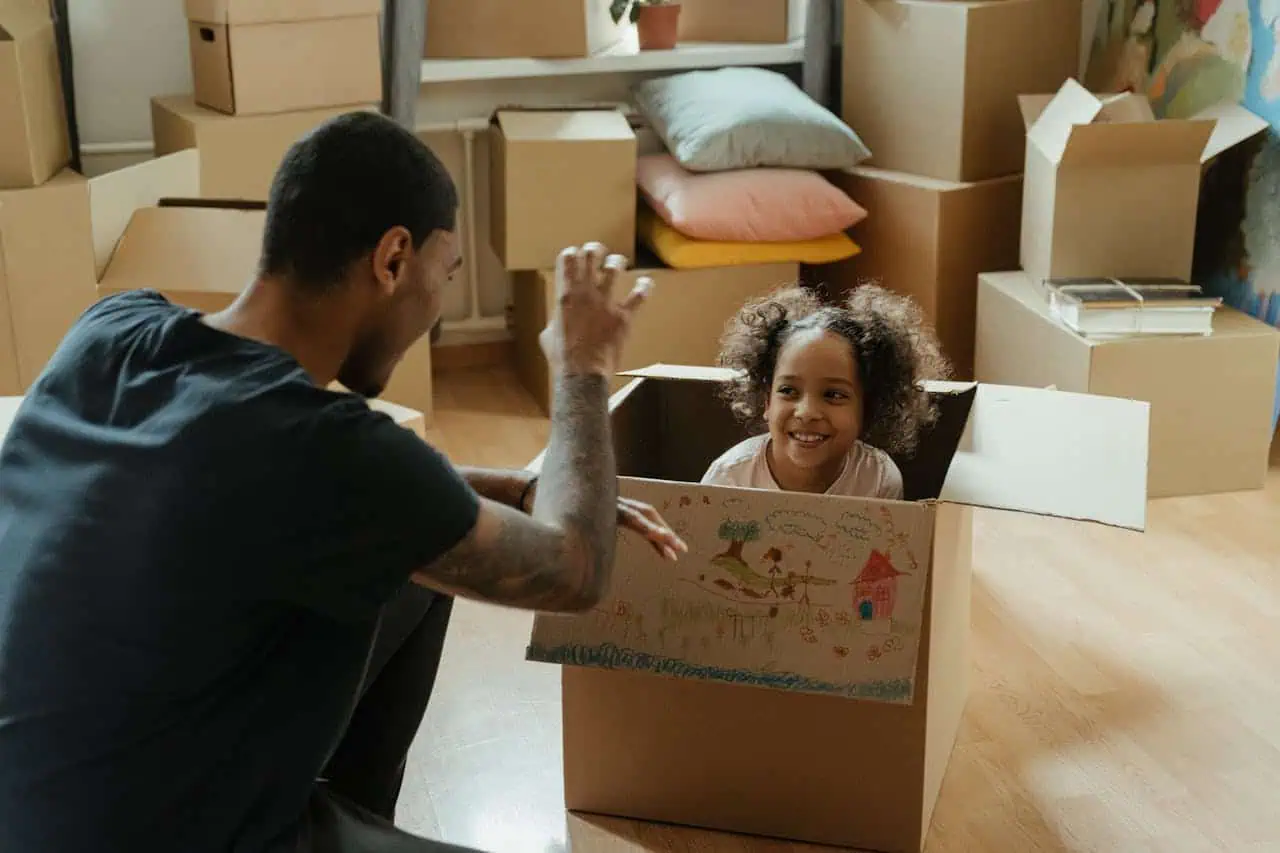
A man plays with a smiling child sitting in a decorated cardboard box surrounded by other boxes, indicating a moving process.

Moving can make kids feel like they have no say in their own lives, so giving them small choices helps reduce their anxiety. Let them join the “planning committee” by choosing which toys to pack first or how to arrange their new room, for example.

One great idea is to let each child pack a personal box. They can decorate the outside with stickers or markers to make it special. When kids have a job to do, they feel like helpful partners instead of just bystanders.


7. Keep Routines as Normal as Possible

Stability is a huge part of staying comfortable when moving with kids. Try to keep bedtimes and meal times exactly the same, even if there are boxes everywhere. If you have a family game night or a pizza tradition, keep doing it. Familiar habits help them relax even when their environment looks different.

Choosing when to move affects their schedule, too. Summer moves are great because they don’t miss class, but leaving friends during the break can be lonely. Moving during the school year can be harder on grades, but it helps them meet new friends right away. If you have the flexibility for it, ask your kids which option they might prefer.


8. Plan Ahead for Moving Day With Kids

Safety is the top priority on moving day. There will be heavy boxes, open doors, and big trucks everywhere. It’s usually best to have a friend or babysitter watch the kids away from the house. This keeps them safe and lets you focus on working with the movers.


“Keep an eye out for red flags like changes in sleep, frequent meltdowns, or losing interest in play. These are signs that the stress is becoming too much for [your kids] to handle alone.”


If they must stay home, pick one adult to be in charge of them. Set up a safe room with snacks, tablets, and toys where they can stay out of the way. Make sure they know never to run near the moving truck or the loading ramp.

As the day ends, try to have a final walkthrough together. Let the kids say goodbye to each room before you lock the door.


9. Pack a First-Night Box for Each Child

By the time you reach the new house, everyone will be tired. You don’t want to dig through fifty boxes just to find a toothbrush or a nightlight. Give each child a special box or backpack that stays with them in the car. This ensures they have everything they need to feel safe and comfy on their first night. Include these essentials in their kit:

  • Pajamas and a change of clothes
  • A favorite blanket or stuffed animal
  • Bathroom items like a toothbrush and soap
  • A few favorite books or a handheld game

10. Expect an Adjustment Period After the Move

Settling in takes time, so don’t expect your kids to feel completely at home the very first night. It’s normal for them to be extra clingy, moody, or tired for a few weeks. Most children need about 3–6 months to fully adjust to their new surroundings and routines. You can help them by setting up their room first, so they have a safe place to retreat.

To ease the transition, stick to your old routines as much as you can. Family dinners and game nights show them that family life hasn’t changed, even if the house has. Use this timeline to track your family’s progress:

  • First week: Unpack all bedrooms and establish a regular bedtime. Take a walk around the block to meet a few neighbors.
  • First month: Help them sign up for a local club or sport to make new friends. Check in with teachers to see how school is going.
  • First 90 days: Hold a family meeting to discuss what everyone likes about the new house. Start a local social routine, like a weekly trip to the library.

11. Start Decorating Plans

A woman and a child sit on the floor, smiling, in front of a vibrant orange-painted wall, indicating they've been painting it

Make plans to decorate your child’s new room as soon as possible. Even when you feel like you have countless other things to do, it’s important to make your child’s new room a top priority on your to-do list. It’s a personal space, and making it feel like it’s completely their own really helps them acclimate to a new home.

Involve your kids in planning their new room layout. You can give them some graph paper or an online room design tool to let them visualize how they want their space to look. Making them feel comfortable in their new room will ease some of the anxiety during this transition.


12. Explore the New Community Together

Shortly after the move, take some time to explore the new neighborhood together. Visit local parks, libraries, schools, and community centers. This helps children become familiar with their new surroundings and creates excitement about where they live now.

Engaging in community activities, such as local events or sports, can also provide opportunities for your children to meet new friends and feel more connected to their new home.


13. Watch for Signs Your Child is Struggling

Keep an eye out for red flags like changes in sleep, frequent meltdowns, or losing interest in play. These are signs that the stress is becoming too much for them to handle alone. For autistic children, moving can be even more taxing due to the sensory changes and broken routines. They may need extra time and specialized support to feel secure again.

If these behaviors last for more than a few weeks, don’t hesitate to ask for help. Reach out to your new pediatrician or school counselor. They can offer advice or resources to help your child process the transition.


14. Avoid These Common Moving-With-Kids Mistakes

Parents often try so hard to remain positive that they ignore their kids’ real feelings. Plus, it’s easy to make mistakes when you’re tired and stressed. Kids are very perceptive, and they pick up on tension quickly. Try to avoid these common pitfalls:

  • Ignoring sad feelings: Don’t tell them “don’t be sad.” It’s hard to watch your kids be unhappy, but it’s ultimately best to let them miss their old home so they can process the loss and move on.
  • Doing too much at once: Don’t expect to unpack the whole house in one day. Focus on the kids’ rooms first, so they feel settled.
  • Letting your stress show: If your children are upset, it’s good to validate their feelings by expressing your own. Saying you’ll miss walking the dog at a certain park or that moving is tiring is fine and even helpful to do. But if you’re in a panic, your kids will be too. Take a break if you feel overwhelmed.

15. Get Extra Help If You Can

Managing a relocation is challenging enough, but moving with children makes it twice as hard. Not only do you have to pack boxes, but you also have to deal with everyone’s moods and schedules. This mental load can wear you out quickly. Sometimes, a total DIY move is just too much stress for one family to handle alone.


“Waiting until the last minute to share the news [of a move] usually backfires…When you keep [your kids] in the loop, they feel like a valued part of the team rather than just a passenger.”


Using a platform like HireAHelper to find labor-only moving services can change everything. These pros handle the heavy lifting while you focus on your children’s needs. If you want even more tips for moving with kids, check out our Comprehensive Guide to Moving With a Child.


Frequently Asked Questions About Moving With Kids

How long does it take kids to adjust after moving?

Most kids need about 3–6 months to feel at home after moving. However, every child is different. Some adjust in a few weeks, while others take a year. Sticking to routines helps them settle in much faster.

Is moving traumatic for kids?

Moving is a big change, but it doesn’t have to be traumatic. Most kids are very resilient. If you provide plenty of support and listen to their feelings, they can handle the transition well and even grow from it.

Should kids stay with relatives on moving day?

If possible, yes. Moving day is busy and full of potentially dangerous situations. Having younger children stay with relatives keeps them safe and out of the way. It also allows you to focus on the movers and the logistics.

Is it harder to move with toddlers or teens?

Both have unique challenges. Toddlers struggle with changes to their daily routine and physical space. Teens face more social loss and emotional stress. They often miss their friends and might push back against the move more.

How do you help kids make friends after a move?

Encourage them to join local clubs, sports teams, or library groups. You can also introduce yourself to neighbors who also have kids. Setting up playdates early helps them build a new group of friends very quickly.

The Comprehensive Guide to Moving With a Child

Author:

Publish Date:

Last Modified Date:

Category: Kids & Pets

Tags: Tags: , , , , , , , , , , , , , , , , , , , , , ,

Moving for adults is a generally stressful and draining event, but relocating with your child comes with even more physical and emotional needs. While we adults can tell ourselves, “just deal with it,” and have plenty of coping skills for demanding situations, that won’t work for a young child.

Before, during, and after your move, your child will need lots of help learning how to handle the move. After all, their lives are being completely upended. In this guide, we’ll show you 7 key strategies to help you prepare your child for a move, plan a successful moving day, and help your little one settle into their new home.


Table of Contents


1. Preparing Your Child Emotionally

Kids can have big emotional reactions to a move. It makes sense — they’re leaving everything that feels familiar, and often due to reasons they had no choice in (like a new job) or other big life events (like a divorce). Make the process easier on your child by helping them navigate these uncomfortable emotions.

Speak Positively About the Move

Children are experts at taking emotional cues. When you look or sound sad, it can trigger a lot of stress in them as well. At the same time, over-the-top enthusiasm can also be confusing for your child. They’re sure to experience some negative emotions, so it’s not helpful to act as if these feelings don’t or shouldn’t exist.

The solution? Acknowledge the downsides, but emphasize — early and often — the positive things you can all look forward to. Maybe they get to have their own room now, or they’re moving closer to an exciting landmark like the ocean, or there’s enough space in the new home to get pets.

Show Kids Pictures of the New House

Once you find a place, get your kids excited about the move by showing them photos and videos of the neighborhood. Point out their new bedrooms, and show off perks like a big backyard or a cool family room. While you’re at it, look at photos of nearby places such as parks, playgrounds, and pizza parlors. You could also watch a few YouTube videos about the neighborhood and make plans to go out and explore before the move.

Read Children’s Books About Moving

Books can help younger children understand all their complicated feelings about the move. Here are three good ones to try:

Discuss the books with your kids, and encourage them to ask questions. Openly talking about their feelings can make the emotions feel less scary.

Mark a Calendar With the Move Date

Count off each day as it passes. Not with big black X’s — those are no fun and pretty ominous. Instead, let your child put a sticker on each square. Give them extra stickers for the days they help with moving tasks or navigate tough emotions.


2. Preparing Your Child Physically

Moving means that your child has to leave everything that’s familiar to them. This is a huge transition, especially for little ones. Use these tips to help them ease into a new home.

Dream Up New Uses for Moving Boxes

For kids, the boxes are the best part of moving. As you pack, come up with creative ways to use the boxes once you unpack. They might want to build a fort out of big boxes or turn little boxes into dollhouses. Let them mark each box they want to use with a “secret symbol” to remind them of the exciting possibilities.

Give Your Child a Special “Treasure Chest”

Make a treasure chest out of a cardboard box, and let your child fill the box with their most prized possessions. There are no rules — as long as it fits in the box, it can come. Let them draw all over it (and the rest of their boxes, too).


“[Asking the movers to load your child’s room last] gives your child as much time as possible in their private space. It also means their things will be coming off the truck first at your new home.”


Your child might not even open that chest during the trip, but that’s okay. Just knowing all their most prized possessions are still with them — or somewhere in the back of the car — may be enough to help them feel secure.

Of course, they’ll still want something to do during the hours or days until the movers show up with all of your belongings. Make sure you fill a backpack with books, paper and crayons, small toys, and other items that might be fun to have on hand.

Hire a Babysitter While You Pack

It is probably easier for everyone to get your kids out of the house while you pack. You can send them off to grandma’s for the afternoon, or schedule playdates with their friends, or hire a babysitter to take them to the zoo or a movie.

Fun activities take kids’ minds off the move, giving them a break from their emotions and the chaos of their schedules being disrupted. It also takes them off your hands, so you can get things done.


3. Managing Moving Day

The action on moving day can be a lot for your child. To protect them from the overwhelming activity and emotion, be prepared with a few kid-friendly solutions.

Assign a Kids-Only Room

Choose one room that’s just for your kids on moving day, and stock it with toys, portable game systems, art supplies, or an iPad loaded with TV shows. Their bedroom is a good choice, as it’s where they’ll feel most secure. However, your kids probably won’t want to be cooped up in one room all day, so you should plan for other activities. For example, you could ask a family friend to play with them outside or walk to a nearby park.

Think about getting something new for them to have with them in their private space. Something as simple and compact as a Nerf basketball hoop, a stuffed animal, or a new movie can help keep them happy and busy. Then, they can take it with them to their new home.

Give Kids a Job on Moving Day

When your kids get restless, give them a job. You can ask them to open the door to each bedroom, bathroom, and closet when it’s time to show the movers around. They can also care for the movers by passing out bottles of water or paper plates for the pizza.

Younger children might need a task that feels more like playing. Spark their imaginations by explaining that the upstairs hallway and the pathways to the front door are the movers’ runways, and tell them they can help by keeping the runways clear.

Keep Their Tummies Happy

By moving day, your fridge will probably be empty and defrosted. Instead, stock a box and a cooler with food and drinks for moving day and the trip to your new home. Hit the supermarket for low-prep food items — cereal, yogurt and fruit, sandwiches and veggies, and, of course, sweet treats! Then, get something special for dinner, like pizza delivery or a Happy Meal.

While paper plates and cups are super-convenient when you’re on the road, they aren’t exactly comforting. Consider bringing your child’s favorite cereal bowl, dinner plate, or cup in the car to add a sense of comfort and continuity.

Ask the Movers to Load Your Child’s Room Last

This strategy gives your child as much time as possible in their private space. It also means their things will be coming off the truck first at your new home. It’s a small step that can make your kids feel happy and important as you make the big transition.


4. Traveling With Children

Just as your kids adjust to an empty house and a moving truck full of stuff, they need to tackle another challenge — traveling to their new house. Whether you’re moving across the world or down the street, you can help your child manage by making the journey comfortable, with a touch of fun along the way.

Car Travel Tips

Instead of looking at the car trip like it’s a necessity, turn it into a memorable part of the move. Staying overnight? Book a hotel with a pool, and spend a couple of hours splashing around as a family. Or, stop at an interesting roadside attraction.

Keep in mind that road trips with kids always take longer than you expect and need more stops. Prepare by stocking the car with tasty snacks and essential supplies like wet wipes or extra diapers. You can even buy a new book or a car game to break out during the last few hours.

Air Travel Tips

With missed naps and kids running off energy in the airport, flying with kids can feel like a minefield. If possible, schedule flights to coincide with naptime. Your kids will fall asleep, and you can relax. Or, choose a plane with in-flight entertainment, and let the movie distract them.

Moving Day Survival Kit

Whether you’re traveling by car or plane, a bag of special treats can make all the difference in keeping your child calm and content. Load it with new candies, toys, games, and snacks. For older kids, toss in a book or a video game they’ve been wanting to try.

Here’s the secret — don’t show your child everything at once! Pull out a new item to reward calm behavior or to head off a tantrum.


5. Acclimate Them to Their New Home, Right From the Start

For adults, settling into a new home is already a big challenge. When you involve a child, the experience takes on a whole new level of difficulty and importance. Don’t be surprised if they melt down or act unusually emotional — they’re processing a huge emotional shift and need steady reassurance, patience, and comfort to feel secure.

Make an Event of Seeing Your Stuff Again

Welcome the movers, and celebrate as you pull out familiar items. There’s nothing like a favorite comforter or a box of toys to make a new house feel like home.

You can also get your child involved in the organization process. Ask them where they think the TV should go, help them arrange their bedroom, and talk about how they can decorate it. Work with them to imagine all the fun things you’ll be able to do in the family room, the basement, and the yard.

Put Off Unpacking Until You Tour the Neighborhood

Even if the unopened boxes are calling your name, take some time instead to help your child get accustomed to their new surroundings. Go for a walk together, say hello to your new neighbors, and check out the closest park.

At the end of the day, make sure they feel safe and secure in their new room. The rest of the house may still be a sea of cardboard and shrink-wrapped furniture, but your priority should be making your child feel at home.


6. Tips for Special Age Groups

Your kids’ ages can affect how they deal with moving. A teenager will have much different struggles than a toddler. Here’s how to create a better experience when moving with kids in different age groups.

Babies and Toddlers

Kids up to age 3 are highly affected by your emotions and the changes to their schedules. Try to stick to the same sleep and feeding times, even when you’re in the home stretch of packing. Keep a beloved blanket or stuffed animal on hand to make a strange place feel more familiar.

Preschoolers and Young Children

Kids this age love structure, so you might find that they’re more moody or irritable when you’re moving. They might have trouble sleeping, or you might notice some unusual behaviors. As with babies, it’s helpful to keep your child on schedule. Start creating new routines as soon as you move in, and involve them in unpacking and setting up their rooms.

School-Aged Children

At this age, the thought of being the new kid at school and finding new friends can bring your child (and you) on an emotional rollercoaster.


“Don’t be surprised if [your child melts] down or [acts] unusually emotional — they’re processing a huge emotional shift and need steady reassurance, patience, and comfort to feel secure.”


You can help by validating their emotions — let them know it’s normal and okay to feel scared or worried. Remind them that they’re an awesome and interesting kid, and tell them that the new school and neighborhood will be filled with lots of new friends. Signing them up for new activities can help them settle in — and make friends — faster.

Teenagers

Of all the age groups, moving is most difficult for teenagers. Leaving their social groups and activities can be heartbreaking, especially if it means they can’t graduate with their friends. Ease their anxieties by communicating about what to expect during the move. Make sure they know you’re there to let them vent and talk through their worries.


7. Handling Emotions and Challenges

There’s no getting around it: moving with kids is hard. As they say on airplanes, you should help yourself first. Prevent your emotions from affecting your kids by finding strategies for managing the stress of moving, whether that’s working out or meditating.

Once you’ve got yourself settled, you can help your kids deal with common challenges such as emotional stress, interrupted routines, adjusting socially, and educational changes.

Here are some tips to help your kids handle the emotions and challenges of a move:

  • Encourage communication and open expression: Giving your child a safe space to cry, rage, and yell can help them work through hard emotions and prevent meltdowns.
  • Release stress: Hitting balls at the driving range, jumping at a trampoline park, or running around in the park can release tension.
  • Celebrate your community: Give your kids time to hang out with friends and family before the move, and think about hosting a going-away party.
  • Stay in touch: Use FaceTime to help your child stay in touch with loved ones and deal with separation anxiety.
  • Involve your kids: Let your child participate in the move to help them feel in control. You could give them input on your new house or let them pick out a bed for their new room.

Finally, and most importantly, remember the first point: kids take their emotional cues from you. Your positive attitude will help your child feel calmer, even when the move feels hectic and challenging. And that works for adults, too.

Moving With Children Checklist

Things can get lost in the chaos. That’s why a checklist is important to keep everything top-of-mind, even when a lot of your focus is going to taking care of your kids. Use this downloadable PDF to keep things on track for you and your family:

A Parent’s Guide to Moving Schools with Confidence

Author:

Publish Date:

Last Modified Date:

Category: Kids & Pets

Tags: Tags: , , , ,

Whether prompted by a move or a carefully weighed decision to find a better fit for your child, transferring schools can bring a mix of uncertainty, hope, and a lot of questions.

How will my child adjust? Will they be able to make new friends? Are we choosing the right school? It’s a lot for any family to juggle! Especially if you’re in the middle of navigating other life changes at the same time, like moving to a new city or taking on a new job. But you’re not alone. Kids change schools all the time and continue to thrive. In this parent’s guide to moving schools, we’ll walk you through every step of this transition, including tips to prepare kids to move and more.


How to Prepare for the School Move

As with managing any major transition, planning ahead makes all the difference when it comes to transferring schools

Making the Decision: Why and When to Switch Schools

A mother works on a laptop next to her child at a kitchen table

Transferring schools isn’t always tied to a move —families make this big decision for a variety of reasons. Sometimes, there are logistical factors, such as commute times and schedules, or financial reasons are at play. Often, it’s a matter of finding a better fit and making sure your child is in the best environment to support their needs — perhaps the new school has a better academic program or extracurricular activities, or the culture itself is better suited to your child’s personality, learning style, or unique needs.

Timing can make a big difference in helping your child adjust. Starting fresh with the rest of their peers at the beginning of a school year tends to be easiest, so they won’t have any classwork to catch up on or have to wedge their way into already-formed friend groups. If transferring schools mid-year, aim for after winter or spring break, or between quarters or semesters, to help make the transition easier.

Talking to Your Child About Moving

A mother holds her daughter's hands and speaks to her while sitting on a couch.

If the school transfer is part of a move, communication can go a long way in calming their nerves and even getting them excited for the big change. Here’s how to approach the conversation:

  • Explain the reason for the move. Whether your family is relocating for a career opportunity or to buy a home, kids appreciate knowing the why behind your decision.
  • Focus on the positive. Emphasize what they stand to gain by moving, whether that’s sunnier weather, more access to nature, or being closer to Nana and Papa.
  • Validate their emotions. Welcome them to communicate how they feel — sadness, anger, fear, excitement, or anything in between —and remind them these emotions are totally normal and you’re there to support them.
  • Include them in the process. Invite them to pick out decor for their new room or research fun attractions for the family to explore in your new city. The more they’re involved, the more in control they’ll feel.

Clarity and simplicity are key when talking to young children, says Nina Spears, founder & CEO of Baby-Chick.com, a parenting and lifestyle resource for moms and moms-to-be.

“As we all know, moving is a big transition for the whole family, especially for our little ones. To prepare your child emotionally for this big change, it’s important to talk to them about the move in advance using age-appropriate language,” Nina recommends.

When talking to a young child —a toddler to an early elementary-aged kid — about a move, she suggests using language that’s “simple, clear, and positive.”

Communication is equally important with older children as well. For tweens and teens, be open and honest, listen to and understand their concerns, and give them a say in their electives and extracurriculars so they feel like they have a voice in the process.

Finding the Right Fit: Researching New Schools

Before taking your child out of their comfort zone and throwing them into a new environment, the first step is making sure their new school checks all the right boxes.


“Lots of emotions can come before, during, and after a move…[which] might include thrill, grief, fear, sadness, worry, and anticipation. Other changes you might see: fatigue, withdrawal, sleep disturbances, appetite changes, or a need for more attention.”


Start by thinking about what’s most important for your child based on their academic abilities, interests, and social needs. Are they a scholastic superstar in need of a wide range of honors or AP classes, or do they need extra learning support? Are they athletically driven, or are they more of an artist type, or both? Beyond academics and extracurriculars, what kind of culture would they do best in —a small, tight-knit community or a big, bustling campus with an endless supply of new faces and activities?

There are three types of schools to consider:

  • Public schools are free thanks to funding from taxes. They tend to offer a broad curriculum and have more diverse student populations, but as curriculum is overseen by school boards, there’s not much room for flexibility.
  • Charter schools are also publicly funded and free to attend, but they have more autonomy, allowing them to structure their curriculum as they wish. Commonly, charter schools offer a specialized curriculum — for instance, it may be arts-focused or strong in STEM —but as space is limited, you often need to get on a waitlist.
  • Private schools run on tuition, although in some cases, need- or merit-based scholarships are available. They tend to have smaller class sizes and freedom to create their own academic programs, which can mean a higher-quality education. However, they can be expensive and have admissions requirements like interviews or exams.

Check out these online resources to help you determine the right school for your child. Take the time to talk to teachers and parents to get a feel for the school’s culture before making your pick.


How to Navigate the School Transfer Process

Once you settle on which school to send your kids to, the next step is to put those wheels in motion.

Handling Paperwork and Requirements

A mother flips through paperwork and looks at something on a laptop while her child plays in the background

Before a school can accept your child as a new student, it’ll need specific documentation. Make sure to provide this ahead of the enrollment deadlines. In most U.S. states, registration typically takes place between March and April for the fall semester, or between October and November for the spring semester.

Here are the records that schools generally ask for, but be sure to check with the new school to make sure you have everything they need.

  • Academic transcripts: Submit an official form from your children’s previous school that shows the coursework they completed and grades they earned.
  • Immunization records: Submit an up-to-date medical history, including any required vaccines your child has received. Sometimes a physical is also required.
  • Individual Education Program (IEP): If your child requires special learning accommodations, submit a written statement from a qualified professional, such as an educational therapist, in order to authorize access to those services.

Coordinating with the Old and New Schools

A parent shakes the hand of a member of her child's school's administration

Let the administrators at your child’s old school know that your child will be transferring and briefly explain the reason for the move and when it will take place. Ask them to release and submit your children’s transcripts and other electronic records to the new school.

It may also be a good idea to talk to your child’s old teachers and see if there’s anything the next teachers should be aware of. If the new school requires a teacher recommendation letter, this is your window to ask for that. If you can, meet with your child’s new teachers before school starts and fill them in on anything you think they should know to set your child up for success.

Considerations for Special Needs or Gifted Students

If you have a child in gifted classes or a special needs program, make sure their 504 plans, IEP documents, test scores, and parental consent forms are all up-to-date.


“Invite [your children] to pick out decor for their new room or research fun attractions for the family to explore in your new city. The more they’re involved, the more in control they’ll feel.”


Once you submit this information, meet with the school administrators, teachers, counselors, and other specialists to create a holistic, tailored approach or program that will account for your child’s unique abilities, learning styles, and academic objectives. Establishing this collaboration on the front end will help make sure everyone’s on the same page when your child is ready to get started.


How to Make the School Transfer Smoother

With enrollment taken care of, it’s time to focus on transitioning your kids with minimal stress. Because every child’s experience is unique, there’s no one-size-fits-all roadmap for navigating this transition, but the following strategies can help.

Helping Your Child Adjust Socially

A group of school-aged children stand in a semi-circle and chat to each otherOne of the most effective ways to help your child adjust to their new school is by helping them make new friends. Here are some ideas to empower them on this front:

  • Sign them up for an after-school club, sports team, or other extracurricular activities, so they can meet fellow students with common interests.
  • Encourage them to ask a classmate for help with an academic subject or a homework assignment they’ve been having a difficult time with.
  • Brainstorm questions to help them initiate conversations with their peers at the lunch table, recess, or other social settings.

Supporting Academics in the Transition

Even when you take all the right steps, academic hiccups can happen, especially when the curriculum and pacing vary from school to school. You may find that your child has already covered the material, or they may end up behind. Testing can help find the gaps or get them placed in more appropriate classes. From there, you can work with teachers or administrators to create an individualized plan, which might include extra study at home or tutoring.

What to Expect in the First Weeks

A mother comforts her daughter who is obviously frustrated over the homework she'd been working onLots of emotions can come before, during, and after a move, says Diane Dempster, CPC, PCC, parent coach and co-founder of impactparents.com, a coaching and training organization that provides virtual support for parents raising children with complex needs. The feelings might include thrill, grief, fear, sadness, worry, and anticipation. Other changes you might see: fatigue, withdrawal, sleep disturbances, appetite changes, or a need for more attention.

“Acknowledge their feelings, give them space to feel them, and validate them,” Diane advises. “We can model this by being conscious and transparent — in front of our children — about our own feelings around a move or any big transition. Demonstrating healthy emotional management can be a great gift.”

Additionally, touch base with their teachers early on to see how your child is acclimating.


Frequently Asked Questions

Should I move my child during the school year or wait until summer?

The best time to move is during the summer rather than during the school year. This way, your child can start school in the fall along with their peers, which allows them to adapt to the environment, learn the curriculum, and form social connections at the same time as all their classmates, instead of jumping in mid-year.

How can I tell whether a new school is the right fit?

In weighing a school, consider its academic programs, extracurricular activities, educational resources, student demographics, and teaching methods. How do these components align with your child’s specific goals, needs, interests, preferences, and learning style? Research the school, including talking to teachers and parents, touring the campus with your child, and asking for their input as you make a decision.

What are the risks of moving schools too often?

Research shows that occasionally moving schools doesn’t have an impact on children socially or academically, but there’s limited data available for families who frequently move. Research suggests, however, that students who experience more school transfers are more likely to experience instability at home and fewer resources to help them thrive, which can, in turn, impact how well they do in school.

How can I help my child keep in touch with friends at their old school?

Before the move, encourage your kids to ask for their friends’ phone numbers, home addresses, and emails, so they can keep in touch. Writing letters back and forth is a particularly meaningful way to enrich communication skills and maintain close bonds, no matter the miles between them.

How To Pack Toys for Moving

Author:

Publish Date:

Last Modified Date:

Category: Moving Advice

Tags: Tags: , , , ,

Packing your kids’ toys might feel like cleaning their playroom while they “help,” but dumping everything from their toy box into moving boxes isn’t ideal, either.

Thankfully, while there’s no way to make this process as fun as playing with those toys, there are ways to make it easier. Learn how to pack toys for your move with our guide to help prevent them from getting broken, squished, or scratched — you and your kids will be glad you did.

Supplies Needed to Pack Toys Safely

A person looks something up on their phone. A box of toys is set in front of them and they have a teddy bear under the crook of their arm

Moving with toys is easy if you have the right packing supplies. You can typically find these essentials at packing supply stores, hardware stores, or discount department stores. Here are the supplies needed to pack your kids’ toys safely:

Essential Containers and Packing Materials

  • Moving boxes: Safely arrange toys in stackable moving boxes. Consider small or medium boxes for most toys, as it can be easy to overfill larger boxes to the point they become too heavy to lift safely.
  • Plastic storage bags: Place tiny toys, such as LEGO® Minifigures or Mini Brands collectibles, in sealable plastic storage bags so pieces don’t get lost. Plastic storage bags also work well for action figures and coiled cords from electronic toys.
  • Plastic storage bins: Pests love stuffed animals, but you can help keep critters away by packing stuffed animals in plastic bins, especially if you plan to keep the stuffed toys in a PODS container or storage facility. Plastic storage bags can also work, and if you’re short on room, consider vacuum packing the plushies.
  • Packing tape: Seal packed boxes to keep the contents inside. You can reinforce the strength of moving boxes by wrapping tape around them from top to bottom or taping down bent corners.
  • Packing paper and bubble wrap: Fill in the gaps between your kids’ treasured toys to prevent them from bouncing around during the move.

Helpful Tools and Labeling Supplies

  • Colored tape or stickers: Consider color-coding your boxes if you’re moving with toys for multiple kids, so it’s easy to figure out which boxes go in each bedroom.
  • Scissors and box cutters: Used to cut tape or boxes quickly, but make sure they’re always out of your children’s reach.
  • Rubber bands or string: Secure sets of toys or game pieces with rubber bands or string.
  • Labels: Attach a large label on each box to help your family or the movers identify where the packed toys go.
  • Permanent markers: Consider using wide-tip markers in dark colors, such as navy or black, so you can easily read boxes or labels.
  • Trash bags: Can be used as alternative packing containers for big, lightweight toys like stuffed animals or soft blocks.

Step-By-Step Guide for Packing Toys

Clearly you don’t want to crush your child’s beloved car or doll. These 6 steps will help you pack toys safely, whether you’re moving them nearby or across the country.

Step 1. Declutter Before Packing

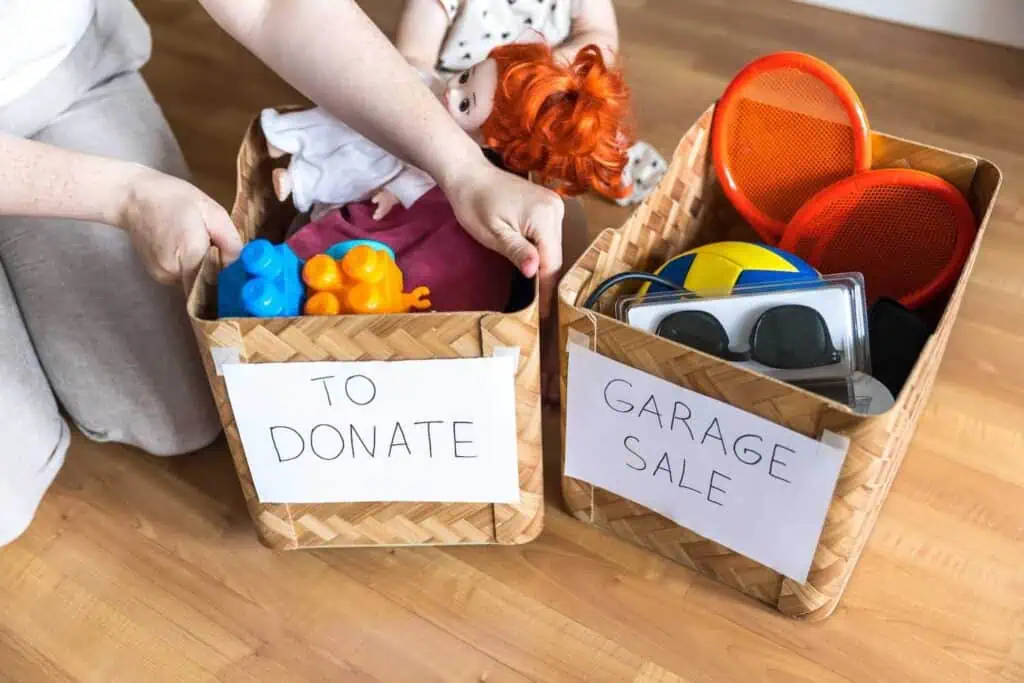
A person grips the edge of a box with a sign labeled "to donate" on it. Next to it is another box labeled "Garage sale". Both are full of toys

Decluttering can be tricky if your child claims every toy is their favorite, but it can make moving day easier. Grab some garbage bags or extra boxes, then create 3 piles: one for donations, one for trash, and one for toys you’re keeping. Consider adding a separate pile for unknown items, such as a toy your oldest has outgrown but your youngest might still enjoy.

Make sure you dispose of electronic waste properly if your kid has broken tablets or remote-control cars in the trash pile. Electronic waste can be dangerous in landfills, and depending on where you live, disposing of it improperly can land you a fine.

Step 2. Clean Toys for the Move

Little fingers are often sticky and tend to spread germs. Sanitize hard toys before moving day with an antibacterial wipe or spray. Let the toys dry completely before packing them.


“Electronic toys should not be left outside in the heat for prolonged periods, such as overnight, and typically should be the last things on the truck and the first things off.”


Stuffed animals can be washed in the washing machine with a gentle detergent, unless their tags indicate otherwise. Place the stuffed animals in a pillowcase or mesh bag before tossing them in the washer. You can also hand-wash stuffed animals in the tub or sink.

Step 3. Pack Large Toys First

Packing large toys often takes less time than packing small toys. Start with bigger items so you can free up floor space to pack smaller toys.

Take apart large toys if necessary, and place the parts in a plastic storage bag or bin. Place toys in medium or large boxes, then fill in the empty spaces with bubble wrap or packing paper. Oversized toys that are too big for boxes can be wrapped in bubble wrap and covered with moving blankets.

Step 4. Pack Electronic Toys

Two young boys pack their belongings into a cardboard box. One holds a video game controller

Disassemble electronic toys before packing them, and remove their batteries. Batteries can go in a separate plastic bag, and you can label it with the toy it belongs to, such as “Red Remote-Control Car”. You should also pack cords, chargers, or remotes in plastic bags.

Roll bubble wrap around electronic toys to help cushion them during the move, and place additional bubble wrap or packing paper in the toy box to protect the delicate components even more. Label the box as fragile or breakable so movers are extra careful with the box.

Step 5. Pack Stuffed Animals

Place clean stuffed animals in plastic storage bags or bins. Stuffed animals are sensitive to heat and humidity, so consider moisture-control or vacuum-sealed plastic bags and bins.

You can pack stuffed animals separately or with other soft or plush toys. A small amount of packing paper crinkled in a cardboard box helps cushion stuffed toys during the move.

Step 6. Pack Small Toys

A young girl puts colorful lego blocks in varying sizes into a clear plastic tub

Put small, non-fragile toys, such as LEGO bricks or miniature dolls, in plastic baggies or small containers. These tiny items can go in a small or medium moving box.

Organize small toys by type. LEGOs and other blocks can go in one box, while tiny clothes and dollhouse decor belong in another. Small toys can easily bounce around, so add bubble wrap or packing paper to the bottom of each box.

Learn more on our How to Pack Hub.

FAQs About Moving Toys

Here are some frequently asked questions about how to transport toys safely:

What if my toy is fragile or oversized?

Fragile toys should be carefully wrapped in bubble wrap, and the box should be labeled as “Fragile”. Also, mark which side is up so you, your family, or the movers don’t accidentally load it into the truck upside down. Oversized toys can be placed in large boxes or wrapped in bubble wrap and moving blankets.

Can I move toys myself, or should I hire professionals?

It’s up to you! Most movers can transport toys for you, and they’re experienced in doing so. Or you can move the toys yourself if you’re confident you’re able to load and unload them safely.

How do you transport toys safely?

Generally, all toys should be packed snugly in boxes, with bubble wrap or packing paper filling the gaps. Electronic toys should not be left outside in the heat for prolonged periods, such as overnight, and typically should be the last things on the truck and the first things off. Cold weather can also damage electronic toys, art supplies, or slime-making kits.

What should I know about unpacking and reassembling toys?

Younger kids may need assistance unpacking toys, especially if they have toys with small pieces, batteries, or cords. Check the user guide for reassembly instructions if you’re unsure how to put the toys back together. You can also find guides for many toys on the manufacturers’ sites or on YouTube.

DIY Cardboard Hacks for KIDS

Author:

Publish Date:

Last Modified Date:

Category: Home Decorating

Tags: Tags: , , , , , , , , , ,

DIY Cardboard Hacks For Kids

Don’t throw away those moving boxes just yet! We have some MORE creative ways to entertain, challenge and keep your kids involved throughout the unpacking time (and maybe even beyond!) without spending a penny.

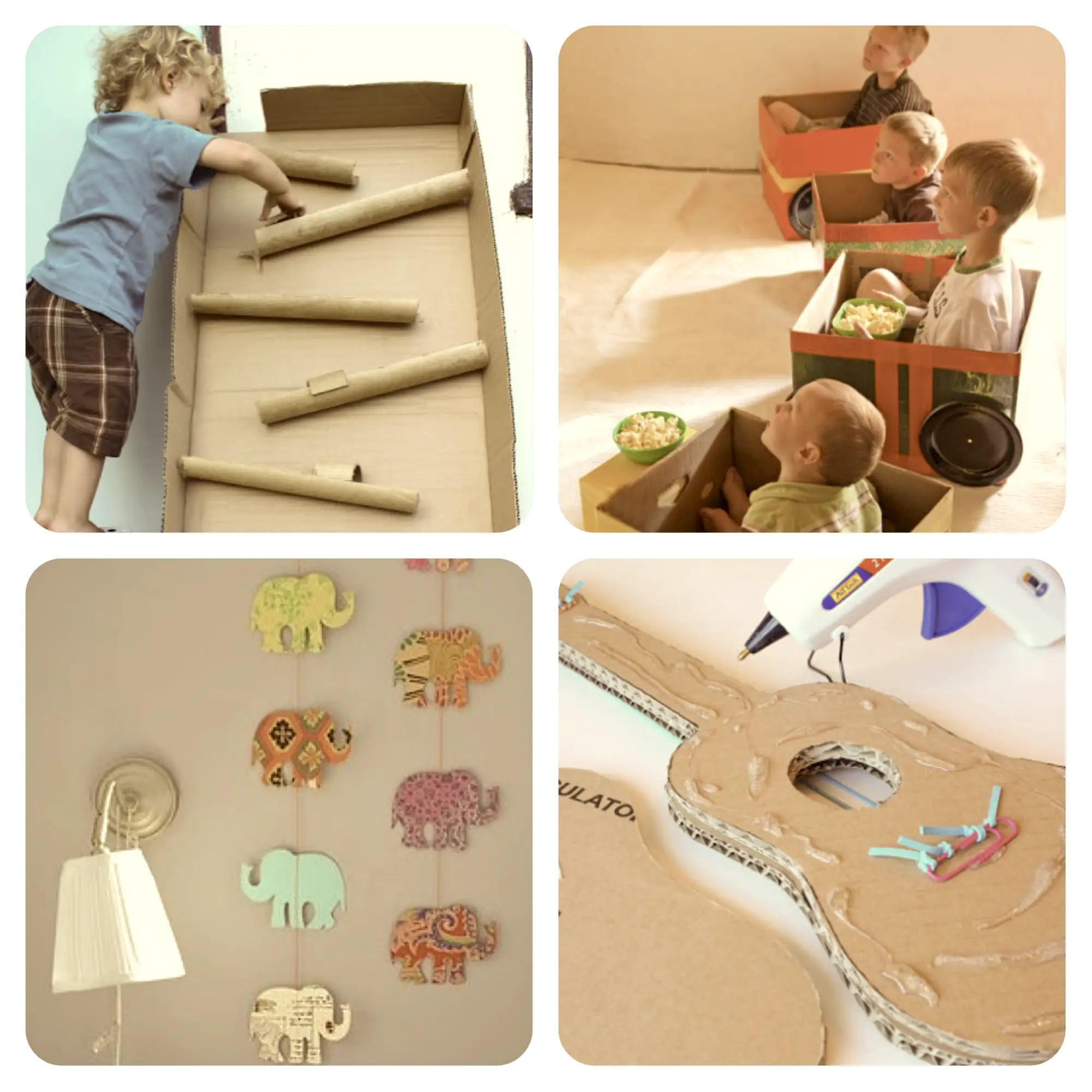
Here are 7 DIY cardboard art projects to help the kids have a little fun throughout the move-in process, which will hopefully simultaneously provide all of you parents a chance to GET SOMETHING DONE! For even more information about each project, click on the link provided for the step-by-step tutorial. (more…)

Cardboard Art Projects: 9 Creative Uses for Moving Boxes

Author:

Publish Date:

Last Modified Date:

Category: Home Decorating

Tags: Tags: , , , , , ,

cardboard3

Don’t throw away those moving boxes just yet! We have some creative and genius ways to reuse, recycle and have some serious fun with that extra cardboard. Here are 9 DIY cardboard art projects to save you some money on those new-homeowner projects that we’ve all faced as we settled into our new homes.

Moving 101 (more…)

×

I'm Moving

Moving? Thinking about moving? Whether your move is off in the distance or you already have one foot out the door, you'll learn about everything you should expect through our useful how-to's, cool articles and much more. It's all specially curated for you in our "I'm Moving" section.
Explore
×

I'm a Mover

For rookies or veterans alike, our "I'm a Mover" section is filled with extensive industry news, crucial protips and in-depth guides written by industry professionals. Sharing our decade of moving knowledge is just one way we help keep our professional movers at the top of their game.
Explore