The Most Important Questions to Ask Movers (and Yourself) Before Moving

Author:

Publish Date:

Last Modified Date:

Category: Moving Advice

Tags: Tags: , , , , , , , , , , , , , , , ,

There are a ton of options for moving companies, but you need the right questions to ask movers to make sure you pick the best option. After all, these are the people you’re going to trust with your furniture and valuables. It doesn’t matter if you want a full-service experience or just labor-only pros to load your rental truck; you always have to vet your moving team carefully before booking.

But what are the right questions to ask? We put together a clear guide to help you figure it out. This covers the most important things to ask moving companies and yourself. When you compare reviews and prices on our platform, these answers will help you make the best choice. Here’s what you need to know.

Questions To Ask Movers When Vetting Their Credentials and Legitimacy

Before you trust anyone with your belongings, you must confirm they’re a real, legitimate company. This means checking their local address, license numbers, and insurance status to avoid scams. Here are some more common questions to ask and things to know about any moving company.

Where Are You Located and How Can I Verify Your Address?

Always ask the company for its physical business address. A real moving company usually has an office or a yard for its trucks. Once you have the address, look it up on Google Maps. You want to see a real building with a sign. If the map shows a house or a rental apartment, take that as a red flag. Reliable movers are easy to find in person.

Are You Licensed, Insured, and Registered With the DOT?

Any company moving goods across state lines must have a USDOT number. You can check this number on the FMCSA website to see their safety record. Ask if they offer basic released value protection or full-value protection for your items. Basic coverage is free but pays very little if an item breaks. For extra peace of mind, make sure they have additional insurance that covers their team and your home.

Are You a Broker or a Carrier?

A carrier is a company that owns trucks and employs the people who actually move your stuff. A broker is a middleman who sells your move to another company and takes a fee. While it’s convenient to have someone else handle getting movers for you, brokers can be risky because you never know who’ll actually show up.


“For long trips, you want to know where your stuff is. Ask the company if they use GPS tracking or send text updates. Some modern providers have an online portal where you can watch the truck move in real time.”


It’s usually safer to hire a carrier directly so you can check their specific reviews and ratings. Check the FMCSA’s movers vs. brokers page for more on the subject.

Do You Conduct Employee Background Checks?

You should feel safe with the people entering your home, so it’s important to ask the company if they run background checks on every person they hire. You should also figure out if the crew acts as full-time staff or temporary help. Full-time staff usually get better training. Finally, verify they have workers’ compensation coverage. This protects you if a mover gets hurt on your property.

Questions About Pricing, Estimates, and Payment

A couple talks to movers and looks over a clipboard with cost and term agreements

Budgeting for a move is easier when you know exactly what you’re paying for. Clear pricing helps you avoid hidden fees and stay within your limit. This section explains how companies set their rates and what kind of quotes you might receive. It also covers how to pay safely and what to expect with deposits.

How Do You Calculate My Final Cost?

Local movers usually charge by the hour, and the rate depends on how many people you need and how long the job takes. For example, a two-person team might cost $100 per hour. If the move takes 5 hours, your total labor cost would be $500.

Long-distance moves work differently. These costs often depend on the weight or volume of your items and the distance to your new home. A company will estimate how much your furniture weighs or how much space it takes up to give you a price. Regardless if you’re moving locally or long-distance, always ask if fuel, stairs, or heavy items like pianos add extra fees to the bill.

Is This a Binding Estimate or a Not-to-Exceed Quote?

A binding estimate is a set price. Even if your items weigh more than expected, you pay the amount on the paper. This is great for staying on budget because the price is firm and you know exactly how much you’ll pay. However, if you end up moving fewer items, you’re essentially paying for space and labor you don’t actually need or use.

With a not-to-exceed quote, if the move is lighter or faster than planned, you pay less than the estimate. But if the job is bigger, you never pay more than the original cap. This gives you a “ceiling” price while still allowing for potential savings.

What Payment Types and Deposit Requirements Do You Accept?

Only use safe payment methods to protect your money and create a paper trail. Most legitimate companies offer several ways to pay for their services. Ask the mover which of the following options they accept before you book:

  • Credit and debit cards: These are the safest ways to pay. They offer fraud protection if something goes wrong with your service. Most professional companies accept major cards for both deposits and final payments. While some movers charge a small processing fee for using a card, the peace of mind is worth the extra cost.
  • ACH and bank transfers: These are direct payments from your bank account to the business. They’re also secure and often used for large, long-distance moves. Just keep in mind that these transfers can take a few days to clear.
  • Digital wallets: Some companies take Apple Pay, Venmo, or Zelle. However, be careful if a mover only accepts those payment methods. While these apps are handy for friends, a lack of other options is a major red flag.
  • Cash: Be wary of any company that asks for the full payment in cash before they start. It’s practically impossible to get your money back, even if something goes wrong, if you pay this way. You should only use cash for tipping your moving team to show your appreciation for their hard work.

Most companies ask for a small deposit to hold your date on their calendar and for assurance that you’re a serious customer. This is normal, especially during the busy summer season. A fair deposit is usually a small percentage of the total cost or a flat fee. If a company asks for a very large deposit up front (or even worse, the whole payment), you may want to look elsewhere.


Questions About Coverage, Claims, and Liability

Even with a professional company, accidents can sometimes happen during a move. It’s important to know how your items are protected before the truck arrives. This section explains the difference between basic and full coverage for your belongings. We’ll also show you how to file a claim if something breaks.

What Coverage Options Are Available for Loss or Damage?

Federal law requires movers to offer basic protection at no extra cost. This is called released-value coverage. It pays a set amount based on weight, not the item’s actual value. If you want better protection, you can pay for supplemental valuation coverage. This option ensures you get more money back if expensive items are lost or damaged.

Comparing Moving Coverage Options

Released Value Protection Basic Full Value Protection Supplemental
Cost This is included in your move for free. You don’t pay extra for this level. You must pay an extra premium. The price depends on the total value of your goods.
How It Pays Payouts are strictly based on weight. You usually get 60 cents for every pound. The company is liable for the full replacement value.
Coverage for Expensive Items You don’t need to list every item. Only the total weight of the shipment matters. You often need to list high-value items worth more than $100 per pound.
Best For People moving clothes, books, or old furniture. People moving electronics, art, or nice furniture.

Choosing the right plan depends on what you’re moving. Basic coverage is fine if your furniture is old, heavy, and hard to break. However, if you have a $2,000 TV that weighs 50 pounds, basic coverage will only pay about $30. In that case, paying for full-value protection is a much smarter choice.

How Do You Handle Damage Claims and Disputes?

If you find damage, stay calm and follow the process outlined in your insurance coverage and the moving company’s policies. Ask the mover for their specific claim form. You legally have 9 months to file a claim for moves between states, but sooner is always better. Local moves often have much shorter deadlines, so check your contract. To make sure your claim is successful, you need to gather proof first. Here are the steps to take:

  • Take photos: Snap clear pictures of the damage right away.
  • Keep the evidence: Don’t throw away broken pieces or the box they came in.
  • Write it down: Note any damage on the inventory sheet before the movers leave.

Submit everything in writing, and avoid doing claims only over the phone so you have a clear record. The company will review your photos and notes to decide on a payout based on the coverage you picked.


Questions About Move Logistics and Special Services

There are also questions to ask about your actual moving day. You need to know how many people will show up and how long the job will take. You’ll also need to know about tracking your truck, who to call if plans change, and how to handle special requests like storage or moving heavy items.

How Many Movers Will Be Assigned and How Long Will My Move Take?

Movers carrying sofa from house to moving truck

Much like the size of your moving truck, this depends on how much stuff you have. You can get a general idea of the number of movers you’ll need by consulting a few guides, and having this information on hand really helps your movers.

If possible, you should have your movers come over to take a look at your home. They’ve done enough moves to be able to tell with a quick walk around how many people you’ll need to have on the crew for your moving day.

Can I Track My Shipment and Who Will Be My Point of Contact?

For long trips, you want to know where your stuff is. Ask the company if they use GPS tracking or send text updates. Some modern providers have an online portal where you can watch the truck move in real time. This helps you plan your arrival at the new house.

Also, ask for the name and number of one specific person to manage your move. You don’t want to call a general hotline when you have a problem. Having a direct line to a manager or supervisor saves you time if the truck runs late. You need someone who knows your case and can get answers fast.

Do You Offer Storage Solutions and Handle Specialty Items?

If your new home isn’t ready when you arrive, ask if the mover offers overnight storage or portable containers. These services are helpful if there’s a gap between moving out and moving in, and they’ll save you from renting a separate storage unit.

You should also mention specialty items like pianos, pool tables, or antiques early on. These pieces often require custom crates or extra tools to move safely. Always confirm that the team has the right experience for these heavy or delicate tasks.

What Are Your Cancellation, Rescheduling, and Price-Matching Policies?

Most companies allow you to cancel or change your date if you give them enough notice, soask how many days in advance you need to call to avoid paying a fee.

On HireAHelper’s platform specifically, we offer a price-matching policy that can get you the best deal under certain conditions. If you find the same move (same date and service) with the same provider but for less money, we’ll match the price for you.

What Happens if My Final Move Takes Longer Than Estimated?

For hourly moves, the final bill depends on the actual time worked. If the move takes longer due to heavy traffic or long walkways, your cost might go up. Make sure you understand the hourly rate for any unexpected extra time.

If you have a not-to-exceed quote, you’re better protected. Even if the crew takes longer than they thought, they can’t charge you more than the agreed cap. Always get this price in writing before the work begins.

Can I Change My Move Date After Booking?

A man looks contemplative as he stares at boxes stacked in a room

Most companies are flexible if you change your date at least a week before the move. However, if you wait until the last minute, you might have to pay a rescheduling fee. This fee helps cover the cost of the crew’s lost time.

If you booked through HireAHelper, first check with the moving company to see if they’re free on the new date. Then simply let our team know so we can update your booking. If the original company is busy on that date, you can cancel and find a new team on our marketplace.


Questions To Ask Yourself Before Booking Help

Before you hire anyone, look at your own situation closely. You need to decide how big a truck to rent and how much work you want to do yourself. It’s also important to set a firm budget and check your calendar for the best dates. Finally, think about where the truck will park and if the crew can reach your front door easily.

What Size Truck or Container Will I Need?

Your answer, of course, depends on how much stuff you have. For the average person without a lot of experience moving, figuring this out can seem like a confusing task. Thankfully, there are some helpful guidelines you can follow to get an idea of the truck size you need.
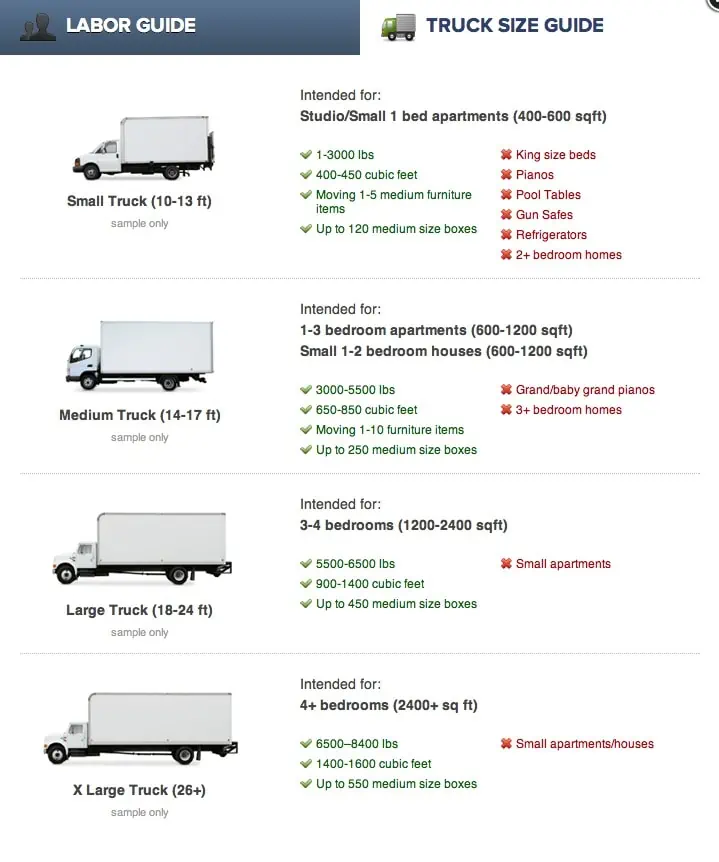
A diagram showing the best moving truck sizes for the size of home you have

However, these are just estimates, and there are some other things to consider besides just the number of bedrooms or square footage. For example, if your home has an attic, a basement, or a large tool shed, you might want to count them as another “half” room, depending on how full they are.

What’s most important is that you now have a rough idea of what you’ll need and can give that information to the movers if they ask.

How Much Help Do I Want Versus Doing It Myself?

Deciding between a DIY move and hiring professionals is a big choice. Think about your physical strength and your schedule before you decide. Here’s how movers can help with different types of moves:

  • Labor-only help: You rent a moving truck or container and handle the transportation yourself. The moving crew just loads and unloads your belongings for you. This is a great budget-friendly choice, especially if you don’t mind a container in your driveway or having to drive a big vehicle.
  • Full-service move: This option is for people who want a hands-off experience. The company brings the truck, loads it, drives it, and unloads it at your new place. They handle everything from start to finish. This is the easiest way to move, but it costs much more than just hiring labor.

Labor-only services save you a lot of money because you’re not paying for a large moving truck. However, full-service moves save you the most time and effort. Pick the one that fits your budget and your energy levels best.

What Is My Budget and Timing Flexibility?

Before you start looking at companies, decide on a firm number you can afford to spend. Moving costs can add up fast with supplies, gas, and service fees. Having a clear budget helps you narrow down your choices on our marketplace. You can also get an estimate quickly with our moving cost calculator.

If you can be flexible with your dates, you might save even more. Prices rise with demand, and most people move on weekends or at the end of the month. If you can move on a weekday in the middle of the month, your costs will be lower. Also, try to avoid the summer rush to keep your expenses as low as possible.

How Close Can the Vehicle Get to My Door?

Walk your property and look at the path from your door to the street. If a large truck can’t park close by, the movers will have to carry items a long distance. This is called a “long carry”, and some companies charge a fee for this extra work. You should also check for low-hanging trees or narrow driveways that might block a big moving van.


“…[A]sk for the name and number of one specific person to manage your move…Having a direct line to a manager or supervisor saves you time if the truck runs late.”


In busy cities, you might need a parking permit to keep a spot open for the truck. Getting a permit ahead of time will prevent costly tickets. Also, if you live in an apartment, check the building rules for moving hours. Keep all these details in mind to help your movers work faster and more efficiently.


Preparing for a Smooth Moving Day

Getting the right answers early makes the actual move feel much more manageable. Planning your move with clear information about pricing, insurance, and timing means you can focus on your new home instead of worrying about hidden fees. Be sure to take the time to vet your moving team with these questions in mind to stay on track and on budget.

Our marketplace is designed to make this process simple and transparent. You can browse local movers, read real customer reviews, and see clear pricing all in one place. Whether you need a full crew or just a few hours of help with heavy lifting, we can help you find the right fit. Once you have your answers ready, you can book with confidence and look forward to a successful moving day.

How to Create a Moving Inventory List (and Why it Matters)

Author:

Publish Date:

Last Modified Date:

Category: Moving Checklists & Planning

Tags: Tags: , , , , , , , , , , , , , , , , , ,

From missing boxes to unexpected damage, a disorganized move can cost you more than just your patience. That’s why making an inventory list is one of the smartest things you can do before moving day. It’s your personal checklist of everything you’re packing and transporting — room by room, box by box.

This list helps you keep tabs on your belongings and gives you written proof if anything goes missing. It also works in tandem with your mover’s household goods descriptive inventory, which is a legal document your moving company creates to record the condition of your items before the move.

In this guide, we walk you through building a moving inventory list that actually works, and how your list and the mover’s inventory can help protect you during your move.


What Is a Moving Inventory List?

A moving inventory list is exactly what it sounds like: A detailed checklist you create before or during packing to track every item you’re taking with you. It keeps you organized and lowers the risk of losing items. It can also come in handy when you need to prove ownership if something goes missing or gets damaged.

Most people use their moving inventory list to:

  • Track items: It’s easy for something to get left out or misplaced during the chaos of packing and unpacking. A list helps you make sure everything that you want to take with you gets in and out of a box.
  • Label boxes: A moving inventory can double as a way to help track and label boxes, as well as keep a key of your color-coding method.
  • Stay organized: Moving day can be pretty chaotic, so a comprehensive list can help you keep things in order, like knowing which items you’ve already put on or taken off the truck.
  • Confirm deliveries: When you can check it against an inventory, you can ensure nothing got lost during transit or was left behind at your old place.
  • Place items easily: You can also use your list as a way to group certain items together via rooms, so you know exactly where everything belongs in the new home.

This list can be a lifesaver when filing insurance claims or dealing with disputes, especially during long-distance moves or complex relocations.

What to Include in Your Moving Inventory List

At a minimum, your moving inventory should have:

  • Item name and description
  • Quantity
  • The room where it belongs
  • Box or container number
  • Notes for fragile or high-value items

You can use columns for each label, or you can use a paragraph format with the box or container number at the start of each section. Choose the style that works best for you.

Kevin the Mover puts it simply:

“When your stuff is delivered, you’ll check off each numbered item as it comes off the truck. Armed with your inventory sheets, you can make sure everything is there.”

If you’re making the list digitally, you can even add columns for photos and actual appraised values, if you have or need those. You’ll get into more detail when you actually start filling out the list, but laying it out upfront makes the process smoother.


How to Create a Moving Inventory List, Step-by-Step

A solid inventory list doesn’t have to be complicated, but it does need to be consistent. Here’s how to create one that actually helps you keep track of everything and supports you in case of loss or damage.

1. Choose a Moving Inventory List Template or App

Start by deciding how you want to track your items. You have three main options:

Format Pros Cons
Spreadsheet -Highly customizable

-Easy to sort/filter

-Requires manual entry

-Less mobile-friendly

Moving inventory app -Mobile access

-Often includes barcode scanning or photos

-May have a learning curve

-May have a subscription cost

Printed checklist -Easy for low-tech users -Can be lost

-Hard to update or back up

We’ve created a fully editable moving inventory list that you can use and duplicate as needed. It includes sample categories and column headings to help you get organized and started fast.

An image of a moving inventory sheet

2. Inventory Your Belongings and Have Valuable Items Appraised

Next, go room by room and list everything you’re packing. Create a column for:

  • Item name and description (e.g., “Flat-screen TV, 55″, “black Samsung”)
  • Quantity
  • Box number or container label
  • The room where it goes
  • Notes for fragile or high-value items

For example:

Item Quantity Box # Room Notes
Wine glasses 8 12 Kitchen Fragile – bubble wrapped
Photo albums 3 8 Living Room N/A

As you compile your inventory, Kevin the Mover recommends one other important detail you should jot down:

“Check your furniture, your appliances, your bookcases and your bicycle. Plainly denote any significant scratches, gouges and dings. Then point them out to your inventory taker.”

When you’re proactive and thorough, your movers are likely to follow suit. If something is especially valuable, you should get it appraised, take photos, and note the value on your sheet, especially for items like jewelry, antiques, or collectibles.

3. Number and Label Your Boxes

Part of keeping track of everything on your list is to make sure your boxes are labeled properly. Use a permanent marker, numbered stickers, or masking tape to clearly mark each box with a unique number. Then, record that number on your inventory list next to the appropriate items.


“If something arrives broken, missing, or altered, you’ll need to prove it wasn’t already in that condition. And the best way to do that is by checking it against [your mover’s household goods inventory [list].”


For example, if box #4 contains a blender, a toaster, and a coffee maker, those 3 items all go under box #4 on your spreadsheet.


Pro Tips for Keeping Your Inventory Accurate

Once you start your inventory list, keep it accurate. Small details make a big difference when it’s time to unpack, and they’re essential if you have to file a claim.

  • Update in real time: Add items to your list as you pack them, not after. Don’t trust your memory. You will forget which box has the toaster.
  • Take photos of each box’s contents before sealing it: This visual record is priceless if anything goes missing or is damaged.
  • Color-code by room using stickers or tape: Color-coding boxes makes sorting easier when unloading, and your movers (or friends) won’t have to ask where “box 14” goes.
  • Back it up: Keep a digital copy of your list stored in the cloud or on your phone. Paper lists get lost during moving more often than you think.
  • Flag valuables: Use a star or bold highlight on your spreadsheet for high-value or fragile items.

What Is a Household Goods Descriptive Inventory?

When you hire professional movers for an interstate move, federal rules require a written, itemized inventory that you review and sign. For local moves, rules vary by state. Many movers still document item condition, and you can request a written inventory for added protection. This document is called a household goods descriptive inventory, and it plays a crucial role in protecting your property.

Unlike your personal moving inventory list — which tracks what you’re moving and where it’s going — the descriptive inventory focuses on the condition of each item at pickup. It’s basically a legal record, and it’s often required for value-based claims or disputes about damage or loss.

As Kevin the Mover advises, “Make a rough list of your boxes … you can use it to make sure your mover has the same number of boxes listed on their official inventory sheets.”

Pro tip: Keep both lists easily accessible on moving day (and have a digital backup). Cross-check them during loading and unloading for peace of mind and fewer surprises later.

What It Contains

Your mover’s household goods inventory differs slightly from your inventory, and typically includes:

  • Detailed list: A detailed list of your items
  • Damage notes: Preexisting damage notes (like scuffs, tears, or discolorations)
  • Condition codes: A series of condition codes (e.g., “SC” = scratched, “BR” = broken)
  • Signatures: Signatures from both the mover and the customer

Why the Household Goods Descriptive Inventory Matters

This document is your legal safeguard. If something arrives broken, missing, or altered, you’ll need to prove it wasn’t already in that condition. And the best way to do that is by checking it against the household goods inventory.

Here are a few tips to ensure the inventory is accurate:

  • Walk through the process: Go through each step in the inventory process with your movers, and don’t be afraid to ask questions as they come up.
  • Challenge inaccuracies: Don’t be afraid to challenge inaccurate notes! Since this document is a legal safeguard, you want everything to be as exact and true as possible.
  • Take photos: Take your own photos of high-value items in case something goes wrong.
  • Get a copy: Request a copy of the signed form before the truck leaves your driveway.

Using Both Lists for Maximum Protection

A lot can happen between point A and point B during a move. If you don’t have a system for tracking your stuff, you’re taking an unnecessary risk. Creating your own moving inventory list gives you a clear guide for packing, tracking, and unpacking. Meanwhile, the household goods descriptive inventory acts as your legal protection if anything gets damaged or goes missing during the move.

Kevin the Mover reiterates this point:

“The inventory sheets are your best friend if something gets lost or damaged. Make sure you are well-acquainted — both before and after your mover fills it out — before it’s finally time to sign off at the bottom.”

In short, using both lists means your belongings are covered on all fronts, from organization to liability.

The Important Things to Take Pictures of While Moving (and Why)

Author:

Publish Date:

Last Modified Date:

Category: Pro Packing Guides

Tags: Tags: , , , , , , , , , , , , , , , , , , , ,

Snapping photos when you’re in the middle of a move might be the last thing on your mind when you’re waist-deep in boxes. However, they can make a big difference later on. Documenting your move is a simple step that saves you time, reduces stress, and preserves precious memories. They can also help you keep track of your prized belongings throughout the process.

Damage to belongings and dings on floors and walls are more common than many homeowners realize. Taking pictures helps document their condition before, during, and after transport. They also protect you in case of disputes or insurance claims.

Additionally, photos could help you plan the design of your new space ahead of time, giving you a head start in your new home, in addition to showing how things like entertainment centers are set up. They definitely make unpacking and arranging your home faster and less overwhelming.

Don’t worry if you’re unsure of where to begin. We have you covered! Our tips and tricks on what to photograph and video can help you from start to finish, so you don’t miss a single shot.


Take Pictures of Your Old Home

Unfortunately, many landlords are literally and figuratively banking on their tenants not doing their due diligence. Make sure you’re not one of them!

When a tenant moves out, their landlord can legally keep part or all of their security deposit. However, it’s meant to cover things like damage beyond normal wear and tear, not greed. They usually have to provide a breakdown of charges, and if they refuse or can’t justify the deductions, tenants may be able to get their money back.


“Your phone’s date and time settings have to be accurate before you start taking photos…if your phone’s date and time are incorrect, the info attached to the images will be, too. This won’t help your case if you need to use the evidence in the future.”


So it’s a good idea to prepare just in case. Taking clear photos and videos of the property while moving out can be a game-changer if your landlord withholds your deposit. For example, you can use the images as evidence if you take them to small claims court.

But renters shouldn’t be the only ones taking pictures. Home sellers should do the same. The pictures can protect you if the buyer later tries to claim you caused damage during the move. Having photo evidence of the property’s state when you took your final steps out the door can prove you weren’t in the wrong.

The images can also be sweet mementos. Put pictures of special areas in your home or its exterior into a photo album or frame. They’ll be great for reminiscing in the future.

Take Pictures of Your New Home

An image of an empty living room in a home

Photographing everything in your new home before you start bringing in your belongings is also an important step. These photos show the house’s current state and allow you to document whether items that were supposed to stay as part of the sale are gone. So if a seller snatched up the vintage light fixtures you fell in love with and paid for, the photos will show proof they’re missing if there’s a dispute.

Post-move-out and pre-move-in pictures also show the home’s condition at crucial points. If you notice damage later, you can compare the two sets of images. They help you determine if the movers accidentally damaged the flooring or other components at some point during the process.

Another perk? The photos give you a head start in deciding where all your items will go in your new home, and it’s much easier than making split-second choices during the fast-paced move-in.

Take Pictures of Your Electronics Setups

An image of a back of a tv

Have you ever temporarily disconnected an elaborate electronics setup only to realize you can’t remember where the wires need to go? If you take pictures before disconnecting them, you don’t have to worry about this happening to you. These photos provide easy references for computers, gaming systems, and other electronic setups, and will save you frustration, time, and probably tears when you set everything back up in your new home.

It also helps to pack all electronics with their matching wires; for example, put the gaming system and its wires in the same box. Attach a tag to each wire indicating what it belongs to so they’re not in a tangled, confusing ball. This saves you headaches later on if you have several of the same cables.

Take a photo of the interior contents of the box, including the items’ serial numbers and the exterior box labeling, so they’re easy to find later. Additionally, if you have multiple boxes of electronics, don’t label them all the same. Write “Electronics 1–Computer Parts,” “Electronics 2–Entertainment Center,” etc. You’ll be happy you did this later if a box accidentally gets misplaced during transit. And, you can show the moving company a photo of exactly what valuables were in each one if a box does end up missing.

Take Pictures of Your Valuable Items

Taking photos of valuable items like antique furniture and electronics is especially important. If they get damaged in transit, the images show their condition before the moving process began. Additionally, if the items get misplaced, it’s much easier to show the moving company which ones are MIA rather than describing them.


“Post-move-out and pre-move-in pictures also show the home’s condition at crucial points. If you notice damage later, you can compare the two sets of images. They help you determine if the movers accidentally damaged the flooring or other components…”


Your pictures provide extra protection when combined with the inventory sheet and bill of lading. These list all your items being transported during the move, so having both strengthens your case if you need to file a claim with the moving company or your insurance.

Take Pictures of Your Water, Electricity, and Gas Meters

an image of a utility meter on a pole

Homeowners typically remember to hook up the utilities at their new place. Unfortunately, many forget to photograph their water, electricity, and gas meters on the way out of their old one. Taking the pictures gives you a good defense if one or more utility companies send you bills stating you owe more than you actually do.

Utility companies usually estimate usage, or can have a delay in updating their records. This could lead to incorrect charges for usage after you moved out, meaning you might get stuck paying for the new tenant’s utilities. Your photos provide clear, time-stamped proof of your final meter readings on the day you left, and they can back up your word if you need to dispute inaccurate costs.

It’s also a good idea to take photos of the meters at your new property as soon as you arrive. They document your starting usage. The time-stamped images provide proof of the initial readings, so you won’t have to pay for usage from the previous occupants.

Take Videos of Your Functional Electronics and Equipment

a laptop and a projector sit on a table

It’s smart to take photos of your belongings to document their condition. However, taking videos is also beneficial for anything motorized or that you turn on and off. They show the objects in their operational state, and that they worked before the move. You’ll need proof if items like your stereo system stop working because the movers accidentally dropped them or knocked them in the wrong way.

Taking videos adds extra time to the packing and moving processes, but it’s worth it. They increase your chances of getting reimbursed for nonworking items later on. You should also take videos of working items remaining at the home. For example, record the garage door doing a full cycle and appliances in use. Much like photos of the home condition do, the videos protect you against false claims from new homeowners saying that certain home components aren’t working.


Bonus Tip: Always Time Stamp Your Photos

It’s not enough to take the photos; they should also be time-stamped. This data is important when documenting things like utility meter readings and the home’s condition while moving out. It’s clear-as-day evidence of when the photos were taken. Time-stamping is especially crucial for billing disputes and insurance claims.

Your phone’s date and time settings have to be accurate before you start taking photos, and the time stamp on the pictures coincides with your phone’s internal clock. If your phone’s date and time are incorrect, the info attached to the images will be, too. This won’t help your case if you need to use the evidence in the future. Set your phone to update the date and time automatically so you won’t have to do it manually.

Smartphones automatically time-stamp photos and videos. Take a test image to make sure it’s accurate before you begin. After taking the picture, find it in your photos app — the day and time should be at the top. Verify that it matches the current date and time, and if it does, you’re all set to document the journey.

Don’t forget to send all the photos and videos to your email or other storage device throughout the day. You’ll have the evidence you need if your phone breaks or gets lost and the videos and images aren’t backed up to an online storage space.

What to Know Before Moving Into a City Apartment

Author:

Publish Date:

Last Modified Date:

Category: Loading & Unloading Guides, Moving Day

Tags: Tags: , , , , , , , , , , , , , , , , , , , , , , , , , , , ,

Moving to a new apartment isn’t always easy. Tight spaces, unclear rules, and even hidden fees can quickly derail your carefully laid plans.

To help you avoid any moving-day surprises, we’ve put together this guide on what to know before moving into a city apartment. By the end, you’ll know how to avoid the unexpected costs of moving into an apartment, understand your building’s lease terms and regulations, and learn how to avoid fines.


Know What Date and Time You Can Move In

a couple happily walks up the stairs carrying boxes and plants to move into their new apartment

Moving can be disruptive, and apartments aren’t particularly known for being soundproof. Even if you’re mindful, you can make a lot of noise coming back and forth with boxes or rearranging furniture. Quiet hours often apply in apartment communities, so you may have to plan around them.

Traffic, noise ordinances, and general rules can also affect your move-in. If your building uses an elevator, there may be specific hours or days that management allows you to book it.

Depending on your complex, you may have to move in on a Saturday. Others might specify that you have to move on a weekday when foot traffic is lighter. Check your building’s move-in policies in advance if you have time constraints for getting everything moved in.


Plan the Best Places to Park Your Moving Truck

a white moving truck is parked outside of an apartment building

Moving into an apartment is often more complicated than relocating to a house with a clear driveway. And if you live in the heart of a big city, it can be even harder. Ask your management office about hours, time limits, permits, and where you need to park. If you need a permit, apply as soon as possible so processing times don’t delay your move-in.

Some buildings offer a rear service entrance or loading dock. This can make things easier since you have a designated place to park, but you may have to schedule a block of time to use it.


Ask About Your Apartment’s Unloading Policy

Before moving day, ask your building management about how and where unloading works. Some apartment complexes require you to unload onto a staging area and move your truck away from the loading dock or service entrance as quickly as possible.


“A COI is a Certificate of Insurance. It lets your apartment complex know that your moving company is insured and provides important coverage details, such as policy limits, effective dates, and other key details.”


Others won’t allow you to leave items out, or they’ll require you to keep clear paths for egress. Don’t forget to inform your moving team of any rules or requirements.

Bonus Tip: Know Where to Dispose of Boxes

Many buildings set specific rules for how to dispose of moving boxes and packing materials. Even if a recycling bin is available, they may ask that moving debris not be placed there to prevent it from filling up too quickly.

Your building manager can tell you the preferred way to dispose of boxes. You can also try giving away empty boxes on social media. Or, if you unpack quickly, the movers might be willing to haul the boxes away for you.


Take Floor Protection Seriously

An apartment's floor is protected as a kitchen is remodeled for a move-in

Many buildings require floor protection to prevent damage in shared areas, especially those with hardwood or tile flooring. For example, an area with nice hardwood or marble flooring may require Masonite: wooden hardboards that can prevent damage to the floor while you’re shifting furniture. If you need it, make sure your movers have one on hand. Some buildings may have hardboards available to lend you, so ask ahead of time.

And don’t stop at protecting just the floor. Some management companies require additional protection in doorways and stairwells.


Familiarize Yourself With Your Movers’ Insurance

Most licensed moving companies have to provide basic liability insurance. However, some buildings in big cities require proof of moving insurance or even the purchase of extra policies. That way, if an accident happens, they can recoup the cost quickly. Without insurance, you could be left with hidden apartment move-in fees.


“Even if you’re mindful, you can make a lot of noise coming back and forth with boxes or rearranging furniture. Quiet hours often apply in apartment communities, so you may have to plan around them.”


If you need proof of insurance, tell your moving company as soon as possible. They’ll need time to get a COI form from the office and return it with all the necessary paperwork from their own insurance company. The building may not let you move in if you don’t have the proper paperwork filed, so check carefully.


Review City Apartment Moving Rules

There’s plenty more to know to make your move seamless. Check with your apartment complex about common rules like:

  • Building move-in hours: Confirm whether there are set moving hours listed in the lease.
  • Elevator reservations: If you need an elevator reservation, familiarize yourself with the process in advance. Make sure you book the reservation early to get the best date and time for moving day.
  • COI requirements: A COI is a Certificate of Insurance. It lets your apartment complex know that your moving company is insured and provides important coverage details, such as policy limits, effective dates, and other key details.
  • Noise and disturbance levels: Evenings and weekends may be subject to noise restrictions. While you shouldn’t be particularly loud while moving, you also want to avoid a costly fine for violating regulations.
  • Fire safety regulations: While you move, avoid any fire safety violations. Ensure that you never obstruct fire exits or safety equipment.
  • Parking: Know where to park your moving truck (and where guests should park if friends or family are coming to help you).

Prepare for a Smooth City Move

Ready to make your move as smooth as possible? Check out our moving checklist to make sure you have all the necessary supplies, such as dollies, stretch wrap, and moving blankets.

Additionally, if you’re moving on a narrow city street or to the top of a towering apartment building, let us know. We make budgeting for apartment moves easy by providing clear, upfront quotes from local moving companies. Compare services and book trusted, vetted, and highly rated movers through HireAHelper’s online platform.

7 Embarrassing Lessons I Learned While Moving People

Author:

Publish Date:

Last Modified Date:

Category: Mover Stories

Tags: Tags: , , , , , , , , , , , , , , ,

Learning to be a good mover is not something you can get from a book. Like riding a bike, playing the piano and getting your black belt – like so many things, really – we all have to learn how to move stuff by going out to the job and getting to it.

And as with just about anything, it involves making mistakes.

This month I want to share with you seven lessons I learned during my earliest days on the job. Lessons learned both through the mistakes of others and through my own errors. They made me feel stupid and embarrassed, but nevertheless taught me things I needed to know if I wanted to stay on in this business.

#1. The nicer the furniture, the more likely you’ll damage it.


This isn’t some sort of karmic law. This is pure woodworking and physics.

The finest dressers and desks have drawers that slide out nice and smoothly – meaning you only need to tip that piece so far before gravity grabs hold of those drawers and start pulling them out and onto the floor. Quality furniture also (usually) means good, solid wood. And it’s heavy. Drawers will gain speed fast and hit the floor hard. Armoire doors, once they start to swing open, can come down so hard they put cracks in themselves; if they don’t bang against the floor, they can end up playing “irresistible force meets immovable object” with their hinges.

Yes, I’ve seen all this firsthand. A lot of it happened on a local move during my first week as a mover. I don’t know about the other guys on that crew, but that was the first and last time I let something like that happen.

Protip: Pad-wrapping items like dressers and armoires can obviously keep all those drawers and doors in place. So can a layer of shrink wrap. But if you prefer not to pad-wrap or shrink wrap those big pieces until you get them out the front door another option is using those big movers’ rubber bands, which are easy to put on, easy to adjust (by knotting up and tying off any slack) and totally economical since you can use them for years.

Extra advice: Gravity works on all kinds of furniture, not just the most expensive stuff!

#2. Sitting in the passenger seat does not mean you get to take a break from helping.

Unfortunately, one guy I worked with didn’t seem to understand this. “Watch that side,” I told him as I began backing half-blind into a slot between two other box trucks. “Aw-right,” he said, glancing lazily at the side view mirror before letting his eyes glaze back over.

I suppose it was my fault. I shouldn’t have taken it for granted that he was going to keep watching that side for me and warn me when I was about to sideswipe the truck parked on his side. Which, of course, he didn’t. And he didn’t get socked with a bill for the damage either.

Protip: This “help your driver” rule is always in effect on the road, because so are blind spots. When your driver is pulling up to the curb along a tree-lined residential street, pay attention not only to how close the tires are getting to the curb, but also how close the top of the truck might be coming to any big fat tree branches. Trust me, tree branches can do some serious damage.

#3. Don’t blindly trust a dog or its owner.

“He’s real friendly,” the customer with the mixed-breed said. “But I’ll put him out back so he doesn’t get in your way.” That seemed fair enough to all of us.

He was a quiet pup, actually, and after a while, I’d totally forgotten about him. I figure so did one of the other guys by the time he went out back to take care of the patio chairs. From the living room was where I heard the barking and the shouting, and I was walking through the kitchen when my fellow mover busted through the back door, cussing and bleeding in three places.

Protip: Quiet dogs are still dogs. With teeth.

#4. If you put things out of the way, remember where you put them.

After moving non-stop for six hours, our three-man crew was finally done with the unload. All we had to do was have the customer sign off on the inventory sheets.

“Looks like we’re missing something, fellas,” he said, showing us the lone unchecked box on his bingo sheet.

On the inventory, it just said “screw box” – which was exactly what I wanted to do. But the four of us – the crew plus the customer – spent the next half an hour looking for a screw box, not sure what one was even supposed to look like. Walking through the garage a fourth time, I looked over at the customer’s big old rolling tool chest and the sliding compartment doors at the bottom. Inside, to everyone’s relief, was a small PBO half-filled with nuts and bolts and washers and flanges and… yup. Screws.

Protip: Keep sticky notes and a marker in your pocket for anything that needs special denotation. That way, an out of the way item will be clearly visible and explained. A lot can be forgotten during a five-hour move, trust me.

#5. Pressboards can’t really be pressed.

During my first week as a mover, I was introduced to a pressboard entertainment unit in the customer’s living room. It held a big TV, stereo equipment, a VCR (this was 1996). When we got it cleared off and picked it up, it immediately started to wobble. I could feel the thing getting progressively looser as the lead guy and I eased it as best we could down the apartment building’s stairwell.

Out on the truck, the lead guy pulled out something called a ratchet strap. There I learned that when you introduce a ratchet strap to a piece of pressboard furniture, the ratchet strap will waste no time crushing that piece of pressboard furniture to pieces.

Protip: When confronted with a piece of pressboard furniture, give the customer two choices: a piece of paper called a Pressboard (Particle Board) Waiver that releases the moving company from liability for damage to a piece of furniture that shouldn’t be moved, or a piece of paper that says “FREE”. Read this discussion on MovingScam.com for more on particle/pressboard waivers.

#6. You know that the name is painted on the side of the truck, right?

One day, one of my fellow crew guys and I were asked to go help another van line agency handle a job in Manhattan. My buddy and I sat in the cramped space behind them, our knees pinned against our chests for the 90-minute ride into the city.

Granted, driving in Manhattan can suck. Driving a 26’ box truck around Manhattan is brutal. It takes patience. It takes nerves of steel. Our driver for the day had neither.

At one point there were three lanes being squeezed into two. New Yorkers generally have a grasp of the concept of merging though evidently, they don’t seem to like it. And, well, the driver let everybody on that ride know from out the window.

Protip: Most people on the road can both hear you AND read the name on the side of your truck.

#7. Shrink wrap comes in rolls, but you can’t reroll it.

“Hand me that shrink wrap, Kevin,” my buddy said from the back door of the box truck. Hands full (with what I don’t remember) I gave the shrink wrap at my feet a push with my boot and sent it rolling across the floor of the truck toward my buddy – and the boss, who had just materialized out of nowhere.

“Don’t EVER do that!” he barked in his usual intimidating way.” You know how much a roll of that stuff costs? You get one little rock in that plastic and the entire roll is shot! Where’s your head?!”

I wouldn’t say the whole entire roll would be shot. I wouldn’t say anything – not to that guy’s face. But he was right. Get even a small nick or cut or bit of debris in that plastic and it’ll drive you nuts the way it comes apart next time you try to use it. Money down the drain.

Protip: When someone asks you to hand them the shrink wrap, do just that.

Got any of your own lessons to share?

We know some of you have been around a while – long enough to have some good stories of your own about the hard lessons you’ve learned. We’d love for you to share them, so all of us can learn the easy way what you guys have learned the hard way.

Which brings me to one final tip.

Admit your mistakes. Spell them out to your team when they happen. This way you’ll be helping people avoid doing the same thing down the road.


Illustrations by Marlowe Dobbe
×

I'm Moving

Moving? Thinking about moving? Whether your move is off in the distance or you already have one foot out the door, you'll learn about everything you should expect through our useful how-to's, cool articles and much more. It's all specially curated for you in our "I'm Moving" section.
Explore
×

I'm a Mover

For rookies or veterans alike, our "I'm a Mover" section is filled with extensive industry news, crucial protips and in-depth guides written by industry professionals. Sharing our decade of moving knowledge is just one way we help keep our professional movers at the top of their game.
Explore