
Moving an entire home is a major feat, even for the savviest of planners. It’s easy to feel overwhelmed, which is why the best moving checklist is a timeline-based one that breaks your move into manageable steps starting 8 weeks out. By following a structured schedule, you maintain control over the chaos and ensure nothing (including your security deposit) gets left behind.
When you look at those junk drawers or the mountain of items piled up in the attic, it’s hard to know where to start. That’s where a checklist comes in. This guide works perfectly whether you are planning a local or long-distance move, and whether you’re going full DIY or hiring labor-only moving professionals to handle the heavy lifting.
Table of Contents
- How to Use This Moving Checklist
- 8 Weeks Before: Services & Logistics
- 6 Weeks Before: The Change of Address Process
- 4 Weeks Before: Packing & Prep
- 1 Week Before: Final Preparations
- The Days Before: Last-Minute Essentials
- Moving Day: Your Action Plan
- After the Move: Settling In
- Moving Checklist by Move Type (Apartment vs. House)
- DIY vs. Labor-Only vs. Full-Service
- Common Moving Checklist Mistakes
- Frequently Asked Questions
At HireAHelper, we’ve helped countless people relocate their entire lives, whether across the street or cross-country. We’ve taken our expert knowledge and condensed it down into the ultimate 8-week checklist — from planning to post-move — so you can move with ease.
How to Use This Moving Checklist
Don’t think of moving as one big task. The best way to move, and the least stressful, is to divide it up into two simultaneous processes: what you need to do and what to pack. This checklist, using an 8-week timeline, helps you organize your move and see the bigger picture — without losing sight of the smaller details.
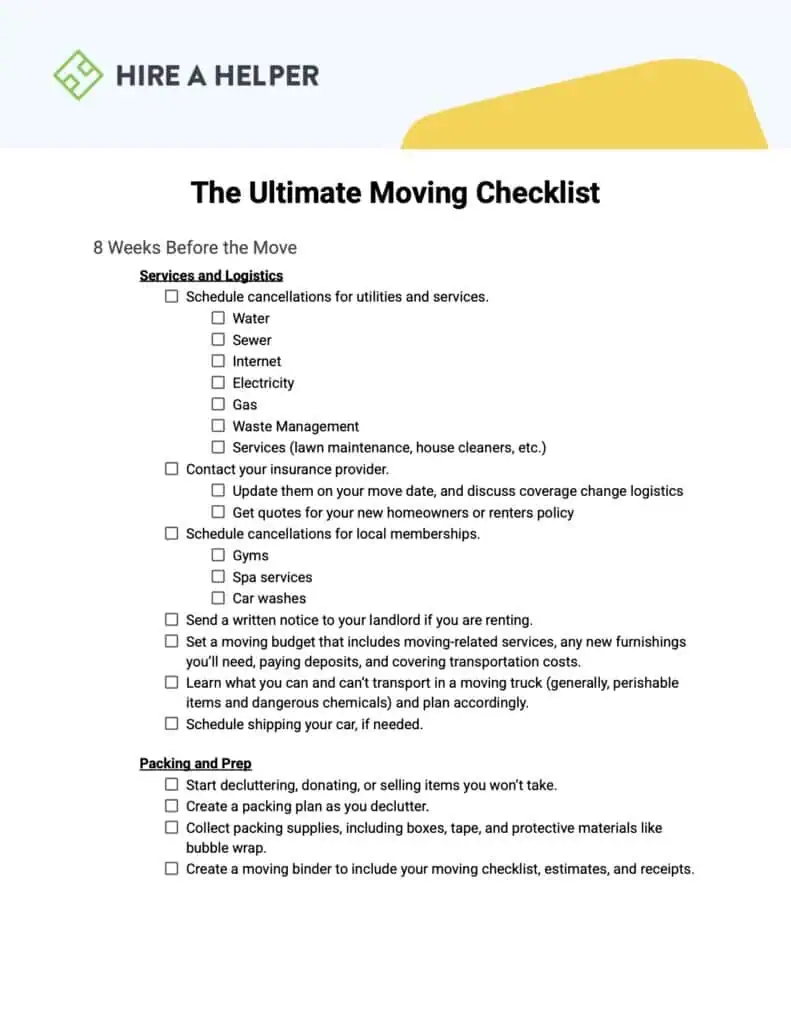
8 Weeks Before the Move
Services and Logistics
- Schedule cancellations for utilities and services, including water, sewage, internet, electricity, gas, and waste management. If you currently have a lawn maintenance company, house cleaners, or other services, let them know what the final date of service will be.
- Contact your insurance provider to get quotes for your new homeowners’ or renters’ policies and schedule the change. Consider asking for a new auto insurance quote, too, since rates can vary considerably between cities.
- Cancel any local memberships like gyms or car washes if you’re moving long-distance. This helps you avoid accidentally paying additional monthly dues once you’re too far away to use them.
- Send a written notice to your landlord if you’re renting. Most require at least 30 days’ notice to avoid fees, but some might ask for 60 days or more.
- Set a moving budget. This should include the cost of all moving-related services, buying new furniture, paying deposits, and covering transportation costs for your family.
- Learn what you can and can’t transport on a moving truck. Movers generally won’t handle hazardous or perishable items, so plan accordingly.
- Schedule shipping your car if you’re moving cross-country and don’t plan on driving it.
Moving Coordination
- Get quotes for moving services if you need them and hire the company that best fits your move. While you can DIY a move, it takes a lot of work to do everything on your own, so it’s often less stressful to at least have some hired help loading and unloading your truck. Hiring a full-service moving company also lets you skip the hassle of renting and driving a truck or getting a moving container. If necessary, schedule a walk-through so they can provide a detailed, accurate quote.
- Buy moving insurance if you choose to. You need to start early to get appraisals for any high-value items you want covered.
- Set up short-term housing and storage if it’s necessary. Gaps in housing can happen, but you can fill them in with an Airbnb, hotels, and other temporary accommodations. Consider keeping your belongings in storage units if necessary.
- If you have kids, start preparing them early. This gives them the chance to process upcoming changes and spend time with their close friends or family members they may be leaving behind.
- Start planning the school and medical record transfer process. Ask your current providers what they need to facilitate the records transfer.
- Start researching your new home. If you’re moving out of town, start searching for new health care providers, dentists, hair or nail salons, and other similar services.
Packing and Prep
- Start decluttering. Donate or sell things you no longer want or need that are still in good condition, and dispose of items that are past their usable life. Take a look at your local waste management services — some provide free bulk pickup services for residents.
- Create a packing plan as you declutter. Identify items you’re keeping but not planning to use in the coming months so they can be packed first. Leave frequently used items until the last week.
- Collect packing supplies, including boxes, tape, and protective materials like bubble wrap.
- Create a moving binder to include your to-do lists, estimates, and receipts. We recommend saving a moving checklist PDF or using a printable moving checklist and keeping it here for easy reference.
What to Pack 8 Weeks Before the Move
| Category | Examples |
| Items held in long-term storage | Holiday decorations, seasonal cookware, bulk pantry goods, backup kitchen appliances |
| Sentimental items | Family recipe books, heirloom dishes, handmade table linens |
| Old baby items you’re saving (if applicable) | Bottles, toddler plates, sippy cups, child-proofing gear |
| Unused furniture | Bar stools, spare kitchen chairs, old dining sets |
| Tools or gardening equipment you won’t need | Extra brooms, watering cans, compost bins, outdoor storage racks |
6 Weeks Before the Move
Services and Logistics
Change of Address Process
Start the change-of-address process. This can be time-consuming, but it’ll save you a lot of trouble later on. Common places you need to update include:
| Category | Examples |
| Government Agencies | USPS, DMV/DOL, IRS, Social Security Administration, Voter Registration |
| Financial | Banks, Credit Cards, Accountants, Insurance Providers |
| Medical & School | Dental and Medical Providers, Schools |
| Employment | Employer |
| Utilities & Services | Electricity, Water, Gas, Internet, Waste, Subscription Services |
| Shopping & Memberships | Online Shopping Sites, Clubs and Organizations, Car Wash, Gym |
| Personal Contacts | Friends and Family |
Moving Coordination
- Request time off from work. It’s best to clear your schedule on moving day and potentially a few days after as you settle in.
- Provide notice to your HOA if necessary. Some covenants require a permit or advanced notice if moving trucks will be in the neighborhood.
- Plan for items that require alternative arrangements. Pianos, pool tables, and other big items often require specialized movers. Some movers won’t touch other items, like aquariums or plants. Start planning for alternative shipping arrangements to ensure everything arrives at your new home.
- Schedule walk-throughs for your new and old homes. A walk-through of your old home lets you record the property’s condition at move-out. At your new home, you get the chance to see everything in person, and you can start planning how you’ll organize the space.
- Book flights, hotels, and rental cars if your move is long-distance.
- Schedule any closing home maintenance if you’re selling and have work that needs to be done before the property transfer completes.
- Schedule home services for your new home if you plan on having work done before you settle in.
Packing and Prep
- Organize all legal, medical, and financial records. Label the boxes with these documents so you can find them quickly if they become necessary.
- Create a moving-out checklist with all the maintenance and cleaning tasks you need to do before turning in your keys.
What to Pack 6 Weeks Before the Move
| Category | Examples |
|---|---|
| Nonessentials | Items You Haven’t Used in Months — Pack First |
| Holiday and Seasonal Decor | Holiday Decorations, Seasonal Gear, Winter/Summer-Specific Items |
| Garage | Tools, Outdoor Gear, Car Accessories |
| Basement | Stored Items, Old Furniture, Keepsakes |
| Attic | Long-Term Storage, Memory Boxes, Old Electronics |
| Storage Closets | Extra Linens, Overflow Supplies, Miscellaneous Storage |
| Guest Room | Spare Bedding, Furniture, Infrequently Used Belongings |
4 Weeks Before the Move
Services and Logistics
- Figure out if you need a parking permit for the moving truck or storage pod. These are more common if you’re moving downtown or in high-density areas. If you book a full-service move, your company might be able to handle this for you, but this helps you avoid surprises if you’re driving your own truck.
Moving Coordination
- Start planning your new home’s arrangement. Get measurements to ensure any big furniture will fit where you envision it going.
- Plan babyproofing if it’s necessary. Make sure you have enough outlet plugs, corner guards, and baby gates well in advance.
Packing and Prep
- Plan to use up perishable foods in the coming weeks. Most movers don’t handle perishables, so now’s the time to burn through that freezer stockpile.
What to Pack 4 Weeks Before the Move
| Category | Examples |
|---|---|
| Bedroom | Low-use items, Spare bedding |
| Clothing | Out-of-season clothing |
| Decor | Wall art, Decorative pieces, Lamps |
| Fragile Items | Fine china, Porcelain, Mirrors |
| Electronics | Rarely used or spare electronics |
| Valuables | Heirlooms, Keepsakes, Instruments |
2 Weeks Before the Move
Services and Logistics
- Figure out your final trash and recycling pickup. Your neighbor may be able to set your bins out for you if you’ll be elsewhere or don’t have the time.
- Empty your gym locker, safe deposit box, or any other storage units if you’re moving far away. You don’t want to forget anything as the weeks get busier.
- Set up mail forwarding with USPS. It’s usually valid for a year and ensures that anything sent before you filed a change of address still makes it to you.
Moving Coordination
- Plan what you’re doing with pets and children on moving day. Young children and pets can get in the way, so leaving them with a trusted sitter often makes things easier. If you have older kids, they may be able to help out (or at least can be better about staying in one spot).
Packing and Prep
- Back up essential data from your phone and computer. If anything goes wrong and something gets damaged during the move, you’ll be glad you did.
- Take photos of tech setups if they’re complex. This lets you replicate the setup in your new place.
What to Pack 2 Weeks Before the Move
| Category | Examples |
| Furniture | Extra furniture, Guest beds, Dressers (empty the drawers and pack up the clothes), Bookshelves |
| Decor & Fragile Items | Books, Art, and Decor — clear all shelves and pack carefully; Store fragile artwork in special boxes |
| Linens | Linen closets — pack everything except a spare sheet and enough towels for your family |
| Equipment | Large gym equipment |
1 Week Before the Move
Services and Logistics
- Confirm utilities and internet at your new address. You can usually schedule your services to start on moving day.
- Refill prescriptions. This is especially important if you’re moving long-distance and have to establish a new doctor once you settle in.
- Return anything borrowed from libraries or local friends and family.
Moving Coordination
- Confirm your move with your hired company. Double-check the date and time to avoid any surprises.
- Tell the neighbors if they don’t already know. Give them a quick heads-up on what the schedule will look like so they can plan around any potential disruptions.
Packing and Prep
- Deep-clean everything (or hire a cleaner). Now’s the time to scrub baseboards and grout, wash the walls, and dust off the blinds and fan blades. If you don’t want to do this yourself, many cleaners offer move-out services.
What to Pack 1 Week Before the Move
| Category | Examples |
|---|---|
| Kids’ Items | Toys — leave out a few small favorites to go in your essentials bag |
| Creative Supplies | Arts and crafts, Hobby supplies |
| Clothing & Accessories | Shoes, Clothes, Accessories — pack all but what you’ll need for the final week and first few days |
| Laundry Room | Detergents, Baskets — pack everything but the soap for your last loads |
| Home Office | Desk drawers, Bookshelves, Spare monitors, Printers, or other rarely used devices |
The Days Before the Move
Services and Logistics
- Gather any spare keys from neighbors or friends. You’ll need to return them to your landlord or give them to the new homeowner.
- Get cash for tips to save you the trip to the ATM on moving day.
- Defrost your freezer if your landlord requires it. Ask them in advance.
Moving Coordination
- Remind your neighbors, especially if you’ll be blocking the road or their driveway with the moving truck. Plus, it’s a great chance to say goodbye.
- Check the forecast and plan for the weather. If it’s rainy, get ready to take extra precautions.
Packing and Prep
- Drain gas out of the garage equipment. Most moving companies won’t handle flammable materials.
- Empty appliances like your dishwasher, washer, and dryer. That way, you know you didn’t accidentally leave anything behind.
- Pack your moving day essentials list. Check it twice so you have everything you’ll need through the early days in your new home.
- Deep-clean your washer and oven. If you’re a renter, this helps you get more of your security deposit back. Run the self-clean cycle on the oven and toss a few cleaner pods through your washer on the sanitize setting.
What to Pack Days Before the Move
| Category | Examples |
|---|---|
| Kitchen | All dishes and silverware (leave enough for moving day or use paper), Countertop appliances, Cookware, Food (leave enough for moving day; pack, donate, or toss the rest) |
| Primary Bathroom | Pack all items except essential toiletries, toilet paper, and hand soap for moving day |
| Decor | Wall decor, Rugs, Plants |
| Valuables | Jewelry, Important documents |
| Electronics | Computers, Televisions, Gaming consoles |
The Day of the Move
Services and Logistics
- Gather any spare keys from neighbors or friends. You’ll need to return them to your landlord or give them to the new homeowner.
- Get cash for tips to save you the trip to the ATM on moving day.
- Defrost your freezer if your landlord requires it. Ask them in advance.
Moving Coordination
- Remind your neighbors, especially if you’ll be blocking the road or their driveway with the moving truck. Plus, it’s a great chance to say goodbye.
- Check the forecast and plan for the weather. If it’s rainy, get ready to take extra precautions.
Packing and Prep
- Drain gas out of the garage equipment. Most moving companies won’t handle flammable materials.
- Empty appliances like your dishwasher, washer, and dryer. That way, you know you didn’t accidentally leave anything behind.
- Pack your moving day essentials list. Check it twice so you have everything you’ll need through the early days in your new home.
- Deep-clean your washer and oven. If you’re a renter, this helps you get more of your security deposit back. Run the self-clean cycle on the oven and toss a few cleaner pods through your washer on the sanitize setting.
What to Pack the Day of the Move
| Category | Examples |
|---|---|
| Personal Essentials | Last-minute clothes and towels, Toothbrushes and toothpaste, Toilet paper, Soap, Toiletries, Daily medications |
| Bedding | Sheets, Pillows, Blankets |
| Kitchen Items | Coffee maker, Dishes |
| Cleaning Supplies | Multipurpose cleaner, Paper towels, Trash bags, Gloves |
| Electronics | Phone chargers, Laptops, Tablets, and any remaining devices |
After the Move
What to Do After the Move
- Change the locks if you just bought your house. Renters usually can’t change their locks per the lease, but you might be able to request this from your landlord. After all, you never know who has a spare key lying around.
- Order or pick up groceries. Don’t worry about filling out your pantry and spice rack quite yet — just the basics will work for now. Don’t forget the condiments and commonly used items.
- Replace all batteries in smoke and CO2 detectors. They should be changed every 6 months anyway, so start the clock on move-in day and rest assured your family is safe.
- Review your home inventory. Now’s your chance to check that everything made it to its final destination in one piece. If it didn’t, file a claim with your moving company or insurance.
- Unpack. Not sure where to start? Check out our guide to unpacking like the pros. Generally, you want to unpack in the opposite order you packed in. Prioritize frequently used items.
- Clear out your moving boxes. If they’re still in good condition, you can sell or give them away. Otherwise, you likely need to drop them off at your local recycling facility.
- Check in with utilities if any didn’t activate as scheduled. Now’s a good time to confirm that services stopped at your old address to avoid extra bills.
- Meet your neighbors. This can take some time, but it’s good to introduce yourself when you have a chance. Exchange contact information and get a feel for the neighborhood.
- Update your driver’s license or state ID, voter registration, and car registration. This might take a bit of time since you usually have to provide recent official mail to update your licenses. If you’ve moved out of state, verify the required documentation in advance. Many states have legally set timelines for these processes, so get yours started as soon as you can.
- Check in with your previous landlord about your security deposit. Most states have strict requirements about how long a landlord has to return your security deposit before they owe you extra. Ask them how long they need to process any potential deductions for damages, and when you can expect to receive your cash back.
Moving Checklist by Move Type
Every move has its own unique requirements. While the timeline stays the same, the to-do list changes quite a bit depending on whether you are navigating a narrow apartment hallway or a sprawling backyard.
Apartment Move Checklist
Apartment living often means dealing with shared spaces and strict property managers. Be sure to check these off:
- Parking permits: See if you need a specific permit for your moving truck to park on the street or in a loading zone.
- Elevator reservations: Many buildings require you to book a service elevator in advance so you aren’t fighting neighbors for space on moving day.
- HOA rules: Review any Homeowners Association or building-specific rules regarding move-in hours and debris removal.
House Move Checklist
Moving into or out of a house usually involves more in terms of belongings and exterior maintenance. Don’t forget:
- Yard equipment: Make sure you drain the gas from your lawnmower and weed eater before loading them onto a moving truck.
- Utilities overlap: Since houses are larger, you often need to keep the lights and heat on at both locations for a few days to facilitate cleaning and repairs.
- Garage and shed items: These are the most common places for forgotten items, so double-check those rafters and back corners.
DIY vs Labor-Only vs Full-Service
Not sure how much help you actually need? Choosing the right move type is all about balancing your budget with how much effort you want to put in. Here is a quick breakdown of how the responsibilities are typically split up:
| Task | DIY Move | Labor-Only | Full-Service |
| Packing | You | You | Movers (usually optional) |
| Loading | You | Movers | Movers |
| Transport | You | You (Rental truck/container) | Movers |
| Unloading | You | Movers |
Movers |
Using a platform like HireAHelper is the perfect middle ground, because you handle the driving, and vetted labor-only moving professionals take care of the heavy lifting.
Common Moving Checklist Mistakes
Even with the best of intentions, it is easy to trip over a few common hurdles when you are busy juggling boxes. To keep your move on the right track, keep an eye out for these things that frequently happen:
- Starting too late: Procrastination is the biggest stress-inducer in any move. Waiting until the last minute makes everything feel like an emergency, so give yourself a head start by using a comprehensive checklist like this one to map out your timeline week by week.
- Underestimating supplies: There is nothing quite as frustrating as running out of packing tape at midnight, so always grab a few more boxes and rolls than you think you will need.
- Forgetting admin tasks: It is easy to focus on the physical boxes and forget paperwork, such as updating your address or transferring school and medical records. Prevent this pileup by setting a calendar reminder 2 weeks before your move date, specifically for handling these vital phone calls and online forms.
- Packing prohibited items: Many people accidentally pack items that movers cannot take, such as flammable liquids, pressurized cans, or perishable food. Take a few minutes to review your service provider’s restricted items list beforehand, and plan to safely dispose of or give away these goods.
Frequently Asked Questions
When Should I Schedule Movers?
For the best prices and availability, aim to book your movers about 4 to 6 weeks ahead of time. Getting an early start gives you plenty of options to find exactly what you need. If you are booking labor-only moving services through HireAHelper’s platform, you usually have a bit more flexibility, but securing your trusted movers early is always the best practice.
What should I do first when moving?
The very first step is to set your moving budget and decide on a move date. Once you have a date, you can start planning, making a timeline, decluttering, and gathering quotes from moving service providers to find the one that fits your needs.
How early should I start packing?
You should begin packing non-essential items, like seasonal decor and out-of-season clothes, about 8 weeks before your move. This prevents a frantic “packing marathon” during your final few days in the house.
What should not be packed?
Avoid packing hazardous or flammable materials like gasoline, matches, or pressurized cans, as movers generally won’t handle them. You should also keep essentials like daily medications, important documents, and basic toiletries with you rather than on the truck.
How long does a move usually take?
While every move is different, a local move usually takes a single day, while a long-distance move can take anywhere from a few days to over a week, depending on the mileage. Factors like the amount of furniture and the distance from the truck to your door also play a role.
How do I prepare for movers or helpers?
Ensure all your boxes are taped shut and clearly labeled with their destination room. Clear a wide path through your home to prevent tripping hazards, and make sure your helpers have a clear place to park the truck when they arrive.